Join us on a literary world trip!
Add this book to bookshelf
Grey
Write a new comment Default profile 50px
Grey
Subscribe to read the full book or read the first pages for free!
All characters reduced
Strategic Bombing - Decisive Air Power in Modern Warfare - cover

Strategic Bombing - Decisive Air Power in Modern Warfare

Fouad Sabry

Publisher: One Billion Knowledgeable

  • 0
  • 0
  • 0

Summary

What is Strategic Bombing
 
Strategic bombing is a systematically organized and executed attack from the air which can utilize strategic bombers, long- or medium-range missiles, or nuclear-armed fighter-bomber aircraft to attack targets deemed vital to the enemy's war-making capability. It is a military strategy used in total war with the goal of defeating the enemy by destroying its morale, its economic ability to produce and transport materiel to the theatres of military operations, or both. The term terror bombing is used to describe the strategic bombing of civilian targets without military value, in the hope of damaging an enemy's morale.
 
How you will benefit
 
(I) Insights, and validations about the following topics:
 
Chapter 1: Strategic bombing
 
Chapter 2: Battle of Britain
 
Chapter 3: Bombing of Dresden in World War II
 
Chapter 4: The Blitz
 
Chapter 5: Firebombing
 
Chapter 6: Baedeker Blitz
 
Chapter 7: Carpet bombing
 
Chapter 8: Aerial bombing of cities
 
Chapter 9: Airstrike
 
Chapter 10: Bombing of Hamburg in World War II
 
(II) Answering the public top questions about strategic bombing.
 
Who this book is for
 
Professionals, undergraduate and graduate students, enthusiasts, hobbyists, and those who want to go beyond basic knowledge or information for any kind of Strategic Bombing.
Available since: 06/20/2024.
Print length: 134 pages.
Other books that might interest you

  • Banished from Johnstown - Racist Backlash in Pennsylvania - cover

    Banished from Johnstown - Racist...

    Cody McDevitt, Tony Norman

    • 0
    • 0
    • 0
    Author and journalist Cody McDevitt tells the story of one of the worst civil rights injustices in Western Pennsylvania history. 


    In 1923, in response to the fatal shooting of four policemen, the mayor of Johnstown ordered every African American and Mexican immigrant who had lived in the city for less than seven years to leave. They were given less than a day to move or would face crippling fines or jail time and were forced out at gunpoint. An estimated two thousand people uprooted their lives in response to the racist edict. Area Ku Klux Klan members celebrated the creation of a "sundown town" and increased their own intimidation practices. Figures such as Marcus Garvey spoke out in Pittsburgh against it as newspapers throughout the country published condemnations.
    Show book
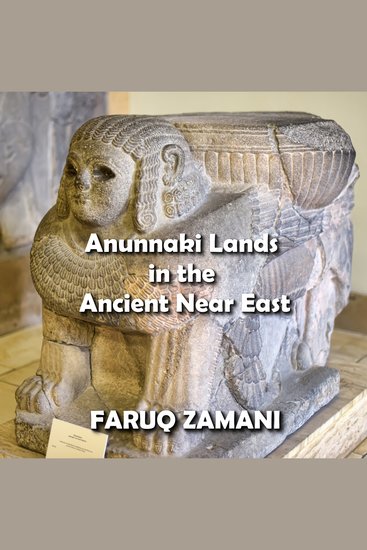
  • Anunnaki Lands in the Ancient Near East - How Sumer Nibiru and Iraq Formed the Birthplace of Civilization - cover

    Anunnaki Lands in the Ancient...

    Faruq Zamani

    • 0
    • 0
    • 0
    There were talented and dexterous people living in what is now southern Iraq during the time of Sumer. Humankind's first known civilization arose in the fertile plain irrigated by the Euphrates and Tigris rivers some 6,000 years ago "suddenly," "unexpectedly," and "with stunning abruptness," according to researchers.  
    It was a society to which we owe virtually every 'First' of what we consider essential to an advanced society:  
    For example, the wheel and wheeled transportation; brick, which made (and still makes) high-rise buildings; furnaces and kilns, which are vital to industries from baking to metallurgy. 
     In Sumer, astronomy, mathematics, cities and urban societies, kingships and laws, temples and priesthoods, calendars, festivals, recipes, art, artifacts, and, above all, writing and record-keeping are all firsts. They were the first to record and describe past events and tell tales of their gods through artful statues and statuettes depicted in a devotional stance. 
    Many landmarks along the road that brought ancient Sumer from complete obscurity to awe-inspiring appreciation of its grandeur bear the names of scholars who made the journey possible. We will mention some of those who worked at the various sites. Many others have assembled and classified fragmented artifacts over the last century and a half of Mesopotamian archaeology to list them all. We now know all this thanks to archaeology and decipherment of ancient languages during the past century and a half. 
    Epigraphers also worked in crowded museums and libraries to turn clay tablets inscribed with odd 'cuneates' into readable cultural, academic, and historical treasures by converting their persistence, devotion, and abilities. 
    Show book
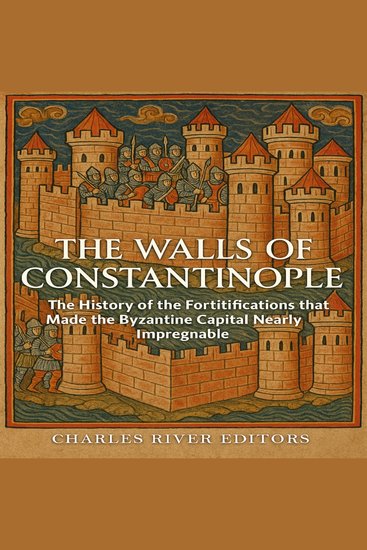
  • Walls of Constantinople The: The History of the Fortifications that Made the Byzantine Capital Nearly Impregnable - cover

    Walls of Constantinople The: The...

    Charles River Editors

    • 0
    • 0
    • 0
    In terms of geopolitics, perhaps the most seminal event of the Middle Ages was the successful Ottoman siege of Constantinople in 1453. Naturally, the Ottoman Empire would also use Constantinople as the capital of its empire after their conquest effectively ended the Byzantine Empire, and thanks to its strategic location, it has been a trading center for years and remains one today under the Turkish name of Istanbul. The end of the Byzantine Empire had a profound effect not only on the Middle East but Europe as well. Constantinople had played a crucial part in the Crusades, and the fall of the Byzantines meant that the Ottomans now shared a border with Europe. The Ottomans were viewed as a threat by the predominantly Christian continent to their west, and it took little time for different European nations to start clashing with them. In fact, the Ottomans would clash with Russians, Austrians, Venetians, Polish, and more before collapsing as a result of World War I, when they were part of the Central Powers.  
    Of course, it wasn’t an accident that Constantinople survived for so long. Since ancient times, settlements have been protected by walls, ranging from simple earth fortifications, mounds, and ditches to sophisticated structures incorporating gates and watchtowers. The globe is replete with famous walls such as that built by Hadrian in the north of England and the Great Wall of China, which spans hundreds of miles across a vast landscape. Some of the earliest evidence of defensive walling can be found in Africa, and the Bible includes references to the walls of Jericho, dating back to at least the 8th century BCE. Walls have protected great civilizations and occasionally been their downfall, and the Byzantine Empire relied on Constantinople’s extensive, sophisticated walls, among the greatest engineering achievements of the ancient world and Early Middle Ages, to survive as long as it did. 
    Show book
  • Hidden Brilliance - Redefining Genius: The Overlooked Intellectual Giant - cover

    Hidden Brilliance - Redefining...

    John Harpoon

    • 0
    • 0
    • 0
    Genius is often perceived through a narrow lens, typically defined by extraordinary achievements, groundbreaking discoveries, or exceptional skills. However, this traditional view of genius overlooks many individuals whose brilliance remains hidden from the mainstream. The nature of genius is far more complex and multifaceted than society tends to acknowledge. It exists not only in those who are celebrated publicly but also in those whose contributions go unnoticed or unrecognized due to societal limitations or biases. 
    At its core, genius is about exceptional intellectual capacity, but this capacity can manifest in many different ways. It is not always about creating world-changing inventions or becoming a famous name. For many, genius lies in quiet innovation, subtle insights, and the ability to solve problems in unique and unconventional ways. It can be seen in the person who finds creative solutions to everyday challenges or in the thinker who makes a significant impact in a specific, narrow field of knowledge, even if that knowledge doesn’t capture the world’s attention.
    Show book
  • Empowering Brain for Success Bundle 2 in 1 Bundle: The Champion's Mind and Thinking Clearly - cover

    Empowering Brain for Success...

    Arnold Kyler, S.M. Blackway

    • 0
    • 0
    • 0
    Empowering Brain for Success Bundle, 2 in 1 Bundle: The Champion's Mind and Thinking ClearlyDo you want to be known as someone with a “champion’s” personality, a personthat is always successful no matter what? Who doesn’t want to be seen as such a person? In order to have that ‘champion’s mindset’ there are several areas which you need to work on and develop. These steps can also be identified as personalitytraits. These personality traits apply to anyone regardless of their end goal. Much can be said about the benefits of always having a positive outlook in life. Always thinking positive thoughts goes hand in hand with having a positive outlook in life. Positive thinking can help boost your health, build your skills and improve your work. It also significantly reduces the stress you feel in your everyday life. Positive thinking makes you feel happier in the long run and studies have shown that happy people live a far better life than the average.This bundle will teach you all about the power and benefits of positive thinking. If you are having a hard time overcoming your negative thoughts and attitude, this audiobook will show you how to fix that. You will discover tips and ways on how to apply positive thoughts in your daily life.  It will also teach you all about these traits or steps in order to have a champion personality. It will highlight traits that will help you develop a winning personality.This 2 in 1 bundle includes the following audiobooks:1. The Champion's Mind: Discover All About the Champion's Mindset That Can Help You Improve Your Personality and Strategies in Life to Achieve Success2. Thinking Clearly: The Ultimate Guide to The Power Of Positive Thinking, Discover and Learn the  Effective Strategies to Train Your Mind Towards Positive Thinking to Achieve SuccessIf you want to learn more, download your copy of Empowering Brain for Success 2 in 1 Bundle today!
    Show book
  • Edge of Knowledge The: How Philosophy Shapes Science - cover

    Edge of Knowledge The: How...

    Henry J. Howes

    • 0
    • 0
    • 0
    The topic "The Edge of Knowledge: How Philosophy Shapes Science" explores the profound relationship between two fields that, while distinct, have deeply influenced each other throughout history. Philosophy lays the foundational questions about existence, reality, and knowledge, while science provides empirical methods and evidence to explore those questions. Together, they push the boundaries of human understanding, with philosophy offering the framework for inquiry and ethics, and science delivering the tools for discovery and innovation. This interplay drives the evolution of ideas, fostering groundbreaking insights into the mysteries of the universe and the principles guiding human progress.
    Show book