Join us on a literary world trip!
Add this book to bookshelf
Grey
Write a new comment Default profile 50px
Grey
Subscribe to read the full book or read the first pages for free!
All characters reduced
Straight Ticket Voting - Unveiling the Power Dynamics of Voter Choices - cover

Straight Ticket Voting - Unveiling the Power Dynamics of Voter Choices

Fouad Sabry

Publisher: One Billion Knowledgeable

  • 0
  • 0
  • 0

Summary

Straight-ticket voting, where voters choose all candidates from one party with a single mark, profoundly affects modern democracies. This book critically analyzes its impact on voter behavior, political loyalty, and polarization. It's a valuable resource for political science students and professionals seeking to understand how this voting method shapes elections and the democratic process.
 
Chapters Overviews:
 
1: Introduction to straight-ticket voting and its origins in elections.
 
2: Libertarian Party’s struggles under a straight-ticket voting system.
 
3: 1992 U.S. presidential election's reliance on straight-ticket voting.
 
4: Electoral fusion as a counter to straight-ticket dominance.
 
5: Third parties' fight to gain traction in a straight-ticket system.
 
6: Straight-ticket voting’s effect on ballot access and candidate choice.
 
7: Write-in candidates as a solution to party-line voting constraints.
 
8: Southern Democrats' dominance due to straight-ticket voting.
 
9: U.S. electoral system and straight-ticket voting’s broad effects.
 
10: How straight-ticket voting strengthens the coattail effect.
 
11: 2005 midterms and the role of straight-ticket voting.
 
12: Electoral reforms in Colorado aimed at reducing straight-ticket voting.
 
13: Ranked-choice voting as a potential alternative.
 
14: Libertarian Party’s history within the constraints of straight-ticket voting.
 
15: The 2010 Texas gubernatorial election's impact from party-line voting.
 
16: Straight-ticket voting’s influence on the 2012 elections.
 
17: Analysis of the 2018 U.S. elections and straight-ticket trends.
 
18: Unified primaries as a potential fix for straight-ticket voting dominance.
 
19: Straight-ticket voting in the 2020 Republican primaries.
 
20: Local election case study in 1996 Cook County, Illinois.
 
21: GOP efforts to restrict voting following the 2020 election.
 
Straight Ticket Voting is an indispensable resource for those looking to understand how party-line voting shapes elections. It highlights the need for reforms to counter its effects and enhance democratic processes. The insights offered are critical for those who wish to engage with electoral reforms and voter behavior studies.
Available since: 10/16/2024.
Print length: 369 pages.

Other books that might interest you

  • Nasty Politics - The Logic of Insults Threats and Incitement - cover

    Nasty Politics - The Logic of...

    Thomas Zeitzoff

    • 0
    • 0
    • 0
    A novel explanation for why politicians insult, accuse, and threaten their opponents, even though voters say they don't like it. 


    Why do politicians engage in nasty politics? Why do they use insult, accusations, intimidation, and in rare cases violence against their domestic political opponents? In Nasty Politics, Thomas Zeitzoff answers these questions by examining this global political trend in the US, Ukraine, and Israel and looking at how key leaders such as Trump, Zelensky, and Netanyahu use it. Drawing on surveys, case studies, in-depth interviews, databases of nasty politics, and large social media datasets, Zeitzoff shows that across all three countries, the public generally doesn't like nasty politics and it increases the threat of political violence. But it can also be a way to signal toughness to voters, which is especially important in threatening times. Featuring a powerful theory of why nastiness takes hold in democratic polities, Nasty Politics highlights how it influences the kinds of politicians who run for office and deepens our understanding for why so many politicians now rely on outsized 
    anger and withering insults for political gain.
    Show book
  • How to make people do what you want & How to change your mind - cover

    How to make people do what you...

    Christopher Rothchester

    • 0
    • 0
    • 0
    How to Make People Do What You Want 
    Do you want to learn how to appeal to people, be happier, healthier, and freer? How to Make People Do What You Want will get you started on that wonderful path. Modern life distracts us from what's really important, causing us to forget who we really are. None of us were born with fears, depression, or nervousness, no, something in our lives along the line pushes us into a downward spiral, careening into problems left and right. 
    The solutions to these problems may be staring us straight in the face, but unless we try, we'll never figure it out and reach our full potential. For some, dealing with people can be very stressful, but it doesn't have to be! The hangups and baggage that weigh us down need to be set aside, we need to become free. 
    Many kind, caring, and intelligent people repel potential friends, employers, and even future spouses because they're not socially perceptive, they don't understand how to attract friends, and they don't understand what impression their words, actions, and behaviors may give to others. 
    This skill is vital to learn because not one of us is an island, we can try to live by ourselves, but we make life so much more rich, easy, joyous, simple, and relaxed when we work together with friends to reach a common goal. Life doesn't have to be so difficult, the repetitive, boring, stressful, and unpleasant life you probably live is not a necessity—it's up to you, it's your choice. Choose wisely. Doing and learning new things will inherently require us to make changes, big changes, and this will feel uncomfortable.
    Show book
  • The Confessions of Fiona - Mythology and Folklore of the Faeries - cover

    The Confessions of Fiona -...

    Steve Blamires

    • 0
    • 0
    • 0
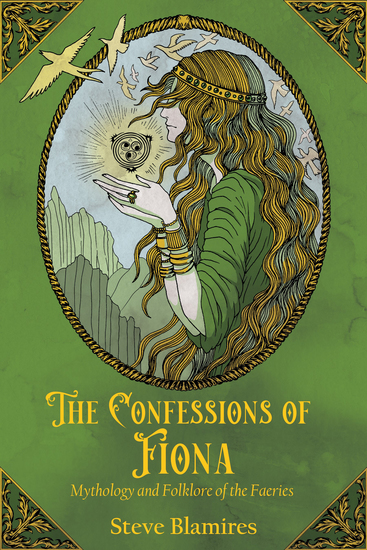
    The Confessions of Fiona by Steve Blamires details the beliefs, stories, and tenets of the Sidhe as revealed by one of the Sidhe, Fiona Macleod. For twelve years, this faery woman laid out the entire mythology, pantheon, and rituals of the faeries themselves. This volume reveals, expands, and explains what we can learn from her.  The Secrets of the Sidhe Revealed!  In 1893, the Scottish writer and mystic William Sharp (1855–1905) started writing under the name Fiona McLeod. The name Fiona did not exist before then, at least not in our world. For the following twelve years, Fiona wrote profusely of her own tradition; that is, the mythology and deities that the faeries recognize. None of these myths, legends, gods, or goddesses were known to humans prior to Fiona’s revelations.   Steve Blamires presents those concepts in his new book, The Confessions of Fiona. He has studied the esoteric faery tradition for thirty years. He presents a unique ritual system; previously unknown myths, legends, and gods and goddesses, offering insight to the modern researcher of this fascinating nonhuman magical body of work. Woven into the legends that the faeries share is a whole ritual magical tradition that humans can emulate with a basic knowledge of the Western magical tradition, the four festivals, the four magical tools, and what has come to be known as pathworking. But they are all significantly different from our human perspective.   Faeries are large, shockingly powerful, and, at times, cruel and dangerous. Steve shows how and when these mighty beings of ancient times were literally shrunken to become the Tinkerbells of popular imagery. Because of this important change of perspective, Steve includes in this book an in-depth look at the faery god Dalua—a truly dark, dangerous god but a necessary one.   To help readers access more of Fiona McLeod’s writings and teachings, Steve has included an appendix detailing all her essential works and scores of relevant direct quotations throughout the book.
    Show book
  • Queer Qabala - Nonbinary Genderfluid Omnisexual Mysticism & Magick - cover

    Queer Qabala - Nonbinary...

    Enfys J. Book, Christopher Penczak

    • 0
    • 0
    • 0
    Branch Out from Antiquated Interpretations of the Tree of Life 


    The Hermetic Qabala is a rich framework for understanding ourselves, our magickal workings, and the universe, but outdated descriptions often obscure its intrinsically queer and nonbinary nature. With updated, affirming metaphors and word choices, this guide makes it easy for any practitioner to understand and work with the Tree of Life. 


    Enfys J. Book welcomes queer people to see themselves in this esoteric practice and offers a variety of pathworkings, exercises, and spells to deepen their understanding of each of the ten spheres (sephiroth). This book also shows magickal communities how to cocreate spaces and structures that are friendlier and more accessible to all. With a modern, inclusive understanding of the Qabala, you can enhance your magick, fully express your identity, and conquer life's challenges.
    Show book
  • The Forbidden Knowledge of the Book of Enoch - The Watchers Nephilim Fallen Angels and the End of the World - cover

    The Forbidden Knowledge of the...

    Harold Roth

    • 0
    • 0
    • 0
    Forbidden knowledge is at the core of the Book of Enoch. Its text has captured interest from 300 BCE up to the present day. Ancient people have all consulted the Book of Enoch for their magical and mystical practices. Sometimes part of religious canon and doctrine, and sometimes outright banned, the Book of Enoch has persisted for well over 2,000 years. Roth interprets the content of the Book of Enoch and addresses how that knowledge has been used in the past and can be useful in the present. The Forbidden Knowledge of the Book of Enoch shows that the Book of Enoch remains as vital, if not more so, today as it has been for centuries. 


    From Renaissance magic to early Christian apocalyptic texts, all the way down to today's conspiracy theories and modern magical angelology, the Book of Enoch has been influential in many spiritual and religious traditions. What has been missing from the various approaches to the Book of Enoch has been any real attempt to find not only what is at the center of these stories but also their connections to magic. The Forbidden Knowledge of the Book of Enoch finds and elucidates those connections. 


    This new work will be useful to magic workers, mystics, those who work with angels, those interested in Jewish magic and mystical practices, and those who are simply curious to peek at apocalyptic visions.
    Show book
  • Languages of the Ancient Near East The: The History of the Languages and Scripts Developed across the Region in Antiquity - cover

    Languages of the Ancient Near...

    Editors Charles River

    • 0
    • 0
    • 0
    Perhaps not surprisingly given how advanced they were in comparison to contemporaries, the Egyptians invented one of the first writing systems ever, and for centuries, people thought these ancient texts held some sort of secret, be it aliens, advanced technology lost to the world, or mystical cures for all of the world’s ills. Even the ancient Egyptians saw their writing systems as full of mystery and hidden knowledge - according to Egyptian mythology, writing was invented by the ibis-headed god Thoth, the most intellectual of the gods.  
    	Along with Egypt, the cultural and geographic region known as Mesopotamia was home to some of the world’s earliest civilizations and also the first known form of writing, cuneiform. Many different ethnic groups vied for power in ancient Mesopotamia over the course of antiquity, spanning about 3,000 years, and many of them spoke different languages. Despite these differences, the people in Mesopotamia shared many cultural attributes, including similar religious practices, a common art and architecture style, and a shared use of the cuneiform script. The languages spoken by the peoples of Mesopotamia were as diverse as the many ethnic groups, but as those groups asserted their military, economic, and cultural power over the other groups, two languages became dominant in the region: Sumerian and Akkadian.  
    	The greatest irony of the lack of primary source information about the Phoenicians is that their language and writing happened to be the most influential in antiquity, a byproduct of their voyages and colonization, which spread their language across the Mediterranean. It was the forerunner to the Greek alphabet, from which the Latin alphabet was directly derived, and thus most of the written languages of the modern West. 
    Show book