Join us on a literary world trip!
Add this book to bookshelf
Grey
Write a new comment Default profile 50px
Grey
Subscribe to read the full book or read the first pages for free!
All characters reduced
Soft Robotics - Advancements in Microscopic Movement and Fluid Dynamics - cover

Soft Robotics - Advancements in Microscopic Movement and Fluid Dynamics

Fouad Sabry

Publisher: One Billion Knowledgeable

  • 0
  • 0
  • 0

Summary

In the rapidly evolving world of robotics, “Soft Robotics” offers an indepth exploration of the cuttingedge innovations driving the field. With a focus on the “Microswimmer” series, this book is essential for professionals, students, and enthusiasts eager to understand the intersection of soft materials and robotics. The detailed breakdown of each chapter ensures that readers gain practical insights into both foundational and advanced topics in the domain
 
Soft robotics-Introduction to the fundamental concepts of soft robotics, exploring the advantages of flexible and adaptable robotic structures
 
Soft exoskeleton-A study on the development and application of soft exoskeletons in assisting human motion, enhancing mobility, and providing physical support
 
Dielectric elastomers-Detailed discussion on dielectric elastomers, their role in creating soft actuators, and their impact on robotic movements
 
Peristaltic robot-Insights into peristaltic robots, designed to mimic the movement of biological organisms, and their applications in diverse industries
 
Projection microstereolithography-Focus on the advanced technique of projection microstereolithography, enabling precise fabrication of soft robotic components
 
Electronic skin-Exploration of electronic skin technology, enabling robots to sense touch and environmental changes, enhancing their interaction with the world
 
Actuator-Indepth look at actuators, the heart of soft robotics, and how they allow robots to move and adapt to various tasks
 
Stéphanie P. Lacour-A tribute to Stéphanie P. Lacour’s groundbreaking contributions in the field of soft robotics, emphasizing her role in advancing electronic skin
 
Liquid crystalline elastomer-Discussion on liquid crystalline elastomers, materials that change shape in response to external stimuli, perfect for soft robotic systems
 
Electroactive polymer-Focus on electroactive polymers and their role in the actuation process of soft robots, contributing to their versatility and efficiency
 
Mohsen Shahinpoor-Exploration of Mohsen Shahinpoor's research on artificial muscles and electroactive polymers, which have revolutionized soft robotics
 
Haptic perception-An exploration of haptic perception in robots, enhancing their ability to feel and interpret tactile feedback from the environment
 
Liquidcrystal polymer-The role of liquidcrystal polymers in soft robotics, focusing on their ability to combine flexibility with high performance
 
Robotic sensing-Insights into the sensors and sensory systems that enable soft robots to interact intelligently with their surroundings
 
Continuum robot-Indepth look at continuum robots, which feature flexible, snakelike structures that offer unprecedented mobility and adaptability
 
Artificial muscle-The development of artificial muscles that mimic human and animal movement, enabling robots to perform delicate and complex tasks
 
Tactile sensor-A deep dive into tactile sensors, which enhance robots' touch capabilities, allowing them to interact more naturally with their environment
 
Robotics-A comprehensive overview of robotics, tracing the evolution from traditional mechanical robots to modern soft robotic systems
 
Ferroelectric polymer-Study of ferroelectric polymers and their application in creating soft actuators for responsive, adaptable robotic movements
 
Stretchable electronics-Introduction to stretchable electronics, which enable robots to maintain their functionality even while bending and stretching
 
Adaptable robotics-Exploration of adaptable robotics, where robots are designed to change their form and function in response to different tasks and environments
Available since: 03/08/2025.
Print length: 247 pages.

Other books that might interest you

  • The Control of Nature - cover

    The Control of Nature

    John McPhee

    • 0
    • 0
    • 0
    The Control of Nature is John McPhee's bestselling account of places where people are locked in combat with nature. Taking us deep into these contested territories, McPhee details the strategies and tactics through which people attempt to control nature. Most striking is his depiction of the main contestants: nature in complex and awesome guises, and those attempting to wrest control from her—stubborn, sometimes foolhardy, more often ingenious, and always arresting characters.
    Show book
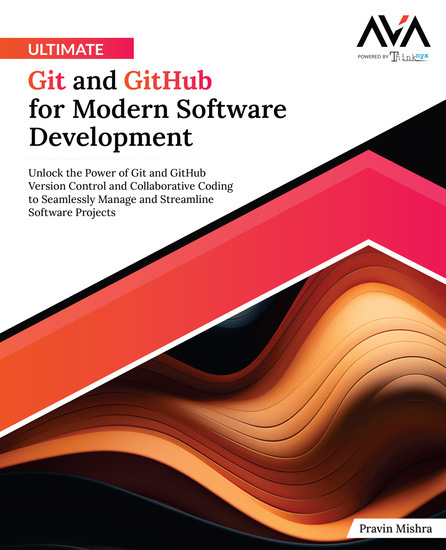
  • Ultimate Git and GitHub for Modern Software Development - Unlock the Power of Git and GitHub Version Control and Collaborative Coding to Seamlessly Manage and Streamline Software Projects - cover

    Ultimate Git and GitHub for...

    Pravin Mishra

    • 0
    • 0
    • 0
    Unlock the Power of Git and GitHub for Seamless Collaboration
    Book Description
    Ultimate Git and GitHub for Modern Software Development is a comprehensive guide that empowers developers to harness the full potential of Git and GitHub for efficient version control and seamless collaboration. This book takes you on a journey through the fundamentals of Git, exploring its commands, branching strategies, and conflict resolution techniques. It then delves into the world of GitHub, teaching you how to create repositories, collaborate with teams, and contribute to open-source projects.
    Whether you're a beginner or an experienced developer, this handbook equips you with the skills and knowledge to streamline your development workflow, ensure code integrity, and foster a collaborative coding environment. With clear explanations, real-world examples, and best practices, you will learn to leverage the power of these tools to enhance your coding experience and elevate your projects to new heights.
    Table of Contents
    1. Introduction
    2. Setting Up Git
    3. Understanding Git Repositories
    4. Basic Git Commands
    5. Branching and Merging
    6. Introduction to GitHub
    7. Working Seamlessly With Both Git and GitHub
    8. Advanced Git Techniques
    9. GitOps: The Future of Operations
    10. Best Practices with Git and GitHub   
    Index
    Show book
  • IBM SPSS - Comprehensive Beginners Guide to Learn Statistics using IBM SPSS from A-Z - cover

    IBM SPSS - Comprehensive...

    Walker Schmidt

    • 0
    • 0
    • 0
    We live in a world where information takes on a life of its own and spreads rapidly. Faster than ever before. For some people, their lives depend on obtaining a steady stream of information as it affects their lives in the most telling ways. The daily news is the simplest example of this phenomenon. It is truly the lifeblood of society and helps us evolve into better informed individuals with every passing day. As one can tell, information on the whole comes at us from every direction. Its influence on business, politics, and government, banking, the STEM fields, and even the social sciences cannot be understated. But its journey begins with raw data being compiled by means of an experiment or study. In saying that, this book should serve as a reference guide for those who wish to go beyond the basics into territory that requires a solid understanding of advanced statistical concepts. Still, as a beginner, it will be wise to move forward with care so that you solidify your understanding before you begin to use these advanced methods. Finally, even if the subject matter is a bit deep, don’t be so serious that you forget to have fun with both the SPSS tool and the study of statistics on the whole. Having said that, let’s get to crunching numbers without any further delay!
    Show book
  • Python for Data Analysis - Unlocking the Potential of Data Through Python - cover

    Python for Data Analysis -...

    Brian Paul

    • 0
    • 0
    • 0
    In this book, we take you on a journey through the essential tools and techniques that Python offers for data analysis. Beginning with the fundamentals of Python programming, you'll swiftly progress to mastering the NumPy and Pandas libraries, building a solid foundation for manipulating and cleaning data. Dive into the world of Exploratory Data Analysis (EDA), learning how to visualize and interpret data patterns, and apply statistical techniques to draw meaningful conclusions. 
    As you advance, the book seamlessly transitions into the realm of machine learning, introducing Scikit-Learn for both supervised and unsupervised learning. Real-world projects and case studies bring the concepts to life, demonstrating how Python's versatility can be applied to predict trends, analyze financial data, and glean insights from social media platforms. 
    But this book goes beyond the basics. You'll explore advanced data manipulation techniques with Pandas, delve into big data with Apache Spark, and gain expertise in web scraping and API integration for collecting diverse data sources. Ethical considerations are not overlooked, emphasizing responsible data handling and addressing privacy and security concerns. 
    Best practices, tips for writing efficient code, and discussions on emerging trends ensure you stay ahead in the ever-evolving field of data analysis. 
    "Python for Data Analysis" is not just a book; it's your companion on the journey to becoming a proficient data analyst. With a blend of theory, hands-on exercises, and real-world applications, this guide empowers you to transform raw data into actionable insights. Get ready to unlock the true potential of your data with Python as your tool of choice. 


    Show book
  • Trusting Tomorrow: The AI Revolution - Exploring the Future of AI and Its Impact on Humanity - cover

    Trusting Tomorrow: The AI...

    Rich Baby Face

    • 0
    • 0
    • 0
    Series Description for "Trusting Tomorrow: The AI Revolution" 
    In an era where artificial intelligence is transforming every aspect of our lives, "Trusting Tomorrow: The AI Revolution" explores the profound changes AI brings to society, technology, and human relationships. This series delves into the evolving role of AI in shaping our future, asking crucial questions about trust, ethics, and our place in an increasingly automated world. 
    Through thought-provoking insights and futuristic visions, Rich Baby Face presents a roadmap to understanding how we can navigate this AI-driven landscape. Join us as we explore the promise and challenges of AI, and how it will revolutionize our world for generations to come
    Show book
  • When the Last One Fell Silent - Stories of Extinct Creatures - cover

    When the Last One Fell Silent -...

    P Agrawal

    • 0
    • 0
    • 0
    This audiobook is narrated by an AI Voice.   
    When the Last One Fell Silent: Stories of Extinct Creatures is a haunting yet deeply human exploration of extinction—told not as dry statistics, but as a series of vivid portraits that bring lost creatures back to life through story, imagery, and reflection. From the island forests where dodos once waddled without fear, to the endless skies once blackened by passenger pigeons, to the misty rainforests where golden toads shimmered like jewels, each chapter of this book immerses readers in the world as it once was—and as it might never be again. 
    Extinction is as old as life itself, but in the last few centuries its rhythm has changed. Where once climate, asteroids, and ice shaped life and loss, today extinction bears the clear mark of one species—our own. This book moves tenderly through history, telling the stories of animals we have lost: the thylacine of Tasmania, hunted more by rumor than truth; the great auk and Steller’s sea cow, slaughtered out of utility and curiosity; the Pyrenean ibex, which briefly flickered back into life through cloning before disappearing again; the mammoths, whose heavy footfalls once trembled across frozen steppes; and the baiji dolphin, the gentle goddess of the Yangtze, drowned beneath the noise of factories and boats. 
    Each chapter does more than recount the facts of extinction. It lingers on the silences that follow. Silence of forests once filled with birds. Silence of oceans where seals no longer bark. Silence of mountains where goats no longer leap. Readers are invited not only to see the loss but to feel it—the grief of the final call, the heaviness of absence, the weight of knowing that these lives were here, and now they are not. 
    At the same time, When the Last One Fell Silent is not simply an elegy. It is also a mirror and a warning. Chapters on myths and legends show how humans carry the memory of vanished animals in stories of dragons, thunder birds, and mermaids.
    Show book