¡Acompáñanos a viajar por el mundo de los libros!
Añadir este libro a la estantería
Grey
Escribe un nuevo comentario Default profile 50px
Grey
Suscríbete para leer el libro completo o lee las primeras páginas gratis.
All characters reduced
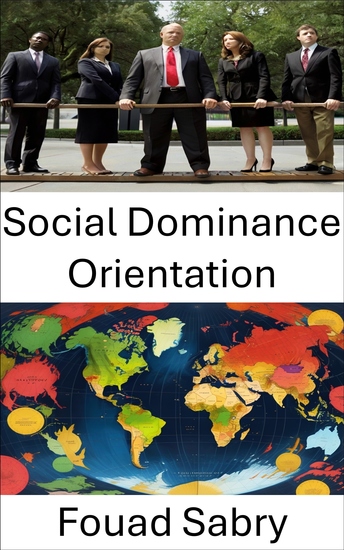
Social Dominance Orientation - Power Dynamics Unveiled - cover

Social Dominance Orientation - Power Dynamics Unveiled

Fouad Sabry

Editorial: One Billion Knowledgeable

  • 0
  • 0
  • 0

Sinopsis

"Social Dominance Orientation" explores the psychological foundations of group dominance and how some individuals support the dominance of specific groups over others.
 
1: Social Dominance Orientation: Introduces the core concept and its influence on social and political behavior.
 
2: Right-wing authoritarian personality: Explores authoritarian personalities and their support of hierarchical structures.
 
3: System justification: Analyzes why individuals support existing social systems that reinforce inequality, impacting social order.
 
4: The Authoritarian Personality: Examines the historical roots of authoritarianism and its influence on contemporary political ideology.
 
5: Social dominance theory: Introduces the framework linking group-based hierarchies to political systems, highlighting implications for governance.
 
6: Realistic conflict theory: Explores how competition over resources can fuel prejudice and dominance.
 
7: Ambivalent sexism: Discusses how hostile and benevolent sexism maintains gender inequality.
 
8: Intergroup relations: Delves into group interactions within hierarchies and their effects on social cohesion and political stability.
 
9: Diversity ideologies: Explores views on diversity that challenge or reinforce social dominance hierarchies.
 
10: Axes of Subordination: Breaks down various forms of subordination, such as race, gender, and class, intersecting with dominance orientation.
 
11: Prejudice: Examines how prejudice reinforces social hierarchies and connects to social dominance orientation, illustrating deep biases.
 
12: Conscientiousness: Discusses how conscientiousness relates to social dominance, showing how individuals navigate power dynamics.
 
13: Political psychology: Explores how political psychology helps understand social dominance, focusing on the shaping of political attitudes.
 
14: Authoritarian personality: Analyzes the authoritarian personality and its support for rigid social structures and dominance.
 
15: Minimal group paradigm: Introduces an experiment showing how arbitrary distinctions can fuel dominance behaviors.
 
16: Openness to experience: Explores how openness as a personality trait affects attitudes toward hierarchy and diversity.
 
17: HEXACO model of personality structure: Delves into the HEXACO framework, focusing on traits inversely related to social dominance.
 
18: Jim Sidanius: Overview of Jim Sidanius, co-founder of social dominance theory, and his contributions to understanding hierarchy and power.
 
19: Felicia Pratto: Highlights Felicia Pratto’s contributions to social dominance theory, focusing on her research into power and inequality.
 
20: Eva G. T. Green: Explores Eva Green's work on intergroup relations, examining ideologies around inequality and dominance.
 
21: Empathy gap: Discusses the empathy gap, explaining how individuals high in social dominance orientation.
Disponible desde: 09/10/2024.
Longitud de impresión: 215 páginas.

Otros libros que te pueden interesar

  • Mamata - Beyond 2021 - cover

    Mamata - Beyond 2021

    Shubhankar, Jayanta Ghosal,...

    • 0
    • 0
    • 0
    In the West Bengal election of 2021, the longest state election in the history of India, Mamata Banerjee won the khela, and the BJP lost the plot. How did this happen? 
    The author, Jayanta Ghosal, travelled to all the districts of West Bengal and unearthed certain key factors that helped the Trinamool win the state. For instance, there was a massive gap in the BJP's understanding of Bengali identity, which Mamata was able to exploit. An 'overdose' of central intervention, ranging from paramilitary forces to intelligence agencies to target key TMC leaders, added to the BJP's disconnect with voters. Increasingly, the state felt the divide between New Delhi and Bengal grow. 
    The book details how Mamata was successfully able to portray herself as the 'daughter of Bengal' who worked tirelessly for the state's poor and disadvantaged. It also asks the question: with the state elections under her belt, what will be Mamata's path to the general elections of 2024? Does she consider herself a candidate for the prime minister's post?
    Ver libro
  • Modernising Irish Government - The Politics of Administrative Reform - cover

    Modernising Irish Government -...

    Neil Collins, Terry Cradden

    • 0
    • 0
    • 0
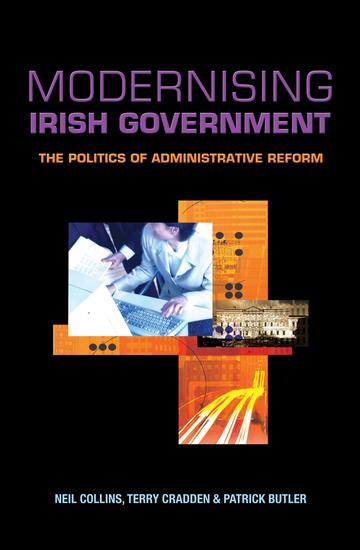
    Modernising Irish Government presents the major historical turning points in the development of Irish public services with a particular focus on the civil service, covering the mid-nineteenth-century reforms, the foundations of the State and the Lemass-Whittaker economic initiative. It introduces the Strategic Management Initiative, its origins and its impact, discussed in terms of efficiency, responsibility and democracy.
    Authors Neil Collins, Terry Cradden and Patrick Butler examine the current, key issues within the Civil Service, including the contentious issue of decentralisation. Providing reviews of the institutional framework for regulating monopolies in such sectors as telecommunications, aviation and retail competition, they present a critique of the new kinds of relationships between government and the people by reviewing Social Partnership, the Citizen Charters of government departments and other similar instruments.
    This textbook at once examines the scale, scope and structure of the delivery of services to the public and their relationship to the civil service, government departments, commercial semi-state companies and other public bodies, while identifying a number of significant failures in service delivery in detail and offering an analysis for their reasons.
    Ver libro
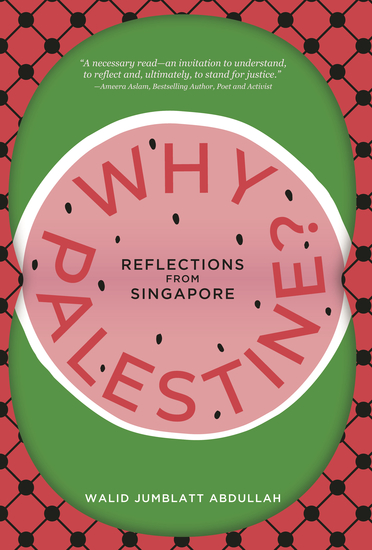
  • Why Palestine?: Reflections From Singapore - cover

    Why Palestine?: Reflections From...

    Walid Jumblatt Abdullah

    • 0
    • 0
    • 0
    If you’ve ever wondered why people keep talking about Palestine, or the point of keeping up with a long-drawn conflict in the Middle East and what difference you could possibly make, this book is for you. Political analyst and podcaster Walid Jumblatt Abdullah takes on questions that Singaporeans have often raised about Palestine, laying out answers that clarify and inform. 
     
    Walid examines myths (“Could Gaza Have Been Singapore?”) and sheds light on the double standards of Western powers, to whom human rights seem to matter, except for where Palestine is concerned. Explaining how the Palestinians have been systematically dehumanised for decades, the book highlights how they continue to exist nevertheless, their very existence an act of resistance. 
     
    Why Palestine? is an illuminating starting point for newcomers to the issue, and a passionate primer that seasoned activists will welcome for capturing the heart and hope of a long-disenfranchised people and those who support them.
    Ver libro
  • Air-Conditioned Nation Revisited: Essays on Singapore Politics - cover

    Air-Conditioned Nation...

    Cherian George

    • 0
    • 0
    • 0
    "Think of Singapore instead as the Air-Conditioned Nation—a society with a unique blend of comfort and central control, where people have mastered their environment, but at the cost of individual autonomy, and at the risk of unsustainability." 
     
    Air-Conditioned Nation Revisited is an anthology of essays on Singapore politics by Cherian George. It draws upon his influential collection Singapore: The Air-Conditioned Nation (2000), on the country's politics of comfort and control, and from Singapore, Incomplete (2017), on its underdeveloped democracy. Updated for the impending transition to a new generation of leaders, this 20th anniversary edition of Air-Conditioned Nation offers critical reflections on continuity and change in Singapore’s unique political culture.
    Ver libro
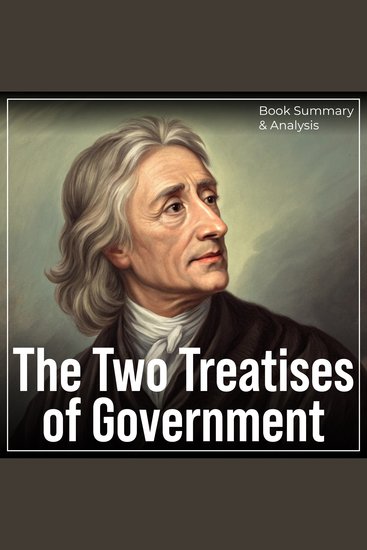
  • Two Treatises of Government The: Book Summary & Analysis - cover

    Two Treatises of Government The:...

    Briefly Summaries

    • 0
    • 0
    • 0
    This is a concise summary and analysis of The Two Treatises of Government, by John Locke.
    It is not the original book and is not affiliated with or endorsed by 
    John Locke.
    Ideal those seeking a quick and insightful overview.
     
    The Two Treatises of Government is a foundational work of political philosophy that challenges the concept of absolute monarchy and lays the groundwork for modern democracy. Divided into two parts, the first treatise critiques the idea of divine-right monarchy, dismantling its theological and philosophical arguments. The second treatise presents a compelling vision of government based on natural rights, consent, and the social contract. Addressing themes of liberty, property, and governance, this timeless text continues to influence debates on freedom and justice in contemporary society.
    Ver libro
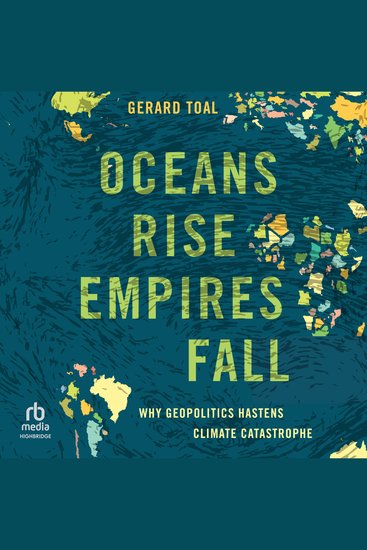
  • Oceans Rise Empires Fall - Why Geopolitics Hastens Climate Catastrophe - cover

    Oceans Rise Empires Fall - Why...

    Gerard Toal

    • 0
    • 0
    • 0
    In the last few years, it has become abundantly clear that the effects of accelerating climate change will be catastrophic, from rising seas to more violent storms to desertification. Yet why do nation-states find it so difficult to implement transnational policies that can reduce carbon output and slow global warming? In Oceans Rise, Empires Fall, Gerard Toal identifies geopolitics as the culprit. States would prefer to reduce emissions in the abstract, but in the great global competition for geopolitical power, states always prioritize access to carbon-based fuels necessary for generating the sort of economic growth that helps them compete with rival states. 


    The Ukraine conflict in particular exposes our priorities. To escape reliance on Russia's vast oil and gas reserves, states have expanded fossil fuel production that necessarily increases the amount of carbon in the atmosphere. Competitive territorial, resource, and technological dramas across the geopolitical chessboard currently obscure the deterioration of the planet's life support systems. In the contest between geopolitics and sustainable climate policies, the former takes precedence—especially when competition shifts to outright conflict. In this book, Toal interrogates that relationship and its stakes for the ongoing acceleration of climate change.
    Ver libro