Join us on a literary world trip!
Add this book to bookshelf
Grey
Write a new comment Default profile 50px
Grey
Subscribe to read the full book or read the first pages for free!
All characters reduced
Satisfaction Approval Voting - Enhancing Democracy Through Innovative Voting Systems - cover

Satisfaction Approval Voting - Enhancing Democracy Through Innovative Voting Systems

Fouad Sabry

Publisher: One Billion Knowledgeable

  • 0
  • 0
  • 0

Summary

"Satisfaction Approval Voting" presents an innovative electoral system designed to improve voter satisfaction and representational outcomes. This book explores how Satisfaction Approval Voting (SAV) integrates approval voting principles with enhancements that optimize democratic processes.
 
1-Satisfaction Approval Voting-An introduction to SAV and its revolutionary approach to electoral satisfaction.
 
2-Approval Voting-A look at approval voting, allowing voters to support multiple candidates for fairness.
 
3-Proportional Representation-Explores proportional representation’s role in achieving equitable outcomes.
 
4-Score Voting-Discusses score voting, a system where voters assign scores to candidates.
 
5-Two-round System-Analyzes how the two-round system ensures broad candidate support.
 
6-Single Transferable Vote-Unpacks the single transferable vote system for proportional outcomes.
 
7-Strategic Voting-Covers strategic voting and its influence on electoral results.
 
8-Voting-Provides a comprehensive overview of voting principles and systems.
 
9-Electoral System-Analyzes the impact of different electoral systems on democracy.
 
10-Cardinal Voting-Explores how cardinal voting rates candidates, highlighting its strengths.
 
11-Multiple Non-Transferable Vote-Examines this system's role in specific electoral contexts.
 
12-Ranked Voting-Discusses ranked voting and its preference-based candidate ranking.
 
13-Proportional Approval Voting-Explores how this method combines approval voting with proportionality.
 
14-Sequential Proportional Approval Voting-Looks at a sequential approach to improve proportional outcomes.
 
15-Combined Approval Voting-Analyzes how this method integrates multiple voting systems.
 
16-STAR Voting-A breakdown of STAR (Score Then Automatic Runoff) voting and its benefits.
 
17-Social Utility Efficiency-Explores how voting systems can optimize social utility.
 
18-Justified Representation-Focuses on achieving fair representation in electoral processes.
 
19-Multiwinner Approval Voting-Covers how multiwinner approval voting represents diverse interests.
 
20-Multiwinner Voting-Discusses various multiwinner systems for balanced representation.
 
21-Multi-Issue Voting-Explores multi-issue voting for elections involving multiple topics.
 
"Satisfaction Approval Voting" is more than a book—it's a valuable resource for anyone interested in democratic reform. Whether you're a professional, student, or enthusiast, this book offers powerful insights into how SAV can transform voting and representation. Dive in to explore the future of electoral reform.
Available since: 09/05/2024.
Print length: 285 pages.

Other books that might interest you

  • Start of the Vietnam War The: The History and Legacy of the Events that Began America’s Most Controversial War - cover

    Start of the Vietnam War The:...

    Editors Charles River

    • 0
    • 0
    • 0
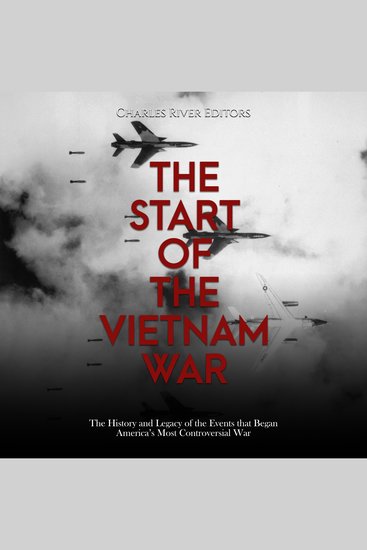
    The Vietnam War could have been called a comedy of errors if the consequences weren’t so deadly and tragic. In 1951, while war was raging in Korea, the United States began signing defense pacts with nations in the Pacific, intending to create alliances that would contain the spread of Communism. As the Korean War was winding down, America joined the Southeast Asia Treaty Organization, pledging to defend several nations in the region from Communist aggression. One of those nations was South Vietnam.  
    	Before the Vietnam War, most Americans would have been hard pressed to locate Vietnam on a map. South Vietnamese President Diệm’s regime was extremely unpopular, and war broke out between Communist North Vietnam and South Vietnam around the end of the 1950s. Kennedy’s administration tried to prop up the South Vietnamese with training and assistance, but the South Vietnamese military was feeble. A month before his death, Kennedy signed a presidential directive withdrawing 1,000 American personnel, and shortly after Kennedy’s assassination, new President Lyndon B. Johnson reversed course, instead opting to expand American assistance to South Vietnam. 
    	The post-analysis of war is a complicated and process that benefits from hindsight, and the involvement of the United States in Vietnam over about a decade was no exception. Never formally declared as a “war,” the Vietnam War was not fought in clean lines or with clear missions. Viewers of the evening news listening to the “box score” of killed and wounded each night had at best a hazy notion of what was happening a world away in Southeast Asia. If anything, their leaders were both attentive to reelection and on a certain level were themselves unsure of what was truly taking place. A military draft that sent over 50,000 American soldiers to their deaths was triggered by a resolution sought by President Lyndon B. Johnson in a decision to contain communism in a distant Asian land. 
    Show book
  • Craft Compelling Stories That Captivate Your Audience Instantly - "Ignite your storytelling skills! Unlock compelling audio lessons that captivate your audience effortlessly" - cover

    Craft Compelling Stories That...

    Cyrus Hargrove

    • 0
    • 0
    • 0
    Transform Your Message; Inspire Action and Connection 
    Are you eager to advance in your career while reinforcing your knowledge? Are you determined to excel and effectively communicate your ideas? 
    Your quest for a thorough and accessible guide to mastering storytelling ends here! 
    This audiobook is your ultimate resource for enhancing your storytelling skills and engaging your audience. With practical exercises and valuable insights, you’ll be fully prepared to convey powerful messages that resonate. 
    Key features of this enriching audiobook: 
    - In-depth exploration of effective storytelling techniques 
    - Comprehensive insights into transforming your message 
    - Proven strategies for crafting compelling narratives that inspire action 
    Our audiobook stands out by offering extensive coverage, necessary for your success. Concepts are explored in detail, ensuring a clear understanding of how to create impactful stories. 
    Designed with a straightforward structure and accessible language, "Transform Your Message; Inspire Action and Connection" guarantees seamless transitions between topics. Say farewell to convoluted terminology and embrace clear, precise, and engaging content. 
    So, why delay? Click the BUY NOW button to grab your copy and embark on your journey toward storytelling success! 
    Unlock your potential and learn to transform your message into a source of inspiration and connection!
    Show book
  • The Last Fighter Pilot - The True Story of the Final Combat Mission of World War II - cover

    The Last Fighter Pilot - The...

    Don Brown, Captain Jerry Yellin,...

    • 0
    • 0
    • 0
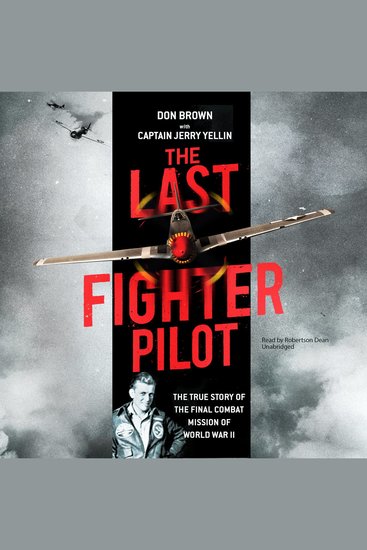
    On the morning of August 15, 1945, Captain Jerry Yellin flew the last combat mission of World War II out of Iwo Jima. Today, Captain Yellin is a sharp, engaging, ninety-three-year-old veteran whose story is brought to life by bestselling author Don Brown (Treason). 
    From April to August of 1945, Captain Jerry Yellin and a small group of fellow fighter pilots flew dangerous bombing and strafing missions out of Iwo Jima over Japan. Even days after America dropped the atomic bombs—on Hiroshima on August 6 and Nagasaki on August 9—the pilots continued to fly. Though Japan had suffered unimaginable devastation, the emperor still refused to surrender. 
    Bestselling author Don Brown sits down with Yellin to tell the incredible true story of the final combat mission of World War II. Nine days after Hiroshima, on the morning of August 15, Yellin and his wingman First Lieutenant Philip Schlamberg took off from Iwo Jima to bomb Tokyo. By the time Yellin returned to Iwo Jima, the war was officially over—but his young friend Schlamberg would never get to hear the news. The Last Fighter Pilot is a harrowing first-person account of war from one of America’s last living World War II veterans.
    Show book
  • Actor's Guide To Mastering the Indian Accent An - Learn The Hallmarks of Indian Pronunciation for the Stage or Screen - cover

    Actor's Guide To Mastering the...

    Oscar Stanley

    • 0
    • 0
    • 0
    Unlock the power of the Indian accent and bring your characters to life with authenticity and confidence. Whether you're preparing for a specific role or expanding your range as an actor, mastering this accent can set you apart in auditions and on screen. This audio-based training guides you through every step, helping you sound natural, nuanced, and believable — without falling into stereotypes. 
    The course breaks down the unique sound patterns of Indian-accented English, teaching you how to shape vowels, soften consonants, and replicate the musical rhythm that defines the accent. You'll learn how regional languages influence speech, giving your delivery a natural flow that goes beyond surface imitation. With a focus on ear training and vocal drills, you'll fine-tune every sound while developing an instinct for the accent's melody and pacing. 
    This training is designed to help actors create rich, layered performances. You'll understand not only how the accent sounds, but why it sounds that way — from the influence of Indian language structure to the subtle shifts in emphasis and intonation. By connecting the accent to character and context, you'll avoid clichés and build performances that feel grounded and authentic. 
    Every lesson is crafted with actors in mind, combining technical precision with practical exercises. Dialogue practice helps you integrate the accent into performance, preparing you for auditions, rehearsals, and on-camera work. The flexible audio format fits easily into your daily routine, letting you learn at your own pace. 
    With the right training, an accent becomes a powerful tool for storytelling. Mastering the Indian accent will give you the confidence to step into any role and deliver performances that are both compelling and true to life.
    Show book
  • Mary Shelley - A Very Short Introduction - cover

    Mary Shelley - A Very Short...

    Charlotte Gordon

    • 0
    • 0
    • 0
    In 1816, when eighteen-year old Mary Godwin began writing Frankenstein, the idea that a woman could dream up such a tale was as far-fetched as raising a being from the dead. But Mary wasn't just any woman. The daughter of two notorious radicals, Mary had become an outcast from English society when she was only sixteen. A lifelong advocate for the rights of women, she refused to be governed by social conventions, running away with a married man, having children out of wedlock, and authoring books, stories, and essays that broke literary conventions. 


    This Very Short Introduction explores the context, background, and important themes contained in Shelley's most famous novel, Frankenstein, as well as demonstrating the importance of her work after Frankenstein. Over the course of her long career, Shelley developed a distinctive voice, and a political and philosophical stance. Exploring key themes throughout Shelley's work, Charlotte Gordon shows how she devoted herself to the propositions her mother, Mary Wollstonecraft, outlined in A Vindication of the Rights of Woman: that women are equal to men; that all people deserve the same rights; that human reason and the capacity for love can reform the world; and that every person is entitled to justice and freedom.
    Show book
  • You're One of Us! - Systemic Insights and Solutions for Teachers Students and Parents - cover

    You're One of Us! - Systemic...

    Marianne Franke-Gricksch

    • 0
    • 0
    • 0
    In this gripping account of her work, Marianne Franke-Gricksch speaks from her experience as a teacher and therapist, describing how systemic ideas enable fundamentally new and effective learning and encourage creative cooperation between students, teachers, and parents. Rather than viewing the participants in this process as isolated individuals, she shows how people and their environment constantly influence and change each other. Franke-Gricksch's own systemic view connects Bert Hellinger's work on the power of one's bond with his or her family of origin with various other approaches within systemic theory. The author's reports are consistently supported by practical examples from the everyday classroom situation. Especially fascinating is the children's enthusiasm and array of ideas that they use to pick up and transfer the new impulses and procedures. Readers who are new to these methods will also be amazed at the powerful effect that is released by systemic thinking and action.
    Show book