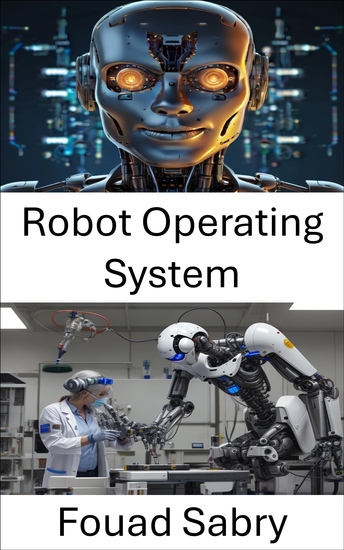
Robot Operating System - Mastering Autonomous Systems for Seamless Integration and Control
Fouad Sabry
Publisher: One Billion Knowledgeable
Summary
In an age where robotics is revolutionizing industries, education, and everyday life, understanding the foundation and tools that drive this technology is more crucial than ever. Robot Operating System is a comprehensive guide that takes you through the key concepts and tools within the realm of robotics. Whether you’re a professional in the field, an undergraduate or graduate student, or an enthusiast looking to dive deeper, this book is designed to provide you with the knowledge necessary to navigate the world of robotics, focusing on the critical components that power robotic systems.

Chapters Brief Overview:

1: Robot Operating System

Explores the fundamentals of ROS, the opensource framework that simplifies robot software development.

2: PostgreSQL

Introduces PostgreSQL, highlighting its role in storing and managing data for robotic systems.

3: Package Manager

Discusses the package manager used in ROS, crucial for managing software dependencies and environments.

4: Eclipse (Software)

Examines Eclipse, a powerful IDE for developing and debugging robotic software applications.

5: Inkscape

Covers how Inkscape is utilized for designing 2D graphics that aid in the visualization of robotic models.

6: Visual Programming Language

Introduces visual programming languages, enabling easier interaction with robotic systems for all skill levels.

7: Ubuntu

Details the importance of Ubuntu as the goto Linux distribution for robotics, with robust support for ROS.

8: OpenCV

Explains OpenCV, a library for computer vision that powers a robot’s ability to see and interpret the world.

9: OpenSUSE

Discusses OpenSUSE, another Linuxbased OS commonly used in robotics applications for its stability.

10: Fedora Linux

Highlights Fedora Linux as a cuttingedge OS in the robotics field, offering the latest tools and security features.

11: Robotics Simulator

Explores simulation software that allows testing and debugging of robots in virtual environments before physical deployment.

12: Willow Garage

Examines Willow Garage, a robotics research lab instrumental in the development of ROS and robotics as a field.

13: Pascal Script

Introduces Pascal Script, used for creating custom scripts that control robot behaviors and workflows.

14: OMPL

Covers the Open Motion Planning Library (OMPL), essential for creating algorithms that determine robot movement.

15: TurtleBot

Introduces the TurtleBot, a popular platform for teaching robotics programming and testing algorithms.

16: Cyphal

Explores Cyphal, a messaging protocol designed for distributed systems and communication between robotic components.

17: Clearpath Robotics

Details Clearpath Robotics, a leading company that develops autonomous robots for research and industrial use.

18: Gazebo (Simulator)

Covers Gazebo, an advanced simulation platform for testing robots in a 3D environment.

19: Microsoft and Open Source

Discusses Microsoft’s contributions to the opensource world, focusing on their support for robotics.

20: Open Robotics

Explores Open Robotics, the organization behind ROS, and its efforts to advance robotic research globally.

21: MySQL

Introduces MySQL, a relational database system used to store data for robotics applications.

With each chapter providing a deep dive into a critical aspect of robotics, Robot Operating System serves as both a valuable resource and a comprehensive reference guide. This book is essential for anyone eager to explore robotics, from students to industry professionals. Equip yourself with the knowledge to build, test, and deploy robots with confidence.
Available since: 01/03/2025.
Print length: 303 pages.