

Junte-se a nós em uma viagem ao mundo dos livros!
Adicionar este livro à prateleira
Grey
Deixe um novo comentário Default profile 50px
Grey
Assine para ler o livro completo ou leia as primeiras páginas de graça!
All characters reduced
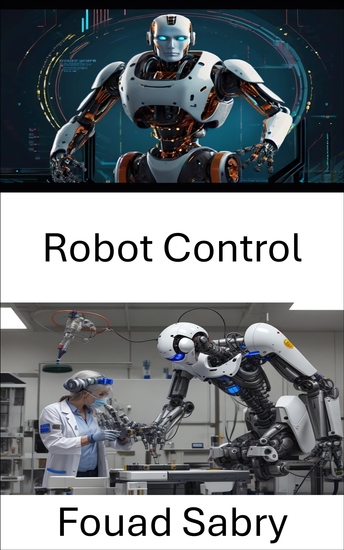
Robot Control - Advancing Autonomy through Intelligent Systems - cover
LER

Robot Control - Advancing Autonomy through Intelligent Systems

Fouad Sabry

Editora: One Billion Knowledgeable

  • 0
  • 0
  • 0

Sinopse

1: Robot control: Delve into the fundamentals of controlling robotic systems, crucial for their functionality.
 
2: Robot: Explore the design, development, and operational aspects of robots in various fields.
 
3: Autonomous robot: Learn how robots operate independently, revolutionizing industries like healthcare and transportation.
 
4: Laparoscopy: Discover the role of robotics in minimally invasive surgery, enhancing precision and recovery time.
 
5: Military robot: Examine the growing use of robotics in defense, from surveillance to autonomous combat.
 
6: Remote surgery: Understand the breakthrough applications of remotecontrolled surgery, enabling precision from afar.
 
7: AI takeover: Investigate the possibilities and risks of AI surpassing human intelligence in robotics.
 
8: Business process automation: See how robotics and AI are streamlining business operations, driving efficiency.
 
9: Minimally invasive procedure: Understand how robots are transforming medical procedures, reducing risks and recovery time.
 
10: Robot ethics: Delve into the ethical concerns surrounding robotics, from autonomy to accountability.
 
11: Ethics of artificial intelligence: Analyze the moral implications of AI, particularly in decisionmaking and autonomy.
 
12: Applications of artificial intelligence: Discover AI’s impact across industries, from healthcare to finance.
 
13: ZEUS robotic surgical system: Explore the ZEUS system’s role in revolutionizing robotic surgery for greater accuracy.
 
14: Machine ethics: Learn about the emerging field of machine ethics, ensuring robots make morally sound decisions.
 
15: Lethal autonomous weapon: Examine the dangers and debates surrounding robots with the potential for autonomous warfare.
 
16: Campaign to Stop Killer Robots: Understand the global movement to prevent the militarization of robotics and AI.
 
17: Mobile industrial robots: Investigate how robots are enhancing industrial efficiency through mobility and automation.
 
18: AI takeover in popular culture: Explore how popular media portrays the rise of AI and its impact on public perception.
 
19: Artificial intelligence arms race: Study the geopolitical implications of AI development in global military strategies.
 
20: Android (robot): Learn about humanoid robots designed to resemble humans, pushing the boundaries of robotics.
 
21: Humanoid robot: Explore the cuttingedge technologies involved in creating robots that mimic human appearance and behavior.
Disponível desde: 09/12/2024.
Comprimento de impressão: 247 páginas.

Outros livros que poderiam interessá-lo

  • Introduction to General Relativity - Basic Concepts and Applications of General Relativity - cover

    Introduction to General...

    Mark Hedges

    • 0
    • 0
    • 0
    General Relativity, proposed by Albert Einstein in 1915, revolutionized our understanding of gravity. It describes gravity not as a force in the traditional sense, as in Newtonian physics, but as a curvature of spacetime caused by mass and energy. This groundbreaking theory was not only a significant departure from previous models of gravity but also the foundation for modern cosmology and astrophysics. 
    At the core of General Relativity is the concept that massive objects like planets, stars, and galaxies bend the fabric of spacetime around them. This curvature influences the movement of objects within it, including light, which explains phenomena such as gravitational lensing, where light bends around massive objects. The equation that governs this curvature is Einstein’s famous field equation, which mathematically relates the geometry of spacetime to the energy and momentum of whatever matter and radiation are present. 
    Before Einstein’s work, gravity was understood in terms of Newton’s law of universal gravitation, which described gravitational force as an instantaneous action at a distance between two masses. While this model worked well for many practical applications, it had limitations, especially in extreme conditions such as those near very massive objects or moving at high velocities. General Relativity resolved these issues by providing a more accurate description of gravitational phenomena, particularly in scenarios involving high gravitational fields, such as near black holes or in the context of cosmology.
    Ver livro
  • Deer Man - Seven Years of Living in the Wild - cover

    Deer Man - Seven Years of Living...

    Geoffroy Delorme

    • 0
    • 0
    • 0
    Geoffroy Delorme does not fit in the human world. As he gets older, he disappears into the woods at night, drawn to animal life. One night, an encounter with a deer changes his life: from then on, he knows he wants to live among them. 


    Delorme becomes a creature of the forest. He learns to live without a tent or sleeping bag and forage for food. He blends in with the deer and, slowly, they accept him. He witnesses their births and deaths, courtship and battles, ostracism and friendship over the cycles of their lives. Among the deer, he experiences the beauty, pain, fear, and joy of a life lived as a part of nature. 


    In his final year in the forest, Delorme meets a woman walking through the trees. He knows he can stay in the forest and die with his friends—or he can leave and speak their truth to a human world. 


    Deer Man is a moving story of what it's like to be an outsider and how forming connections with the natural world can help us feel less alone. A unique and powerful window into how far one human is willing to go to understand an animal, Deer Man asks us to never take for granted the flora and fauna of our world, and to work for their protection in whatever ways we can.
    Ver livro
  • Why Elephants Cry - How Observing Unusual Animal Behaviours Can Predict the Weather (and Other Environmental Phenomena) - cover

    Why Elephants Cry - How...

    John T. Hancock

    • 0
    • 0
    • 0
    Why Elephants Cry is a fascinating frolic through the literature and evidence surrounding the use of unusual behavior of animals to measure and predict the environment. The role of animals, from the smallest ant to the biggest elephant, as predictors of environmental changes is framed around the climate crisis, which highlights the increasingly important part that animals will have to play in the future. 


    Renowned biologist Professor John T. Hancock collects anecdotal stories and myths along with scientific evidence, demonstrating that observation of animals can be of tangible use. He looks at the measurement of the air temperature using ants, crickets, and snakes, and goes on to assess the evidence that the observation of a wide range of animals can predict the weather or the imminent eruption of volcanoes and earthquakes. Evidence of animals being able to predict lunar and solar events, such as lunar cycles and the Northern Lights, is also considered. 


    This is the only time that all this literature has been brought together in one place, a fascinating reference for anybody interested in animals and the environment. The book is also an ideal supplementary textbook for students studying animal behavior.
    Ver livro
  • The Dark Energy Puzzle - Piecing Together the Forces of the Cosmos - cover

    The Dark Energy Puzzle - Piecing...

    Dirk Fallon

    • 0
    • 0
    • 0
    In the late 1990s, astronomers made a discovery that completely changed our understanding of the universe. While studying distant supernovae to measure how fast the universe was expanding, researchers expected to see signs that the expansion was slowing down due to gravity. Instead, they found the opposite—the expansion was speeding up. This unexpected observation pointed to something completely unknown, an unseen force that counteracts gravity and drives galaxies apart at an accelerating rate. That force was given the name "dark energy." 
    The term "dark" doesn't mean this energy is black or shadowy, but rather that it's unknown and mysterious. Scientists still don’t know what it really is, only that it seems to make up around 68 percent of the total energy in the universe. That’s a huge amount, especially considering that everything we can see—stars, planets, gas, dust—makes up less than 5 percent. The rest is made of dark matter, another unknown component, but dark energy is even more puzzling. It doesn’t clump like matter does, and it seems to be spread evenly through space. 
    Astronomers began piecing this together by observing Type Ia supernovae, which are exploding stars that always reach roughly the same brightness. Because of that consistency, they can be used like cosmic measuring sticks. When scientists looked at supernovae that were billions of light-years away, they saw that those objects were dimmer than expected. That meant they were farther away than predicted, and the only explanation was that the universe had expanded more than anyone thought. It wasn’t just expanding—it was accelerating.
    Ver livro
  • Laughing Through The Shift: - A Nurse’s Guide To Finding Light In The Dark - cover

    Laughing Through The Shift: - A...

    Patrice M Foster

    • 0
    • 0
    • 0
    Do you struggle to find humor in your daily life, especially in high-stress environments like healthcare? 
    Are you looking for ways to lighten the mood and build stronger connections with your colleagues and patients? 
    If you’ve answered YES,Let this book help you master how to leverage the power of humor to deal with some of the life’s most challenging and tense environments – the hospital – and beyond! 
    In the hustle and bustle of the healthcare environment, finding humor may seem like an impossible task. Yet, humor isn't just about telling jokes; it's a powerful tool for coping with stress, building rapport, and maintaining mental well-being. Imagine navigating through long shifts and challenging situations with a smile on your face and a lighter heart. 
    Is it even possible? 
    How can humor positively impact the daily life of a nurse or healthcare provider? 
    What strategies can you as medic employ to infuse humor into your work environment? 
    This book will address all these and other related questions to empower you literally laugh through your shifts!In this book, you will discover: 
    ·      The surprising benefits of humor in healthcare settings 
    ·      Practical strategies to cultivate a positive sense of humor 
    ·      How humor can strengthen relationships and enhance patient care 
    ·      Techniques to navigate stress, burnout, and emotional overload 
    ·      Tips for maintaining work-life balance and preserving your emotional well-being 
    ·      So much more!
    Ver livro
  • Data-Driven Science and Engineering - Mastering the Art of Data-Driven Decision Making - cover

    Data-Driven Science and...

    SAM CAMPBELL

    • 0
    • 0
    • 0
    In the modern era, where data is the new gold, "Data-Driven Science and Engineering: Mastering the Art of Data-Driven Decision Making" serves as a comprehensive guide to harnessing the power of data for scientific inquiry and engineering innovation. This book bridges the gap between theoretical knowledge and practical application, offering a deep dive into the methodologies and tools that enable effective data analysis and decision-making processes. 
    Authored by leading experts in data science and engineering, this book is designed for a broad audience, from beginners seeking to understand the basics of data-driven techniques to professionals aiming to enhance their decision-making skills. It covers a wide range of topics, including the fundamentals of data collection and analysis, advanced statistical methods, machine learning algorithms, and the latest in artificial intelligence technologies. 
    "Data-Driven Science and Engineering" not only equips readers with the necessary tools and techniques but also explores the ethical and regulatory considerations of data usage. It emphasizes the importance of transparency, fairness, and accountability in data-driven decision-making, ensuring readers are well-versed in navigating the complexities of the digital age. 
    "Data-Driven Science and Engineering: Mastering the Art of Data-Driven Decision Making" is an invaluable resource for mastering the skills necessary to thrive in a data-centric world. This book will empower you to make informed decisions, optimize processes, and lead projects to success with confidence and precision. 
     
    Ver livro
