Join us on a literary world trip!
Add this book to bookshelf
Grey
Write a new comment Default profile 50px
Grey
Subscribe to read the full book or read the first pages for free!
All characters reduced
Representative Democracy - Exploring the Foundations and Future of Electoral Systems - cover

Representative Democracy - Exploring the Foundations and Future of Electoral Systems

Fouad Sabry

Publisher: One Billion Knowledgeable

  • 0
  • 0
  • 0

Summary

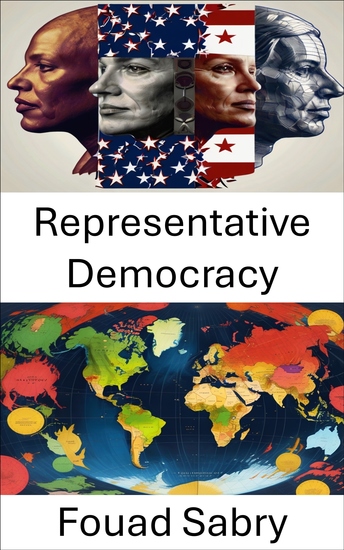
Explore the essential concepts of governance with "Representative Democracy," a key volume in the "Political Science" series. This book offers a thorough analysis of representative governance, its development, and its relevance today. Ideal for students, professionals, and enthusiasts, it provides crucial insights into how representative democracy influences our world.
 
Chapters Highlights:
 
1. Representative Democracy: Foundations and principles.
 
2. Democracy: Various forms and theoretical foundations.
 
3. Government: Structure and function in representative systems.
 
4. Republic: Integration with representative democracy and historical evolution.
 
5. Parliamentary System: Role, advantages, and challenges.
 
6. History of Parliamentarism: Evolution and modern impact.
 
7. Participatory Democracy: Intersection and citizen involvement.
 
8. Liberal Democracy: Core values and influence on representative governance.
 
9. Criticism of Democracy: Strengths and weaknesses.
 
10. Types of Democracy: Manifestations in different contexts.
 
11. Monarchy: Relationship and adaptation within democratic frameworks.
 
12. Direct Democracy: Comparison with representative systems.
 
13. Forms of Government: Overview and context for representative democracy.
 
14. Mixed Government: Combining representative democracy with other systems.
 
15. History of Democracy: Development of democratic systems.
 
16. Nepalese Democracy Movement: Case study of representative democracy.
 
17. Sortition: Potential role in enhancing representation.
 
18. Liquid Democracy: Blending representative and direct democracy.
 
19. Citizens' Assembly: Role and impact on policy-making.
 
20. Outline of Political Science: Key concepts related to representative democracy.
 
21. Oral Democracy: Implications for governance.
 
"Representative Democracy" is your gateway to understanding the mechanisms shaping our societies. Invest in your knowledge and explore the impact of representative democracy today.
Available since: 08/10/2024.
Print length: 355 pages.
Other books that might interest you

  • Gaffs: Why No One Can Get a House and What We Can Do About It - cover

    Gaffs: Why No One Can Get a...

    Rory Hearne

    • 0
    • 0
    • 0
    The book that has been waiting to be written – how Ireland’s housing policy has locked an entire generation out of the housing market and what we should do about it. 
    Millennials are the first generation in Ireland to be worse off than their parents. Trapped in a game of rental roulette, stuck living at home as adults, and many on the brink of homelessness, the Irish housing crisis has defined the lives of an entire generation – and it is set to continue. 
    With housing costs in Ireland the highest in the EU, the property ladder has been kicked from under thousands. So how did we get here … and how do we break the cycle? 
    In Gaffs, housing expert Rory Hearne urges us to think about the people behind the statistics, and shows us that there is a way towards a future where everyone has access to a home. 
    In Gaffs, Rory Hearne, a renowned expert in sociology and economics, delves into the heart of the Irish housing crisis, exposing the economic disparity and social classes struggle. He presents a compelling argument, backed by top-notch research, about the dire need for a shift in public policy. 
    For fans of Rashid Khalidi (The Hundred Years' War on Palestine), Alex Thompson (Original Sin), Michael J. Sandel (The Tyranny of Merit), Yuval Noah Harari (Sapiens), and David Graeber (Pirate Enlightenment, or the Real Libertalia). 
    HarperCollins 2022
    Show book
  • The Civic Bargain - How Democracy Survives - cover

    The Civic Bargain - How...

    Josiah Ober, Brook Manville

    • 0
    • 0
    • 0
    A powerful case for democracy and how it can adapt and survive—if we want it to 


    Is democracy in trouble, perhaps even dying? Pundits say so, and polls show that most Americans believe that their country's system of governance is being "tested" or is "under attack." But is the future of democracy necessarily so dire? In The Civic Bargain, Brook Manville and Josiah Ober push back against the prevailing pessimism about the fate of democracy around the world. Instead of an epitaph for democracy, they offer a guide for democratic renewal, calling on citizens to recommit to a "civic bargain" with one another to guarantee civic rights of freedom, equality, and dignity. That bargain also requires them to fulfill the duties of democratic citizenship: governing themselves with no "boss" except one another, embracing compromise, treating each other as civic friends, and investing in civic education for each rising generation. 


    Manville and Ober trace the long progression toward self-government through four key moments in democracy's history: Classical Athens, Republican Rome, Great Britain's constitutional monarchy, and America's founding. Comparing what worked and what failed in each case, they draw out lessons for how modern democracies can survive and thrive.
    Show book
  • What Is Property? - An Inquiry into the Principle of Right and of Government - cover

    What Is Property? - An Inquiry...

    Pierre-Joseph Proudhon

    • 0
    • 0
    • 0
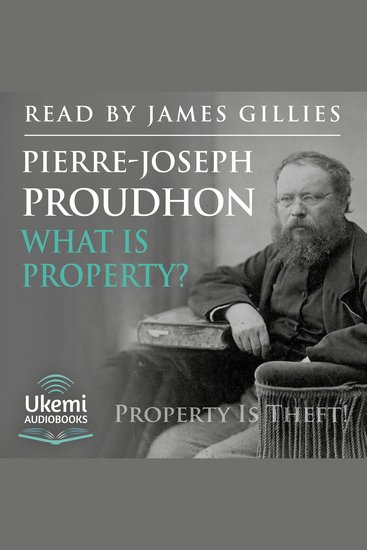
    ‘Property is Theft’, a phrase which has passed into common parlance, was the rallying call of Pierre-Joseph Proudhon’s political treatise What Is Property? Proudhon (1809-1865) was both admired and excoriated. A political theorist of the first order, he was vilified in his native France by the Communists and the Monarchists alike, though admired by Karl Marx as well as many in the nation’s academia and judiciary who valued the clarity of his thought and analytical method.  
     
    He criticised both Right and Left (the very definition of French political thinking), describing them as two sides of the same coin. Their solutions to society’s ills, he said, were like Thesis and Antithesis, based on a common error and both inadequate to the task of healing society. He offered, instead, a third way, which he called his Synthesis. Regarded as the founder of modern Anarchism, his aim was not to engender chaos, as the word anarchy often connotes, but to suggest a workable, political, and economic foundation for society which would promote order and equity for all under the most unfettered conditions of individual liberty.  
     
    Proudhon grew up in poverty, and was home schooled as a child, but received a bursary in his youth sufficient to allow him to attend the City College in his home town (though not sufficient, it seems, to buy him shoes). There, he discovered the library which introduced him to a world, classical and contemporary, previously denied him. Lacking wealth or contacts, he worked variously as a printer, a compositor and proof-reader by day and an essayist by night, learning Latin along the way to assist in his work. In 1830, a friend, a scholar, invited Proudhon to join him in Paris to pursue his philosophical writings full time. When a cholera outbreak forced his return home, Proudhon spent the next few years juggling his two careers. In 1839, he applied for a pension (bursary) at the Academy of Besançon which obliged him to write works on its behalf.  
     
    What Is Property?, published in France in 1840, was his first. It was so controversial that little else followed. However, it established his reputation, and he was eventually able to pursue his philosophical work full time. What Is Property? (First Memoir) attempts to uncover the roots of poverty and associated social ills and examines different attitudes to poverty and wealth from the Greeks to the present day. Proudhon quickly identifies a common thread, property, which he distinguishes from possession, and argues that only a fundamental, though gradual, abandonment of property (as an asset) and all that flows from it, can rescue society from its current conflicts. The memoir seeks to illuminate the underlying causes of war, poverty, slavery, and oppression and points the way to a solution. In effect, it is a practical manual for the survival of mankind. The Second Memoir (1841), included on this recording, is Proudhon’s response to the criticisms of the First Memoir, initially uncomprehending and then self-assured by turns. What Is Property? is Proudhon’s masterwork. It divides opinion, but no one who hears it can come away with their view of their own world unchanged.  
     
    Translation: Benjamin R. Tucker.
    Show book
  • Saga of Erik the Red (Reeves Translation) - cover

    Saga of Erik the Red (Reeves...

    Various Various

    • 0
    • 0
    • 0
    The Saga of Erik the Red is one of the two important thirteenth-century accounts of the Norse explorations of Greenland and North America, along with The Saga of the Greenlanders. Containing fantastic anecdotes about ghostly visitations, wise women-seers, and one-legged native Unipeds, the saga is just as fascinating for what is clearly authentic history. It vividly relates the conflict between Christianity and the old Norse religion; the significant place of extraordinary women in Icelandic and Greenland culture; the frequent incursions of the Norsemen into Ireland and Scotland, lands really not at all far from the centers of Norse activity; and first contact with the native inhabitants of the Dawnlands of northeastern North America. Most absorbing are the clear embodiments of real human personalities in this historical saga: Leif Erikson and his lover, the renownedly intelligent Thorgunna who boldly renounced social convention; Gudrid the daughter of Thorbiorn, beautiful and of strong and influential character; Thioldhild, the wife of Erik the Red, who refused to have sex with him so long as he resisted Christianity; Thorbiorg, the eldritch “Little Sibyl,” who dispensed prophecies to the settlers of Greenland; and Thorhall, the fey, untameable hunter, who held fast to his god Thor the Red-Bearded even when it meant being severed from human society.This translation by Arthur Middleton Reeves is taken from a weighty compilation of texts related to the Norse explorations entitled The Norse Discoveries of America and including the translations and editing of fellow Norse scholars North Ludlow Beamish and Rasmus Björn Anderson. ( Expatriate)
    Show book
  • Albert Einstein’s "Why Socialism?" - The Enduring Relevance of His Classic Essay - cover

    Albert Einstein’s "Why...

    Albert Einstein

    • 0
    • 0
    • 0
    A contemporary look at Albert Einstein's classic call for socialism 


    First published more than seventy-five years ago in the inaugural issue of Monthly Review: An Independent Socialist Magazine, Albert Einstein's "Why Socialism?" is an unheralded classic. Written during the McCarthyite witch-hunt in the United States, it constituted an act of defiance, making a case for socialism unrivaled in its time or ours. Yet, its very existence has been an embarrassment to an establishment which has continually sought to downplay the significance of his iconoclastic essay, together with Einstein's socialism itself. 


    This volume includes Einstein's essay along with a detailed commentary on his essay by Monthly Review editor, John Bellamy Foster. Foster's introduction tells the story of Einstein's life-long commitment to socialism and the events leading to the publication of "Why Socialism?" and contextualizes the importance of his essay as we enter a time of planetary crisis and new threats of world war. Over the three-quarters of century since its publication, "Why Socialism?" is one of those rare statements whose power has only grown, reaching untold numbers of readers over the years. It is of crucial importance that―for the sake of the future of humanity―Einstein's message continues to proliferate.
    Show book
  • Controversial Essays - cover

    Controversial Essays

    Thomas Sowell

    • 0
    • 0
    • 0
    One of conservatism's most articulate voices dissects today's most important economic, racial, political, education, legal, and social issues, sharing his entertaining and thought-provoking insights on a wide range of contentious subjects.
    Show book