Join us on a literary world trip!
Add this book to bookshelf
Grey
Write a new comment Default profile 50px
Grey
Subscribe to read the full book or read the first pages for free!
All characters reduced
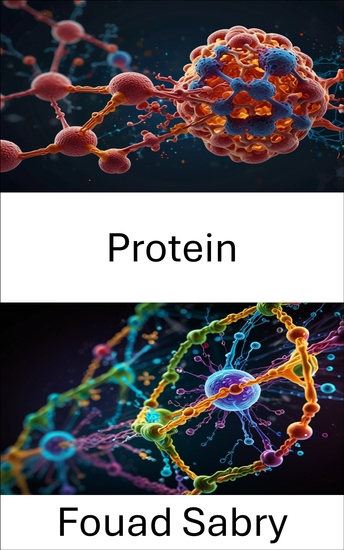
Protein - Structural Dynamics and Functional Interactions at the Molecular Level - cover

Protein - Structural Dynamics and Functional Interactions at the Molecular Level

Fouad Sabry

Publisher: One Billion Knowledgeable

  • 0
  • 0
  • 0

Summary

"Protein" is a comprehensive exploration of the molecular foundations of proteins, offering an indepth look at the biochemical and biophysical aspects of these crucial molecules. In the field of Molecular Biophysics, understanding proteins is not just an academic pursuit but essential for advancing research in biochemistry, biotechnology, and medicine. This book is designed for professionals, undergraduate and graduate students, as well as enthusiasts and hobbyists who seek a deep dive into the complex world of proteins.
 
Chapters Brief Overview:
 
1: Protein: An introduction to the fundamental role of proteins in biological systems, detailing their diversity and functions.
 
2: Protein primary structure: A detailed look at amino acid sequences and how they define protein function.
 
3: Protein biosynthesis: Explores the intricate process of translating genetic information into functional proteins.
 
4: Protein targeting: Covers the mechanisms by which proteins are directed to specific locations within a cell.
 
5: Ribosome: Delve into the ribosome's structure and its role in protein synthesis.
 
6: Central dogma of molecular biology: Explains how genetic information flows from DNA to RNA to protein, forming the basis of molecular biology.
 
7: Fluorescent tag: Discusses the application of fluorescent labels to study proteins in realtime, advancing cellular biology research.
 
8: Translation (biology): Details the process by which ribosomes synthesize proteins, turning genetic code into functional molecules.
 
9: Biomolecule: Introduces the concept of biomolecules, emphasizing proteins as key players in cellular functions.
 
10: Structural bioinformatics: Highlights how computational tools are used to predict and analyze protein structures.
 
11: Protein structure: Examines the hierarchical organization of proteins, from primary to quaternary structure, and its implications.
 
12: Chemical biology: Explores the intersection of chemistry and biology, with a focus on protein interactions.
 
13: Intrinsically disordered proteins: Investigates proteins that lack a fixed structure and their functional importance in cell biology.
 
14: Gene product: Discusses the end result of gene expression, focusing on proteins as the primary gene products.
 
15: ATPbinding motif: Details the ATPbinding motifs within proteins and their role in energy transfer.
 
16: Biomolecular structure: Explores the broader concept of biomolecular structures, highlighting their relevance to protein function.
 
17: Molecular biophysics: Provides insights into how physical principles are applied to understand the behavior of proteins and other biomolecules.
 
18: Protein metabolism: Discusses the processes by which proteins are synthesized, degraded, and recycled in cells.
 
19: History of RNA biology: Traces the development of RNA biology, connecting it to the understanding of protein function.
 
20: Amino acid: Explores the building blocks of proteins, focusing on their chemical properties and how they determine protein function.
 
21: Posttranslational modification: Examines the chemical modifications proteins undergo after translation, affecting their activity and function.
 
By reading "Protein," you will not only gain crucial insights into the biophysics of proteins but also deepen your understanding of their vital roles in biological systems. This knowledge is pivotal in fields ranging from biotechnology to medicine, offering value far beyond the cost of this book. The fusion of theory and application makes it indispensable for anyone passionate about molecular biophysics and the cuttingedge research driving scientific progress.
Available since: 03/12/2025.
Print length: 322 pages.
Other books that might interest you

  • The Things We Make - The Unknown History of Invention from Cathedrals to Soda Cans - cover

    The Things We Make - The Unknown...

    Bill Hammack

    • 0
    • 0
    • 0
    Discover the secret method used to build the world . . . 


    For millennia, humans have used one simple method to solve problems. Whether it's planting crops, building skyscrapers, developing photographs, or designing the first microchip, all creators follow the same steps to engineer progress. But this powerful method, the "engineering method", is an all but hidden process that few of us have heard of—let alone understand—but that influences every aspect of our lives. 


    Bill Hammack, a Carl Sagan Award–winning professor of engineering and viral "The Engineer Guy" on YouTube, has a lifelong passion for the things we make, and how we make them. Now, for the first time, he reveals the invisible method behind every invention and takes us on a whirlwind tour of how humans built the world we know today. From the grand stone arches of medieval cathedrals to the mundane modern soda can, Hammack explains the golden rule of thumb that underlies every new building technique, every technological advancement, and every creative solution that leads us one step closer to a better, more functional world. Spanning centuries and cultures, Hammack offers a fascinating perspective on how humans engineer solutions in a world full of problems.
    Show book
  • The Great Dead Body Teachers - cover

    The Great Dead Body Teachers

    Jackie Dent

    • 0
    • 0
    • 0
    An adventure into the world of anatomy and dissection. 
    Since I was a child, I’ve been interested in dead bodies. When I was eight years old, I dug up the remains of my pet budgie Zazbut. He had been buried for about eight weeks in a patch of grass outside our house in Dasmarinas, a fortified village in Manila, in the Philippines. 
     
    ‘The first exhumation was the beginning of my intrigue with death, which has persisted. As a journalist, I’ve written about graveyards, funerals and death doulas. I always visit the local cemetery wherever I am in the world. But one thing that has largely been hidden from me in this death trip is the dead body. 
     
    Dissection might not be a normal topic to contemplate but when both your paternal grandparents donate their bodies to science it does intermittently cross your mind. 
     
    This is the story of how Jackie Dent’s grandparents - Ruby and Julie - gave their bodies to science when they died. No one in her family seems to know why, or what really happened with their bodies afterwards. Were they avid science buffs? Was it to save on cremation costs? How do scientists tackle the practicalities and ethics of cutting up the dead for research? And who are body donors generally? 
      
    Weaving the personal with the history of anatomy and the dissected, Jackie Dent explores the world of whole-body donation — all the while looking for answers as to what happened to her grandparents.
    Show book
  • The Medicine Chest - A Physician's Journey Towards Reconciliation - cover

    The Medicine Chest - A...

    Jarol Boan

    • 0
    • 0
    • 0
    An examination of the barriers facing Indigenous people within the healthcare system from the perspective of an empathetic settler physician 
    After leaving her medical practice in Pennsylvania in 2011, Jarol Boan returned to her childhood home in Saskatchewan, Canada to practice medicine. There she found a healthcare system struggling with preventable chronic diseases and institutional racism. Shocked by the high rate of preventable diseases in her patients, Boan realized that a paternalistic deficit model does not support Indigenous communities. Through working to provide medical services in Indigenous communities and learning firsthand from her Indigenous patients, Boan embarked on a road to enlightenment and reconciliation. 
    In The Medicine Chest, Boan exposes the healthcare disparities in a country that prides itself on an equitable healthcare system and examines the devastating effects of diabetes, the myth of “the drunken Indian,” the inner workings of hospitals, Missing and Murdered Indigenous Women and Girls, epidemics on reserves, and residential school trauma. Exploring the intersectionality of common diseases and social determinants of health gained from her experience of caring for Indigenous patients, Boan weaves historical data, comments on health policy, and jurisdictional gaps into the narrative while investigating how Canada’s healthcare system is failing those most in need.
    Show book
  • Principles of Economics by Alfred Marshall - cover

    Principles of Economics by...

    ALFRED MARSHALL

    • 0
    • 0
    • 0
    The principles of economics are the foundational concepts that explain how people, businesses, and governments manage scarce resources to satisfy unlimited wants. Most modern introductions, such as the one found in Gregory Mankiw's Principles of Economics, categorize these ideas into three main levels of analysis.
    Show book
  • Mastering Large Language Models - An Essential Guide to Understanding and Implementing AI - cover

    Mastering Large Language Models...

    Virversity Online Courses

    • 0
    • 0
    • 0
    Explore the transformative world of large language models with our comprehensive course designed to provide essential knowledge and skills. Dive into foundational concepts, architecture, and applications to understand the impact of this revolutionary technology.Master Large Language Models for Real-World Applications:- Build a strong foundation in language model principles and their historical development.- Gain insights into their powerful architecture and core components.- Understand text tokenization and word embeddings to enhance efficiency.- Explore ethical considerations and future directions.- Acquire practical skills through hands-on model evaluation and fine-tuning.Large language models are revolutionizing AI, transforming how machines understand and generate human language. Start with foundational concepts, history, and architectural structures. Intermediate modules cover tokenization and word embeddings to improve performance, and explore popular models, datasets, and training techniques. We address ethical challenges in deploying language models, highlighting responsibilities.The course emphasizes practical application through hands-on practice. Evaluate and fine-tune a simple language model, gaining skills for real-world applications. Learn to integrate models into applications, leveraging their potential in your projects.By the end, you'll harness large language models' transformative power, understanding their technical and ethical implications. Be prepared to navigate the complexities of these models and innovate in your field.
    Show book
  • The Ministry of Truth - cover

    The Ministry of Truth

    James G. Edwards II

    • 0
    • 0
    • 0
    What if George Orwell's 1984 wasn't a warning, but a blueprint? 
    In 1949, George Orwell painted a chilling portrait of a totalitarian future where Big Brother watched every move, the Ministry of Truth rewrote history, and thoughtcrime was punishable by death. Seventy-five years later, his dystopian nightmare has become our digital reality—and we handed over the keys willingly. 
    Welcome to the age of voluntary surveillance. 
    Your smartphone tracks your location 24/7. Social media algorithms know your political beliefs before you do. Search engines decide which version of reality you see. Tech giants possess more power than most governments, and they're using Orwell's playbook to maintain control. 
    The Ministry of Truth is a disturbing examination of how Orwell's fictional instruments of oppression have been perfected in the digital age: 
    • Big Brother 2.0: How smartphones, smart homes, and wearable devices created a surveillance network that makes telescreens look quaint 
    • Digital Newspeak: How algorithms manipulate language and thought, creating echo chambers that would make the Ministry of Truth proud 
    • The Memory Hole Goes Viral: How information disappears from the internet, history gets rewritten in real-time, and inconvenient truths vanish forever 
    • Thoughtcrime Enforcement: How cancel culture, deplatforming, and social credit systems punish dissent with surgical precision 
    • The Two Minutes Hate, 24/7: How social media platforms profit from outrage, amplify division, and keep us perpetually angry at each other 
    But this book isn't just a catalog of horrors it's a roadmap to resistance. Drawing from privacy advocates, digital rights activists, and freedom fighters around the world, Edwards shows how individuals can reclaim their cognitive autonomy and digital privacy. 
    The question isn't whether we're living in 1984 we are. The question is what we're going to do about it.
    Show book