Join us on a literary world trip!
Add this book to bookshelf
Grey
Write a new comment Default profile 50px
Grey
Subscribe to read the full book or read the first pages for free!
All characters reduced
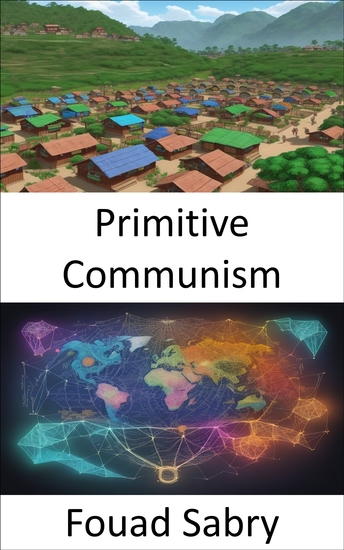
Primitive Communism - Rediscovering Our Egalitarian Roots a Journey into Primitive Communism - cover

Primitive Communism - Rediscovering Our Egalitarian Roots a Journey into Primitive Communism

Fouad Sabry

Publisher: One Billion Knowledgeable

  • 0
  • 0
  • 0

Summary

What is Primitive Communism
 
Primitive communism is a term that is used to describe the gift economies that have been used by hunter-gatherers throughout history. In these economies, the resources and property that have been hunted or collected are distributed among all members of a group in accordance with their particular requirements. In the fields of political sociology and anthropology, it is also a term that depicts hunter-gatherer communities as traditionally being built on egalitarian social relations and shared ownership rather than hierarchical social structures. Lewis H. Morgan's descriptions of "communism in living" as it was practiced by the Haudenosaunee of North America served as a significant source of inspiration for both Marx and Engels. Societies that practiced primitive communism, according to Marx's description of socioeconomic structures, did not have hierarchical social class structures or capital accumulation.
 
How you will benefit
 
(I) Insights, and validations about the following topics:
 
Chapter 1: Primitive communism
 
Chapter 2: Egalitarianism
 
Chapter 3: The Communist Manifesto
 
Chapter 4: Hunter-gatherer
 
Chapter 5: Christian communism
 
Chapter 6: Social stratification
 
Chapter 7: History of communism
 
Chapter 8: Marxism
 
Chapter 9: Common ownership
 
Chapter 10: Influences on Karl Marx
 
Chapter 11: Communism
 
Chapter 12: Eleanor Leacock
 
Chapter 13: Urgesellschaft
 
Chapter 14: Social market economy
 
Chapter 15: Pre-Marxist communism
 
Chapter 16: Marxist archaeology
 
Chapter 17: Marxist schools of thought
 
Chapter 18: Religious communism
 
Chapter 19: Utopian socialism
 
Chapter 20: Historical materialism
 
Chapter 21: Christopher Boehm
 
(II) Answering the public top questions about primitive communism.
 
(III) Real world examples for the usage of primitive communism in many fields.
 
Who this book is for
 
Professionals, undergraduate and graduate students, enthusiasts, hobbyists, and those who want to go beyond basic knowledge or information for any kind of primitive communism.
Available since: 01/09/2024.
Print length: 227 pages.
Other books that might interest you

  • Difficult People - Tools for Handling Toxic Stubborn and Manipulative Personalities - cover

    Difficult People - Tools for...

    Rowic Nelligan

    • 0
    • 0
    • 0
    Difficult People: Tools for Handling Toxic, Stubborn, and Manipulative PersonalitiesAre you exhausted from dealing with difficult people? Do you often find yourself unsure of how to handle challenging situations? You're in the right place—this audiobook is designed specifically for you!This audiobook is your ultimate guide to mastering the art of dealing with challenging individuals. Whether you’re facing a toxic coworker, a stubborn friend, or a manipulative partner, this audiobook offers powerful strategies and actionable techniques to help you take control of your interactions. Discover how to set firm boundaries, communicate with confidence, and protect your emotional well-being while navigating even the most difficult personalities. With insights rooted in psychology and real-world experience, this audiobook is a must-have resource for anyone looking to enhance their relationships and thrive in any environment. Don’t let difficult people drain your energy—equip yourself with the tools to turn conflict into cooperation and regain your peace of mind. Transform your approach to challenging situations and take the first step towards a more harmonious life.
    Show book
  • Narrative of the Life of Frederick Douglass - cover

    Narrative of the Life of...

    Frederick Douglass

    • 0
    • 0
    • 0
    Narrative of the Life of Frederick Douglass is an 1845 memoir and treatise on abolition written by famous orator and former slave Frederick Douglass during his time in Lynn, Massachusetts. It is generally held to be the most famous of a number of narratives written by former slaves during the same period. In factual detail, the text describes the events of his life and is considered to be one of the most influential pieces of literature to fuel the abolitionist movement of the early 19th century in the United States.
    Narrative of the Life of Frederick Douglass encompasses eleven chapters that recount Douglass's life as a slave and his ambition to become a free man. It contains two introductions by well-known white abolitionists: a preface by William Lloyd Garrison, and a letter by Wendell Phillips, both arguing for the veracity of the account and the literacy of its author.
    The most famous and inspirational works of Frederick Douglass include: Narrative of the Life of Frederick Douglass, an American Slave, My Bondage and My Freedom, Life and Times,  Letter to Thomas Auld, The Frederick Douglass Papers Edition and many more.
    Show book
  • Agile Project Management with Kanban - Enhancing Collaboration and Streamlining Workflows - cover

    Agile Project Management with...

    William Adams

    • 0
    • 0
    • 0
    Unlock the power of Kanban to revolutionize your project management approach with "Agile Project Management with Kanban: Efficient Workflows, Continuous Improvement." In this comprehensive guide, seasoned project management experts delve into the dynamic world of Agile methodologies and showcase how Kanban can be the game-changer for achieving unprecedented efficiency and continuous improvement in your projects. 
    Embark on a journey through the core principles of Kanban, a visual management system that promotes collaboration, flexibility, and transparency in project workflows. Through real-world examples and practical insights, this book equips you with the tools and techniques needed to seamlessly integrate Kanban into your Agile project management strategy. 
    "Agile Project Management with Kanban" provides the insights and strategies you need to elevate your projects to new heights of efficiency and success. Take the leap into the world of Agile with Kanban and revolutionize the way you approach project management.
    Show book
  • The Complete Guide to Pediatrics - Health and Disease in Children - cover

    The Complete Guide to Pediatrics...

    Ava Westwood

    • 0
    • 0
    • 0
    Pediatrics is the branch of medicine dedicated to the health and well-being of infants, children, and adolescents, focusing on preventive care, early disease detection, and the management of both acute and chronic conditions. It encompasses a broad range of medical care, from routine check-ups and immunizations to diagnosing and treating infections, congenital disorders, and developmental delays. Unlike adult medicine, pediatrics requires a specialized approach due to the unique physiological, psychological, and developmental needs of children. Pediatricians play a crucial role in ensuring children grow and develop optimally by monitoring milestones, providing nutritional guidance, and educating parents on best health practices. They also work closely with families and caregivers to address emotional and behavioral concerns, helping to create a supportive environment for a child’s overall well-being.  
    The scope of pediatrics extends to various subspecialties, including neonatology, pediatric cardiology, and pediatric neurology, which focus on specific medical conditions that require advanced expertise. Child development is a fundamental aspect of pediatrics, as growth occurs in distinct stages, each marked by significant physical, cognitive, and emotional changes. Early intervention in cases of developmental delays, genetic conditions, or chronic diseases can greatly improve long-term health outcomes.  
    Preventive care is a key pillar of pediatric medicine, with an emphasis on immunizations, nutrition, and health education to reduce the risk of disease and promote healthy lifestyles from infancy through adolescence. Pediatricians not only treat illnesses but also advocate for child safety, mental health support, and public health initiatives aimed at reducing childhood morbidity and mortality.
    Show book
  • Raise Your Roof - The Hidden Power of Your Potential - cover

    Raise Your Roof - The Hidden...

    Karl Subban, Elle Glencoe

    • 0
    • 0
    • 0
    Unlock the often-overlooked key to making positive and lasting change 
    For over three decades, Karl Subban has been honing his proven approach to resilience, perseverance and goal-setting—and bringing the best out of everyone. Every year we get bigger, but not necessarily better. Older, but not necessarily wiser. Despite our best efforts, we’re not always set up for success. And we can get stuck in a place where we don’t think it’s possible to dream, let alone dream big. 
    As a coach, an educator, an author and a father, Subban knows that understanding and believing in your own potential are key to making changes that matter, that bring purpose to our lives and the lives of those around us. Packed with proven strategies and including “raise their roof” playbooks for leaders, parents and educators, Raise Your Roof is an inspiring and practical guide to creating meaningful change, realizing goals and finding fulfillment. 
    The power of potential is that it’s your starting line, not your finish line. 
    Supplemental enhancement PDF accompanies the audiobook.
    Show book
  • Progressive Dystopia - Abolition Antiblackness and Schooling in San Francisco - cover

    Progressive Dystopia - Abolition...

    Savannah Shange

    • 0
    • 0
    • 0
    San Francisco is the endgame of gentrification, where racialized displacement means that the Black population of the city hovers at just over three percent. The Robeson Justice Academy opened to serve the few remaining low-income neighborhoods of the city, with the mission of offering liberatory, social justice-themed education to youth of color. While it features a progressive curriculum, including Frantz Fanon and Audre Lorde, the majority Latinx school also has the district's highest suspension rates for Black students. In Progressive Dystopia Savannah Shange explores the potential for reconciling the school's marginalization of Black students with its sincere pursuit of multiracial uplift and solidarity. Drawing on ethnographic fieldwork and six years of experience teaching at the school, Shange outlines how the school fails its students and the community because it operates within a space predicated on antiblackness. Seeing San Francisco as a social laboratory for how Black communities survive the end of their worlds, Shange argues for abolition over revolution or progressive reform as the needed path toward Black freedom.
    Show book