Join us on a literary world trip!
Add this book to bookshelf
Grey
Write a new comment Default profile 50px
Grey
Subscribe to read the full book or read the first pages for free!
All characters reduced
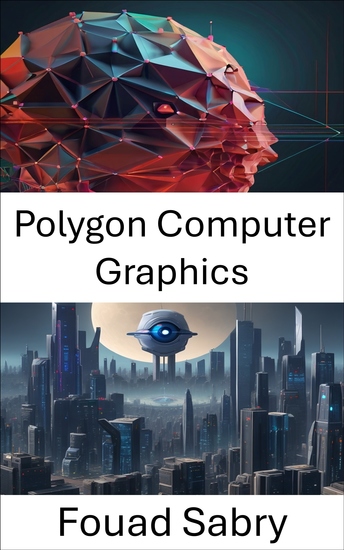
Polygon Computer Graphics - Exploring the Intersection of Polygon Computer Graphics and Computer Vision - cover

Polygon Computer Graphics - Exploring the Intersection of Polygon Computer Graphics and Computer Vision

Fouad Sabry

Publisher: One Billion Knowledgeable

  • 0
  • 0
  • 0

Summary

What is Polygon Computer Graphics
 
Polygons are used in computer graphics to compose images that are three-dimensional in appearance. Polygons are built up of vertices, and are typically used as triangles.
 
How you will benefit
 
(I) Insights, and validations about the following topics:
 
Chapter 1: Polygon (computer graphics)
 
Chapter 2: Wire-frame model
 
Chapter 3: Gouraud shading
 
Chapter 4: Binary space partitioning
 
Chapter 5: Texture mapping
 
Chapter 6: Shading
 
Chapter 7: Polygon mesh
 
Chapter 8: Shader
 
Chapter 9: Level of detail (computer graphics)
 
Chapter 10: Graphics pipeline
 
(II) Answering the public top questions about polygon computer graphics.
 
(III) Real world examples for the usage of polygon computer graphics in many fields.
 
Who this book is for
 
Professionals, undergraduate and graduate students, enthusiasts, hobbyists, and those who want to go beyond basic knowledge or information for any kind of Polygon Computer Graphics.
Available since: 05/14/2024.
Print length: 90 pages.

Other books that might interest you

  • A Year of Ebola - cover

    A Year of Ebola

    David Brett-Major

    • 0
    • 0
    • 0
    Who should read this book? Someone on their way out the door for their first or an early career health emergency and disaster risk management (HEDRM) experience, regardless of role, or someone who is trying to support one who is, or who does it all of the time and wants to know that they are not alone 
    What does this book tell the reader? It provides the shock of jumping into the cold water of health emergency and disaster risk management (HEDRM), without the risk of drowning; it focuses on practical aspects of the experience of doing the work that guidelines and playbooks (as important as they are) do not address 
    Who else might be interested in this book? People keen to understand how HEDRM happens in the context of highly communicable diseases, or about how global public health, emergencies, aid, and development mix, or medical history... the technical and contextual curious 
    Who should NOT read this book? Anyone who is looking for gory details 
    What is the main strength of this book? It is a raw view of the experience of conducting such responses at the clinical: public health interface, with some lessons durable across emergencies 
    What is the main weakness of this book? It carries all of the biases of such experiences. There is a lot not said; the book has snapshots and cannot relate the 10,000,000 events during the year not described 
    What is new in the 2024 edition? In print and e-book, overdue editing without loss of content, a forward that reflects on the COVID-19 pandemic in the context of themes in the book, and in the print edition available on www.amazon.com, a series of essays stepping back and exploring the ways in which people interact with the threat of infectious diseases that defines our willingness and readiness to meet them
    Show book
  • The One Thing You Need to Know - The Simple Way to Understand the Most Important Ideas in Science - cover

    The One Thing You Need to Know -...

    Marcus Chown

    • 0
    • 0
    • 0
    Rather than trying to bend your mind around all the vast and confounding details of things such as gravitational waves, electricity, and black holes, wouldn't it be easier to understand just one central concept from which everything else follows? 


    If you've ever found yourself fascinated by the idea of quantum computing but feel a little overwhelmed by the mind-blowing subject of quantum mechanics or concerned by climate change but haven't been able to get to grips with the details of global warming, this book is for you. Let's take atoms, for example—what on earth are they? Well, if you start to think of them less like things you can't see with complex little nuclei and more like the alphabet of nature, they might start to feel a little more understandable. Or gravitational waves—why are they creating so much excitement? Think of them as the voice of space, vibrations on the drumskin of space-time—before delving into all their complexities. 


    Chown explains the one thing you need to know to understand some of the most important scientific ideas of our time. Packed full of astounding facts, scientific history, and the entertaining personalities at the heart of the most pivotal discoveries about the workings of our universe, this is an accessible guide to all the tricky stuff you've always wanted to understand more about.
    Show book
  • Nightmare Fuel - The Science of Horror Films - cover

    Nightmare Fuel - The Science of...

    Nina Nesseth

    • 0
    • 0
    • 0
    Do you like scary movies? Have you ever wondered why? 


    In Nightmare Fuel, Nina Nesseth explores the strange and often unexpected science of fear through the lenses of psychology and physiology. How do horror films get under our skin? And why do we keep coming back for more? 


    Horror films promise an experience: fear. But how exactly do filmmakers pull this off? The truth is, there's more to it than just loud noises and creepy images. 


    With the affection of a true horror fan and the critical analysis of a scientist, Nesseth explains how audiences engage horror with both their brains and bodies, and teases apart the elements that make horror films tick. Nightmare Fuel covers everything from jump scares to creature features, serial killers to the undead, and the fears that stick around to those that fade over time. 


    With in-depth discussions and spotlight features of some of horror's most popular films—from classics like The Exorcist to modern hits like Hereditary—and interviews with directors, film editors, composers, and horror academics, Nightmare Fuel is a deep dive into the science of fear, a celebration of the genre, and a survival guide for going to bed after the credits roll.
    Show book
  • 100 Amazing Facts about Sharks - Mysteries and Wonders of Ocean Predators - cover

    100 Amazing Facts about Sharks -...

    Marc Dresgui

    • 0
    • 0
    • 0
    Discover the Fascinating World of Sharks with "100 Amazing Facts About Sharks"! Get ready to dive into the mysterious and captivating world of sharks with "100 Amazing Facts About Sharks". This book invites you to explore the wonders of these iconic marine creatures, revealing astonishing secrets and fascinating facts that will surprise you on every page. 🦈 
    Have you ever wondered:How the whale shark filters up to 8,000 liters of water each day?What the true size of the largest shark in the world is?Why the tiger shark is sometimes mistaken for a very different predator?How the hammerhead shark uses its head to detect its prey?What role the zebra shark's stripes play in its camouflage?How long a great white shark can live in the depths of the oceans?Why the goblin shark is so difficult to observe in the abyss? 
    This book is perfect for:Sparking curiosity in young readers: Discover incredible facts that will captivate the imagination of children and teenagers.Educating about conservation: Learn how these marine predators play a crucial role in ocean ecosystems and why it's essential to protect them.Stimulating interest in marine biology: Explore the amazing adaptations and unique behaviors of sharks in an accessible and engaging format.Encouraging independent reading: With a clear and engaging presentation, young readers can deepen their understanding of sharks on their own. 
    "100 Amazing Facts About Sharks" is more than just a book: it’s an immersion into the fascinating world of sharks that combines learning with entertainment.
    Show book
  • Sustainable Botany - Understanding Plants Sustainable Living and Ecological Systems (2 in 1) - cover

    Sustainable Botany -...

    Jeron Iris

    • 0
    • 0
    • 0
    This book contains the following titles: 
    Botany - Botany, the scientific study of plants, forms the cornerstone of our understanding of the natural world and is crucial to numerous fields such as agriculture, medicine, and environmental science. Plants are integral to life on Earth, providing oxygen, food, and raw materials. They play a fundamental role in the planet's ecosystems, supporting biodiversity and maintaining ecological balance. By examining plants in-depth, botany reveals their structures, functions, and the intricate relationships they have with other living organisms. At its core, botany seeks to answer key questions about how plants grow, develop, reproduce, and adapt to their environments. This branch of biology explores a wide range of plant life, from the microscopic algae and fungi to towering trees and flowering plants. The study of plants extends beyond their mere anatomy and physiology; it also includes their evolutionary history, classification, and their interactions with both biotic (living) and abiotic (non-living) factors. 
    Sustainability - Sustainability refers to the practice of maintaining processes and systems that support the well-being of both current and future generations. It encompasses a broad range of disciplines, from ecology and economics to social equity, focusing on long-term balance and responsible use of resources. At its core, sustainability strives for harmony between the environment, society, and economy, ensuring that each of these areas is addressed in ways that do not compromise the others. In the environmental context, sustainability involves careful management of natural resources to ensure that ecosystems remain viable for generations to come. This includes minimizing waste, reducing pollution, and encouraging the responsible use of land, water, and energy resources.
    Show book
  • Secure Software Design - cover

    Secure Software Design

    Saimon Carrie

    • 0
    • 0
    • 0
    "Secure Software Design: Advanced Strategies for Building Resilient and Secure Applications" delves into the intricacies of creating robust and secure software systems in an increasingly complex digital landscape. In this comprehensive guide, readers will explore advanced strategies and best practices for fortifying their applications against evolving cyber threats. 
    From understanding the principles of secure software design to implementing advanced security measures, this book equips developers, architects, and security professionals with the knowledge and techniques needed to protect their applications and data from malicious actors. Through practical examples, case studies, and expert insights, readers will learn how to:Apply secure coding principles and best practices to minimize vulnerabilities and exploits.Implement advanced authentication and authorization mechanisms, such as multi-factor authentication (MFA) and role-based access control (RBAC).Utilize encryption and secure communication protocols to safeguard data at rest and in transit.Incorporate security into the software development lifecycle (SDLC) through threat modeling, secure coding standards, and security testing.Leverage emerging technologies, such as AI and machine learning, to enhance threat detection and incident response capabilities.Navigate compliance requirements and regulatory frameworks, including GDPR, HIPAA, and PCI DSS. 
    This book provides invaluable insights and actionable strategies for building resilient and secure applications in today's cyber-threat landscape. 
     
    Show book