Join us on a literary world trip!
Add this book to bookshelf
Grey
Write a new comment Default profile 50px
Grey
Subscribe to read the full book or read the first pages for free!
All characters reduced
Political Warfare - Strategies and Tactics in Military Science - cover

Political Warfare - Strategies and Tactics in Military Science

Fouad Sabry

Publisher: One Billion Knowledgeable

  • 0
  • 0
  • 0

Summary

What is Political Warfare
 
Political warfare is the use of hostile political means to compel an opponent to do one's will. The term political describes the calculated interaction between a government and a target audience, including another state's government, military, and/or general population. Governments use a variety of techniques to coerce certain actions, thereby gaining relative advantage over an opponent. The techniques include propaganda and psychological operations ("PsyOps"), which service national and military objectives respectively. Propaganda has many aspects and a hostile and coercive political purpose. Psychological operations are for strategic and tactical military objectives and may be intended for hostile military and civilian populations.
 
How you will benefit
 
(I) Insights, and validations about the following topics:
 
Chapter 1: Political warfare
 
Chapter 2: CIA cryptonym
 
Chapter 3: Psychological warfare
 
Chapter 4: Black propaganda
 
Chapter 5: Unconventional warfare
 
Chapter 6: 1954 Guatemalan coup d'état
 
Chapter 7: Active measures
 
Chapter 8: Operation Neptune (espionage)
 
Chapter 9: Subversion
 
Chapter 10: Office of Policy Coordination
 
(II) Answering the public top questions about political warfare.
 
Who this book is for
 
Professionals, undergraduate and graduate students, enthusiasts, hobbyists, and those who want to go beyond basic knowledge or information for any kind of Political Warfare.
Available since: 05/27/2024.
Print length: 92 pages.


Other books that might interest you

  • Histology - Microscopic Anatomy and Tissue Structure - cover

    Histology - Microscopic Anatomy...

    Mike Crawford

    • 0
    • 0
    • 0
    Histology, often referred to as microscopic anatomy, is the branch of biology that focuses on the structure and organization of tissues at a cellular level. It serves as a bridge between anatomy and physiology, providing essential insights into how tissues function and interact within the body. Through histological studies, scientists and medical professionals gain a deeper understanding of normal tissue architecture, which is crucial for diagnosing diseases, developing treatments, and advancing medical research.  
    The significance of histology extends beyond academic interest—it plays a fundamental role in medicine, particularly in pathology. By examining tissue samples under a microscope, pathologists can detect abnormalities that indicate infections, genetic disorders, or cancerous growths. This microscopic analysis helps in early diagnosis and targeted treatments, improving patient outcomes. Additionally, histology contributes to the fields of pharmacology and biotechnology, where understanding tissue responses to drugs and therapies is essential for innovation.  
    Studying histology requires specialized techniques and tools to visualize tissue structures. Microscopes, ranging from simple light microscopes to advanced electron microscopes, allow researchers to examine the intricate details of cells and their components. To enhance visibility, tissues are typically stained with chemical dyes such as hematoxylin and eosin (H&E), which highlight cellular structures in contrasting colors. Immunohistochemistry, a more advanced technique, uses antibodies to detect specific proteins within tissues, aiding in more precise medical diagnoses. 
    Show book
  • Denver the (not so) Great - cover

    Denver the (not so) Great

    B. E. Baker

    • 0
    • 0
    • 0
    A compelling story of one family's determination to save their grumpy old horse against all odds. 
    The Baker family bought Denver to be a family horse, and he took care of their children for several years as well as he could. So when, in a freak trailer accident, Denver injured himself badly, the family was upset. 
    Denver's girl, Tessa, was devastated.  
    Sadly, his injury was difficult to diagnose, and once they finally figured out what was wrong, it was so rare that it didn't really have an established treatment. The vets suggested the Bakers put him down, since he was old, and frankly, not so great. He hadn't been expnsive, and the experimental treatment they thought might save him was risky, long term, and expensive.  
    The Baker family decided to take a gamble on their beloved horse anyway.  
    The decision changed all their lives, and it blessed them in ways they never expected. Join Denver and Bridget as they tell the story from dual POVs. It will break your heart, but it will heal it again and then some.
    Show book
  • NASA’s Space Race Programs: The History and Legacy of NASA Missions in the 1950s and 1960s - cover

    NASA’s Space Race Programs: The...

    Editors Charles River

    • 0
    • 0
    • 0
    Today the Space Race is widely viewed poignantly and fondly as a race to the Moon that culminated with Apollo 11 “winning” the Race for the United States. In fact, it encompassed a much broader range of competition between the Soviet Union and the United States that affected everything from military technology to successfully launching satellites that could land on Mars or orbit other planets in the Solar System. Moreover, the notion that America “won” the Space Race at the end of the 1960s overlooks just how competitive the Space Race actually was in launching people into orbit, as well as the major contributions the Space Race influenced in leading to today’s International Space Station and continued space exploration. 
    The Apollo space program is the most famous and celebrated in American history, but the first successful landing of men on the Moon during Apollo 11 had complicated roots dating back over a decade. Landing on the Moon presented an ideal goal all on its own, but the government’s urgency in designing the Apollo program was actually brought about by the Soviet Union, which spent much of the 1950s leaving the United States in its dust (and rocket fuel). In 1957, at a time when people were concerned about communism and nuclear war, many Americans were dismayed by news that the Soviet Union was successfully launching satellites into orbit. 
    Throughout the 1960s, NASA would spend tens of billions on missions to the Moon, the most expensive peacetime program in American history to that point, and Apollo was only made possible by the tests conducted through earlier missions. Of course, by the time it was all done, Americans sure felt the cost was worth it as they watched the first live shots of astronauts Neil Armstrong and Buzz Aldrin walking on the Moon. As he left his first footprint on the Moon, Armstrong transmitted one of the 20th century’s most famous phrases: “That’s one small step for man, one giant leap for mankind.”
    Show book
  • Water Harvesting 101 - Learn How to Conserve Scarce Water and Put It To Work - cover

    Water Harvesting 101 - Learn How...

    Martha Jean Retallick

    • 0
    • 0
    • 0
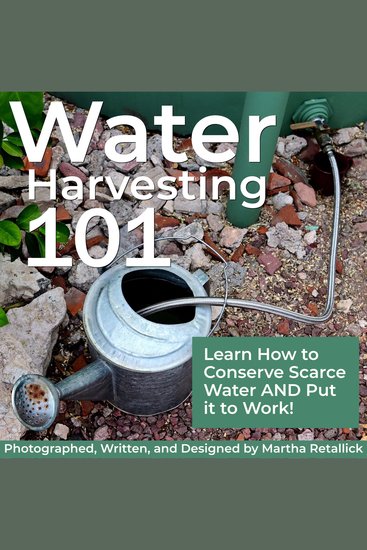
    Water Harvesting 101 introduces you to: 
    Passive Water Harvesting: This is the act of sculpting your land with basins, berms, and drainage swales. The goal? To channel rainwater toward plants and away from structures – like your house. Passive water-harvesting earthworks eliminate the need for landscape irrigation connected to municipal water systems. In arid regions, that spells substantial cost savings. 
    Active Water Harvesting: Want fresh garden produce when it’s 105 degrees out? And it hasn’t rained in six weeks? At my place, the 1,500-gallon rainwater harvesting cistern makes year ‘round gardening possible. And, on wash day, I don’t let the wastewater go down the drain. Instead, I use a greywater harvesting system that effortlessly diverts that wastewater from the laundry to my four fruit trees.
    Show book
  • Profits Over People: How Healthcare Became Sickcare - cover

    Profits Over People: How...

    Dr. Adrian Mehmedi

    • 0
    • 0
    • 0
    What if everything you thought you knew about healthcare was wrong? 
    In Profits Over People: How Healthcare Became Sickcare, Dr. Adrian Mehmedi exposes the truth about a broken medical system that prioritizes profits over patient well-being. From the rise of Big Pharma’s influence to the suppression of alternative medicine, this book reveals how corporate greed, flawed policies, and a pharmaceutical-driven agenda have transformed healthcare into a business that thrives on illness rather than healing. 
    🔹 Why are prescription drugs the go-to solution, even when they cause harm? 
    🔹 Why is the U.S. healthcare system the most expensive in the world—yet ranks among the worst in health outcomes? 
    🔹 How did we move from natural, holistic healing to a profit-driven sickcare model?A Deep Dive Into the Past, Present & Future of Medicine 
    Dr. Mehmedi takes readers on a compelling journey through history, unveiling how theFlexner Report, medical monopolization, and pharmaceutical lobbying shaped the modern healthcare system. He explores today’s crises, from skyrocketing medical costs to the overprescription of drugs—and reveals how we can reclaim our health.A Roadmap for a Better Future 
    This book isn’t just an exposé—it’s a call to action. With insights into holistic medicine, decentralized healthcare, regenerative practices, and emerging innovations, Profits Over People offers a vision for a new paradigm of healing—one where people, not profits, come first. 
    If you care about your health, your family’s well-being, or the future of medicine, this book is a must-read.
    Show book
  • Deep Blue - Why we love the sea - cover

    Deep Blue - Why we love the sea

    Veruska De Vita

    • 0
    • 0
    • 0
    '. . . there is a quiet here that doesn't exist on land, a fluid suspension that reminds me that humans were never meant to be so rigid, so fixed in place. In the sea, we are both vulnerable and free . . .'
    Deep Blue is a love letter to the sea, exploring humans' deep connection with the ocean and the bliss of swimming, diving, dipping and simply being in salt water.
    Join Veruska De Vita, a learner free diver and open-water swimmer, as she delves into why the ocean calls to us. Along the way she talks to those who find healing and wellness in swimming groups and cold-water immersion, scientists who study complex marine environments, elite athletes who swim super-human distances along our coasts and free divers who plumb the depths with one breath.
    Water is primordial. It gives life. It represents hope and renewal. This book is not only for sea worshippers. It promises to inspire everyone to jump with joy into the waves – and offers reflections on our intimate relationship with the sea, which supports life on earth and requests that we respect it.
    Show book