Join us on a literary world trip!
Add this book to bookshelf
Grey
Write a new comment Default profile 50px
Grey
Subscribe to read the full book or read the first pages for free!
All characters reduced
Political Spectrum - Understanding the Range of Political Ideologies in Modern Society - cover

Political Spectrum - Understanding the Range of Political Ideologies in Modern Society

Fouad Sabry

Publisher: One Billion Knowledgeable

  • 0
  • 0
  • 0

Summary

Dive into "Political Spectrum," a key resource for understanding political ideologies. Ideal for students, professionals, and enthusiasts, this book offers deep insights that go beyond basic knowledge.
 
Chapter Highlights:
 
1. Political Spectrum – Understand the basics and significance of categorizing political beliefs.
 
2. The Political Compass – Visualize where individuals and parties fall on the spectrum.
 
3. Hans Eysenck – Explore Eysenck’s theories on personality and ideology.
 
4. World Values Survey – Gain a global perspective on political values.
 
5. Nolan Chart – Learn about this chart that incorporates personal and economic freedoms.
 
6. Left–Right Political Spectrum – Analyze its historical and contemporary relevance.
 
7. Trait Theory – See how personality traits influence political attitudes.
 
8. Pournelle Chart – Discover this critique and expansion of traditional political categorizations.
 
9. Postmaterialism – Investigate the shift from materialist to postmaterialist values.
 
10. Social Dominance Orientation – Understand its impact on political ideology.
 
11. Right-wing Authoritarian Personality – Examine its characteristics and implications.
 
12. Ronald Inglehart – Learn about Inglehart’s theories on changing political values.
 
13. The Authoritarian Personality – Analyze this seminal work on political attitudes.
 
14. Cleavage (Politics) – Understand political cleavages and their impact.
 
15. Rokeach Value Survey – Discover insights into personal values and political ideologies.
 
16. Horseshoe Theory – Explore the idea that extremes of the political spectrum may converge.
 
17. Self-expression Values – Examine their importance in modern democracies.
 
18. Brian Patrick Mitchell – Investigate Mitchell’s contributions to political spectrums.
 
19. Hofstede's Cultural Dimensions Theory – Learn its application to political beliefs.
 
20. NOMINATE (Scaling Method) – Analyze legislative behavior using this method.
 
21. Inglehart–Welzel Cultural Map of the World – Explore global political values.
 
"Political Spectrum" enriches your understanding of political science and offers a comprehensive guide to the ideologies shaping our world. Enhance your perspective on the forces influencing political thought and action.
Available since: 08/07/2024.
Print length: 185 pages.


Other books that might interest you

  • The Social Genome - The New Science of Nature and Nurture - cover

    The Social Genome - The New...

    Dalton Conley

    • 0
    • 0
    • 0
    A pioneering scientist presents a mind-expanding account of the sociogenomics revolution, which promises to upend everything we know about human development. 


    Sociogenomics brings together advances in molecular genetics and traditional social and behavioral science. The key tool is the polygenic index, which allows us to analyze DNA to measure a child's genetic potential. Today, we can estimate a child's adult height, how far they will go in school, and their weight as an adult—all from a cheek swab, finger prick, or vial of saliva. Dalton Conley and other researchers are using this new science to shed light on the ways in which genes shape our world, influencing how each person both creates and responds to the environment around them. Conley reveals a world where children's DNA influences the nurture they extract from their parents; the genes of our schoolmates affect our likelihood of smoking as much as our own DNA does; and spouses' genes influence each other's moods and behaviors. 


    The Social Genome presents a nuanced, powerful perspective on individual potential and social dynamics and raises critical ethical questions about how we will navigate a future where we have access to far more genetic information than ever before.
    Show book
  • The Kybalion - The Forbidden Knowledge of the Hermetic Philosophy and the 7 Universal Laws: Understanding the Art of Hermetic Alchemy - Annotated and Illustrated - cover

    The Kybalion - The Forbidden...

    Three Initiates, William Walker...

    • 0
    • 0
    • 0
    “The All is Mind; the Universe is Mental.” With this bold statement, The Kybalion, attributed to the mysterious Three Initiates, invites readers into a world where ancient wisdom meets universal truth. First published in 1908, the book distills the essence of Hermetic philosophy, a tradition linked to Hermes Trismegistus, the legendary figure seen as a bridge between human consciousness and divine knowledge. 
    At its core, The Kybalion presents the Seven Hermetic Principles: Mentalism, Correspondence, Vibration, Polarity, Rhythm, Cause and Effect, and Gender. These principles are described as the laws governing both the visible and invisible realms. By understanding them, seekers can align with cosmic patterns, deepen self-mastery, and unlock hidden dimensions of existence. 
    This edition expands upon the original text with valuable insights: commentary and reflections, historical context, advanced Hermetic practices such as Alchemy, Astrology, and Theurgy, comparative analysis with other spiritual traditions, and a Hermetic Q&A for further clarity. 
    Emerging during a wave of fascination with mysticism in the early 20th century, The Kybalion quickly became a cornerstone of Western esotericism. The anonymity of its authors only adds to its allure, leaving readers to wonder at their identities and sources. More than a book, The Kybalion remains a guide to uncovering not only the mysteries of the universe but also the depths of one’s own mind.
    Show book
  • The Largest Amphibious Campaigns of World War II - cover

    The Largest Amphibious Campaigns...

    Editors Charles River

    • 0
    • 0
    • 0
    Despite the gargantuan scale and the importance of Operation Husky, the invasion of Sicily has since taken a backseat to the landings on D-Day. During the first half of 1944, the Americans and British commenced a massive buildup of men and resources in the United Kingdom, while Allied Supreme Commander Dwight D. Eisenhower and military brass planned the details of an enormous and complex amphibious invasion of Europe. Though the Allies used misinformation to try deceiving the Germans, the most obvious place for an invasion was just across the narrow English Channel, and the Germans had built coastal fortifications throughout France to protect against just such an invasion. 
    	The invasion across the Channel came in the early morning hours of June 6, 1944. That day, forever known as D-Day, the Allies commenced Operation Overlord by staging the largest and most complex amphibious invasion in human history. The complex operation would require tightly coordinated naval and air bombardment, paratroopers, and even inflatable tanks that would be able to fire on fortifications from the coastline, all while landing over 150,000 men across nearly 70 miles of French beaches. Given the incredibly complex plan, it’s no surprise that General Eisenhower had already written a letter apologizing for the failure of the invasion, which he carried in his coat pocket throughout the day, but the operation’s success eventually guaranteed the liberation of Paris and victory in Europe.   
    	By the time the second Phillipines campaign started, Japan was on the defensive, but as they would prove in other places like Iwo Jima and Okinawa, Japanese soldiers would act fanatically before admitting defeat or surrendering. During this second major Philippines campaign, an estimated 330,000 Japanese died, and only a bit more than 10,000 were willing to be taken prisoner.
    Show book
  • The Happiness Makeover - Overcome Stress and Negativity to Become a Hopeful Happy Person - cover

    The Happiness Makeover -...

    M. J. Ryan

    • 0
    • 0
    • 0
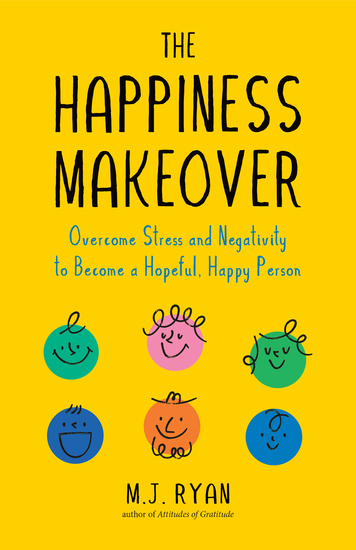
    Become a Happy Person Through Positivity and Self-Care“A wonderful blend of motivation, inspiration, and explanation, The Happiness Makeover is a recipe for enjoying today and all your tomorrows.” —David Niven, PhD, author of The 100 Simple Secrets of Happy PeopleFrom M.J. Ryan, one of the creators of the New York Times bestselling Random Acts of Kindness series, The Happiness Makeover teaches you how to be a happy person and enjoy the experience of life again.Train your brain to be optimistic, even in the darkest situations. From stress management tips to positive and motivational quotes, M.J. Ryan’s positivity book shows you how to transform your mindset so that you can face any difficult challenge thrown your way.We all want the things that we are sure will make us a happy person —money, success, independence, and love. But when we finally get them, we can find to our surprise that we are the same miserable, moody, or unhappy person we always were. Do things have to be that way? Absolutely not!Cultivating the ability to feel contentment is the key. There are people whose lives are full of serious challenges  who nevertheless feel peace and joy —and there are those who have few difficulties in life and yet feel hopeless negativity. You can teach yourself to be a happy person and enjoy your days. M.J. Ryan, the bestselling author of The Power of Patience and Attitudes of Gratitude, shows you how in this positive thinking guide.  The Happiness Makeover gives you a plan that can help you:Clear away happiness hindrances like worry, fear, envy, and grudgesDiscover happiness boosters with gratitude and hopeRewire your brain to experience joyLearn to think optimistically and be a happy personIf you enjoyed optimism books and positivity books like A Year of Positive Thinking, The Happiness Trap, or Habits of a Happy Brain, then you’ll love The Happiness Makeover.
    Show book
  • The Hidden Face of Pope Francis - cover

    The Hidden Face of Pope Francis

    Paul Ariès

    • 0
    • 0
    • 0
    Why did Pope Francis canonize a priest responsible for the genocide of the Indians?
    Why does he wish to beatify the anti-Semitic French priest, Leon Dehon?  
    What are the unmentionable reasons for his papal election? 
    Pope Francis is presented as progressive and sensitive to the interests of the people, but underneath his smiles and his good words hides an authoritarian and dogmatic pope. This pope relies on very conservative movements such as Communion and Liberation or the Order of the Knights of Columbus, which are close to Opus Dei. 
    The good Pope Francis is beginning to drop his mask when he declares that Europe is undergoing a new Arab invasion (sic), when he calls on "Catholics with a sense of identity" to take to the streets, when he fights against republican secularism and demonizes atheists.
    After an overview of the financial, political and sexual scandals, Paul Ariès proceeds to a very detailed and documented analysis of the "Church of Francis," particularly in the areas of ecology and sexuality. This clear book offers a surprising insight into the best communicator the Church has known in a long time.
    Show book
  • YOUR ANCHOR - Calm in the Chaos of American Money Stress - cover

    YOUR ANCHOR - Calm in the Chaos...

    Joe Ilunjo

    • 0
    • 0
    • 0
    Description 
    Does money feel like fear? The 3 AM panic over bills, the shame at the checkout line, the dread of your own bank account—this is financial anxiety. It’s not a math problem. It’s a nervous system problem. 
    Your Anchor is the compassionate guide to finding calm in the chaos. Forget rigid budgets. Through powerful stories and neuroscience-backed tools, you’ll learn to:Stop financial panic attacks with instant "first-aid" techniques.Rewrite the painful stories you tell yourself about money.Break the cycle of shame and build resilience. 
    This is not about getting rich. It’s about getting free. Discover how to transform your relationship with money from a source of fear to one of profound self-trust. Your journey to financial peace starts here. 
    (Thank you for choosing my audiobook. If you have any questions, feedback, or if you’d like to request a digital or paperback copy of the book, please feel free to reach out to me at joenduga@gmail.com.)
    Show book