Join us on a literary world trip!
Add this book to bookshelf
Grey
Write a new comment Default profile 50px
Grey
Subscribe to read the full book or read the first pages for free!
All characters reduced
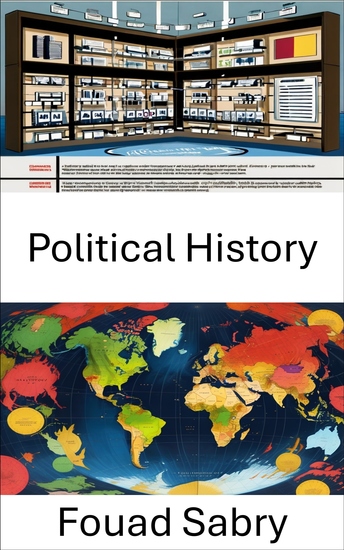
Political History - From Ancient Empires to Modern Democracies - cover

Political History - From Ancient Empires to Modern Democracies

Fouad Sabry

Publisher: One Billion Knowledgeable

  • 0
  • 0
  • 0

Summary

Unlock the profound intricacies of global governance with *Political History*, a definitive exploration within the Political Science series. This essential volume delves into the evolution of political systems and ideologies, tracing their impact on contemporary political landscapes. Whether you're a professional, student, or history enthusiast, this book offers unparalleled insights into historical developments that have shaped modern societies.
 
Chapter Summaries:
 
1. Political History – Explore foundational elements of political history and their influence on current political climates.
 
2. Diplomatic History – Investigate the evolution of international relations and diplomacy in shaping global alliances and conflicts.
 
3. Historiography – Delve into historical writing and methodology, examining evolving interpretations of political events.
 
4. Marxist Historiography – Uncover the Marxist perspective on historical analysis, focusing on class struggles and economic influences.
 
5. Historiography of the French Revolution – Examine diverse interpretations of the French Revolution and its impact on political thought.
 
6. Comparative History – Analyze different political systems and historical events to understand their unique and shared features.
 
7. History – Gain a broad understanding of historical context and its significance in political developments.
 
8. Historiography of the British Empire – Explore interpretations of the British Empire’s history and its enduring global influence.
 
9. Historiography of the United States – Analyze various perspectives on U.S. history and their impact on its political identity.
 
10. Political History in the United States – Dive into key events and figures in U.S. political history and their lasting effects.
 
11. Annales School – Learn about the Annales School’s focus on social and economic factors over traditional political narratives.
 
12. Historian – Discover historians' roles and methodologies in interpreting and recording political history.
 
13. Social History – Examine the intersection of social movements and political developments.
 
14. Frederick Jackson Turner – Understand Turner’s Frontier Thesis and its impact on American historical thought.
 
15. Charles A. Beard – Explore Beard’s theories on American politics and constitutional development.
 
16. Frontier Thesis – Delve deeper into the Frontier Thesis and its significance in American political history.
 
17. Bielefeld School – Investigate the Bielefeld School’s contributions to historical theory and political history.
 
18. Historiography of Canada – Analyze Canadian historiography and its impact on understanding Canada’s political evolution.
 
19. Historiography of the United Kingdom – Explore interpretations of UK history and their influence on its political trajectory.
 
20. Historiography of Germany – Examine approaches to German history and their implications for political analysis.
 
21. African Historiography – Investigate interpretations of African history within the broader context of political history.
 
*Political History* is an investment in understanding political evolution. With each chapter offering in-depth analysis and unique perspectives, this book is an invaluable resource for comprehending political history and its enduring impact on today’s world.
Available since: 08/07/2024.
Print length: 356 pages.

Other books that might interest you

  • Stories on lord Ganesh series - 22 - From various sources of Ganesh purana - cover

    Stories on lord Ganesh series -...

    Anusha HS

    • 0
    • 0
    • 0
    Lord Ganesh is the son of Goddess Parvati and Lord Shiva. He is the first one to get worshipped before worshipping any other god. We can say in short that there is no Hindu who doesn't perform Lord Ganesh’s worship. In Ramayana Lord Rama had worshipped Lord Ganesh. 
    In Mahabharata Lord Krishna had also worshipped Lord Ganesh. They have become the role models to the whole world. Before the beginning of any work it is common to worship Lord Ganesh. There are many Holy hymns on Lord Ganesh. Lord Ganesh’s favorite food is modak. 
    He gets pleased if we offer Durva grass to him. He also loves red Hibiscus flower. He is called the vighnaharta because he wards off all the obstacles in our life. He is also called vighnaraja. There are infinite names to Lord Ganesh which we cannot explain. He ties a snake around his waist. 
    The vehicle of Lord Ganesh is mouse in Hindu culture. Lord Ganesh is worshipped all over India. His miracles have been described in all of the 18 Puranas. There are many forms of Lord Ganesh. 
    He has got two wives one is riddhi and the other is siddhi.Lord Ganesh has got 32 forms of incarnations. The modak which you offer to Lord Ganesh will give you good results. Lord Ganesh does not bias among his devotees. He is specially worshipped on sankashti days. On Ganesh Chaturthi people fast and perform vrath.On this day it is forbidden to see Chandra the moon.
    Show book
  • Henry VII To Elizabeth I - A Comic History Of England Book 5: A Bloody Backstabbing Comedy of Royal Disasters Scheming Monarchs and Countless Heads Rolling - cover

    Henry VII To Elizabeth I - A...

    Gilbert Abbott A'Beckett

    • 0
    • 0
    • 0
    Prepare for the most uproariously grim tour of Tudor England ever recorded! Gilbert Abbott A'Beckett's classic satire skewers the so-called "golden age" of English monarchy, revealing the Tudors as they truly were: a parade of tyrants, schemers, and royal disasters who treated their subjects like pawns in a deadly game of power. 
    Witness history's worst monarchs at their terrible best: 
    - Henry VII - The paranoid accountant-king who taxed England into submission while pretending to unite the realm. His reign ran on spies, forged claims, and enough gold to make a dragon jealous! 
    - Henry VIII - The original wife-disposer, whose marital musical chairs left two ex-wives headless and a nation bankrupt from his ego. His break with Rome? Just history's most expensive midlife crisis! 
    - Edward VI - The sickly boy-king whose advisors turned England into a Puritan playground where fun went to die (along with most of the treasury). 
    - Bloody Mary - The original firestarter, who turned heresy trials into London's hottest (literally) public spectacles. Her Spanish marriage? The Tudor equivalent of a disastrous Tinder date! 
    - Elizabeth I - The Virgin Queen (or so she claimed) who ruled with an iron ruff, executed her cousin for fun, and bankrupted England fighting wars while pretending to be immortal. 
    From the War of the Roses' messy aftermath to Elizabeth's dying delusions of grandeur, this book proves the Tudors were less a noble dynasty and more a reality show with better costumes and worse consequences.  
    A'Beckett's razor-sharp wit transforms historical atrocities into dark comedy gold, exposing how royal marriages were just preludes to executions, every royal proclamation hid a hidden tax or trap and the only thing growing faster than Henry VIII's waistline was his kill count. 
    Perfect for fans of Horrible Histories., with dark humor, historical atrocities, severed heads, royal tantrums, and exactly zero apologies for mocking the monarchy.
    Show book
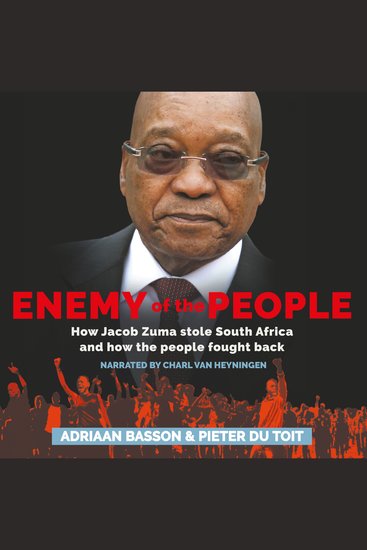
  • Enemy of the People - How Jacob Zuma stole South Africa and how the people fought back - cover

    Enemy of the People - How Jacob...

    Adriaan Basson, Pieter Du Toit

    • 0
    • 0
    • 0
    He swore to serve the people, but Jacob Zuma robbed us blind. 
    This is the first definitive account of Zuma’s catastrophic misrule, offering eyewitness descriptions and cogent analysis of how South Africa was brought to its knees – and how the people fought back.  
    When Jacob Zuma took power of the ANC in December 2007, he inherited a country whose economy was growing and a party that had the support of two-thirds of the electorate. Today, South Africa is caught in the grip of state capture, the economy is moribund and a divided ANC is staring down the barrel of defeat at the 2019 elections. How did we get here? 
    Zuma ruthlessly brought his party to heel, subduing and isolating his political opponents. Then he built a patronage network of family, friends and business associates – powerful, corruptible political tenderpreneurs – who stopped at nothing to take control of state institutions and enterprises. State capture became Zuma’s brand – a maze of corruption so far-reaching that it has replaced many parts of government, causing irreparable damage to institutions, state enterprises, and the ANC itself.  
    But it hasn’t all gone Zuma’s way. In a new era of activism, former political allies, public-minded civil servants, the media and the people have stepped forward to join the anti-Zuma groundswell. In the courts, too, the pressure has mounted against a bad president, who has become an enemy of the people. 
    As a deeply divided ANC squares off for the party’s conference in December, journalists Adriaan Basson and Pieter du Toit offer an insightful, up-to-the-minute account of the Zuma era.
    Show book
  • Imperialism - cover

    Imperialism

    Vladimir Lenin

    • 0
    • 0
    • 0
    Written in 1916 against the backdrop of the First World War, Imperialism: The Highest Stage of Capitalism explains the flaws and power of capitalism, which inevitably lead to monopolies, imperialism and colonialism. Lenin develops Marx’s theories of political economy, which had been put forward 50 years earlier in Das Kapital. He goes on to argue that imperialism is the most advanced state of capitalism, characterised by the domination of monopolies on an international scale, with the export of capital leading to the big imperialist powers carving up the world.More than a century later, Imperialism remains highly relevant in understanding the historical background to the strategies of many of today’s major nations.
    Show book
  • Harry S Truman: A short biography - 5 Minutes: Short on time – long on info! - cover

    Harry S Truman: A short...

    5 Minutes, 5 Minute Biographies,...

    • 0
    • 0
    • 0
    Harry S. Truman, American president after World War II: Life and work in a short biography! Everything you need to know, brief and concise. Infotainment, education and entertainment at its best!
    Show book
  • Geopolitics and Energy Diplomacy in the Caspian Region - Developments after the Downfall of the Soviet Union - cover

    Geopolitics and Energy Diplomacy...

    Yunis Gurbanov

    • 0
    • 0
    • 0
    Could the Caspian Region replace Russia's or the Persian Gulf's immense energy potential with their energy resources? Yunis Gurbanov explores the strategic importance of the region in post-USSR Eurasian policies of major global actors, namely China, the EU, the USA, and Russia, and examines Azerbaijan's, Kazakhstan's, and Turkmenistan's oil and gas resources as alternatives to conventional suppliers. He shows that the Caspian region's resources could serve as alternative energy sources on a global level, mitigating dependence on traditional suppliers and stabilizing energy prices.
    Show book