Join us on a literary world trip!
Add this book to bookshelf
Grey
Write a new comment Default profile 50px
Grey
Subscribe to read the full book or read the first pages for free!
All characters reduced
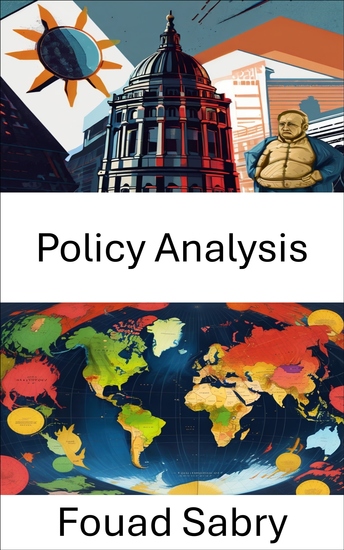
Policy Analysis - Understanding Governance Dynamics - cover

Policy Analysis - Understanding Governance Dynamics

Fouad Sabry

Publisher: One Billion Knowledgeable

  • 0
  • 0
  • 0

Summary

"Policy Analysis: Political Science" is an essential guide for professionals, students, and enthusiasts to evaluate and shape public policies. In today's world, understanding policy analysis is crucial.
 
Chapters Highlights:
 
1: Policy Analysis - Fundamentals and methodologies of effective policy analysis.2: Evaluation - Techniques for assessing policy outcomes and impacts.3: Public Policy - Overview of policy formulation and implementation.4: Policy - Conceptual and theoretical foundations of policy development.5: Program Evaluation - Assessing program effectiveness within policy frameworks.6: Foreign Policy Analysis - Complexities of foreign policy decision-making.7: Needs Assessment - Identifying societal needs for actionable policy recommendations.8: Wicked Problem - Addressing complex policy challenges with innovative solutions.9: Rational Planning Model - Structured approach to policy formulation.10: Problem Structuring Methods - Techniques for analyzing complex policy issues.11: Transportation Planning - Considerations for sustainable urban development.12: Systems Development Life Cycle - Lifecycle of systems development in policy contexts.13: Development Communication - Role of communication in policy implementation.14: Scenario Planning - Preparing for future policy challenges.15: Business Analysis - Applying business techniques to policy contexts.16: DPSIR - Framework for assessing environmental policies.17: Normalization Process Theory - Integrating new policies for sustained effectiveness.18: Participatory Development - Engaging stakeholders in policy development.19: Collaborative e-democracy - Enhancing transparency and citizen engagement through technology.20: PRECEDE–PROCEED model - Designing and evaluating community health programs.21: Community-based program design - Empowering communities in the policy-making process.
 
"Policy Analysis: Political Science" provides essential tools and frameworks for navigating governance complexities and studying policy formulation, offering a gateway to informed decision-making and impactful policy analysis.
Available since: 08/07/2024.
Print length: 334 pages.

Other books that might interest you

  • The Last Best Hope - A History of American Realism - cover

    The Last Best Hope - A History...

    John Hulsman

    • 0
    • 0
    • 0
    In this brilliant exploration of American history and contemporary conservative politics, foreign policy expert John Hulsman draws on his years at the heart of Washington to present a compelling new vision of conservative realism. 
    In our current Age of Insecurity, Hulsman suggests, there has never been a bigger need for the re-ascendance of realist principles in conservative circles. By drawing on U.S. history to illustrate realist precepts at the heart of the American story, The Last Best Hope provides a practical, realist foreign policy for a new age of American politics. 
    There has never been a greater time to re-claim the primacy of conservative thought. By fusing the populist Jacksonian base of the GOP with the more libertarian Jeffersonian school of thought, this cogently argued manifesto hopes to grasp that opportunity, and to act as a clarion call for a new dominant realist foreign policy.
    Show book
  • Culture and Society - How Cultural Norms Shape Our Social Reality - cover

    Culture and Society - How...

    Fred Grandsen

    • 0
    • 0
    • 0
    Culture and society are deeply interconnected, shaping human behavior, beliefs, and institutions. Culture encompasses the shared practices, values, symbols, and artifacts that define a group of people, while society refers to the structured interactions and relationships within a community or nation. Culture provides the foundation for social norms, influencing everything from language and customs to laws and moral expectations. At the same time, society determines how culture is transmitted, adapted, and reinforced through institutions such as family, education, and government. 
    One of the key aspects of culture is its learned nature. Unlike biological traits, cultural knowledge is passed down through generations via socialization. From early childhood, individuals absorb cultural norms through interactions with family, peers, and media. These shared understandings create a sense of belonging and cohesion within a group. However, culture is not static; it evolves over time as societies encounter new ideas, technologies, and challenges. The dynamic nature of culture ensures that it remains relevant to the needs and values of the people who uphold it.
    Show book
  • Mao Zedong - The Cultural Revolution and the Communist Party - cover

    Mao Zedong - The Cultural...

    Kelly Mass

    • 0
    • 0
    • 0
    Mao Zedong has had a tremendous impact on the Chinese nation. During his Great Leap Forward, he was responsible for more deaths than both Hitler and Stalin, making him the biggest mass murderer in history. 
    Mao Zedong, typically called Chairman Mao, was a Chinese communist revolutionary who functioned as the starting dad of peoples's Republic of China (PRC), judgment as the chairman of the Chinese Communist Party from 1949 till his death in 1976. Maoism is a Marxist-- Leninist dogma that includes his theories, army operations, and political programs. 
    What happened during the Great Leap Forward? Why did so many farmers starve to death? And what else did Mao Zedong do during his reign? You will find out more about those and other questions in this book.
    Show book
  • Summary of Confronting Evil - Assessing the Worst of the Worst - cover

    Summary of Confronting Evil -...

    Fortune Press

    • 0
    • 0
    • 0
    Book Summary: Confronting Evil by Bill O’Reilly and Josh Hammer 
     Assessing the Worst of the Worst 
    What drives human beings to commit acts of unspeakable cruelty—and what separates those who resist evil from those who enable it? In Confronting Evil, Bill O’Reilly and Josh Hammer examine history’s darkest figures to reveal the moral choices that define humanity’s ongoing battle between good and evil. 
    This summary explores the key ideas and insights behind O’Reilly and Hammer’s chilling yet thought-provoking analysis of tyrants, conquerors, and criminals—from Genghis Khan and Caligula to Hitler, Stalin, and modern-day despots. Through their stories, the book sheds light on the psychology of power, corruption, and the devastating cost of moral indifference. 
    With clarity and depth, this companion guide distills the authors’ central message: evil persists not only because of those who commit it, but because too many good people look away. 
    Disclaimer: This is an unofficial summary and analysis of Confronting Evil by Bill O’Reilly and Josh Hammer. It is intended to provide educational value and enhance understanding of the original work.
    Show book
  • China's Church Divided - Bishop Louis Jin and the Post-Mao Catholic Revival - cover

    China's Church Divided - Bishop...

    Paul P. Mariani

    • 0
    • 0
    • 0
    During the Cultural Revolution, the Chinese state sought to eradicate religious life throughout the country. But by 1978, two years after the death of Mao Zedong, the Communist Party under Deng Xiaoping cautiously embraced the revival of religion. At the same time, the newly elected Pope John Paul II made a point of renewing outreach to China. Paul P. Mariani tracks the fate of Chinese Catholicism in the wake of these transformative leadership changes, focusing on the influential Catholic community in Shanghai. 


    Earlier policies of the 1950s had fractured the Catholic community into a state-approved "patriotic" church that answered to the government and an underground church loyal to Rome. Even after the Cultural Revolution, Mariani shows, this divide remained firmly intact. The resulting tensions were on vivid display in Shanghai, owing to the leadership of the Jesuit priest Louis Jin Luxian. Bishop Jin used his position to revitalize the local Catholic community, but his cooperation with the party put him ever at odds with underground church leaders. 


    Sensitive to the ideals, compromises, and disappointments of Catholics on both sides of the rift, China's Church Divided reveals how the community navigated the irreconcilable differences between a worldwide Church centered in Rome and a regime wary of foreign spiritual authority.
    Show book
  • Filthy Rich Politicians - The Swamp Creatures Latte Liberals and Ruling-Class Elites Cashing in on America - cover

    Filthy Rich Politicians - The...

    Matt K. Lewis

    • 0
    • 0
    • 0
    From one of America's sharpest conservative journalists is this searing, thought-provoking and hilarious takedown of the ruling class running amok in Washington. These are your elected officials. Some are slyly taking advantage of the system. They are hoping no one is savvy enough to notice. But Matt Lewis has. And this is what he’s learned.  Today’s politicians are an unsavory lot—a hybrid of plutocrats and hypocrites. And it’s worse (and more laughable) than you can imagine. Lewis will introduce you to a crop of latte liberals, ivy league populists, insider traders, trust-fund babies, and swamp creatures as he exposes how truly ludicrous money in politics has gotten.  In Filthy Rich Politicians, Lewis embarks on an investigative deep dive into the ridiculous state of modern American democracy—a system where the rich get elected and the elected get rich. One of the brightest conservative writers of his generation, Lewis doesn’t just complain: he articulates how Americans can achieve accountability from their elected leaders through radically commonsense reforms. But many of these ruling-class elites have a vested financial interest in rejecting the reforms so desperately needed to rebuild Americans’ trust in the institutions that once made our nation great.  This is not an “eat the rich” kind of book, and it is not for those who want to stoke class warfare, topple the whole regime, and burn it all to the ground. This is a must-read book for thoughtful readers who yearn for transparency and will commit to holding their elected leaders accountable to those they are supposed to represent—we the people.  The reforms spelled out in this book would incentivize good behavior in our leaders, stymie corruption, and prevent politicians from using the system (and our taxpayer dollars) to feather their filthy rich nests.  It is only by taking these steps to reform the system that we can rebuild trust in our institutions and preserve American democracy for future generations. There really is no richer inheritance we could leave them.
    Show book