Join us on a literary world trip!
Add this book to bookshelf
Grey
Write a new comment Default profile 50px
Grey
Subscribe to read the full book or read the first pages for free!
All characters reduced
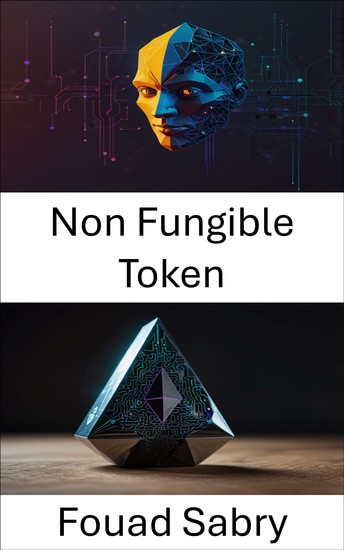
Non Fungible Token - Ethereum Digital Ownership and Asset Innovation in Web3 Ecosystems - cover

Non Fungible Token - Ethereum Digital Ownership and Asset Innovation in Web3 Ecosystems

Fouad Sabry

Publisher: One Billion Knowledgeable

  • 0
  • 0
  • 0

Summary

Dive into the fascinating intersection of blockchain and digital ownership with Non Fungible Token, part of the Ethereum Blockchain series by Fouad Sabry. As nonfungible tokens (NFTs) revolutionize how we assign, trade, and preserve value, this book offers an essential guide to understanding their role in shaping the future of decentralized systems.
 
Chapters Brief Overview:
 
1: Nonfungible token: Explores the uniqueness of NFTs and their role in Ethereumbased digital assets.
 
2: Certificate of authenticity: Highlights how NFTs act as verifiable proof of origin and ownership.
 
3: Cardano (blockchain platform): Examines Cardano's approach to NFTs compared to Ethereum's ecosystem.
 
4: Axie Infinity: Discusses the playtoearn model and NFT integration in blockchainbased gaming.
 
5: OpenSea: Analyzes the largest NFT marketplace and its impact on Ethereum’s growth.
 
6: Mike Winkelmann: Looks at Beeple's NFT artwork and its influence on Ethereum art markets.
 
7: Tron (blockchain): Reviews Tron’s entry into NFTs and contrasts it with Ethereum's standards.
 
8: CryptoKitties: Details the viral Ethereum game that introduced NFTs to the mainstream.
 
9: Uniswap: Explores Ethereum's decentralized exchange and its ties to NFT liquidity and value.
 
10: Polygon (blockchain): Discusses scaling Ethereum NFTs through Polygon’s layer2 network.
 
11: Kevin Abosch: Profiles the conceptual artist’s pioneering Ethereum NFT creations.
 
12: OKX: Covers how the exchange integrates Ethereum NFTs into broader crypto ecosystems.
 
13: William Entriken: Introduces the lead author of the ERC721 standard, fundamental to NFTs.
 
14: Ethereum: Provides the foundation of the Ethereum blockchain and its pivotal NFT role.
 
15: CryptoPunks: Traces the cultural and technological significance of these Ethereum NFT icons.
 
16: Everydays: the First 5000 Days: Reviews Beeple's Ethereumbased NFT that redefined digital art.
 
17: Decentralized autonomous organization: Explains DAO use of NFTs for governance on Ethereum.
 
18: ERC721: Breaks down the technical standard enabling NFTs on the Ethereum blockchain.
 
19: Pak (creator): Showcases the digital artist's use of Ethereum for groundbreaking NFT art.
 
20: Blockchain game: Surveys how Ethereum NFTs redefine ownership in online gaming.
 
21: Curio Cards: Revisits one of the first NFT art collections on Ethereum.
 
Whether you're a professional, a student, or simply fascinated by the merging of tech and art, this book equips you with the knowledge to navigate, analyze, and engage with NFTs confidently. Understanding NFTs within the Ethereum framework is essential for grasping broader concepts in political science like decentralization, digital sovereignty, and value systems. This guide is more than a purchase—it's a critical investment in your blockchain literacy.
Available since: 06/20/2025.
Print length: 200 pages.


Other books that might interest you

  • The Future Economy - A Crypto Insider's Guide to the Tech Dismantling Traditional Banking - cover

    The Future Economy - A Crypto...

    Brandon Zemp

    • 0
    • 0
    • 0
    Few know the blockchain space as well as Brandon Zemp. Here Brandon offers readers a peek into the dizzying growth of this field, from the emergence of Bitcoin to the proliferation of other tokens such as Ethereum and Solana, to the dramatic rise and fall and rise again of the crypto financial markets. While savvy investment in this growing space can make you rich, Zemp shows how the real wealth will come from blockchain’s capacity to improve human lives, from medicine to transportation to art. The introduction of blockchain-powered decentralized finance will challenge a banking industry in desperate need of reform, empowering billions around the globe by reclaiming power from big banks and state-sanctioned fiat currencies. Zemp concludes by offering guidance for those who want to participate in this movement. There is space for everyone, and fresh opportunities are emerging each day. The only ones who will be left behind are those who refuse to see that the twenty-first century belongs to blockchain. That time is already here.
    Show book
  • Roman Medicine and Science - Advances of Ancient Civilization - cover

    Roman Medicine and Science -...

    Rogan Fish

    • 0
    • 0
    • 0
    Roman medicine was a blend of practical knowledge, religious beliefs, and influences from earlier civilizations, particularly the Greeks and Etruscans. While early Roman healing methods were deeply rooted in superstition, the expansion of the empire led to the adoption of more systematic medical practices. Over time, Roman medicine evolved into a structured system that combined natural remedies, surgical techniques, and public health initiatives. 
    Greek influence played a significant role in shaping Roman medical knowledge. Before Rome conquered Greece, healing in the Roman Republic was often associated with household remedies and religious rituals. However, as Greek physicians such as Archagathus and later Galen entered Rome, their advanced knowledge in anatomy, surgery, and pharmacology became widely accepted. Many Roman physicians were either trained by Greek mentors or studied Greek medical texts. Hippocratic principles, which emphasized observation and diagnosis, became foundational in Roman medical education. 
    Despite the growing reliance on scientific methods, religion and superstition remained integral to Roman healing practices. The Romans believed that diseases could be divine punishments or warnings from the gods. Temples dedicated to deities like Aesculapius, the god of medicine, served as healing centers where the sick sought divine intervention. Priests and healers performed rituals and sacrifices to appease the gods and cure ailments. Additionally, charms, amulets, and incantations were commonly used to ward off illness. Even as medical science progressed, many Romans continued to rely on religious customs for healing.
    Show book
  • Stop Phobias and Fears Sleep Hypnosis - Conquer Your Fears and Be Free - cover

    Stop Phobias and Fears Sleep...

    Dreamy Hypnosis

    • 0
    • 0
    • 0
    Are you tired of living with irrational fears? Do your phobias hold you back from experiencing life to the fullest? What if you could conquer your fears and phobias while you sleep? Imagine the liberation of leading a life unshackled from those anxieties. 
    Welcome to a groundbreaking audiobook designed to reshape your subconscious mind. It employs proven sleep hypnosis techniques, guiding you to break free from the restrictive chains of your fears and phobias. From arachnophobia to claustrophobia, every fear has a solution.  
    With this audio guide, you can reprogram your thoughts during the peaceful state of sleep, the optimal time for our minds to process and heal. Narrated by expert hypnotherapists, the comforting voices and tranquil soundscapes will ease you into a deep slumber.  
    Embark on this journey to emancipate yourself from the confines of fear. Don't let phobias dictate your life anymore. Embrace the change tonight, and wake up to a world where anything is possible.
    Show book
  • The History and Medicinal Benefits of Tea and Coffee - cover

    The History and Medicinal...

    Susun Weed

    • 0
    • 0
    • 0
    Beyond their cultural significance, both beverages offer various health benefits. Coffee is rich in antioxidants and has been associated with improved cognitive function, a reduced risk of certain diseases like Parkinson's and Alzheimer's, and even enhanced physical performance. Tea, whether green, black, or herbal, contains polyphenols that may contribute to heart health, boost the immune system, and provide anti-inflammatory effects. Additionally, the ritual of preparing and enjoying these beverages has therapeutic qualities, promoting relaxation and social interaction. As global consumption continues to rise. Join us as Susun Weed discusses the history and medicinal benefits of coffee and tea and how they remain integral to the fabric of human experience. 
     
    ISBN: 978-1-63757-068-5
    Show book
  • Sleep hypnosis to verbally express your feelings - A guided meditation - DST Hypno with Stu Newman - cover

    Sleep hypnosis to verbally...

    Stuart Newman

    • 0
    • 0
    • 0
    If you're looking for a way to express your feelings in an effective and healthy manner, then look no further than this DST sleep hypnosis with Stu Newman.  
    This program is designed to help you explore and verbalize your true emotions, allowing you to gain insight into yourself while also providing relief from stress.  
    With the aid of guided hypnosis techniques, this program can help improve self-awareness as well as reduce anxiety levels by helping individuals better understand their own feelings and reactions.  
    Additionally, it can provide valuable tools for managing difficult situations more effectively without feeling overwhelmed or out of control.  
    So if you’re ready to take charge of expressing how you feel in a positive way that will benefit both yourself and those aroundyou – DST Hypno with Stu Newman is the perfect solution!
    Show book
  • Orology - The Mountainous World - Understanding Earth's High Peaks - cover

    Orology - The Mountainous World...

    Mike Crawford

    • 0
    • 0
    • 0
    Mountains are among the most awe-inspiring features of the Earth's landscape, rising as towering peaks that shape weather patterns, influence ecosystems, and define the natural borders of continents. Their formation is a complex process driven by immense geological forces acting over millions of years. The primary mechanisms behind mountain building include tectonic activity, volcanic processes, and the gradual effects of erosion and uplift. 
    One of the most significant processes responsible for mountain formation is tectonic activity, particularly through folding and faulting. The Earth's crust is divided into massive plates that float atop the semi-molten mantle. When these plates collide, the immense pressure causes the crust to buckle and fold, resulting in the formation of fold mountains such as the Himalayas and the Alps. These ranges continue to rise as the plates press against each other, making them some of the youngest and most geologically active mountains in the world. Fault-block mountains, on the other hand, form when tectonic forces cause large sections of the Earth's crust to break and shift along faults. The Sierra Nevada in North America is an example of a fault-block mountain range created by the movement of these fractured rock masses. 
    Another major contributor to mountain formation is volcanic activity. When magma from beneath the Earth's surface erupts through cracks in the crust, it cools and solidifies, gradually building up into towering volcanic mountains. Over successive eruptions, these formations can grow into massive peaks such as Mount Fuji in Japan or Mount Kilimanjaro in Africa. Volcanic mountains can form along plate boundaries, particularly in subduction zones where one tectonic plate is forced beneath another, or in hotspot regions
    Show book