Join us on a literary world trip!
Add this book to bookshelf
Grey
Write a new comment Default profile 50px
Grey
Subscribe to read the full book or read the first pages for free!
All characters reduced
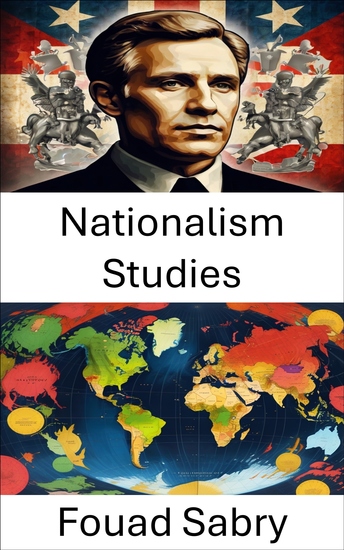
Nationalism Studies - Understanding Identity and Power in Modern States - cover

Nationalism Studies - Understanding Identity and Power in Modern States

Fouad Sabry

Publisher: One Billion Knowledgeable

  • 0
  • 0
  • 0

Summary

Explore the complexities of nationalism with Nationalism Studies, a key volume in the Political Science series. This essential read delves into the intricate relationship between nationalism, identity, and global politics, offering valuable insights for professionals, students, and enthusiasts alike.
 
Chapter Highlights:
 
1. Nationalism Studies: Introduction to the core concepts and importance of nationalism in modern political science.
 
2. Nationalism: Foundational theories and evolution of nationalism.
 
3. Nation: The role of nations as political and cultural entities.
 
4. Women's Studies: Intersection of nationalism and gender, highlighting women's roles in nationalist movements.
 
5. Cultural Identity: The link between nationalism and cultural heritage.
 
6. National Identity: Formation and implications of national identity.
 
7. Primordialism: Theory of ancient ties between individuals and their nations.
 
8. Anthony D. Smith: Contributions to nationalism theory and ethnic identity.
 
9. Civic Nationalism: Focus on shared citizenship and political values.
 
10. Constitutional Patriotism: Loyalty to democratic principles over ethnic bonds.
 
11. Madheshi People: Nationalist challenges and recognition in Nepal.
 
12. Azar Gat: Views on nationalism's role in political structures and conflicts.
 
13. Ghassan Hage: Research on multiculturalism and nationalism.
 
14. Walker Connor: Theories on ethnic and national identity.
 
15. Thomas Spira: Perspectives on nationalism's global impact.
 
16. Multiculturalism in Canada: Interaction of multiculturalism and nationalism in Canada.
 
17. John Hutchinson: Scholarly contributions to nationalism studies.
 
18. Umut Özkirimli: Theoretical and practical aspects of nationalism.
 
19. Korean Ethnic Nationalism: Features and political influence of Korean ethnic nationalism.
 
20. Ethnosymbolism: Role in forming and maintaining national identities.
 
21. Ethnicities (Journal): Recent research and discussions on nationalism and ethnic studies.
 
Nationalism Studies provides a comprehensive understanding of nationalism's impact on global politics and personal identities, making it an invaluable resource for exploring this multifaceted topic.
Available since: 08/05/2024.
Print length: 179 pages.

Other books that might interest you

  • Chasing Bandits in the Badlands - cover

    Chasing Bandits in the Badlands

    Bob Breen

    • 0
    • 0
    • 0
    In January 1993, the Australian government sent just under one thousand young men and women to serve under American command in a violent, impoverished, starving society. Most males over the age of twelve either carried or had access to a gun, and most Somali men had been fighting a vicious civil war for years. 
    Australian soldiers and their teams had to gain control of the streets of Baidoa and surrounding towns. This contest was not ‘find, fight and kill’ warfare. There was no decisive victory or defeat. The aim was to detect ‘the bad boys’ and deter and de-escalate their violence rather than escalate hostilities to success through ‘body count’. This mode of operation was not community policing by soldiers either. It involved adjusting attitudes forcefully and assuring uncomfortable consequences for bad behaviour and ultimately lethal responses to armed challenges. 
     
    The world looked over their shoulders. Corporals and diggers had to make split-second decisions to open or hold fire. Holding fire when provoked by punks constituted disciplined professional performance. Opening fire before understanding the situation, especially against unarmed provocateurs, constituted unprofessional conduct and possible condemnation, even criminal charges. These young Australians carried the international reputation of Australia and its army on their shoulders. Their actions would either enhance that reputation or create controversy, negative publicity and, potentially, international embarrassment and condemnation. 
     
    After adjusting their own attitudes to balance aggression and compassion, fight leaders and their diggers forcefully adjusted Somali attitudes, secured a stalemate, and then took control for the time they were in Somalia Australian soldiers individually and collectively helped a traumatised society needing a ‘fair go’ and gave ordinary Somali men, women and children trying to survive a little bit of hope.
    Show book
  • Ottoman Empire’s Greatest Victories The: The History and Legacy of the Most Important Battles Won by the Ottomans - cover

    Ottoman Empire’s Greatest...

    Editors Charles River

    • 0
    • 0
    • 0
    In terms of geopolitics, perhaps the most seminal event of the Middle Ages was the successful Ottoman siege of Constantinople in 1453. The city had been an imperial capital as far back as the 4th century, when Constantine the Great shifted the power center of the Roman Empire there, effectively establishing two almost equally powerful halves of antiquity’s greatest empire. Constantinople would continue to serve as the capital of the Byzantine Empire even after the Western half of the Roman Empire collapsed in the late 5th century. Naturally, the Ottoman Empire would also use Constantinople as the capital of its empire after their conquest effectively ended the Byzantine Empire, and thanks to its strategic location, it has been a trading center for years and remains one today under the Turkish name of Istanbul.  
    The end of the Byzantine Empire had a profound effect not only on the Middle East but Europe as well. Constantinople had played a crucial part in the Crusades, and the fall of the Byzantines meant that the Ottomans now shared a border with Europe. The Islamic empire was viewed as a threat by the predominantly Christian continent to their west, and it took little time for different European nations to start clashing with the powerful Turks. In fact, the Ottomans would clash with Russians, Austrians, Venetians, Polish, and more before collapsing as a result of World War I, when they were part of the Central powers. 
    In the wake of taking Constantinople, the Ottoman Empire would spend the next few centuries expanding its size, power, and influence, bumping up against Eastern Europe and becoming one of the world’s most important geopolitical players. It was a rise that would not truly start to wane until the 19th century.
    Show book
  • Still Hopeful - Lessons from a Lifetime of Activism - cover

    Still Hopeful - Lessons from a...

    Maude Barlow

    • 0
    • 0
    • 0
    “Canada’s best-known voice of dissent.” — CBC
    		 
    “It’s time we listened to the Maude Barlows of the world.” — CNN
    		 
    In this timely book, Barlow counters the prevailing atmosphere of pessimism that surrounds us and offers lessons of hope that she has learned from a lifetime of activism. She has been a linchpin in three major movements in her life: second-wave feminism, the battle against free trade and globalization, and the global fight for water justice. From each of these she draws her lessons of hope, emphasizing that effective activism is not really about the goal, rather it is about building a movement and finding like-minded people to carry the load with you. Barlow knows firsthand how hard fighting for change can be. But she also knows that change does happen and that hope is the essential ingredient.
    Show book
  • The Epic - A Very Short Introduction - cover

    The Epic - A Very Short...

    Anthony Welch

    • 0
    • 0
    • 0
    The epic is an ancient and universal form of artistic expression. Storytellers around the globe have long told of heroes who are touched by greatness and gain lasting fame. 


    In this Very Short Introduction, Anthony Welch places the Western epic canon alongside traditional heroic poetry from Asia, Africa, and the Near East. Tracing shared themes and practices that unite the world's epic literature, Welch examines the roles that epic poets serve in society and how epic storytelling differs from other narrative forms. Ranging widely from Gilgamesh to Derek Walcotts Omeros, the author acquaints listeners with some of the world's greatest literary works and asks why the epic holds such power over our imaginations.
    Show book
  • How to be Healthy - An Ancient Guide to Wellness - cover

    How to be Healthy - An Ancient...

    Galen

    • 0
    • 0
    • 0
    The second-century Greek physician Galen—the most famous doctor in antiquity after Hippocrates—is a central figure in Western medicine. A talented doctor, surgeon, writer, philosopher, teacher, pharmacologist, and inventor, Galen attended the court of Marcus Aurelius, living through outbreaks of plague that devastated the Roman Empire. He also served as a physician for professional gladiators. In writings that provided the foundation of Western medicine up to the nineteenth century, Galen created a unified account of health and disease. In How to Be Healthy, practicing physician and classical historian Katherine Van Schaik presents a collection of Galen's enduring insights about how we can take care of our bodies and minds, prevent disease, and reach a healthy old age. 


    Although we now know that many of Galen's ideas about physiology are wrong, How to Be Healthy shows that much of his advice remains sound. In these selections from his writings, presented in fresh translations, Galen discusses the art of medicine, exercise and diet, the mind-body connection, the difficulty of applying general medical principles to individuals, and much more. Featuring an introduction and brief commentaries that connect ancient medical practices to modern ones, How to Be Healthy offers an entertaining and enlightening new perspective on the age-old pursuit of wellness.
    Show book
  • Ontology Or the Theory of Being - cover

    Ontology Or the Theory of Being

    Peter Coffey Ph. D.

    • 0
    • 0
    • 0
    In the domain of Ontology, there are many scholastic theories and discussions which are commonly regarded by non-scholastic writers as possessing nowadays, for the student of philosophy, an interest that is merely historical. This mistaken notion is probably due to the fact that few if any serious attempts have yet been made to transpose these questions from their medieval setting into the language and context of contemporary philosophy. Perhaps not a single one of these problems is really and in substance alien to present-day speculations.  
    The author has endeavoured, by his treatment of such characteristically “medieval” discussions as those on potentia and actus, essence and existence, individuation, the theory of distinctions, substance and accident, nature and person, logical and real relations, efficient and final causes, to show that the issues involved are in every instance as fully and keenly debated, in an altered setting and a new terminology, by recent and living philosophers of every school of thought as they were by St. Thomas and his contemporaries in the golden age of medieval scholasticism.  
    And, as the purposes of a text book demanded, attention has been devoted to stating the problems clearly, to showing the significance and bearings of discussions and solutions, rather than to detailed analyses of arguments. At the same time, it is hoped that the treatment is sufficiently full to be helpful even to advanced students and to all who are interested in the Metaphysics of the Schools.
    Show book