Join us on a literary world trip!
Add this book to bookshelf
Grey
Write a new comment Default profile 50px
Grey
Subscribe to read the full book or read the first pages for free!
All characters reduced
Nanoparticles Characterization - Exploring Structure Properties and Applications in Advanced Materials - cover

Nanoparticles Characterization - Exploring Structure Properties and Applications in Advanced Materials

Fouad Sabry

Publisher: One Billion Knowledgeable

  • 0
  • 0
  • 0

Summary

In the rapidly evolving world of nanotechnology, understanding the properties and characterization of nanoparticles is essential. "Nanoparticles Characterization" provides a comprehensive exploration of the latest methods and techniques in the field. This book is not just a guide for researchers and professionals; it is also ideal for undergraduate and graduate students looking to deepen their understanding of nanotechnology. Enthusiasts and hobbyists alike will find it a valuable resource for grasping the complexities of nanoparticles and their applications in diverse industries
 
Characterization of nanoparticles-This chapter introduces the key methods for analyzing nanoparticle properties, such as size, shape, and distribution
 
Nanosensor-A look into the integration of nanoparticles into sensor technologies, highlighting their role in detecting environmental changes
 
Surface science-This chapter focuses on the surface properties of nanoparticles, which are crucial for their behavior in various environments
 
Nanoparticle–biomolecule conjugate-An exploration of the interaction between nanoparticles and biomolecules, opening doors to medical and biological applications
 
Electron energy loss spectroscopy-This technique is explored for understanding the electronic structure of nanoparticles, aiding in advanced material design
 
Polymeric surface-The use of polymer coatings on nanoparticles is discussed, with applications in drug delivery and material protection
 
Nanomaterials-This chapter offers an overview of different nanomaterials and their synthesis, key to many modern technological innovations
 
Titanium dioxide nanoparticle-Focuses on titanium dioxide as a versatile nanoparticle with applications in photocatalysis and medicine
 
Carbon nanofiber-Detailed analysis of carbon nanofibers and their uses in electronics, energy storage, and nanocomposites
 
Nanotoxicology-A critical look at the potential toxic effects of nanoparticles and safety measures for their use in products and industry
 
Pollution from nanomaterials-Examines the environmental impact of nanomaterials and strategies for reducing pollution from their production and use
 
Health and safety hazards of nanomaterials-This chapter outlines the key health risks associated with exposure to nanoparticles and how to mitigate them
 
Nanotechnology-A broad overview of the field of nanotechnology, highlighting its interdisciplinary nature and its impact on science and industry
 
Radioactive nanoparticle-This chapter covers the use of radioactive nanoparticles in medical imaging and cancer treatment, among other applications
 
Localized surface plasmon-Focuses on the optical properties of nanoparticles and their applications in sensors and imaging
 
Spectroscopy-A detailed look at various spectroscopy techniques used in nanoparticle analysis, vital for understanding their behavior and interactions
 
Particle technology-Discusses the technology behind particle production, from synthesis to characterization, and its industrial relevance
 
Characterization (materials science)-The integration of nanoparticle characterization into broader materials science, highlighting its role in advanced engineering
 
Metallography-Explores how nanoparticles influence the metallographic structure of materials and their impact on mechanical properties
 
Nanoparticle-A comprehensive discussion of different types of nanoparticles and their wideranging applications in medicine, electronics, and more
 
Nanometrology-This final chapter explores the measurement techniques used in nanotechnology, ensuring precision and reliability in nanoparticle applications
Available since: 03/23/2025.
Print length: 295 pages.
Other books that might interest you

  • Emotional Intelligence - Cognitive Behavioral Therapy Self Discipline Manipulation Anger Management Empath - cover

    Emotional Intelligence -...

    Mike Miller

    • 0
    • 0
    • 0
    Are you tired of feeling controlled by your emotions?  
    Do you struggle with managing your anger or finding empathy for others? If so, "Emotional Intelligence" by Mike Miller is the book for you. 
    This comprehensive guide explores the principles of cognitive behavioral therapy and self-discipline to help you take control of your emotions and live a happier, more fulfilling life. With practical advice and relatable examples, this book will help you:Recognize and challenge negative thoughts and cognitive distortions that are causing you distressDevelop coping strategies to manage stress and difficult emotions, such as anger or anxietyBuild self-discipline and motivation to achieve your goals and live a more balanced lifeIncrease your empathy and improve your relationships with othersIdentify and resist manipulative behaviors from others that may be causing you harm 
    In addition to the above, the following long-tail keywords may help attract readers to this book:Overcoming cognitive distortions for emotional wellnessStrategies for anger management and stress reductionTechniques for developing self-discipline and motivationUnderstanding and improving empathy for healthier relationshipsRecognizing and resisting manipulation from toxic individualsSelf-help tips for improving emotional intelligencePractical applications of cognitive behavioral therapy in everyday lifePersonal growth strategies for emotional wellness and successEmpowering yourself to take control of your emotions and your life 
    Don't miss out on the opportunity to develop your emotional intelligence and transform your life. 
    Order your copy of Emotional Intelligence today!
    Show book
  • Medicine - cover

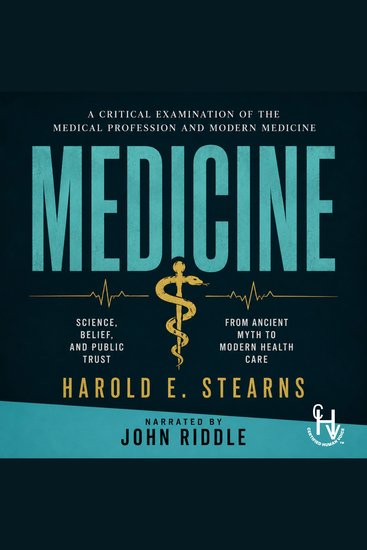
    Medicine

    Harold E. Stearns

    • 0
    • 0
    • 0
    What happens when medicine's reputation for scientific authority exceeds the science behind its practice? 
     
    Written during a transformative period in American medicine, Medicine is a provocative and fiercely skeptical examination of doctors, medical science, public health, and the rapidly changing business of healthcare. 
     
    The author challenges the assumption that the practice of medicine and the science of disease are one and the same. From the traditional family physician to the rise of specialists, surgeons, medical groups, laboratories, and organized public-health campaigns, the essay examines how scientific discovery, human credulity, commercial interests, professional authority, and moral beliefs became intertwined in American medicine. 
     
    Along the way, Medicine questions contemporary medical theories and treatments, scrutinizes the growing commercialization of the profession, and argues for a more rigorous distinction between genuine experimental science and medical practice based upon assumption, tradition, or incomplete evidence. 
     
    Originally published anonymously in 1922, the essay was later attributed to bacteriologist and science writer Paul de Kruif. More than a century later, it offers listeners a fascinating—and often startling—window into an era when modern American medicine was still defining its relationship with science. 
     
    Narrated by John Riddle, Medicine is a provocative historical document about science, skepticism, professional authority, and the evolution of American healthcare.
    Show book
  • Humans & AI How To Work together Better Volume No 1 - cover

    Humans & AI How To Work together...

    Daniel Stark

    • 0
    • 0
    • 0
    Book Description: Discover the foundational strategies for establishing a productive, harmonious, and highly efficient working partnership with artificial intelligence. In Humans and AI: How to Work Together Better, Volume Number 1, author Daniel Stark shares real-world insights derived from extensive collaborative publishing projects. Learn why setting firm constraints builds immediate trust, how managing digital bandwidth and memory cache prevents system fatigue, and why pacing every interaction to match the human workflow leads to breakthrough results. Designed for independent creators, writers, researchers, and professionals, this volume offers a practical blueprint for transforming AI from a complicated tool into a seamless, reliable collaborator.
    Show book
  • All Tomorrow's Futures - Fictions That Disrupt - cover

    All Tomorrow's Futures -...

    Benjamin Greenaway, Stephen...

    • 0
    • 0
    • 0
    Welcome to a journey through speculative fictions, where the possibilities of tomorrow are explored like never before. In a new collaborative approach, renowned experts, armed with their deep knowledge of justice, energy, digital money, longevity and learning, join forces with talented authors to weave narratives that transcend the future that you may currently believe is inevitable.  
    Situated in 'real-life' between accelerationism and scepticism, this volume of disruptions serves as a thought-provoking look into the potential consequences of scientific progress, technological development and societal evolution.  
    "What a wonderful and inspiring alternative to the so-called 'world-building' of today's science fiction industry. Here are some real lessons on how to speculate in ways that may actually open new potentials for human flourishing." Douglas Rushkoff, Team Human. 
    "This book offers an essential collaboration between domain experts, writers, and editors, fusing foresight and technological exploration to offer narratives both visionary and eerily plausible." Dr Helen Marshall, Director, WhatIF Lab, Queensland University. 
      
    "The stories and commentaries make us take a long hard look at the world we have ahead of us, knowing that the problems aren't with AI, climate, money, health, or knowledge. Rather, they come from our relationships with them. The lessons are aplenty, but more importantly, there is hope." Yen Ooi, 2023 Hugo Awards finalist and Director, London Science Fiction Research Community. 
    "This clever collection of speculative stories explores the possible futures that await us. Through a series of narratives that weave together technological, ethical and societal futures, we are also gifted great analysis and commentary from experts in their fields." Tracey Fellows, Futurist, Author of 'The Future Of You'.
    Show book
  • Micro Frontends Architecture for Scalable Applications - Master Modular and Efficient Web Development with Micro Frontends DDD and CI CD for Scalable Distributed Frontend Applications - cover

    Micro Frontends Architecture for...

    Vanderlei Silva

    • 0
    • 0
    • 0
    Unleash Agility and Scale with Micro Frontend Architecture.
    Book Description
    As modern web applications grow in complexity, micro frontend architecture offers a scalable, modular approach that helps teams work independently, accelerate delivery, and maintain long-term flexibility. Micro Frontends Architecture for Scalable Applications provides a comprehensive, hands-on guide to implementing micro frontends effectively in real-world projects.
    The book starts by defining frontend and backend development, exploring what is considered a valuable architecture, and introducing various frontend architecture patterns.
    Next, it dives into micro frontends and concepts like Domain-Driven Design, Decentralized Governance, and Independent Deployments. It explains how these principles enable highly observable (easy-to-monitor) micro frontends and covers in-depth discussions on integration strategies, their advantages and disadvantages.
    Communication and routing are thoroughly explored, including Container Applications, State Management, and Cross-Application Communication. The book also addresses UI/UX considerations and how micro frontends interact with varying backend patterns.
    The final part focuses on best practices for testing (unit, integration, and end-to-end), deployment strategies, and essential security measures. It concludes with a real-world case study and insights into the future of micro frontends—highlighting emerging trends, evolving architectures, and the growing impact of artificial intelligence.
    Table of Contents
    1. A Tale of Two Worlds
    2. Valuable Architecture
    3. Frontend Architectural Patterns
    4. Micro Frontend Foundations
    5. Integration Strategies
    6. Communication and Routing
    7. UI/UX and Design System
    8. Backend Patterns
    9. Testing Strategies
    10. Deployment Strategies
    11. Observability
    12. A Micro Frontend Adoption       
    
    Index
    Show book
  • 100 Quotes About Science - intégrale - cover

    100 Quotes About Science -...

    J. M. Gardner

    • 0
    • 0
    • 0
    Embark on a captivating journey through the wonders of science with this collection of 100 enlightening quotes. 
    Whether you're a seasoned scientist, a curious learner, or simply fascinated by the wonders of the universe, "100 Quotes About Science" will ignite your curiosity! 
    Discover the awe-inspiring words of renowned scientists, philosophers, and thinkers who have unlocked the mysteries of the cosmos, delved into the intricacies of nature, and revealed the beauty of the scientific method.
    Show book