Join us on a literary world trip!
Add this book to bookshelf
Grey
Write a new comment Default profile 50px
Grey
Subscribe to read the full book or read the first pages for free!
All characters reduced
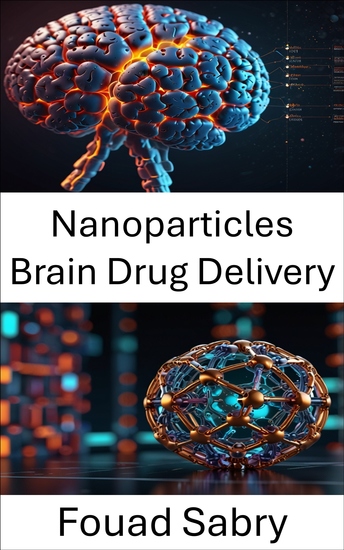
Nanoparticles Brain Drug Delivery - Advancements in Targeted Treatment for Neurological Disorders - cover

Nanoparticles Brain Drug Delivery - Advancements in Targeted Treatment for Neurological Disorders

Fouad Sabry

Publisher: One Billion Knowledgeable

  • 0
  • 0
  • 0

Summary

Nanoparticles for drug delivery to the brain-This chapter introduces the role of nanoparticles in enhancing brain drug delivery, emphasizing their ability to cross the bloodbrain barrier
 
Blood–spinal cord barrier-Explore the challenges and solutions in delivering drugs across the blood–spinal cord barrier using nanoparticle technology
 
Lipidbased nanoparticle-Discusses lipidbased nanoparticles' advantages in drug delivery, focusing on their biocompatibility and efficiency in brain targeting
 
RNAi nanoparticles to target cancer-Examines the use of RNA interference nanoparticles to target cancer cells in the brain, offering a promising therapeutic approach
 
Nanocapsule-Details the role of nanocapsules in drug delivery, with a focus on their ability to encapsulate and protect drugs for controlled release
 
Vectors in gene therapy-Looks at the importance of nanoparticles as gene delivery vectors, enhancing the precision of gene therapies for neurological conditions
 
Targeted drug delivery-Explores various targeting mechanisms used in nanoparticle drug delivery systems to improve drug efficacy and reduce side effects
 
Intranasal drug delivery-Investigates the effectiveness of intranasal administration of nanoparticles for delivering drugs directly to the brain
 
Nanoparticle–biomolecule conjugate-Focuses on the conjugation of nanoparticles with biomolecules to enhance drug targeting and effectiveness
 
Drug delivery to the brain-Reviews various methods and technologies used to deliver therapeutic agents directly to the brain, highlighting nanoparticles' role
 
Nanoparticle drug delivery-A comprehensive review of nanoparticle drug delivery systems, exploring their applications, challenges, and future potential
 
Nanoneuroscience-Delve into the emerging field of nanoneuroscience, where nanoparticles are used to study and treat brain diseases and disorders
 
Immunoliposome therapy-Examines the use of immunoliposomes, a nanoparticlebased system, in delivering drugs and immune therapies to the brain
 
Magnetic nanoparticles in drug delivery-Discusses the role of magnetic nanoparticles in targeted drug delivery, including their ability to be directed to specific areas of the brain
 
Microbubble-Investigates how microbubbles are used in conjunction with nanoparticles for noninvasive drug delivery to the brain, enhancing treatment precision
 
Nanogel-Looks into the potential of nanogels in drug delivery, focusing on their ability to provide controlled release and targeted treatment for brain disorders
 
Blood–brain barrier-Explores advanced strategies for overcoming the bloodbrain barrier, a major challenge in drug delivery to the brain
 
Cytokine delivery systems-Analyzes how nanoparticles can be used to deliver cytokines to the brain, offering new avenues for treating neuroinflammatory diseases
 
Cationic liposome-Discusses cationic liposomes in drug delivery, focusing on their potential to efficiently deliver therapeutic agents to the brain
 
Focused ultrasound for intracranial drug delivery-Investigates the combination of focused ultrasound and nanoparticles in enhancing drug delivery to the brain
 
Transcytosis-This chapter looks at how nanoparticles can exploit transcytosis to bypass biological barriers and deliver drugs directly to the brain
Available since: 03/13/2025.
Print length: 264 pages.

Other books that might interest you

  • Weather Science - How Meteorology Has Gone from Folklore to High-Tech - cover

    Weather Science - How...

    Brian Clegg

    • 0
    • 0
    • 0
    Everyone has an interest in the weather, whether it's to check the prospects for a day out or to know when best to harvest a crop. The Earth's weather systems also provide some of the most dramatic forces of nature, from the vast release of energy in a lightning flash to the devastating impact of tornadoes and hurricanes.
    
    For centuries, our only real guide to future weather was folklore, but with the introduction of the first weather forecasts and maps in Victorian times, attempts were made to give some warning of the weather to come. Until relatively recently, these forecasts could be wildly inaccurate - think of Michael Fish's denial that there was a storm on the way the night before the UK's great storm of 1987. This was due to the mathematically chaotic nature of weather systems, first discovered in the 1960s, the understanding of which would transform forecasting from the 1990s and mean that meteorologists became some of the foremost users of supercomputers.
    
    From the crystalline perfection of the snowflake to the transfer of energy from the Sun, science lies at the heart of the weather and our understanding of it. In recent years, weather science has moved to the leading edge with advanced modelling, versatile use of satellite data and a better understanding of mathematical chaos. This is a true example of hot science at work.
    Show book
  • If P Then Q - Why Philosophy Can Teach You How to Think and Help You Live a Happy Life By the Methods of Applying Logic to Solve the Problems in Your Life and Achieve Success (A Scholarly Monograph) - cover

    If P Then Q - Why Philosophy Can...

    Russell Hasan

    • 0
    • 0
    • 0
    This short paper on logic argues that logic and science can go hand in hand, and that, by taking observations of perceptions and sensations, and applying logical analysis to them, you have the power to build conceptual models and frameworks that you can use in order to predict what you should do in the future and to reason how to solve the problems in your life. Examples from hard science, and examples of the use of science and logic in the courtroom to understand legal arguments, are presented, as well examples of how to figure out the answers to the mundane ordinary problems that we humans have in our lives. 
    Mandatory must-read for anyone who wants to think and live using logic.
    Show book
  • Music & Meditation - Can music truly influence your state of mind - cover

    Music & Meditation - Can music...

    Book Cave

    • 0
    • 0
    • 0
    Understanding Musical Meditation involves the integration of music into meditation practices to enhance relaxation and mindfulness. This approach recognizes that sound can significantly influence our emotional and psychological states. By incorporating music into meditation, individuals can deepen their practice, creating a more immersive and enriching experience. The soothing qualities of music can help to quiet the mind and prepare the body for meditation, making it easier to achieve a state of tranquillity and focus. 
    The objective of this book is to provide some insights into an understanding and benefits of using music in your meditation. 
    Show book
  • Artificial Intelligence in Healthcare - Revolutionizing Medicine - cover

    Artificial Intelligence in...

    Craig Dames

    • 0
    • 0
    • 0
    Artificial Intelligence (AI) is rapidly transforming the landscape of healthcare, offering new possibilities for improving diagnosis, treatment, and patient care. At its core, AI refers to the ability of machines to simulate human intelligence through learning, reasoning, problem-solving, and decision-making. In healthcare, this means using advanced computational models and algorithms to analyze data, identify patterns, and make predictions that were once the exclusive domain of human experts. 
    The journey of AI in medicine began in the mid-20th century with the development of the first rudimentary computer programs designed to simulate human cognition. Since then, technological advancements have propelled AI into the forefront of healthcare innovation. Today, AI is used across a wide range of applications, from enhancing medical imaging and diagnosing diseases to streamlining administrative tasks and improving patient outcomes. 
    One of the most notable contributions of AI to healthcare is in the realm of diagnosis and disease detection. Machine learning algorithms, for instance, are capable of analyzing vast datasets—such as medical images, electronic health records (EHRs), and genomic information—to detect patterns that might be invisible to the human eye. AI systems are now being used to detect conditions like cancer, heart disease, and neurological disorders at earlier stages, offering the potential for more accurate and timely interventions.
    Show book
  • Working with Dinosaurs - How to Lead Technological Evolution from the C-Suite - cover

    Working with Dinosaurs - How to...

    Marcus East

    • 0
    • 0
    • 0
    You already know what happens when dinosaurs and meteoric change come together. 
    Rapid change also impacts the digital world, and the choice for leaders is transformation or extinction. But adaptation can be challenging. Human teams and managers tend to resist change, and it takes effort and ingenuity to convince them to grow. 
    In Working with Dinosaurs, Marcus East, a leader in the digital technology industry for over two decades, shows other top executives how to disrupt outdated systems and mindsets and embrace new tech worlds like cloud computing and AI, so they can become next generation leaders of digital and tech transformation. 
    Ditching the dinosaurs means more than switching out old software and skills. It means re-envisioning the structure of an organization. It means creatively changing roles, capabilities, and culture. It means inspiring teams to move forward. 
    Digital transformation is here. Evolve to lead it.
    Show book
  • Dispossessing the Wilderness - Indian Removal and the Making of the National Parks - cover

    Dispossessing the Wilderness -...

    Mark David Spence

    • 0
    • 0
    • 0
    National parks like Yellowstone, Yosemite, and Glacier preserve some of this country's most cherished wilderness landscapes. While visions of pristine, uninhabited nature led to the creation of these parks, they also inspired policies of Indian removal. By contrasting the native histories of these places with the links between Indian policy developments and preservationist efforts, this work examines the complex origins of the national parks and the troubling consequences of the American wilderness ideal. The first study to place national park history within the context of the early reservation era, it details the ways that national parks developed into one of the most important arenas of contention between native peoples and non-Indians in the twentieth century.
    Show book