Join us on a literary world trip!
Add this book to bookshelf
Grey
Write a new comment Default profile 50px
Grey
Subscribe to read the full book or read the first pages for free!
All characters reduced
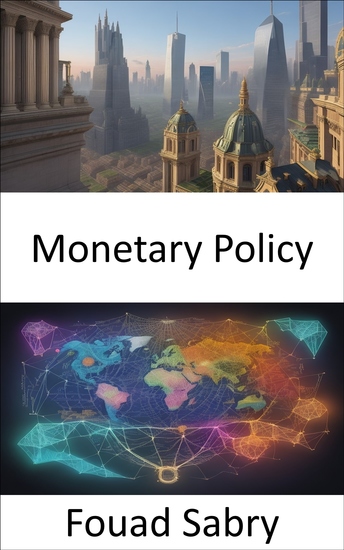
Monetary Policy - Mastering Monetary Policy Your Key to Financial Wisdom - cover

Monetary Policy - Mastering Monetary Policy Your Key to Financial Wisdom

Fouad Sabry

Publisher: One Billion Knowledgeable

  • 0
  • 0
  • 0

Summary

What is Monetary Policy
 
The policy that is adopted by the monetary authority of a nation to impact monetary and other financial conditions in order to achieve broader goals such as high employment and price stability is referred to as monetary policy. The contribution of monetary policy to economic stability and the maintenance of exchange rates that are predictable with respect to other currencies are two further aspects of monetary policy. In today's world, the majority of central banks in rich countries conduct their monetary policy within the framework of inflation targeting. On the other hand, the majority of central banks in developing countries target some type of fixed exchange rate regime with their monetary policies. Targeting the money supply is a third monetary policy technique that was widely used throughout the 1980s. However, its popularity has decreased since then, despite the fact that it is still the official strategy in a number of emerging nations.
 
How you will benefit
 
(I) Insights, and validations about the following topics:
 
Chapter 1: Monetary policy
 
Chapter 2: Central bank
 
Chapter 3: Inflation
 
Chapter 4: Interest rate
 
Chapter 5: Monetary policy of the United States
 
Chapter 6: Money supply
 
Chapter 7: Exchange rate
 
Chapter 8: Devaluation
 
Chapter 9: Open market operation
 
Chapter 10: Foreign exchange reserves
 
Chapter 11: Money creation
 
Chapter 12: Impossible trinity
 
Chapter 13: Mundell-Fleming model
 
Chapter 14: Plano Real
 
Chapter 15: Inflation targeting
 
Chapter 16: Currency intervention
 
Chapter 17: Exchange-rate flexibility
 
Chapter 18: Sterilization (economics)
 
Chapter 19: History of monetary policy in the United States
 
Chapter 20: Monetary policy of the Philippines
 
Chapter 21: Fear of floating
 
(II) Answering the public top questions about monetary policy.
 
(III) Real world examples for the usage of monetary policy in many fields.
 
Who this book is for
 
Professionals, undergraduate and graduate students, enthusiasts, hobbyists, and those who want to go beyond basic knowledge or information for any kind of Monetary Policy.
Available since: 01/21/2024.
Print length: 282 pages.

Other books that might interest you

  • STOP! Read This Before You Even THINK About Trading! - cover

    STOP! Read This Before You Even...

    Ryder Knight

    • 0
    • 1
    • 0
    In the dizzying world of finance, trading holds a certain allure. It is often seen as a quick path to riches, a way to outsmart the market and win big. Images of Wall Street traders cheering and fist-pumping after a successful deal are etched in our collective memory, fueling the misconception that active trading is a sure-fire strategy for accumulating wealth. However, this romanticized depiction is far from reality, and it's time we bring this inconvenient truth to light.The purpose of this book, Stop! Read This Before You Even THINK About Trading! is to dispel the illusions surrounding trading and provide a clear-eyed look at its pitfalls. The idea of beating the market and consistently generating above-average returns is deeply ingrained in our psyche, but the hard truth is that it's an endeavor riddled with risks, hidden costs, and often leads to disappointing outcomes.Drawing from extensive research, this book offers a comprehensive exploration of the underlying reasons why most people lose money in trading.
    Show book
  • Headlines That Matter - How News Moves Markets - cover

    Headlines That Matter - How News...

    Kavita Chandran, Saldene Lyte,...

    • 0
    • 0
    • 0
    An in-depth exploration of how breaking news affects investor sentiments and trader decisions―and ultimately the stock marketGlued to their screens for news alerts, financial traders must quickly decipher which ones are most reliable in order to make effective trading decisions. Journalists know that the headlines they craft must instantly grab the attention of a trader.This book focuses on the relatively unknown "Headlines" desk in newswire services, where journalists type breaking news for subscribers and the public. Drawing on their experiences as former Bloomberg headline writers, Chandran and Lyte reveal the processes of these teams that deftly link the two sides of news: information and interpretation.The insights this book offers will benefit students of both business journalism and finance, as well as CEOs, corporate communications directors, wealth managers, investors, and traders.
    Show book
  • Self-Publish & Succeed - The No Boring Books Way to Writing a Non-Fiction Book that Sells - cover

    Self-Publish & Succeed - The No...

    Julie Broad

    • 0
    • 1
    • 0
    You can write a book - anyone can. But if you want to write a book that people will want or even need to read, it’s not as simple as sitting down to write. In fact, that’s one of the biggest mistakes unsuccessful authors make. 
    Writing a book can be one of the smartest moves for your business success. But you need more than writing skills to create an impressive book that readers will love. You also need a plan to market, sell, and leverage your book into a new level of leadership within your industry to reach your professional goals.  
    In Self-Publish & Succeed, trusted best-selling author and entrepreneur Julie Broad shows you that writing a successful nonfiction book starts long before you write your first chapter. To write a book that boosts your brand, generates a profit, and makes you an influencer in your industry, you need the #noboringbooks way.  
    You’re about to discover:The reason why you’re not finishing your book - and how to overcome itWhy most books are boring, and how to keep yours from being one of themWhich editors you need to perfect your story, and where to find themThe one simple page that could generate thousands of salesSeven places to sell your book (and only one starts with “A!”) 
    Nonfiction doesn’t mean no fun. Write a money-making book that delivers meaningful impact. Self-Publish & Succeed is your step-by-step guide to writing, publishing, and marketing a book that will get attention, explode your career, and change people’s lives - including yours.
    Show book
  • The Elevated Leader - Level Up Your Leadership Through Vertical Development - cover

    The Elevated Leader - Level Up...

    Ryan Gottfredson

    • 0
    • 0
    • 0
    The Elevated Leader is a cutting-edge leadership development book that explains how vertical development can guide leaders to effectively navigate the rising change, pressure, ambiguity, and complexity they are increasingly facing, while having a positive and uplifting influence on the world around them.
    Show book
  • CHOOSE TO BE RICH - 3 STEP GUIDE TO WEALTH - Where Are You Now And Set Your New Goals - cover

    CHOOSE TO BE RICH - 3 STEP GUIDE...

    Robert T. Kiyosaki, Sharon...

    • 0
    • 0
    • 0
    Robert T. Kiyosaki 
    Robert Kiyosaki, author of Rich Dad Poor Dad - the international runaway bestseller that has held a top spot on the New York Times bestsellers list for over six years - is an investor, entrepreneur and educator whose perspectives on money and investing fly in the face of conventional wisdom. He has, virtually single-handedly, challenged and changed the way tens of millions, around the world, think about money.In communicating his point of view on why 'old' advice - get a good job, save money, get out of debt, invest for the long term, and diversify - is 'bad' (both obsolete and flawed) advice, Robert has earned a reputation for straight talk, irreverence and courage.Rich Dad Poor Dad ranks as the longest-running bestseller on all four of the lists that report to Publisher's Weekly - The New York Times, Business Week, The Wall Street Journal and USA Today - and was named "USA Today's #1 Money Book" two years in a row. It is the third longest-running 'how-to' best seller of all time.Translated into 51 languages and available in 109 countries, the Rich Dad series has sold over 27 million copies worldwide and has dominated best sellers lists across Asia, Australia, South America, Mexico and Europe. In 2005, Robert was inducted into Amazon.com Hall of Fame as one of that bookseller's Top 25 Authors. There are currently 26 books in the Rich Dad series.In 2006 Robert teamed up with Donald Trump to co-author Why We Want You To Be Rich - Two Men - One Message. It debuted at #1 on The New York Times bestsellers list.Robert writes a bi-weekly column - 'Why the Rich Are Getting Richer' - for Yahoo! Finance and a monthly column titled 'Rich Returns' for Entrepreneur magazine.Prior to writing Rich Dad Poor Dad, Robert created the educational board game CASHFLOW 101 to teach individuals the financial and investment strategies that his rich dad spent years teaching him. It was those same strategies that allowed Robert to retire at age 47.
    Show book
  • The Human Side of Sales - cover

    The Human Side of Sales

    Jessica Frank

    • 0
    • 0
    • 0
    Behind every deal, target, and transaction is a person. In The Human Side of Sales, Jessica Frank reminds us that selling isn’t about numbers—it’s about people, relationships, and trust. 
    This book offers a refreshing perspective on sales that balances strategy with empathy, blending proven techniques with a human-first approach. You’ll learn how to: 
    Build genuine connections that outlast a single transaction. 
    Listen deeply to understand what customers really need. 
    Lead conversations with authenticity instead of scripts. 
    Handle rejection with resilience and grace. 
    Create long-term partnerships that fuel sustainable growth. 
    Whether you’re new to sales or a seasoned professional, this book shows you how to succeed without losing sight of the values that matter most. 
    Because the best sales are built not on pressure, but on people.
    Show book