Join us on a literary world trip!
Add this book to bookshelf
Grey
Write a new comment Default profile 50px
Grey
Subscribe to read the full book or read the first pages for free!
All characters reduced
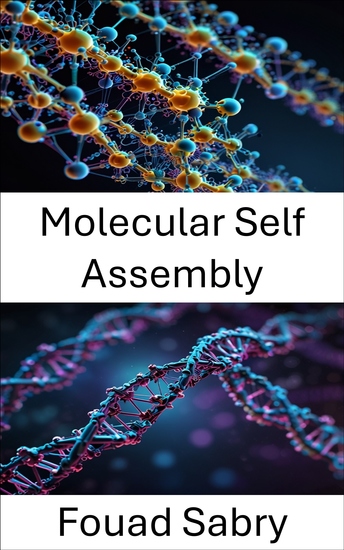
Molecular Self Assembly - Emerging Frontiers in DNA Nanotechnology and Biomimetic Design - cover

Molecular Self Assembly - Emerging Frontiers in DNA Nanotechnology and Biomimetic Design

Fouad Sabry

Publisher: One Billion Knowledgeable

  • 0
  • 0
  • 0

Summary

The world of molecular selfassembly holds the key to groundbreaking advancements in DNA nanotechnology. Understanding how molecules autonomously organize into complex structures is essential for innovations in medicine, materials science, and nanorobotics. This book provides a comprehensive exploration of selfassembly principles, making it an invaluable resource for professionals, students, and enthusiasts.
 
Chapters Brief Overview:
 
1: Molecular selfassembly – Examines the fundamental principles driving autonomous molecular organization.
 
2: Molecular engineering – Explores techniques for designing molecules with precise structural properties.
 
3: Resorcinarene – Introduces macrocyclic molecules used for templated nanostructures.
 
4: Supramolecular catalysis – Highlights catalytic processes enabled by noncovalent molecular interactions.
 
5: Selfassembly of nanoparticles – Discusses strategies for arranging nanoparticles into functional assemblies.
 
6: Bacillus virus phi29 – Analyzes the selfassembling properties of this bacteriophage in nanotechnology.
 
7: DNA origami – Details the folding of DNA into nanoscale structures with programmable functionality.
 
8: Molecular machine – Explores nanoscale devices that perform mechanical work at the molecular level.
 
9: Supramolecular polymer – Introduces polymeric materials formed through reversible molecular interactions.
 
10: Protein complex – Examines naturally occurring selfassembling protein structures and their applications.
 
11: DNA nanotechnology – Provides a deep dive into DNAbased molecular construction techniques.
 
12: Selfassembly – Covers broad concepts of spontaneous molecular organization across various disciplines.
 
13: Mechanically interlocked molecular architectures – Discusses the unique properties of topologically linked molecules.
 
14: Nanotechnology – Explores the broader applications of nanoscale engineering beyond DNAbased systems.
 
15: Supramolecular chemistry – Introduces the chemistry of noncovalent interactions governing molecular assembly.
 
16: Roeland Nolte – Highlights contributions of this pioneer in supramolecular chemistry and nanotechnology.
 
17: Nanobiotechnology – Examines the intersection of nanotechnology and biology for medical advancements.
 
18: RNA origami – Describes RNAbased selfassembly techniques for creating programmable nanostructures.
 
19: Crystal engineering – Explores the design of crystalline materials using selfassembly principles.
 
20: Macromolecular cages – Introduces hollow molecular structures with potential in drug delivery and catalysis.
 
21: Molecular recognition – Investigates how molecules selectively interact to form complex assemblies.
 
By mastering molecular selfassembly, readers will gain insights into how nature builds intricate nanostructures and how these principles can be harnessed for revolutionary applications. Whether you are a student, researcher, or hobbyist, this book provides a solid foundation in one of the most exciting frontiers of science.
Available since: 03/07/2025.
Print length: 236 pages.

Other books that might interest you

  • Cracking the Code: Secrets to Understanding Cancer Unraveled - "Master cancer comprehension! Access compelling audio lessons designed to enlighten and empower your learning journey" - cover

    Cracking the Code: Secrets to...

    Orson Dunsmore

    • 0
    • 0
    • 0
    Cracking the Code: Secrets to Understanding Cancer Unraveled 
    ⭐⭐ Simplified Audio Guide & Explanations Included ⭐⭐ 
    Are you eager to advance your career and enhance your knowledge while unraveling the complexities of cancer?   
    Do you need a thorough guide that encompasses everything you need to truly understand cancer and its secrets?   
    Your quest ends here!   
    This guide is your ultimate resource for deepening your comprehension, applying newfound insights, and engaging in practical exercises. With this, you're set for success.   
    Updated for the latest understanding and practices in cancer research and care.   
    Key features of this enriched guide:   
    - In-depth insights into the intricacies of cancer   
    - Comprehensive explanations of key concepts related to cancer   
    - Effective strategies for understanding and discussing cancer   
    Our guide stands out with its extensive coverage, which is crucial for your success in unraveling the mysteries of cancer. Concepts are not just glossed over; they are explored with clarity and depth.   
    Crafted with a clear structure and straightforward language, our guide guarantees seamless transitions between topics. Say farewell to confusing jargon and welcome clear, concise, and technically accurate content.   
    So, why hesitate? Click the BUY NOW button, secure your guide, and embark on your journey to understanding cancer like never before!   
    Transform your life through courage and self-discovery with this essential guide!
    Show book
  • The Dog Who Didn’t Love Me - Wild Chorus Author Brenda Peterson on our Bonds with Dogs Wolves and Dolphins - cover

    The Dog Who Didn’t Love Me -...

    Brenda Peterson

    • 0
    • 0
    • 0
    What animals teach us about love. Brenda Peterson, author of the popular book, Wild Chorus, takes us on a moving, sometimes surprising journey of our more-than-human bonds with wild and domestic animals. Author interviewed by Almost Live! comedian, Tracey Conway, and her husky dog, Ella. 
     
    The Tantor audiobook of WILD CHORUS is available at https://tantor.com/wild-chorus-brenda-peterson.html 
     
    The print book of WILD CHORUS is available from your favorite bookstore or from Mountaineers Books at www.mountaineers.org/books/books/wild-chorus-finding-harmony-with-whales-wolves-and-other-animals 
     
    Brenda's many books can be found at: https://brendapetersonbooks.com/, as well as other stories in Wild Chorus at: https://brendapetersonbooks.com/wild-chorus.
    Show book
  • Mind Hacking for Self-Mastery - cover

    Mind Hacking for Self-Mastery

    Zander Green

    • 0
    • 0
    • 0
    Mind Hacking for Self-Mastery: A Guide on How to Achieve Your Goals Through Mind Control. Discover Mind Hacking Techniques for Personal Growth and SuccessWe all want to be in control of our lives, but sometimes our minds can feel like they're working against us. Negative thoughts, self-doubt, and distractions can prevent us from achieving our goals and living the lives we want. The good news is that you have the power to take control of your own mind. By mastering the art of mind control, you can learn to direct your thoughts and emotions in a way that serves your best interests. This audiobook will give you the tools and techniques you need to achieve self-mastery and unlock your full potential.This audiobook will cover the following topics:- The Power of Mind Control- The Science of Mind Control- The Importance of Self-Awareness- Techniques for Mind Control- Overcoming Limiting Beliefs- The Power of Emotions- The Role of Focus and Concentration- The Connection Between Mind and Body- Overcoming Procrastination and Building Habits- Protecting Yourself from Mind Control by Others- And many more!If you want to achieve profound changes in your life through mastering your mind, scroll up and click “add to cart” now.
    Show book
  • Species Interactions - cover

    Species Interactions

    Santiago Machain

    • 0
    • 0
    • 0
    Species Interactions is a clear, engaging introduction to how life holds together. Written for readers with no prior background, it reveals the everyday logic behind the living world—how species compete for resources, how predators and prey shape each other, and how microbes, plants, and animals form partnerships that make survival possible. This book moves from core concepts like niches, food webs, and trophic dynamics to practical views of symbiosis, microbial ecosystems, network stability, and resilience. Along the way, it shows how observation, simple experiments, and pattern recognition can turn any backyard, park, or city block into a living classroom. The result is a friendly yet rigorous guide to seeing, understanding, and caring for the connections that sustain ecosystems and our daily lives.
    Show book
  • Milk - cover

    Milk

    Matthew Evans

    • 0
    • 0
    • 0
    A powerful, entertaining and, at times, eviscerating commentary on the most controversial of original superfoods. 
     
    Milk. It's in our coffee, on our cereal. We see it in processed form – yoghurt, butter, cheese, skimmed and lactose free. It's there in almond form, or made from oats or soy, and is as lauded as the 'perfect' food or lambasted as not fit for human consumption and a toxic planet killer, depending on who you trust. Which type you drink, whether you were raised on breastmilk, what you think of it, is affected by culture, biology and fashion. How you view it is driven by your gender and your politics, as well as your geography. 
     
    The miracle liquid has suffered an image problem. It has been used to keep people poor, to keep women subjugated, and to build corporate and medical careers. It's been blamed for climate change, the breakdown of human health, and an enabler of the industrial revolution. From perfect food to pariah, milk's role in life has often been debased. 
     
    Milk celebrates the majesty of this noble liquid, and delves into the pretenders to its throne, from formula to Mylk. It looks at the transformation of what a milk-producer eats into one of the most nutrient dense foods available, and how that can be transformed again into the butter, cheese and clotted cream that we know and love today. It's an exploration of the science, history and politics of what makes mammals different from every other life form on earth.
    Show book
  • Hydrology - Water's Journey in Nature - cover

    Hydrology - Water's Journey in...

    Mike Crawford

    • 0
    • 0
    • 0
    The water cycle, also known as the hydrological cycle, is a continuous and dynamic process that moves water throughout the Earth's atmosphere, surface, and underground reservoirs. This cycle plays a vital role in sustaining ecosystems, regulating climate, and supporting human life. Water undergoes various transformations as it moves through different stages, driven by the energy of the sun and the force of gravity. 
    One of the fundamental processes of the water cycle is evaporation, where water from oceans, lakes, rivers, and even soil turns into water vapor due to heat from the sun. Plants also contribute to this process through transpiration, where they release moisture from their leaves into the air. Together, these processes add significant amounts of water vapor to the atmosphere. As the air rises and cools, this vapor undergoes condensation, forming clouds composed of tiny water droplets or ice crystals. 
    When these droplets combine and become heavy enough, precipitation occurs in the form of rain, snow, sleet, or hail. Precipitation is the primary way water returns to the Earth's surface, replenishing water bodies and providing essential moisture for plant and animal life. Depending on the terrain and environmental conditions, this water can take several different paths. Some of it infiltrates into the ground, recharging underground aquifers in a process known as groundwater recharge. Other portions of the water flow overland as surface runoff, eventually collecting in rivers, lakes, and oceans. This runoff helps shape landscapes by eroding and transporting sediments over time.
    Show book