Join us on a literary world trip!
Add this book to bookshelf
Grey
Write a new comment Default profile 50px
Grey
Subscribe to read the full book or read the first pages for free!
All characters reduced
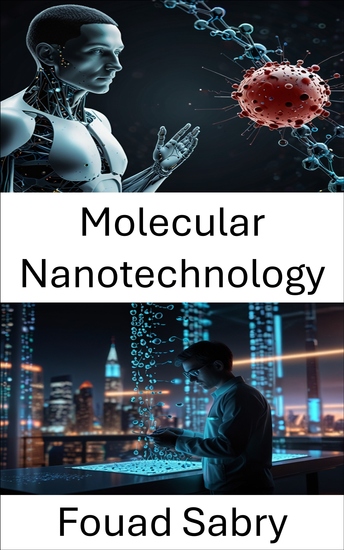
Molecular Nanotechnology - Exploring Revolutionary Advances in Nanoengineering for Future Technologies - cover

Molecular Nanotechnology - Exploring Revolutionary Advances in Nanoengineering for Future Technologies

Fouad Sabry

Publisher: One Billion Knowledgeable

  • 0
  • 0
  • 0

Summary

Molecular nanotechnology-This chapter introduces the core concepts of molecular nanotechnology, its potential, and its role in shaping future innovations
 
Selfreplicating machine-Explores the possibility of machines that can replicate themselves, an essential concept for nanotechnology's scalability and efficiency
 
K. Eric Drexler-Highlights Drexler’s pioneering work in nanotechnology, which laid the foundation for much of the current research and advancements in the field
 
Engines of Creation-An indepth look at Drexler’s influential book, which discusses the theoretical underpinnings and future possibilities of molecular manufacturing
 
Robert Freitas-Discusses the contributions of Robert Freitas to molecular nanotechnology, particularly in the field of nanomedicine and its societal impact
 
Richard Smalley-Examines Richard Smalley’s key discoveries, including his work on carbon nanotubes, which have vast implications for molecular nanotechnology
 
Gray goo-Focuses on the potential dangers of selfreplicating nanomachines, an essential ethical and safety consideration in the field of nanotechnology
 
Nanorobotics-Investigates the creation and use of nanobots, exploring their potential in fields like medicine, environmental monitoring, and manufacturing
 
Nanomedicine-Describes the revolutionary potential of nanotechnology in medicine, including drug delivery systems, diagnostics, and treatment innovations
 
Molecular assembler-Explains the concept of molecular assemblers—machines capable of constructing materials at the molecular level, a key technology for nanotechnology
 
There’s Plenty of Room at the Bottom-Discusses Richard Feynman’s groundbreaking 1959 lecture that envisioned a future of miniaturized machines and systems, setting the stage for molecular nanotechnology
 
Feynman Prize in Nanotechnology-Details the prestigious Feynman Prize, awarded for outstanding contributions to the field of nanotechnology, and its impact on research
 
Selfreplication-A further exploration of the concept of selfreplicating systems and their potential applications, both beneficial and hazardous
 
Drexler–Smalley debate on molecular nanotechnology-Examines the intellectual debate between two leading figures in nanotechnology, offering insights into the field’s challenges
 
History of nanotechnology-Traces the historical development of nanotechnology from its theoretical origins to its current applications, highlighting key milestones
 
Ralph Merkle-Highlights the contributions of Ralph Merkle, particularly in the area of molecular machines and their potential in practical applications
 
Wet nanotechnology-Focuses on the role of wet nanotechnology, which involves molecularscale machines working in environments similar to biological systems
 
Productive nanosystems-Explores the development of nanosystems that can perform complex tasks, including manufacturing and selfrepair
 
Ecophagy-Discusses the concept of nanotechnology being used for environmental remediation, particularly in the context of “ecophagy” or selfreplicating systems designed to remove waste
 
Nanotechnology-Provides a broader overview of the current state of nanotechnology, its applications, and its promise in revolutionizing industries
 
Mechanosynthesis-Focuses on the process of mechanosynthesis, a critical technology for assembling complex molecular structures with precision
Available since: 03/26/2025.
Print length: 219 pages.

Other books that might interest you

  • Thrive - Maximizing Well-Being in the Age of AI - cover

    Thrive - Maximizing Well-Being...

    Anindya Ghose, Ravi Bapna

    • 0
    • 0
    • 0
    Artificial intelligence (AI) is a powerful general-purpose technology that is reshaping the modern economy, but misperceptions about AI stand in the way of harnessing it for the betterment of humanity. In Thrive, Ravi Bapna and Anindya Ghose counter the backlash by showcasing how AI is positively influencing the aspects of our daily lives that we care about most: our health and wellness, relationships, education, the workplace, and domestic life. In the process the authors help explain the underlying technology and give people the agency they need to shape the debate around how we should regulate AI to maximize its benefits and minimize its risks. 


    Bringing over two decades of experience with cutting-edge research, consulting, executive coaching, and advising to bear on the subject, Bapna and Ghose demystify the technology of AI itself. They offer a novel "House of AI" framework that encompasses traditional analytics, generative AI, and fair and ethical deployment of AI. Using examples from everyday life, they showcase how the modern AI-powered ecosystem fundamentally improves the emotional, physical, and material well-being of regular people across the globe. Thrive's mission is to educate the public about AI, shape realistic expectations, and foster informed discussions about a fast-emerging AI-shaped society.
    Show book
  • Fundamentals of Machine Learning - A no code no math book on understanding fundamentals of modern ML & AI - cover

    Fundamentals of Machine Learning...

    DSA Shots

    • 0
    • 0
    • 0
    Welcome to "Fundamentals of Machine Learning"! This comprehensive guide is designed to provide an introduction to the fascinating world of machine learning and artificial intelligence. Whether you're a seasoned programmer or just starting out, this book will take you on a journey through the fundamentals of these technologies and their applications in various industries. 
    Artificial Intelligence (AI) has been a buzzword for years, but what does it really mean? In simple terms, AI refers to any software that can perform tasks that typically require human intelligence, such as visual perception, speech recognition, decision-making, and language translation. Machine learning is a subset of AI that focuses on developing algorithms and statistical models that enable computers to learn from data without being explicitly programmed. 
    This book will cover the following topics: 
    * Introduction to Artificial Intelligence and Machine Learning 
    * Differences Between Classical Programming and Artificial Intelligence 
    * Machine Learning Models and their Types (Supervised, Unsupervised, and Reinforcement Learning) 
    * Deep Learning Techniques and Large Language Models (LLMs) 
    * Applications of Machine Learning in various industries such as Healthcare, Finance, Marketing, and more. 
    By the end of this book, you will have a solid understanding of the fundamentals of machine learning and artificial intelligence, and how they can be applied to real-world scenarios. Whether you're looking to start a career in this field or simply want to learn more about it, this book is an excellent starting point for your journey. So, let's get started!
    Show book
  • Leadership for Scientists and Engineers - Transforming Brilliant Technical Experts Into Great Managers - cover

    Leadership for Scientists and...

    Gwen Acton

    • 0
    • 0
    • 0
    Like it or not, you’re a leader now. Better step away from your computer and figure out how to deal with people! 
    There are few leadership books tailored specifically to the needs of technical-minded people who like hard evidence, plain language, and industry-specific guidance. 
    People like you! 
    Gwen Acton, PhD, has helped thousands of scientists and engineers to become better leaders, and she can help you too. Leadership for Scientists and Engineers offers a clear, pull-no-punches walk through all the skills you’ll need to manage a team and advance in your role, including: 
        * Delegating. Delegating way more than you think you should. Delegating like your life depends on it. 
        * Conducting one-on-ones that put you and your reports at ease and ensure no surprises when it comes time for the annual review. 
        * Navigating the hiring and onboarding process no matter what size organization you’re working with. 
        * Figuring out what to do when someone starts crying in your office. 
    Science and engineering take a lot of technical know-how, but leadership takes a lot of soft skills—communication, networking, setting and adjusting goals. 
    You want to be good at this stuff. You don’t want to hate it. Leadership for Scientists and Engineers is here to help.
    Show book
  • Everyday AI - How Anyone Can Benefit from Artificial Intelligence - cover

    Everyday AI - How Anyone Can...

    Nura Uba

    • 0
    • 0
    • 0
    Everyday AI: How Anyone Can Benefit from Artificial Intelligence 
     Artificial intelligence isn’t just powering high-tech companies and futuristic inventions it’s already shaping your daily life in ways you may not even notice. From personalized recommendations and smart assistants to fraud protection and healthcare breakthroughs, AI is working quietly in the background to make things faster, easier, and more secure. 
    This Audiobook is your guide to understanding AI without the jargon, the hype, or the fear. You don’t need to be a programmer or a tech expert to see how it fits into your world and how you can make the most of it. 
     Inside, you’ll discover:How AI shows up in everyday routines from shopping and travel to work and entertainment.The biggest myths and misunderstandings about AI, and what’s really true.Practical ways to use AI tools for productivity, learning, and personal growth.How to stay confident and informed as AI continues to evolve. 
     Everyday AI is written for curious beginners, busy professionals, and anyone who wants to keep up without feeling overwhelmed. By the end, you’ll have the clarity and confidence to see AI not as something distant or intimidating, but as a helpful partner in your everyday life.
    Show book
  • White Pine - American History and the Tree that Made a Nation - cover

    White Pine - American History...

    Andrew Vietze

    • 0
    • 0
    • 0
    The history of the ubiquitous pine tree is wrapped up with the history of early America—and in the hands of a gifted storyteller becomes a compelling listen, almost an adventure story.
    Show book
  • Ultimate Event-Driven Architecture with Python and Apache Kafka - Architect Secure Test and Deploy Event-Driven Applications at Scale Using the Power of Python and Apache Kafka - cover

    Ultimate Event-Driven...

    Gopal Sharma

    • 0
    • 0
    • 0
    Build high-performance, scalable, and resilient systems using Python and Kafka.
    Book Description
    Python’s simplicity and flexibility, combined with Apache Kafka’s high-throughput, fault-tolerant messaging system, make them a powerful duo for building scalable, event-driven applications. Ultimate Event-Driven Architecture with Python and Apache Kafka brings together these two technologies to help developers and architects design modern, asynchronous systems capable of handling real-time data at scale.
    The book begins by introducing the fundamentals of Event-Driven Architecture (EDA), including its core principles, benefits, and real-world relevance. It then explores the essential components of an EDA system, guiding readers through design patterns, message flow, and architectural considerations. Security, testing, and observability are covered in depth to ensure robust and reliable systems.
    Later chapters dive into Apache Kafka concepts and demonstrate how to build and deploy practical, real-world solutions using Python. Hands-on examples and a complete use case walk-through ensure that readers can confidently apply what they’ve learned in production scenarios.
    Whether you're modernizing legacy systems or architecting from scratch, this book equips you to build event-driven systems that are scalable, resilient, and future-ready. Start your EDA journey with Python and Kafka today!
    Table of Contents
    1. Event-Driven Architecture: Introduction
    2. Components of Event-Driven Architecture
    3. Event-Driven Architecture: Real-World Examples
    4. Designing Event-Driven Architecture
    5. Security Best Practices
    6. Testing and Debugging
    7. Monitoring
    8. Apache Kafka: Concept
    9. Real-World Use Case with Python and Kafka      
    
    Index
    Show book