Join us on a literary world trip!
Add this book to bookshelf
Grey
Write a new comment Default profile 50px
Grey
Subscribe to read the full book or read the first pages for free!
All characters reduced
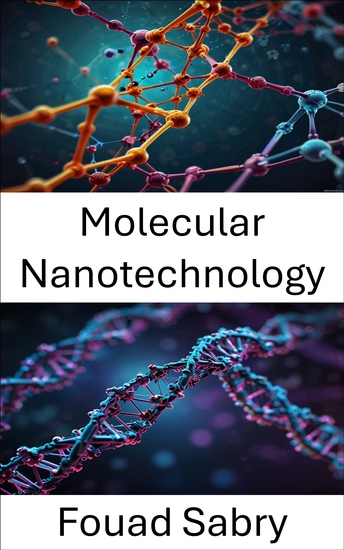
Molecular Nanotechnology - Advancements in DNA Based Technologies for Precision Assembly - cover

Molecular Nanotechnology - Advancements in DNA Based Technologies for Precision Assembly

Fouad Sabry

Publisher: One Billion Knowledgeable

  • 0
  • 0
  • 0

Summary

Unlock the transformative world of Molecular Nanotechnology and its profound impact on science, technology, and society. This essential guide bridges cuttingedge research with practical insights, making it an indispensable resource for professionals, students, and enthusiasts eager to explore the limitless potential of DNA nanotechnology in shaping our future.
 
Chapters Brief Overview:
 
1: Molecular nanotechnology – Discover the fundamentals of atomically precise manufacturing.
 
2: Nanotechnology – Explore the broader field and its integration with molecular systems.
 
3: Molecular assembler – Learn how molecular assemblers revolutionize nanoscale construction.
 
4: Ralph Merkle – Delve into the pioneering contributions of Ralph Merkle in nanotechnology.
 
5: Drexler–Smalley debate on molecular nanotechnology – Examine the key arguments in this pivotal debate.
 
6: Gray goo – Understand the hypothetical risks of unchecked selfreplicating nanobots.
 
7: Engines of Creation – Explore the groundbreaking ideas from Drexler's visionary work.
 
8: Feynman Prize in Nanotechnology – Learn about this prestigious award and its significance in the field.
 
9: Ecophagy – Analyze the environmental implications of nanotechnological advances.
 
10: Robert Freitas – Discover Freitas's contributions to nanomedicine and molecular machines.
 
11: Selfreplication – Understand the mechanics and potential of nanoscale selfreplicating systems.
 
12: History of nanotechnology – Trace the evolution of nanotechnology from theory to application.
 
13: Nanomedicine – Explore how nanotechnology is revolutionizing healthcare and treatment.
 
14: Richard Smalley – Learn about Smalley’s influential work and its impact on molecular science.
 
15: Mechanosynthesis – Dive into the methods of building structures atom by atom.
 
16: Wet nanotechnology – Discover how biological environments influence nanoscale engineering.
 
17: Productive nanosystems – Examine systems capable of assembling complex nanostructures.
 
18: Selfreplicating machine – Explore machines that replicate themselves at the molecular level.
 
19: Nanorobotics – Learn about robots operating at the nanoscale for diverse applications.
 
20: K. Eric Drexler – Investigate Drexler’s visionary work and its role in advancing nanotech.
 
21: There's Plenty of Room at the Bottom – Reflect on Feynman's seminal lecture that inspired nanotech.
 
Dive into Molecular Nanotechnology to grasp the future of technology today. This comprehensive guide offers valuable insights for professionals, students, and hobbyists alike, ensuring you're at the forefront of this revolutionary field. The knowledge gained from this book far exceeds its cost, opening doors to innovation and understanding in DNA nanotechnology.
Available since: 03/13/2025.
Print length: 219 pages.
Other books that might interest you

  • Evolution Is Wrong - A Radical Approach to the Origin and Transformation of Life - cover

    Evolution Is Wrong - A Radical...

    Erich von Däniken

    • 0
    • 0
    • 0
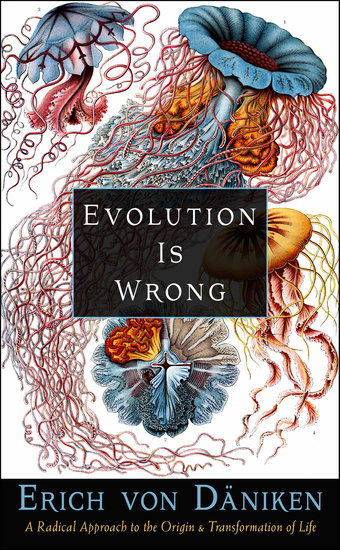
    A Fascinating Exploration on Why the Darwinists’ Theory No Longer Explains EverythingThere was once a set of ideas called the theory of evolution, conceived by clever people and confirmed by countless scientists. Then people discovered the electron microscope. This made it possible to make the molecules within the cell visible, and suddenly questions about evolution arose that were not possible before. Which force actually bundles the atoms in the right order? What moves the molecular chains into the correct position? How did the first living unit within the cell actually come about? How does inheritance work, how does information pass on to the next generation? Did humans descend only and exclusively from primates—as Charles Darwin and countless other great minds assumed—or did additional “engines” intervene in evolution? Today it is clear: countless questions can no longer be answered with the previous theory of evolution. There is a form of life called “Blob” (Physarum polycephalum). The “thing” has neither eyes nor ears, neither a mouth nor a nose or even a brain. Nevertheless, it takes in food, overcomes obstacles by the shortest route and exchanges information with other “blobs.” The “blob” contradicts any evolutionary thought that one develops from the other. Or the “gastric-brooding frogs” (Rheobatrachus) found in Australia. They hatch their young in the stomach. Impossible in a slow, evolutionary process. Everywhere there are characteristics of animals that do not want to fit into the theory of evolution anywhere. And man? Are we really the most adapted life-form on this planet? Today, more and more scientists who contradict the previous theory of evolution speak out. The theory fits the changes within the species, but it can no longer be reconciled with the inner workings of the cell. Some other influence that has so far escaped us is affecting evolution. It is called “Intelligent Design.” Intelligent planning is suspected behind this. Anyone or anything—a spirit of the universe? Aliens?—could be behind this planning. Erich von Däniken uses countless examples to demonstrate the impossibility of the previous evolutionary idea. He quotes scientists who argue against the previous teaching, but also those who defend it. Unfortunately, established science still refuses to look at discrepancies and holes in the theory of evolution, even though it is quite obvious that there is more going on with regard to the development of all species, as well as human culture, than could be explained by the theory of evolution alone.
    Show book
  • Data Mesh - Principles and Logical Architecture - cover

    Data Mesh - Principles and...

    Alexa Campbell

    • 0
    • 0
    • 0
    Gain a broader understanding of Data Mesh and logical architecture. 
    Have you ever asked yourself why you need to learn about Data Mesh? 
    What is their use in our daily life? 
    Have you ever wondered what the logical architecture is for a data mesh? 
    Your data is like a mesh. It's everywhere, and it's connected. 
    This book will help you understand the root causes of this problem and how to solve them using today's most advanced techniques in data management. 
    It is a book about the structure of a data mesh. It defines data mesh, how it works, and why you might want to use it. 
    This book was written for anyone who wants to learn more about this technology. Whether you're an engineer or developer working with a data mesh, someone who's just curious about how they work, or an entrepreneur looking at ways to improve your company's efficiency or productivity—this book will help you understand what these technologies are all about! 
    In this book, you will:Learn the Data Mesh, its state, and its futureLearn about the practical uses of Data MeshGet background knowledge about Data Mesh with concrete examplesMaster Domain Ownership PrincipleDiscover the principle behind the self-serve data platformLearn about the federated computational government principleDiscover the point of inflectionMaster the logical architecture 
    Data Mesh is not just a framework; it's an approach to data modeling that emphasizes simplicity, clarity, and scalability. This book will teach you how to use Data Mesh to build a logical architecture that scales. 
    Don't wait another second; click the “Add to Cart” button now, and the possibilities are endless!
    Show book
  • California Coast Trails - cover

    California Coast Trails

    Joseph Smeaton Chase

    • 0
    • 0
    • 0
    In 1911, decades before California's coast Highway 1 was built, an Englishman rode 2000 miles on horseback the length of California, from Mexico to Oregon. On the way he is courteously received at isolated ranches, has many quiet adventures, and is generally amazed by the beauty of our coast. A classic early California travelog. Chase was born in Islington (London) and but lived most of this life in the California desert.Here are Chase's major landmarks, first going south and then turning north:Chap. 1 El Monte to Laguna Beach. Chap. 2 Aliso Canyon to San Juan Capistrano. Chap. 3 San Juan hot springs (east of Mission Viejo) to Oceanside. Chap 4. Del Mar to San Diego. Chap. 5 San Fernando Valley to Malibu. Chap. 6 Boney Mountain (in the Santa Monica Mtns.) to Ventura. Chap. 7 Carpenteria to Santa Barbara. Chap 8. Refugio Pass (south of Solvang) to Lompoc. Chap. 9 Solvang to Las Cruces (south of Solvang). Chap. 10 Point Conception back to Lompoc. Chap. 11 Casmalia to Avila (on SLO Bay). Chap. 12 San Luis Obispo to Morro Bay. Chap. 13 to Jolon and Mission San Antonio de Padua (SE of Ft. Hunter Liggett). Chap. 14 to Pacific Valley (south of Limekiln State Park). Chap. 15 Limekiln, Lucia, to about Lopez Point. Chap. 16 Big Sur, Point Sur Lighthouse to Monterey. Chap. 17 Seaside through the Santa Cruz Mtns. to Pescadero (San Mateo Co.). Chap. 18 Half Moon Bay, San Francisco, to Drakes Bay. Chap. 19 Tomales Bay to Gualala. Chap. 20 Navarro to Westport. Chap. 21 King Range and the Mattole Valley to Eureka. Chap. 22 Arcata to the Klamath.(Summary by Adrian Praetzellis)
    Show book
  • The Monster's Bones - The Discovery of T Rex and How It Shook Our World - cover

    The Monster's Bones - The...

    David K. Randall

    • 0
    • 0
    • 0
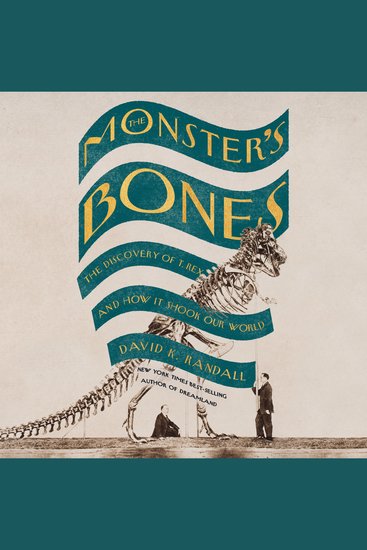
    In the dust of the Gilded Age Bone Wars, two vastly different men emerge with a mission to fill the empty halls of New York's struggling American Museum of Natural History: Henry Fairfield Osborn, a socialite whose reputation rests on the museum's success, and intrepid Kansas-born fossil hunter Barnum Brown. 


    When Brown unearths the first Tyrannosaurus Rex fossils in the Montana wilderness, forever changing the world of paleontology, Osborn sees a path to save his museum from irrelevancy. With four-foot-long jaws capable of crushing the bones of its prey and hips that powered the animal to run at speeds of twenty-five miles per hour, the T. Rex suggests a prehistoric ecosystem more complex than anyone imagined. As the public turns out in droves to cower before this bone-chilling giant of the past and wonder at the mysteries of its disappearance, Brown and Osborn together turn dinosaurs from a biological oddity into a beloved part of culture. 


    The Monster's Bones journeys from prehistory to present day, from remote Patagonia to the badlands of the American West to the penthouses of Manhattan. With a wide-ranging cast of robber barons, eugenicists, and opportunistic cowboys, New York Times bestselling author David K. Randall reveals how a monster of a bygone era ignited a new understanding of our planet and our place within it.
    Show book
  • Smart Trader: The Psychology and Strategy of Intraday Success - cover

    Smart Trader: The Psychology and...

    Anshumala Singh

    • 0
    • 0
    • 0
    Trading is often painted as a world of numbers, algorithms, and quick decisions. But behind the charts and tickers lies something much deeper—the mind of the trader. I have written The Smart Trader to explore this often overlooked aspect of trading, where psychology, discipline, and emotion meet strategy, risk, and execution. 
    Over the years, I’ve met countless traders who knew all the right strategies, had all the technical tools at their disposal, and yet, struggled to make consistent profits. Why? Because trading is not just about understanding the markets. It’s about understanding yourself. Success in trading is rooted in mastering your emotions, managing your impulses, and remaining disciplined through uncertainty. 
    This book is divided into two parts, each designed to guide you through this complex world. The first half focuses on the psychological principles that every trader must embrace—discipline, patience, risk management, and mindfulness. These traits are not only necessary for survival in the market but also for long-term success. 
    The second half transitions into the technical side of trading, where I explore the strategies that work in real-time intraday markets. But I won’t just be presenting these in a dry, technical manner. You’ll learn through the journeys of Bill, Elon, Steve, and Jeff—traders who each have their strengths and flaws, just like all of us. Their experiences are meant to be relatable, and through them, you’ll see how psychology and strategy blend together in the fast-paced world of derivatives and crypto trading. 
    Thank you for picking up The Smart Trader. Let’s begin the adventure.
    Show book
  • The Mystery of Healing - Insights from the Quantum Field - cover

    The Mystery of Healing -...

    MD Deepak Chopra

    • 0
    • 0
    • 0
    When we look at the world around us, what do we really see? In The Mystery of Healing, Dr. Deepak Chopra discusses the mechanics of perception—or what's going on in our minds and bodies as we react to external stimuli. Fascinating studies point to new possibilities in healing that are already surfacing in modern medicine. 
    Sounds True Pearls bring you inspirational and insightful downloadable audio sessions selected from our most popular courses. Ranging between 15–40 minutes each, Sounds True Pearls offer a concise way to explore topics from meditation and spiritual practice to mind-body healing, the art of manifestation, and more. String them on your smartphone, MP3 player, tablet device, or computer today, and you'll be ready to empower your life with the transformational teachings contained in each Sounds True Pearl.  
    This session is excerpted from Deepak Chopra's 2-CD program The New Physics of Healing.
    Show book