Join us on a literary world trip!
Add this book to bookshelf
Grey
Write a new comment Default profile 50px
Grey
Subscribe to read the full book or read the first pages for free!
All characters reduced
Military Campaign - Strategic Warfare: Tactics Technology and Triumphs - cover

Military Campaign - Strategic Warfare: Tactics Technology and Triumphs

Fouad Sabry

Publisher: One Billion Knowledgeable

  • 0
  • 0
  • 0

Summary

What is Military Campaign
 
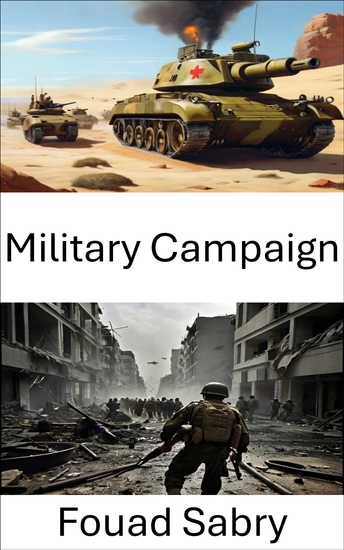
A military campaign is large-scale long-duration significant military strategy plan incorporating a series of interrelated military operations or battles forming a distinct part of a larger conflict often called a war. The term derives from the plain of Campania, a place of annual wartime operations by the armies of the Roman Republic.
 
How you will benefit
 
(I) Insights, and validations about the following topics:
 
Chapter 1: Military Campaign
 
Chapter 2: Battle
 
Chapter 3: Tactic (method)
 
Chapter 4: Military Science
 
Chapter 5: Military Strategy
 
Chapter 6: Military
 
Chapter 7: Military Intelligence
 
Chapter 8: Invasion
 
Chapter 9: Close-Quarters Combat
 
Chapter 10: Military Operation
 
(II) Answering the public top questions about military campaign.
 
Who this book is for
 
Professionals, undergraduate and graduate students, enthusiasts, hobbyists, and those who want to go beyond basic knowledge or information for any kind of Military Campaign.
Available since: 05/31/2024.
Print length: 123 pages.
Other books that might interest you

  • The Street Clinic - 10 Young Lives on the Frontline of Gang Culture - cover

    The Street Clinic - 10 Young...

    Dorcas Gwata

    • 0
    • 0
    • 0
    This audiobook features an exclusive Q&A between reader Chipo Chung and author, Dorcas Gwata'Fascinating . . . While the rest of us are worrying about it, Dorcas Gwata is doing something about it' - Wendy Joseph, author of Unlawful KillingsThrough the lives of ten young people an award-winning nurse reveals the impact of gang culture on mental health. Dorcas Gwata is an award-winning nurse specialising in mental health. She has worked closely with vulnerable young people exposed to the knife crime, sexual exploitation, drug use and poor mental health associated with gangs. In The Street Clinic, we accompany her in her work as she meets and cares for young people on the street and on their terms.We meet Fuz, who is on trial for aggravated assault. There's Abdul, who’s exploring his sexuality and has been humiliated online. Louise's promising future is compromised by her controlling boyfriend. And there’s Zane, whose parents’ divorce opens up an emotional hole in his life that’s plugged by an ill-chosen new friendship.Drawing on her own experiences of loss and social injustice, and twenty-five years on the NHS frontline, Dorcas offers a bird’s-eye view of London: its multicultural population, wealth inequalities, tireless healthcare professionals, and an NHS that doesn’t always work for everyone. And she asks the big questions: What lies behind London’s youth violence crisis? What is its impact on the mental health of its victims? How are the families of our young people and the wider community affected?Exposing some uncomfortable truths about British society, The Street Clinic is also a powerful story of resilience, strength and, ultimately, hope.
    Show book
  • Britons: A Captivating Guide to the Ancient People Living in Britain Before the Anglo-Saxon Invasions - cover

    Britons: A Captivating Guide to...

    Captivating History

    • 0
    • 0
    • 0
    Step into the lost world of ancient Britain, where fierce warriors painted themselves blue and wise Druids practiced mysterious magic. 
    This audiobook uncovers the untold story of the Britons—an ancient people often overshadowed by Roman invaders and Anglo-Saxon conquerors. Yet, their legacy, filled with culture, strength, and resilience, is the true foundation of modern Britain. 
    Explore the hidden secrets of their hill forts, learn about their battles against the powerful Roman Empire, and see how they survived in a harsh and ever-changing world. From the daily lives of the tribes to the mystical rituals of the Druids, this audiobook brings the Britons' world to life in a way that’s easy to understand and hard to forget. 
    What you'll find inside:The Britons' unique way of living and how their tribes sometimes clashed and sometimes came togetherThe spiritual world of the Druids and the myths that shaped their beliefsClever battle strategies, including their famous chariot warfareDaily life, from the colorful crafts they made to the traditions they cherishedThe lasting impact of the Roman conquest and how it changed their worldSurprising archaeological findings that show the Britons' skills in art and building.The lasting influence of the Britons on modern British culture and languageInspiring stories of leaders who fought against all odds to protect their peopleAnd much more 
    Don't let this important chapter of history stay hidden. Discover the remarkable world of the Britons and see how their legacy still touches our lives today. 
    Click "Add to Cart" now to uncover the mysteries of ancient Britain!
    Show book
  • The History of France Under German Occupation During World War II - cover

    The History of France Under...

    Editors Charles River

    • 0
    • 0
    • 0
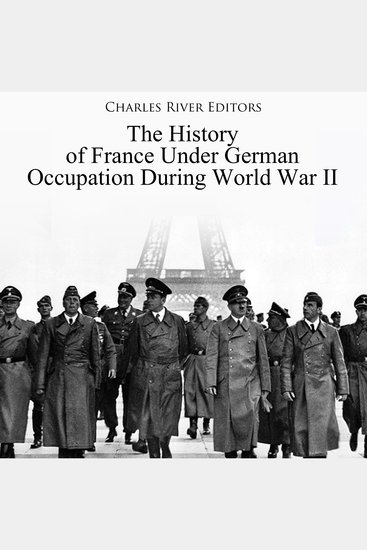
    Emerging from France's catastrophic 1940 defeat like a bedraggled and rather sinister phoenix, the French State – better known to history as “Vichy France” or the “Vichy Regime” after its spa-town capital – stands in history as a unique and bizarre creation of German Fuhrer Adolf Hitler's European conquests. A patchwork of paradoxes and contradictions, the Vichy Regime maintained a quasi-independent French nation for some time after the Third Reich invasion until the Germans decided to include it in their occupation zone. Headed by a French war hero of World War I, Marshal Philippe Petain, and his later Prime Minister Pierre Laval, Vichy France displayed strong right-wing, conservative, and authoritarian tendencies, though it never lapsed fully into fascism until the Germans arrived to reduce its role to little more than a mask over their own dominion. Petain carried out several major initiatives in an effort to counteract the alleged “decadence” of modern life and to restore the strength and “virtues” of the French “race.” Accordingly, he received willing support from more conservative elements of society, even some factions within the Catholic Church.  
    Of course, not all French people proved willing to surrender to the Nazi invaders, however. While large numbers “collaborated” – working for German or Vichy companies to provide for themselves or their families – and some wholeheartedly backed the new regime out of opportunism, fascist conviction, or other motivations, many courageous French resisted the Nazis and the quisling Vichy state. At the same time, despite the legends, the French Resistance never grew into a single unified organization. Rather, it remained divided in several major and numerous minor factions, each with their own philosophy and agenda. While these factions all shared the same goal – opposition to the Germans their Vichy pawns – they viewed each other with some suspicion and sometimes cooperated only grudgingly.
    Show book
  • Bohemians - A Very Short Introduction - cover

    Bohemians - A Very Short...

    David Weir

    • 0
    • 0
    • 0
    The Romantic myth of Bohemia originated in the early nineteenth century as a way of describing the new conditions faced by artists and writers when the previous system of aristocratic patronage collapsed in the wake of the Age of Revolution. Without the patron system, the artist was free to move around, to seek an audience wherever fortune beckoned. This marketing model likening the artist's vagabond career to the "gypsy" life helps to explain part of the bohemian myth, but not all of it. Most bohemians have scant interest in commercial gain and are not so itinerant after all, confining their movements to down-market urban neighborhoods where the rent is cheap and the morals are loose. 


    This Very Short Introduction traces the myth of Bohemia through its various fictional manifestations, from Henry Murger's novel Scenes of Bohemian Life and Giacomo Puccini's opera La Bohème to Aki Kaurismäki's film La vie de Bohème and Jonathan Larson's musical Rent. It goes on to examine the history of different bohemian communities, including those in the Latin Quarter of Paris and the Greenwich Village neighborhood of New York. David Weir also considers the politics of Bohemia and traces the careers of the artists Gustave Courbet and Pablo Picasso and the great chanteuses Yvette Guilbert, Fréhel, and Edith Piaf in the Montmartre neighborhood of Paris.
    Show book
  • Pandya Empire - Tamil Kingdoms in the Shadow of Rome - cover

    Pandya Empire - Tamil Kingdoms...

    Rolf Hedger

    • 0
    • 0
    • 0
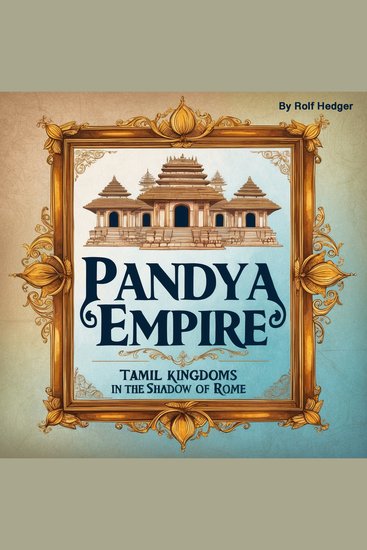
    The Pandya dynasty was one of the most ancient and influential Tamil kingdoms of South India, with origins deeply rooted in both history and legend. The earliest references to the Pandyas appear in Tamil Sangam literature, which dates back over two thousand years. These texts describe the Pandyas as powerful rulers of Madurai, a city that would become the cultural and political heart of their kingdom. The dynasty’s history is intertwined with mythology, particularly in Tamil literary traditions that claim the Pandyas descended from the gods. Some legends suggest that the first Pandya king was Kulasekara Pandya, a ruler said to be divinely blessed by Lord Shiva himself. 
    Historically, the Pandyas are believed to have established their rule as early as the 6th century BCE, although their presence likely predates this period. The Sangam Age, which spanned from roughly 300 BCE to 300 CE, marks the first well-documented era of Pandya rule. During this time, the kingdom flourished due to its strong trade networks, military strength, and patronage of Tamil poets and scholars. The Pandyas ruled alongside the Chola and Chera dynasties, forming a triad of powerful Tamil polities that competed for dominance in South India. These three kingdoms frequently engaged in alliances, conflicts, and shifting power dynamics that shaped the region’s history. 
    The early Pandyas built their capital in Korkai, an important port city known for its pearl fisheries and maritime trade. However, as their kingdom expanded, Madurai became the political and cultural center of their rule. The Pandyas were known for their patronage of literature and arts, particularly the Tamil Sangam assemblies, where poets and scholars composed some of the most revered works in Tamil history. This period saw the flourishing of Tamil culture, with kings promoting literary works that detailed heroism, love, and governance.
    Show book
  • Summary of Bradley Hope & Justin Scheck’s Blood and Oil - cover

    Summary of Bradley Hope & Justin...

    Falcon Press

    • 0
    • 0
    • 0
    Buy now to get the main key ideas from Bradley Hope & Justin Scheck’s Blood and Oil 
      
    Mohammed bin Salman Al Saud, Saudi Arabia’s crown prince and de facto ruler, is one of the most influential political figures in the world, yet much about him remains mysterious, even to those who are impressed by his groundbreaking economic and social decisions and unprecedented reforms.  
    In Blood and Oil (2020), journalists Bradley Hope and Justin Scheck immerse readers into the twisted world of the Saudi dynasty. They explore the political and foreign agenda of the 36-year-old ruler, who, despite claiming openness and modernity, uses coercion and deadly means to silence dissidents and impose fear. They tackle Saudi Arabia’s strategic relations with the US and its regional allies, as well as its moves against its arch-enemy Iran.
    Show book