Join us on a literary world trip!
Add this book to bookshelf
Grey
Write a new comment Default profile 50px
Grey
Subscribe to read the full book or read the first pages for free!
All characters reduced
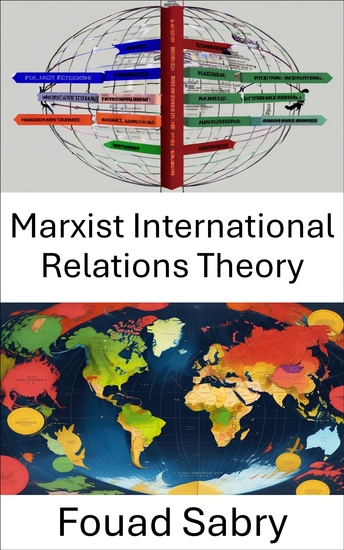
Marxist International Relations Theory - Global Struggle Ideologies Unleashed - cover

Marxist International Relations Theory - Global Struggle Ideologies Unleashed

Fouad Sabry

Publisher: One Billion Knowledgeable

  • 0
  • 0
  • 0

Summary

In the evolving field of international relations, Marxist theory provides a crucial perspective, revealing hidden structures and challenging traditional views. This journey through "Marxist International Relations Theory" offers deep insights into political science. Here’s a concise guide to each chapter:
 
Chapters Highlights:
 
1. Marxist International Relations Theory: Explore global politics through Marxism, examining surplus extraction and power dynamics shaping our world.
 
2. Conflict Theories: Understand conflicts beyond surface-level, focusing on economic and social tensions, class struggles, and geopolitical rivalries.
 
3. Cultural Hegemony: Investigate how dominant ideologies influence culture and perpetuate inequality through cultural hegemony.
 
4. Marxism: Dive into Marxist thought—historical materialism, class struggle, and dialectical processes—offering rigorous intellectual exploration.
 
5. Marxian Class Theory: Study the historical class divide, from bourgeoisie to proletariat, and its role in societal transformation.
 
6. Marxist Schools of Thought: Examine diverse Marxist perspectives, from Gramsci to Althusser, each offering unique insights into power relations.
 
7. Analytical Marxism: Delve into concepts with precision, questioning assumptions and analyzing social phenomena.
 
8. Neo-Marxism: Explore contemporary issues such as globalization and identity through Neo-Marxist perspectives.
 
9. Historical Materialism: Understand how historical materialism drives societal change, offering a compass for analyzing the past and present.
 
10. Marxist Philosophy: Go beyond politics to explore Marxist philosophy—dialectics, alienation, and human liberation.
 
11. Frankfurt School: Discover how Frankfurt School thinkers challenge cultural and ideological norms, impacting media and culture.
 
12. Critical Criminology: Examine how capitalist structures contribute to criminality, offering profound revelations.
 
13. Primary Stage of Socialism: Explore the transition from capitalism to socialism, assessing its challenges and possibilities.
 
14. Base and Superstructure: Learn how economic relations (the base) shape culture, law, and institutions (the superstructure).
 
15. Classical Marxism: Revisit Marx and Engels’ foundational ideas, tracing their historical influence.
 
16. Marxist Literary Criticism: Analyze how literature reflects and influences societal norms through a Marxist lens.
 
17. Marxist Historiography: Discover how Marxist historians challenge dominant narratives and uncover hidden voices.
 
18. Marxian Economics: Examine key concepts like surplus value, exploitation, and capitalism’s contradictions.
 
19. False Consciousness: Uncover the illusions that obscure our understanding and impede collective action.
 
20. Outline of Marxism: Synthesize Marxist thought into a comprehensive understanding, connecting key concepts.
 
21. Marxist Ethics: Explore Marxist ethical principles, focusing on justice and human flourishing beyond profit.
 
This book is ideal for professionals seeking new perspectives, students craving intellectual challenge, enthusiasts who question the status quo, and curious minds eager for transformative insights. The journey offers invaluable knowledge at a modest cost.
Available since: 08/12/2024.
Print length: 272 pages.
Other books that might interest you

  • Brown Church - Five Centuries of Latina o Social Justice Theology and Identity - cover

    Brown Church - Five Centuries of...

    Robert Chao Romero

    • 0
    • 0
    • 0
    Foreword INDIES Book of the Year Finalist 


    Interest in and awareness of the demand for social justice as an outworking of the Christian faith is growing. But it is not new. 


    For five hundred years, Latina/o culture and identity have been shaped by their challenges to the religious, socio-economic, and political status quo, whether in opposition to Spanish colonialism, Latin American dictatorships, US imperialism in Central America, the oppression of farmworkers, or the current exploitation of undocumented immigrants. Christianity has played a significant role in that movement at every stage. 


    Robert Chao Romero, the son of a Mexican father and a Chinese immigrant mother, explores the history and theology of what he terms the "Brown Church." Romero considers how this movement has responded to these and other injustices throughout its history by appealing to the belief that God's vision for redemption includes not only heavenly promises but also the transformation of every aspect of our lives and the world. Walking through this history of activism and faith, listeners will discover that Latina/o Christians have a heart after God's own.
    Show book
  • Reimagining Government - Achieving the Promise of AI - cover

    Reimagining Government -...

    Thomas H. Davenport, Faisal...

    • 0
    • 0
    • 0
    How AI can help the government lead with speed, trust, and impact.Artificial Intelligence is reshaping what is possible across every sector—and public service is no exception. Reimagining Government is a bold, practical playbook for harnessing AI to deliver smarter, faster, and more effective outcomes. Inside, you'll find: 
    · Clear breakdowns of AI opportunities and challenges in the government space 
    · Proven frameworks and maturity models for responsible, scalable adoption 
    · Insights and examples from real-world government innovators 
    · Strategies to transform leadership, culture, and public impactWritten for policymakers, technologists, and civic leaders, this book is a guide to making AI work—for people as well as for systems.
    Show book
  • Trust Signals - cover

    Trust Signals

    Scott Baradell

    • 0
    • 0
    • 0
    What is a trust signal?Let’s say you’re interested in a book you aren’t familiar with—this book, for example. Before you buy it, you wonder, “Can I trust this author?” Can you trust that their book will be worth your money and your time?The author, in turn, tries to prove their trustworthiness in a number of ways:An accomplished and relevant biographyGlowing praise from well-known people on the coverFive-star reviews on AmazonAcclaim on social media by people you followCoverage in news media outlets you know and respectThese are examples of trust signals, the points of evidence that individuals, companies, and brands use to win one another’s trust.Mastering these signals is the single best way to build, grow, and protect your brand in today’s post-truth world—where trust is the most precious commodity of all.
    Show book
  • The EU Indo-Pacific Bid - Sailing Through Economic and Security Competition - cover

    The EU Indo-Pacific Bid -...

    Filippo Fasulo

    • 0
    • 0
    • 0
    Over the past five years, the Indo-Pacific region's importance for Europe has grown significantly. However, the launch of the EU Strategy for cooperation in the Indo-Pacific in September 2021 and its subsequent implementation have been affected by growing polarisation between the US and China, and by a fast-changing scenario caused by the Russian invasion of Ukraine. This Report examines the state and perspectives of the EU's Indo-Pacific strategy, 18 months after its launch. Are there avenues for cooperation with regional military initiatives, such as the QUAD? How is the economic landscape changing, in particular after the start of negotiations for the Indo-Pacific Economic Framework for Prosperity (IPEF)? What are the main strategies of Indo-Pacific countries for the green transition? And how do the US, China, and ASEAN countries view and act in the Indo-Pacific region?
    Show book
  • State of the Union 1988 - cover

    State of the Union 1988

    Ronald Reagan

    • 0
    • 0
    • 0
    The 1988 State of the Union Address delivered January 25, 1988, extols individual rights, the free market, and the value of work, family, and religion, resulting in “the longest peacetime expansion in history”. Reagan stresses unity and common goals, saying there are no Republicans, no Democrats -- just Americans. 
    “We’re for limited government…”, free trade, a balanced budget, and the line-item veto. “[C]ontrol of our schools belongs to the States, local communities and, most of all, to the parents and teachers.” 
     “My friends, some years ago, the Federal Government declared war on poverty, and poverty won.” Our 59 major poverty programs have created a dependency trap that wreaks havoc on the family, the support system most needed to escape poverty. 
    We support a drug-free America, an end to federal funding of abortion, and “believe Congress should pass our school prayer amendment.” 
    “A creative, competitive America is the answer to a changing world, not trade wars that would close doors, create greater barriers, and destroy millions of jobs. … Protectionism is destructionism. America's jobs, America's growth, America's future depend on trade -- trade that is free, open, and fair.” 
    “We must … make adequate, stable defense spending a top goal both this year and in the future.” Our “efforts are to give future generations what we never had -- a future free of nuclear terror. Reduction of strategic offensive arms is one step, SDI another. Our funding request for our Strategic Defense Initiative is less than 2 percent of the total defense budget. SDI funding is money wisely appropriated and money well spent.”  
    We thank God for “this place called America, this shining city on a hill, this government of, by, and for the people. Thank you, and God bless you.” 
    Audio recording courtesy of the Ronald Reagan Presidential Library. 
    AspenLeafMedia.com
    Show book
  • Private Censorship - cover

    Private Censorship

    J.P. Messina

    • 0
    • 0
    • 0
    Concerns about censorship have once again reached a fever pitch across the liberal West. With a few notable exceptions, complaints about censorship in the twenty-first century West are complaints about the behavior of private parties: employers, media conglomerates, social media platforms, and search engines. 


    To better understand the concerns surrounding nonstate interference with speech, Private Censorship offers an account of censorship, as well as an assessment of the ethical and political issues it raises across contexts. J. P. Messina asks and variously answers questions like: what should we think when employees get fired for things they say and how might patterns of such firings create a climate of fear inimical to free inquiry? When is it appropriate for social media firms to deplatform users, and what does it mean for our democracy that those in charge of such decisions are often wealthy Silicon Valley executives? Do search engines act as massive gatekeepers to information in troubling ways, and how might they be constrained, if they do? Along the way, Messina casts a critical eye on many popular proposals for responding to these complaints. Unlike these popular approaches, Private Censorship foregrounds the importance of rights to property, association, and free expression for thinking well about twenty-first century censorship concerns.
    Show book