Join us on a literary world trip!
Add this book to bookshelf
Grey
Write a new comment Default profile 50px
Grey
Subscribe to read the full book or read the first pages for free!
All characters reduced
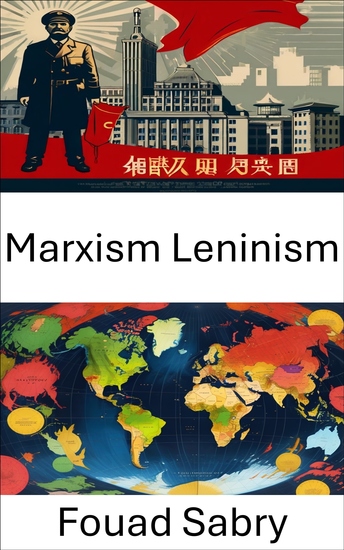
Marxism Leninism - Exploring the Ideologies and Impact on Modern Governance - cover

Marxism Leninism - Exploring the Ideologies and Impact on Modern Governance

Fouad Sabry

Publisher: One Billion Knowledgeable

  • 0
  • 0
  • 0

Summary

Discover the essential principles and historical impact of Marxism Leninism in this concise guide, part of the "Political Science" series. This book offers a detailed exploration of the evolution and influence of this pivotal political ideology, crucial for understanding modern political science and its historical context.
 
1: Marxism–Leninism - Learn the foundational concepts, origins, and its role as a guiding theory for political movements.
 
2: Communist Party of the Soviet Union - Explore the history, structure, and ideology of the party that shaped Soviet politics.
 
3: Leninism - Understand Lenin’s interpretation of Marxism and its impact on revolutionary strategies and governance.
 
4: Stalinism - Examine Stalin’s policies and their enduring impact on the Soviet Union and global communism.
 
5: Trotskyism - Discover Trotsky’s opposition to Stalinism and his alternative communist vision.
 
6: Bolshevism - Study the origins and principles of the Bolshevik faction in the Russian Revolution.
 
7: Communist state - Analyze the characteristics and functioning of states governed by communist principles.
 
8: History of communism - Trace the development of communist ideology from its inception to the present.
 
9: Marxism - Revisit core Marxist ideas and their application in various political contexts.
 
10: Democracy in Marxism - Investigate the complex relationship between Marxist theory and democratic principles.
 
11: Communism - Gain a broader understanding of communism and its interpretations.
 
12: National communism - Explore the adaptation of communist principles to national contexts.
 
13: Ideology of the Communist Party of the Soviet Union - Delve into the specific ideological tenets guiding the Soviet Union.
 
14: List of communist ideologies - Familiarize yourself with the diverse range of ideologies within the communist movement.
 
15: Marxist schools of thought - Compare different interpretations and schools within Marxist theory.
 
16: State socialism - Study the concept and practical implementations of state socialism.
 
17: Orthodox Marxism - Learn about traditional interpretations of Marxism and their relevance.
 
18: Socialist state - Examine the features and functioning of socialist states as envisioned by Marxist theorists.
 
19: Anti-Stalinist left - Understand critiques from leftist groups opposing Stalin’s policies.
 
20: Proletarian internationalism - Explore the idea of international solidarity among working-class movements.
 
21: Foundations of Leninism - Summarize key elements of Leninist thought and its foundational role in Marxist-Leninist theory.
 
This book is ideal for professionals, students, and enthusiasts seeking in-depth knowledge of Marxism Leninism, offering invaluable insights beyond basic understanding.
Available since: 08/13/2024.
Print length: 315 pages.
Other books that might interest you

  • Oceans Rise Empires Fall - Why Geopolitics Hastens Climate Catastrophe - cover

    Oceans Rise Empires Fall - Why...

    Gerard Toal

    • 0
    • 0
    • 0
    In the last few years, it has become abundantly clear that the effects of accelerating climate change will be catastrophic, from rising seas to more violent storms to desertification. Yet why do nation-states find it so difficult to implement transnational policies that can reduce carbon output and slow global warming? In Oceans Rise, Empires Fall, Gerard Toal identifies geopolitics as the culprit. States would prefer to reduce emissions in the abstract, but in the great global competition for geopolitical power, states always prioritize access to carbon-based fuels necessary for generating the sort of economic growth that helps them compete with rival states. 


    The Ukraine conflict in particular exposes our priorities. To escape reliance on Russia's vast oil and gas reserves, states have expanded fossil fuel production that necessarily increases the amount of carbon in the atmosphere. Competitive territorial, resource, and technological dramas across the geopolitical chessboard currently obscure the deterioration of the planet's life support systems. In the contest between geopolitics and sustainable climate policies, the former takes precedence—especially when competition shifts to outright conflict. In this book, Toal interrogates that relationship and its stakes for the ongoing acceleration of climate change.
    Show book
  • A Rare Recording of President John F Kennedy’s Cuban Missile Crisis Speech - cover

    A Rare Recording of President...

    President John Fitzgerald Kennedy

    • 0
    • 0
    • 0
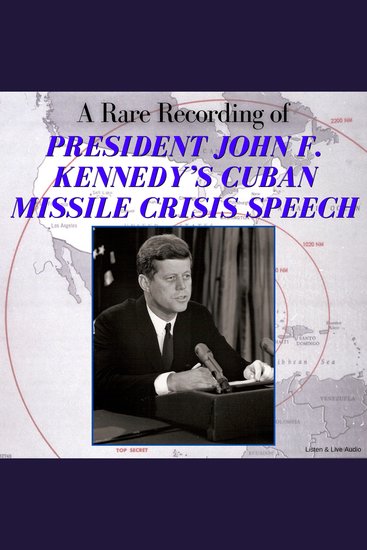
    On October 22, 1962, President John F. Kennedy gave a televised address informing the American public that the Soviet Union had installed missiles in Cuba. Kennedy announced a US naval blockade around the island to prevent further delivery of such weapons, essentially declaring that any missile launched from Cuba against the Western Hemisphere would be considered an attack by the Soviet Union, and would prompt a full US retaliatory response. Kennedy demanded the removal of the missiles from Cuba and warned of serious consequences if the Soviets did not comply.
    Show book
  • Stream to Income - Turn Your Skills Content and Time Into Online Revenue - cover

    Stream to Income - Turn Your...

    Kyla Jennings

    • 0
    • 0
    • 0
    🎧 Stream to Income: Turn Your Skills, Content, and Time Into Online Revenue 
     Written and narrated for creators, freelancers, and everyday entrepreneurs ready to earn online. 
    Are you sitting on untapped skills, valuable knowledge, or just a passion to create—and wondering how to turn it all into real income? Stream to Income is your step-by-step audio guide to transforming your expertise, content, and free time into multiple streams of online revenue. 
    Whether you're a teacher, writer, gamer, artist, coach, or side hustler, this audiobook walks you through practical, actionable strategies for monetizing what you already know and love to do. No fluff, just a clear roadmap. 
    Inside, you’ll learn how to:Identify the most profitable parts of your skill setCreate digital products that sell while you sleepBuild your audience without burning outChoose the best platforms for content, coaching, courses, and moreStreamline your time and set up sustainable systems for passive income 
    From side hustle to full-time freedom, Stream to Income breaks down the myths and shows you what’s really working right now in the digital economy. 
    🎙️ Perfect for listening on the go, this audiobook includes real examples, bonus tips, and mini-audio exercises to help you build your revenue engine as you listen. 
    If you're ready to stop trading hours for dollars and start building income streams that work while you sleep, press play and let’s start streaming your income today.
    Show book
  • Henry David Thoreau: On The Duty of Civil Disobedience - original title: Resistance to Civil Government - cover

    Henry David Thoreau: On The Duty...

    Henry David Thoreau

    • 0
    • 0
    • 0
    "That government is best which governs least" is the famous opening line of this essay. The slavery crisis inflamed New England in the 1840s and 1850s. The environment became especially tense after the Fugitive Slave Act of 1850. A lifelong abolitionist, Thoreau delivered an impassioned speech which would later become Civil Disobedience in 1848, just months after leaving Walden Pond. The speech dealt with slavery, but at the same time excoriated American imperialism, particularly the Mexican–American War. Thoreau asserts that because governments are typically more harmful than helpful, they therefore cannot be justified. Democracy is no cure for this, as majorities simply by virtue of being majorities do not also gain the virtues of wisdom and justice. The judgment of an individual's conscience is not necessarily inferior to the decisions of a political body or majority, and so "[i]t is not desirable to cultivate a respect for the law, so much as for the right. The only obligation which I have a right to assume is to do at any time what I think right.... Law never made men a whit more just; and, by means of their respect for it, even the well-disposed are daily made the agents of injustice." He adds, "I cannot for an instant recognize as my government [that] which is the slave's government also.
    Show book
  • The Sun Also Rises - cover

    The Sun Also Rises

    Ernest Hemingway

    • 0
    • 0
    • 0
    The debut novel from the Nobel Prize-winning author that is both a tragic love story and a searing group portrait of hapless American expatriates drinking, dancing, and chasing their dreams in postwar Europe. 
    “An absorbingly beautiful and tenderly absurd, heart-breaking narrative ... It is a truly gripping story.” —The New York Times 
    Ernest Hemingway, winner of the Nobel Prize in Literature in 1954, exerted a lasting influence on fiction in English through his economical prose style that conceals more than it reveals. His first novel, published in 1926, is narrated by world-weary journalist Jake Barnes, who is burdened by a wound acquired in World War I and by his utterly hopeless love for the flamboyantly decadent Lady Brett Ashley. The Sun Also Rises tracks the Lost Generation of the 1920s from the nightclubs of Paris to the bullfighting arenas of Spain
    Show book
  • John F Kennedy's Inaugural Address - cover

    John F Kennedy's Inaugural Address

    John F. Kennedy

    • 0
    • 0
    • 0
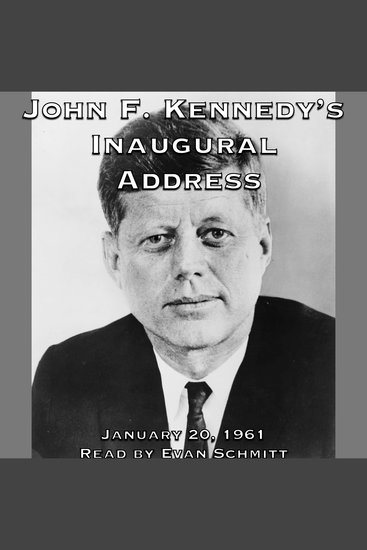
    John F. Kennedy's inaugural address, delivered on January 20, 1961, is a historic and iconic speech that marked the beginning of his presidency. In his address, Kennedy emphasized the themes of unity, freedom, and responsibility, calling on Americans to join together in a common purpose to face the challenges of the Cold War era.
    Show book