¡Acompáñanos a viajar por el mundo de los libros!
Añadir este libro a la estantería
Grey
Escribe un nuevo comentario Default profile 50px
Grey
Suscríbete para leer el libro completo o lee las primeras páginas gratis.
All characters reduced
Macromolecular Assembly - Understanding the Principles of Structural Formation and Dynamics in Molecular Systems - cover

Macromolecular Assembly - Understanding the Principles of Structural Formation and Dynamics in Molecular Systems

Fouad Sabry

Editorial: One Billion Knowledgeable

  • 0
  • 0
  • 0

Sinopsis

Macromolecular assembly-Understand the fundamental processes of how macromolecules come together to form complex biological structures, influencing cellular function
 
Protein-Gain insights into protein structure, folding, and function, key to understanding cellular processes and disease mechanisms
 
Ribosome-Discover the structure and function of ribosomes, the molecular machines responsible for protein synthesis in all living organisms
 
Structural biology-Learn how structural biology uncovers the 3D architecture of macromolecules, providing a deeper understanding of their function
 
Macromolecule-Explore the diverse types of macromolecules that make up living organisms, including proteins, nucleic acids, and polysaccharides
 
Peripheral membrane protein-Understand the role of peripheral membrane proteins in cellular signaling, communication, and membrane stability
 
Structural bioinformatics-Dive into the field of structural bioinformatics, where computational tools are used to analyze and predict macromolecular structures
 
Transmission electron cryomicroscopy-Explore the revolutionary technique of cryoEM, providing unprecedented views of biological macromolecules at nearatomic resolution
 
Biomolecular structure-Delve into the study of biomolecular structures and how they relate to biological function and drug design
 
Eva Nogales-Learn about Eva Nogales' groundbreaking contributions to understanding molecular structures, particularly in the field of cryoelectron microscopy
 
Molecular biophysics-Discover the key principles of molecular biophysics, blending biology, physics, and chemistry to understand macromolecular behavior
 
Resolution (structural biology)-Understand the importance of resolution in structural biology techniques, particularly in protein structure determination
 
Biological data visualization-Learn how advanced visualization techniques help to represent complex biological data, aiding in scientific discovery and communication
 
Biophysical chemistry-Explore the chemical principles underlying biophysical phenomena, crucial for understanding macromolecular behavior and interactions
 
Food physical chemistry-Investigate the intersection of food science and biophysics, focusing on the physical chemistry of food at the molecular level
 
Joachim Frank-Discover the pioneering work of Joachim Frank in cryoEM and his significant contributions to the visualization of molecular structures
 
Protein–ligand complex-Explore the interactions between proteins and ligands, essential for drug design and understanding molecular recognition processes
 
Cryogenic electron microscopy-Understand how cryoEM allows for highresolution imaging of biomolecules, advancing structural biology and drug discovery
 
Protein primary structure-Delve into the primary structure of proteins and how this sequence determines their function and interactions
 
Protein biosynthesis-Learn about the cellular processes responsible for translating genetic information into functional proteins
 
Protein targeting-Understand the mechanisms that direct proteins to their correct location within the cell, essential for cellular function and survival
Disponible desde: 21/03/2025.
Longitud de impresión: 269 páginas.

Otros libros que te pueden interesar

  • TV Lobotomy The Scientific Truth About the Effects of Television - cover

    TV Lobotomy The Scientific Truth...

    Michel Desmurget

    • 0
    • 0
    • 0
    "TV unleashes the imagination and feeds intelligence." • "A child deprived of TV risks social isolation." • "TV dumbs you down." • "TV makes you obese." It seems that everything—and its opposite—has already been said about TV. But what is it really? How can we distinguish between the radical "No TV" of some and the supposedly entertaining virtues touted by others? Michel Desmurget, a doctor in neuroscience, has sifted through and synthesized thousands of research articles published over the last fifty years in the most rigorous international journals. The conclusion is unequivocal—we must stop watching television for good, whatever the program. All content, even that meant to teach, can never come close to any other learning method. The data is clear—television viewing is detrimental to school performance. For a child in elementary school, for example, every hour spent daily watching television increases the likelihood that he or she will one day leave the school system without any qualifications. For specialists, there is no doubt that television has a negative influence, not only on intellectual development but also on behavior. Thus, certain eating disorders (anorexia, bulimia) are related to a frantic consumption of—television programs! In short, watching television has an impact on our life expectancy. However, the harmful impact of this risk is largely underestimated, because of the large sector of the public exposed to television (more than 85% of Western households have at least one television set), and because of a debate on the subject that has become inaudible and confused. Moreover, the results of the research initiated by the big media groups on the subject remain "proprietary," i.e., closed to the general public. Believing that we is facing a real public health problem, Michel Desmurget wants to act as a responsible scientist—with a clear, concise and rigorously referenced book, the message cannot go unnoticed. Michel Desmurget is a doctor of neuropsychology. He attended several major American universities (MIT, Emory, UCSF) and is now a research director at INSERM in cognitive neuroscience. He is particularly interested in the problems of brain organization and plasticity. He is the author of the book TV Lobotomy (Max Milo, 2022), which is based in part on his personal history. Exasperated by having to constantly justify the choice not to have television at home—and to prevent his children from having access to it—and not to be seen as a sociopath in the eyes of those around him, he has done a massive job to argue his point. 
    This audiobook is read by a synthesized voice.
    Ver libro
  • Reinforcement Learning - Amplifying AI Shattering Boundaries with Reinforcement Learning - cover

    Reinforcement Learning -...

    Simon Winston

    • 0
    • 0
    • 0
    In a world where machines are constantly pushing the boundaries of human capabilities, one field stands out as a beacon of innovation: Reinforcement Learning (RL). In "Reinforcement Learning: Amplifying AI - Shattering Boundaries with Reinforcement Learning," embark on an exhilarating journey into the heart of AI's next frontier. 
    Unveiling the inner workings of reinforcement learning, this book is your guide to understanding and harnessing the power of intelligent agents that learn to make decisions through trial and error. From the foundational concepts of agents, environments, and rewards to advanced algorithms like Q-learning, deep Q-networks, and policy gradients, you'll uncover the strategies that machines use to optimize their own performance. 
    Dive into the world of dynamic programming, explore Monte Carlo methods, and delve into the intricacies of temporal difference learning. Discover how these algorithms enable machines to not only learn from their experiences but also to predict and adapt to the outcomes of their actions. Witness the fusion of reinforcement learning and neural networks, creating potent combinations capable of conquering complex tasks. 
    But this book doesn't just stop at theory. It provides hands-on insights into implementing reinforcement learning algorithms, equipping you with the tools to transform abstract concepts into practical solutions. Explore exploration strategies that balance learning from the familiar with the excitement of the unknown. Understand the challenges of transferring knowledge across tasks and the emerging frontiers of multi-task learning and hierarchical approaches. 
    Join us on this transformative expedition into the realm of Reinforcement Learning, and discover how it amplifies AI's capabilities, shattering boundaries along the way. Your journey to empower machines with intelligent decision-making starts here. 
     
    Ver libro
  • Beyond Your Doorstep - A Handbook to the Country - cover

    Beyond Your Doorstep - A...

    Hal Borland

    • 0
    • 0
    • 0
    The inspiring classic on the virtues of embracing the great outdoors from the nationally bestselling author of The Dog Who Came to Stay. 


    Over the course of his career, Hal Borland wrote eight nature books and hundreds of "outdoor editorials" for the Sunday New York Times, extolling the virtues of the countryside. From his home on one hundred acres in rural Connecticut, Borland wrote of the natural wonders, both big and small, that surrounded him every day. Beyond Your Doorstep is his guide to venturing into the outdoors around your home, wherever it is, and discovering the countryside within reach. 


    The beauty to be found in roadsides, meadows, woodlands, and bogs are explored in elegant prose. Borland takes up birds, animals, and plants—both edible and poisonous—and the miraculous ways in which they are threaded together throughout the natural world. Part introductory field guide and part incitement to exploration, Beyond Your Doorstep is a classic of nature writing and a must-listen for anyone looking to renew his or her relationship to the outdoors.
    Ver libro
  • Johnny Crow's Garden - cover

    Johnny Crow's Garden

    L. Leslie Brooke

    • 0
    • 0
    • 0
    A beautifully illustrated children’s picture book featuring Johnny Crow who made a garden in which a variety of animals do bizarre things in rhyme.Listen to the audio while you view the pictures on  gutenberg.org  (Summary by Jim)
    Ver libro
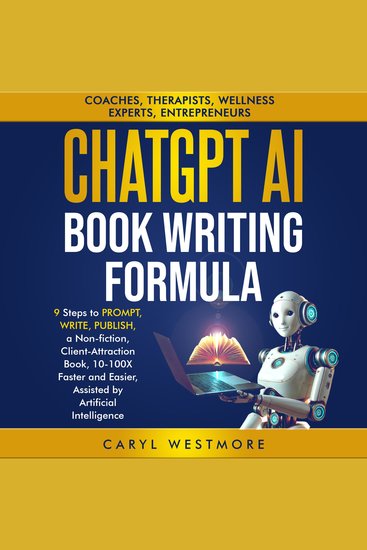
  • ChatGPT AI Book Writing Formula - 9 Steps to Prompt Write Publish a Non-fiction Client-Attraction Book 10-100X Faster and Easier Assisted by Articicial Intelligence - cover

    ChatGPT AI Book Writing Formula...

    Caryl Westmore

    • 0
    • 0
    • 0
    Coaches, Wellness Experts, and Entrepreneurs—Write Your Book Faster and Easier with AI! 
    Struggling to find time or the right approach to writing your book? Stop the overwhelm—ChatGPT AI makes book writing faster, easier, and smarter than ever! 
    The AI revolution is here, and this book reveals a 9-step formula to write, publish, and launch a client-attraction book—without losing your unique voice and authenticity. 
    ✅ Inside, you’ll discover how to:Master AI book writing with expert prompts (become a Prompt Ninja)Brainstorm compelling book titles and winning ideasOutline a clear book structure and seamless chapter flowWrite your first draft effortlessly—no writer’s block!Edit, refine, and polish to professional standardsFormat, publish, and launch—with 15+ five-star reviews on day oneLeverage your book for business growth and attract ideal clients 
    BONUS: Includes a time-saving AI Prompt Cheat Sheet for Authors, packed with all the prompts used in this book—your go-to guide for writing a non-fiction book step-by-step! 
     Empower your voice. Boost your impact.  Write your book NOW—AI makes it possible!
    Ver libro
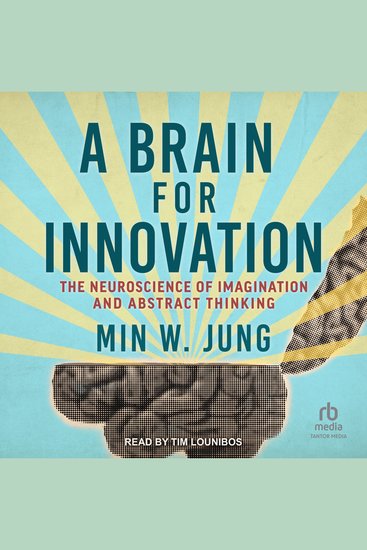
  • A Brain for Innovation - The Neuroscience of Imagination and Abstract Thinking - cover

    A Brain for Innovation - The...

    Min W. Jung

    • 0
    • 0
    • 0
    What sets humans apart from other animals? The accumulation of discoveries throughout history, big and small, has enabled us to build global civilizations and gain power to shape our environment. But what makes humans as a species so innovative? 


    Min W. Jung offers a new understanding of the neural basis of innovation in terms of humans' exceptional capacity for imagination and high-level abstraction. He provides an engaging account of recent advances in neuroscience that have shed light on the neural underpinnings of these profoundly important abilities. Jung examines key discoveries concerning the hippocampus and neural circuits that have demystified the processes underlying imagination and abstract thinking. He also considers how these capacities might have evolved as well as possible futures for intelligence. 


    Bringing together disparate findings in neuroscience, psychology, anthropology, and artificial intelligence, A Brain for Innovation develops a unified perspective on the mechanisms of imagination, abstract thought, and creativity. Presenting cutting-edge neuroscientific research in a way that is accessible to listeners without a background in the subject, this book is essential for anyone interested in the biological basis of one of the most fundamental aspects of human nature.
    Ver libro