Join us on a literary world trip!
Add this book to bookshelf
Grey
Write a new comment Default profile 50px
Grey
Subscribe to read the full book or read the first pages for free!
All characters reduced
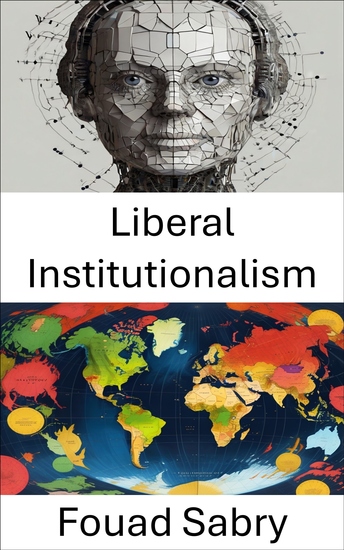
Liberal Institutionalism - The Dynamics of Cooperation and Conflict in Global Governance - cover

Liberal Institutionalism - The Dynamics of Cooperation and Conflict in Global Governance

Fouad Sabry

Publisher: One Billion Knowledgeable

  • 0
  • 0
  • 0

Summary

Discover the essentials of global cooperation and state behavior with "Liberal Institutionalism," a key addition to the "Political Science" series. This book explores how international institutions drive state collaboration, reshape global politics, and influence international interactions. Ideal for professionals, students, and political enthusiasts, it enhances your understanding of international relations.
 
Chapters Highlights:
 
1: Liberal Institutionalism - Learn how international institutions promote cooperation and reduce conflicts between states, laying the groundwork for understanding their broader impact.
 
2: Neorealism - Explore Neorealism’s view of the international system as anarchic and power-focused, and its contrast with Liberal Institutionalism.
 
3: International Relations - Establish a foundational understanding of International Relations, essential for grasping the nuances of Liberal Institutionalism.
 
4: International Relations Theory - Delve into various International Relations theories, setting the stage for Liberal Institutionalism and its unique contributions.
 
5: Regime Theory - Examine how international regimes affect state behavior and cooperation, connecting to Liberal Institutionalism’s core principles.
 
6: International Security - Investigate how international institutions influence global security and state cooperation.
 
7: Economic Interdependence - Analyze how international institutions manage economic ties between states to promote cooperation.
 
8: Complex Interdependence - Understand the implications of complex interdependence for global politics and its relevance to Liberal Institutionalism.
 
9: After Hegemony - Explore Robert Keohane’s "After Hegemony" theory and its impact on institutional cooperation without a dominant power.
 
10: International Trade and State Security - Examine how institutions mediate the relationship between trade and state security, fostering stability.
 
11: Military Alliance - Investigate military alliances within Liberal Institutionalism, highlighting their role in international cooperation.
 
12: John Mearsheimer - Learn about John Mearsheimer’s critiques of Liberal Institutionalism and their influence on the theory.
 
13: Robert Keohane - Delve into Robert Keohane’s significant contributions to Liberal Institutionalism and International Relations.
 
14: Realism - Contrast Realism with Liberal Institutionalism, focusing on state behavior and international cooperation.
 
15: Polarity - Explore the concept of polarity and its impact on understanding institutional roles in global politics.
 
16: Historical Institutionalism - Examine Historical Institutionalism’s focus on the evolution of institutions and its relevance to Liberal Institutionalism.
 
17: Constructivism - Compare Constructivism’s view on ideas and norms with Liberal Institutionalism’s perspective.
 
18: Robert Gilpin - Understand Robert Gilpin’s role in developing International Relations theory and his impact on Liberal Institutionalism.
 
19: Anarchy - Analyze how Liberal Institutionalism addresses the concept of anarchy in global politics.
 
20: English School - Explore the English School’s approach to International Relations and its connections to Liberal Institutionalism.
 
21: International Order - Delve into how institutions contribute to international order, reinforcing Liberal Institutionalism’s significance.
 
"Liberal Institutionalism" is an invaluable guide to understanding international cooperation, making it essential reading for anyone interested in global politics.
Available since: 08/11/2024.
Print length: 216 pages.

Other books that might interest you

  • Spinoza and the Politics of Renaturalization - cover

    Spinoza and the Politics of...

    Hasana Sharp

    • 0
    • 0
    • 0
    There have been many Spinozas over the centuries: atheist, romantic pantheist, great thinker of the multitude, advocate of the liberated individual, and rigorous rationalist. The common thread connecting all of these clashing perspectives is Spinoza’s naturalism, the idea that humanity is part of nature, not above it. In this sophisticated new interpretation of Spinoza’s iconoclastic philosophy, Hasana Sharp draws on his uncompromising naturalism to rethink human agency, ethics, and political practice. Sharp uses Spinoza to outline a practical wisdom of “renaturalization,” showing how ideas, actions, and institutions are never merely products of human intention or design, but outcomes of the complex relationships among natural forces beyond our control. This lack of a metaphysical or moral division between humanity and the rest of nature, Sharp contends, can provide the basis for an ethical and political practice free from the tendency to view ourselves as either gods or beasts. Sharp’s groundbreaking argument critically engages with important contemporary thinkers—including deep ecologists, feminists, and race and critical theorists—making Spinoza and the Politics of Renaturalization vital for a wide range of scholars.
    Show book
  • The Petroleum Papers - Inside the Far-Right Conspiracy to Cover Up Climate Change - cover

    The Petroleum Papers - Inside...

    Geoff Dembicki

    • 0
    • 0
    • 0
    Burning fossil fuels will cause catastrophic global warming: this is what top American oil executives were told by scientists in 1959. But they ignored that warning. Instead, they developed one of the biggest, most polluting oil sources in the world—the oil sands in Alberta, Canada. As investigative journalist Geoff Dembicki reveals in this explosive book, the decades-long conspiracy to keep the oil sands flowing into the US would turn out to be one of the biggest reasons for the world's failure to stop the climate crisis. 


    In The Petroleum Papers, Dembicki draws from confidential oil industry documents to uncover for the first time how companies like Exxon, Koch Industries, and Shell built a global right-wing echo chamber to protect oil sands profits—a misinformation campaign that continues to this day. He also tells the high-stakes stories of people fighting back: a Seattle lawyer who brought down Big Tobacco and is now going after Big Oil, a Filipina activist whose family drowned in a climate disaster, and a former Exxon engineer pushed out for asking hard questions. 


    With experts now warning we have less than a decade to get global emissions under control, The Petroleum Papers provides a step-by-step account of how we got to this precipice—and the politicians and companies who deserve our blame.
    Show book
  • Being Cosmopolitan - A Political Approach - cover

    Being Cosmopolitan - A Political...

    Luke Ulas

    • 0
    • 0
    • 0
    What does it mean to be cosmopolitan? Typically, cosmopolitanism is understood as a broad moral orientation, involving some kind of commitment to global moral equality. On this understanding, to be cosmopolitan is simply to evidence that moral orientation oneself. By contrast, Being Cosmopolitan takes up a thoroughly political approach. The focus is on what it might mean, and what it is like, to be political in a distinctly cosmopolitan form. What it means to be cosmopolitan in this thoroughly political sense cannot involve appeal to any particular moral orientation, because politics is about, inter alia, the contestation of such orientations and commitments. Instead, this book offers an account that is based upon the internalization of particular kind of global "social imaginary," involving the imagination of a global public to which certain issues—or global public affairs—are understood to pertain. 


    Within which kind of global order is it possible, or comfortable, for a cosmopolitical agent to live? In answer to this question, the book argues against the viability of both a world of self-determining peoples, and of "pluralist" global visions—both of which are popular with moral cosmopolitan theorists.
    Show book
  • The White Allies Handbook - 4 Weeks to Join the Racial Justice Fight for Black Women - cover

    The White Allies Handbook - 4...

    Lecia Michelle

    • 0
    • 0
    • 0
    You've read White Fragility and How to Be an Antiracist, but what comes next? The answer lies in this clear, actionable guide providing an invaluable four-week program for becoming an ally who makes a real difference in the racial justice fight. 


    Black women have always been the driving force behind real change in this country—especially when it comes to racial justice work. But they shouldn't have to do it alone. If you're ready to stop standing on the sidelines and become anti-racist instead of passively "not racist," then this book is what you need. You'll discover: how to have difficult conversations about white supremacy, racism, and white privilege; how to listen to criticism without defensiveness; why it's harmful to ignore race or claim to be colorblind; and how to expand your racial justice circle by joining groups led by Black women and cultivating a group of like-minded allies. 


    Racism can only be defeated if white people educate themselves and actively engage in antiracism work, especially in their inner circles. With this book, you'll learn how to change from someone who defends and protects racism to someone who fights against it. And you'll become an example to others that true allies are made, not born.
    Show book
  • Australian Citizenship Test - 200 Practice Questions to Ensure You Pass First Time - cover

    Australian Citizenship Test -...

    Ray Aldous

    • 0
    • 0
    • 0
    Becoming an Australian citizen is a significant milestone and the Australian Citizenship Test is a crucial step in this journey, assessing your knowledge of Australia’s history, culture, laws, and government. 
    This audiobook has been carefully designed to help you prepare for the Australian Citizenship Test. By working through the practice test questions, you will gain a deeper understanding of the key topics covered in the test. This will not only increase your chances of passing but also help you become a well-informed and active member of the Australian community. 
    Key Features:In-depth practice questionsInsights into Australia’s culture, laws, and historyTips for effective studying and test-taking strategies 
    Whether you’re a new immigrant, a long-time resident, or simply looking to broaden your understanding of Australia, this audiobook equips you with the tools to succeed. Embrace your future as a well-informed and active member of Australian society, ready to contribute to the diverse tapestry that is Australia. 
    Prepare for the Australian Citizenship Test with confidence and clarity—your journey to belonging starts here!
    Show book
  • The Church and Abortion - A Catholic Dissent - cover

    The Church and Abortion - A...

    George Dennis O'Brien

    • 0
    • 0
    • 0
    This provocative book takes a critical look at what is increasingly viewed as the central political issue for Catholics—abortion. From pro-choice politicians being denied communion to Democrats being called "the party of death," for some of the most vocal Catholic leaders, the abortion issue often trumps all others. The author, a practicing Catholic who is against abortion in principle, believes the Church is on the wrong course with this issue, with grievous results for the Church and American society more broadly. He gives a brief history of abortion legislation, then explores the issue from legal, moral, and Christian perspectives, presenting compelling reasons why Church leaders and Catholics should stop trying to overturn Roe v. Wade and reconsider the issue.
    Show book