Join us on a literary world trip!
Add this book to bookshelf
Grey
Write a new comment Default profile 50px
Grey
Subscribe to read the full book or read the first pages for free!
All characters reduced
Law - The Framework of Governance and Justice - cover

Law - The Framework of Governance and Justice

Fouad Sabry

Publisher: One Billion Knowledgeable

  • 0
  • 0
  • 0

Summary

What is Law?
 
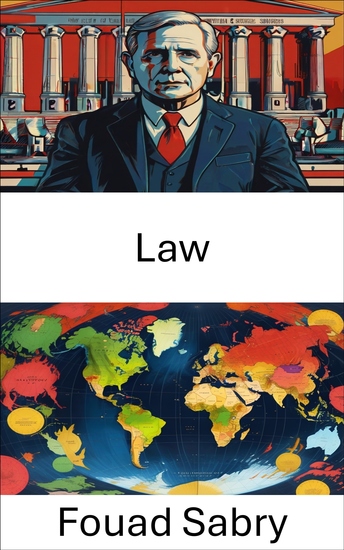
"Law" examines the core principles, structures, and functions of legal systems, revealing how laws shape societies and influence governance. As part of the "Political Science" series, it provides a broad perspective on how legal frameworks impact political processes and the functioning of nations.
 
Chapters Overview:
 
1: Law - Understand the definition and role of law in governance and society.
 
2: Common Law - Discover common law’s global influence and its application.
 
3: Constitutional Law - Explore constitutional law's role in rights protection and government structure.
 
4: Canon Law - Learn about the historical and institutional impact of canon law.
 
5: Sharia - Examine Sharia's principles and its influence in Islamic countries.
 
6: Chinese Law - Study the evolution and distinct features of Chinese law.
 
7: National Legal Systems - Compare the structures of various national legal systems.
 
8: Legal History - Trace the historical development of legal systems worldwide.
 
9: Uniform Civil Code - Understand the concept and societal impact of a uniform civil code.
 
10: Law of Canada - Learn about Canada’s unique legal system and its evolution.
 
11: Law of Japan - Discover the traditional and modern aspects of Japanese law.
 
12: Law of the Soviet Union - Examine the legal framework and its post-Soviet impact.
 
13: Law of India - Study the complexities of Indian law and its historical influences.
 
14: Law of France - Learn about the civil law tradition of France and its global influence.
 
15: Law of Malaysia - Explore Malaysia’s blend of civil, common, and religious laws.
 
16: Legal System of Kuwait - Study Kuwait’s legal system at the intersection of tradition and modernity.
 
17: Rule of Law - Discover the importance of the rule of law in maintaining justice and order.
 
18: Law of Libya - Learn how colonial and Islamic influences shape Libyan law.
 
19: Legal System of Saudi Arabia - Examine Saudi Arabia’s Islamic-based legal structure.
 
20: Law of North Korea - Understand the role of law in North Korean governance.
 
21: Application of Sharia by Country - Analyze Sharia’s diverse applications in different nations.
 
Whether you're a student, professional, or enthusiast, "Law" provides valuable insights into the world’s legal systems, enhancing your understanding of their role in shaping political landscapes. This book is an essential addition to anyone's collection who seeks to grasp the intricate connections between law and governance.
Available since: 09/21/2024.
Print length: 408 pages.
Other books that might interest you

  • Fact Forward - The Perils of Bad Information and the Promise of a Data-Savvy Society - cover

    Fact Forward - The Perils of Bad...

    Dan Gaylin

    • 0
    • 0
    • 0
    Solutions to increase trust and empower better decision making in a data-rich world 
     
    Fact Forward: The Perils of Bad Information and the Promise of a Data-Savvy Society explores how a growing deluge of data has led to a data-rich world with abundant new opportunities and a precipitous decline in trust due to the problems we face in producing, communicating, and consuming data. This book takes listeners on a journey through the data ecosystem, showing how data producers, data consumers, and data disseminators all have a role to play in creating a more data-savvy society. 
     
    Written by Dan Gaylin, president and CEO of NORC at the University of Chicago, a leading research organization in the field of social science and data science, this book demonstrates the urgent need for: 
    greater transparency on the part of data producersincreased data literacy on the part of data communicators and data consumersa societal commitment to data education and infrastructure 
     
    Fact Forward earns a well-deserved spot on the bookshelves of leaders across industries and all individuals who want to build a better society and world by improving the way we present, analyze, and make use of data.
    Show book
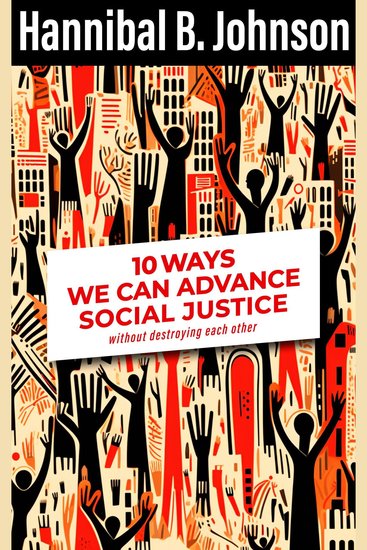
  • 10 Ways We Can Advance Social Justice - cover

    10 Ways We Can Advance Social...

    Hannibal B. Johnson

    • 0
    • 0
    • 0
    Social justice matters because we—each of us—matter. Unless we learn to co-exist as equals, we will never live optimally. To denigrate any one of us is to demean all of us. 
    Absent the wholesale embrace of social justice, we risk succumbing to human tendencies to stereotype, "otherize," and scapegoat. Those tendencies, left unchecked, lead to horrific ends. 
    When we see ourselves in others, we understand that our shared humanity eclipses all else. Through our disagreements, we must never doubt the dignity and worth of the other. 
    Certain facts and factors that cause misalignments in the social order—inequality and inequity—social injustice—but there are ways to intervene and interrupt them. This book offers 10 ways we can advance social justice.   
    We pay a cost for failing to internalize and act upon history's lessons. For example, our history teems with examples of fractious relations among racial, ethnic, and cultural groups and an overarching white supremacist ideology that places some at an advantage at the expense of others. Recognizing our shared humanity—and the power of "we"—and rectifying disparities and inequities are among the chief aims of social justice initiatives. 
    Achieving social justice is an aspirational pursuit—an ongoing journey that can be fraught with peril and disappointment. It is nonetheless an odyssey worth taking—a quest so many of us have no choice but to embrace. Introspection, engagement, and advocacy are essential stops along the way. 
    Show book
  • How Ronald Reagan Changed My Life - cover

    How Ronald Reagan Changed My Life

    Anonymous

    • 0
    • 0
    • 0
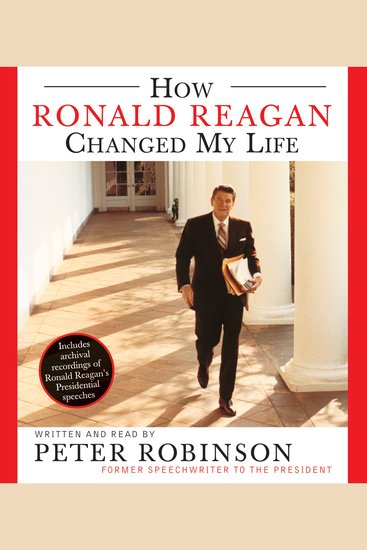
    On February 6, 2001, my nine-year-old daughter happened to wander into the room during a television segment marking Ronald Reagan's ninetieth birthday. She watched for a moment. Then she turned to me and asked, ""Dad, is that the President you worked for?"" 
    What answer could I give her? How could I make her see? I wanted my daughter to recognize that the world she inhabited was freer and more prosperous because of that old, old man on television. But I also wanted her to grasp my personal debt to him, to understand all that he taught me-how to work and how to relax, how to think and how to use words, how to be a good husband, how to approach life itself... 
    I needed to tell my children how Ronald Reagan changed my life. 
    In 1982, as a young man, Peter Robinson was hired as a speechwriter in the Reagan White House. During the six years that followed, he was one of a core group of writers who became informal experts on Reagan, absorbing not just his political positions but his personality, manner, and way of carrying himself And the example Reagan set-as a confident, passionate, principled, generous-spirited older man-molded Robinson's outlook just as he was coming into his own. ""Hard work. A good marriage. A certain lightness of touch,"" he writes. ""The longer I studied Ronald Reagan, the more lessons I learned."" 
    At the core of How Ronald Reagan Changed My Life are ten of the life lessons Robinson learned from the fortieth President-principles that have guided his own life ever since. But it also offers a warm and unforgettable portrait of a great yet ordinary man who touched the individuals around him as surely as he did his millions of admirers around the world. 
    Drawing on journal entries from his days at the White House, as well as interviews with those who knew the President best, Robinson etches his portrait with fresh observations, telling detail, and that ""certain lightness of touch"" that recalls the master himself The result is nothing less than a love story-an account of the profound respect and affection that one young man came to feel for the President who changed his life forever.
    Show book
  • Nancy Pelosi: Biography of A Political Trailblazer - cover

    Nancy Pelosi: Biography of A...

    Jordan Blake

    • 0
    • 0
    • 0
    Immerse yourself in the compelling story of one of America's most influential political figures with Nancy Pelosi: Biography of a Political Trailblazer by Jordan Blake. This insightful audiobook takes listeners through the extraordinary journey of Nancy Pelosi, from her early life in San Francisco to her historic achievements as Speaker of the House of Representatives. 
    Blake’s meticulously researched biography offers an in-depth exploration of Pelosi’s career, highlighting her ascent from a young activist to a powerhouse in American politics. The audiobook delves into her pivotal legislative successes, her strategic acumen in navigating partisan divides, and her role in driving significant policy changes on issues ranging from healthcare reform to climate action. 
    Listeners will gain a deeper understanding of Pelosi’s leadership style, her influence on the Democratic Party, and her contributions to shaping both domestic and international policy. Whether you're interested in political leadership, women's history, or the inner workings of U.S. governance, Nancy Pelosi: Biography of a Political Trailblazer provides an inspiring and comprehensive portrait of a woman who has left an indelible mark on the American political landscape.
    Show book
  • Recessional - The Death of Free Speech and the Cost of a Free Lunch - cover

    Recessional - The Death of Free...

    David Mamet

    • 0
    • 0
    • 0
    NEW YORK TIMES BESTSELLER! 
    “Savagery appeased can only grow. Once you give in to it, it must escalate, like a fire searching for air.” 
    The man who won the Pulitzer Prize for GLENGARRY GLEN ROSS, who wrote the classic films THE VERDICT and WAG THE DOG sounds his alarm about the Visigoths at our gates. 
    In RECESSIONAL he calls out, skewers, mocks, and, most importantly, dissects the virus of conformity which is now an existential threat to the West. 
    A broad-ranging journey through history, the Bible, and literature, RECESSIONAL examines how politics and cultural attitudes about rebellion have shifted in the United States in the last generation. By screaming down freedom of thought and expression, Mamet explains, we kill invention and democracy – the foundations of security and growth. 
    A wickedly funny, wistful and wry appeal to the free-thinking citizen, RECESSIONAL is a vital warning that if we don’t confront the cultural thuggery now, the commissars and their dupes will transform the Land of the Free into the dictatorship at which they aim.
    Show book
  • 20 First Legislative Acts of the Russian Bolshevik Revolution - cover

    20 First Legislative Acts of the...

    Vladimir Lenin

    • 0
    • 0
    • 0
    Decrees were legislative acts of the highest Soviet institutions, primarily of the Council of People's Commissars (the highest executive body — Sovnarkom) and of VTsIK (the highest legislative body between sessions of the Congress of Soviets).
    The Bolshevik Initial Decrees were announced as soon as the Bolsheviks declared their success in the October Revolution (October 26, 1917). The Decrees seemed to conform to the popular Bolshevik slogan "Peace, Land and Bread". The slogan succinctly articulated the grievances of the Russian peasantry, armed forces and proletariat.
    The Bolsheviks were not opportunists but benevolent idealists; the point of the Decrees was to bring about a better quality of life for the Russian people. Regardless of which view is the more accurate account, it is clear from these opposing perspectives that the history of the Initial Decrees is a politically charged issue. This is perhaps because historians use the Decrees to try to discern whether the implementation of Marxist thought has totalitarian tendencies.
    Show book