Join us on a literary world trip!
Add this book to bookshelf
Grey
Write a new comment Default profile 50px
Grey
Subscribe to read the full book or read the first pages for free!
All characters reduced
Immersion Into Virtual Reality - The perception of being physically present in a non-physical world - cover

Immersion Into Virtual Reality - The perception of being physically present in a non-physical world

Fouad Sabry

Publisher: One Billion Knowledgeable

  • 0
  • 0
  • 0

Summary

What Is Immersion Into Virtual Reality
 
Virtual reality (VR) gives users the impression that they are physically present in a setting that does not exist in the real world. The user of the virtual reality system is immersed in visuals, sounds, and other stimuli that together form an immersive whole environment, which is responsible for the creation of the perception.
 
How You Will Benefit
 
(I) Insights, and validations about the following topics:
 
Chapter 1: Immersion (virtual reality)
 
Chapter 2: Multimedia
 
Chapter 3: Virtual reality
 
Chapter 4: Augmented reality
 
Chapter 5: Mixed reality
 
Chapter 6: Head-mounted display
 
Chapter 7: Metaverse
 
Chapter 8: Virtual reality therapy
 
Chapter 9: 360-degree video
 
Chapter 10: Projection augmented model
 
Chapter 11: Astronaut training
 
Chapter 12: Oculus Rift
 
Chapter 13: zSpace (company)
 
Chapter 14: Windows Mixed Reality
 
Chapter 15: Virtual reality headset
 
Chapter 16: VR positional tracking
 
Chapter 17: Virtual reality in primary education
 
Chapter 18: Virtual reality game
 
Chapter 19: Virtual reality applications
 
Chapter 20: Immersive learning
 
Chapter 21: Cinematic virtual reality
 
(II) Answering the public top questions about immersion into virtual reality.
 
(III) Real world examples for the usage of immersion into virtual reality in many fields.
 
(IV) 17 appendices to explain, briefly, 266 emerging technologies in each industry to have 360-degree full understanding of immersion into virtual reality' technologies.
 
Who This Book Is For
 
Professionals, undergraduate and graduate students, enthusiasts, hobbyists, and those who want to go beyond basic knowledge or information for any kind of immersion into virtual reality.
Available since: 08/03/2022.
Print length: 322 pages.
Other books that might interest you

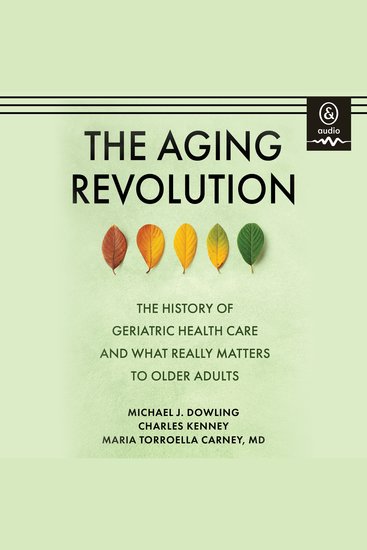
  • The Aging Revolution - The History of Geriatric Health Care and What Really Matters to Older Adults - cover

    The Aging Revolution - The...

    Michael J. Dowling, Charles...

    • 0
    • 0
    • 0
    A history of aging in the United States and an innovative blueprint for revolutionizing care for older adults from Northwell Health, New York’s largest health care system. The New York Times described Dr. Robert Butler as “the man who saw old age anew.” In his 1975 book Why Survive: Being Old in America, Butler argued that for far too many people old age was “a period of quiet despair . . . and muted rage” and he set out to mitigate it. Nearly five decades since he penned his book, a devoted band of brilliant physicians and others in the healthcare field have realized at least a portion of Butler’s dream: to recognize and alleviate suffering among the aging. 
    The Aging Revolution is the story of Butler and his disciples: women and men who saw older distressed adults in hospitals and homes, and worse: being ignored by most of the medical establishment. These revolutionaries could not ignore the suffering, and they set out—individually and collectively—to create entirely new ways of caring for aging adults to ease their suffering and improve their quality and length of life. 
    This revelatory book tells a story never-before told in its entirety, recounting the one of the most significant periods of improvement in American medical history. Readers will learn about pioneering individuals, concepts, and ideas that have improved the lives of millions, including: the women who placed the spotlight on delirium and falls—major issues for older adults; the campaign to build and spread Geriatric and Palliative Care; the small bands of doctors who worked the halls of Congress to create a new program that provides primary care along with home visits from healthcare professionals; and the New York-based foundation that has devoted its mission and millions exclusively to improving care and quality of life for aging adults. 
    Today, as a result, chronic conditions that almost always accompany old age are far more manageable. Older people enjoy more options for work and professional development, for education, for leisure and travel, for sports and maintaining physical strength and mobility. For increasing numbers of Americans, life is healthier and richer in the experiences that matter most. 
    Yet, aging in America can still be a challenge and, too often, particularly for the poor, a painful struggle. The range of mental and physical well-being has almost infinite variations: ninety-year-olds running marathons; sixty-five-year-olds incapacitated by stroke. While this book celebrates the incredible progress and strides made in this field, it also highlights areas that need improvement. The authors lay out specific steps that, if implemented, could ignite the aging revolution and diminish the total volume of older adults suffering in America.
    Show book
  • Better Never to Have Been - The Harm of Coming into Existence - cover

    Better Never to Have Been - The...

    David Benatar

    • 0
    • 0
    • 0
    Most people believe that they were either benefited or at least not harmed by being brought into existence. Thus, if they ever do reflect on whether they should bring others into existence—rather than having children without even thinking about whether they should—they presume that they do them no harm. Better Never to Have Been challenges these assumptions. David Benatar argues that coming into existence is always a serious harm. Those who never exist cannot be deprived. However, by coming into existence one does suffer quite serious harms that could not have befallen one had one not come into existence. Drawing on the relevant psychological literature, the author shows that there are a number of well-documented features of human psychology that explain why people systematically overestimate the quality of their lives and why they are thus resistant to the suggestion that they were seriously harmed by being brought into existence. The author then argues for the "anti-natal" view—that it is always wrong to have children—and he shows that combining the anti-natal view with common pro-choice views about fetal moral status yield a "pro-death" view about abortion. Although counter-intuitive for many, that implication is defended, not least by showing that it solves many conundrums of moral theory about population.
    Show book
  • Stress to Calm in 7 Minutes for Nurses - cover

    Stress to Calm in 7 Minutes for...

    Janey Lee Grace, Beverley Densham

    • 0
    • 0
    • 0
    Are you a nurse feeling overwhelmed and stressed at work? Do you find it difficult to balance the demands of your job with your personal life?  Stress to Calm in 7 Minutes for Nurses is here to help!
    We understand the unique challenges that nurses face on a daily basis, from long hours to a heavy workload and constant multi-tasking. That's why we've designed a practical step-by-step guide that takes you through 7 one-minute tools specifically tailored to help you work through stress and find more peace and balance.
    Each tool is backed by science and designed to help you reduce stress levels, improve your work-life balance, and boost your mental health and wellbeing. These tools can be used anytime, anywhere – whether you're in a hospital, work situation or at home and when you see the improvement, you will be motivated to use them every day.
    With just 7 minutes a day, you can make a real difference in your stress levels and overall wellbeing. Join the Stress to Calm revolution and start living your best, stress-free life today!
    Show book
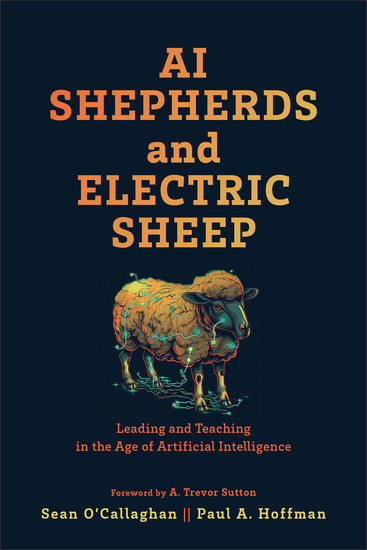
  • AI Shepherds and Electric Sheep - Leading and Teaching in the Age of Artificial Intelligence - cover

    AI Shepherds and Electric Sheep...

    Sean O'Callaghan, Paul A. Hoffman

    • 0
    • 0
    • 0
    Since ChatGPT burst into the public consciousness in 2022, AI has thoroughly infiltrated everyday life. Machines can now take on work once thought to be solely the domain of human beings--from writing college essays to composing worship music. How should Christians respond to this brave new technology? 
     
    In this accessible introduction to AI, Sean O'Callaghan and Paul Hoffman explore its social and ethical impacts for ministry and teaching. The authors shed light on the biblical vision for human flourishing--and on how AI can help or hinder that flourishing. Avoiding both alarmism and uncritical acceptance, O'Callaghan and Hoffman offer resources and practical tools for using AI in our classrooms and congregations. 
     
    AI can write a generic three-point sermon, but it cannot replace an authentic encounter between humans and the divine. In a time of cultural confusion, O'Callaghan and Hoffman encourage readers to embrace the clarity found in the gospel. The book includes a foreword by A. Trevor Sutton.
    Show book
  • Backbone - History Traditions and Leadership Lessons of Marine Corps NCOs - cover

    Backbone - History Traditions...

    Julia Dye

    • 0
    • 0
    • 0
    Noncommissioned officers stand as the backbone of the United States Marine Corps. The Corps is among the most lasting institutions in America, though few understand what makes it so strong and how that understanding can be applied effectively in today's world. In this insightful and thoroughly researched book, Julia Dye explores the cadre of noncommissioned officers that make up the Marine Corps' system of small-unit leadership. To help us better understand what makes these extraordinary men and women such effective leaders, Dye examines the fourteen leadership traits embraced by every NCO. These qualities--including judgment, enthusiasm, determination, bearing, and unselfishness--are exemplified by men like Terry Anderson, the former Marine sergeant who spent nearly seven years as a hostage in Beirut, John Basilone, the hero of the Pacific, and many others. To assemble this extraordinary chronicle, Julia Dye interviewed Anderson and dozens of other Marines, mining a rich trove of historical and modern NCO heroes that comprise the Marine Corps' astonishing legacy, from its founding in 1775 to the present day. 
    "Few people have the privilege of serving as a noncommissioned officer in the U.S. Marine Corps, but anyone who is interested in leading the kind of purpose-driven and values-centered life that marks the best Marine NCOs can learn from this book. And anyone in the business of leading people--whether it's in business, the classroom, or the playing field--should study the men and women Dye writes about with such insight. These NCOs don't just teach young Marines; they have a great deal to teach anyone smart enough to read, listen, and learn." 
    --Ed Ruggero, author of The First Men In: US Paratroopers and the Fight to Save D-Day
    Show book
  • Facing America's Greatest Enemy - cover

    Facing America's Greatest Enemy

    Rich Germaine

    • 0
    • 0
    • 0
    "Facing America's Greatest Enemy" by Rich Germaine delves into the pervasive issue of apathy within American society, exploring its historical roots, psychological underpinnings, and extensive impact on various facets of life. The book opens with a compelling introduction that frames apathy and indifference as a silent yet formidable adversary threatening the foundations of democracy and societal progress. Germaine traces the emergence of apathy from post-revolutionary disinterest to contemporary political indifference, emphasizing how crises and prosperity alike have fostered disengagement. 
    Germaine provides historical examples, such as the rise of Nazi Germany and the low voter participation in recent U.S. elections, to underscore the dire consequences of public disengagement. 
    In the digital age, the paradox of connectivity is examined, where social media's potential to mobilize is countered by the overwhelming influx of information, leading to 'slacktivism'—a superficial form of engagement. The manuscript also addresses the role of education in combating apathy, advocating for curricula that foster critical thinking, empathy, and active citizenship. 
    Parental apathy is explored as a significant factor in children's moral and educational development, highlighting the need for active parental involvement despite modern challenges. The author also incorporates a biblical worldview, urging Christians to act against apathy through faith-driven engagement and community building. 
    Concluding with actionable steps, calling for a collective commitment to rekindle civic engagement and counter the inertia threatening American self-government. This comprehensive exploration offers a roadmap for individuals and communities to overcome apathy and foster a more involved, empathic, and active society.
    Show book