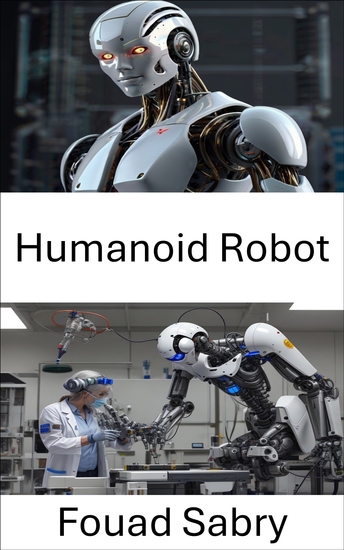
Humanoid Robot - Exploring the Intersection of Artificial Intelligence and Humanlike Machines
Fouad Sabry
Publisher: One Billion Knowledgeable
Summary
"Humanoid Robot" is a comprehensive exploration into the world of robotics, offering insights into the groundbreaking technologies, ethical considerations, and design innovations that shape humanoid robots. Whether you're a professional, student, or enthusiast, this book delves into the intricate relationship between humanity and robots, blending theory with practice for those eager to understand this rapidly advancing field.

Chapters Brief Overview:

1: Humanoid robot: This chapter explores the basic concept of humanoid robots, their history, and the key features that define them.

2: Robot: A broad overview of robots, their classifications, and the pivotal role they play in modern industries and society.

3: Domo (robot): Focuses on Domo, a humanoid robot developed to interact with humans in an engaging and intuitive way.

4: David Hanson (robotics designer): Highlights David Hanson's contributions to robotics, particularly in the field of lifelike humanoid robots.

5: Passive dynamics: This chapter examines passive dynamics in robotics, where robots move with minimal energy input to simulate natural motion.

6: Mobile robot: Covers the development and design of mobile robots, which navigate and perform tasks autonomously in dynamic environments.

7: Japanese robotics: A deep dive into Japan’s role as a leader in robotics innovation, with a special focus on humanoid robots.

8: ICub: Introduces the ICub robot, designed to mimic human learning and interaction in a variety of contexts.

9: Coco (robot): Investigates Coco, a robot created to interact socially, demonstrating humanlike communication capabilities.

10: Adaptable robotics: Discusses adaptable robots that adjust their movements and behavior based on their environment and needs.

11: Legged robot: Explores the design and functionality of legged robots, which are crucial for navigating complex terrains.

12: Neurorobotics: Analyzes the intersection of neuroscience and robotics, where robots are designed to replicate the behavior of the human brain.

13: Robotics: A broad overview of the field of robotics, covering its history, applications, and the future of this technology.

14: Bioinspired robotics: Explores robots designed based on principles found in nature, such as biomimicry and evolutionary strategies.

15: Oussama Khatib: Discusses the contributions of Oussama Khatib to robotics, particularly in humanrobot interaction and control.

16: Juggling robot: Examines the fascinating concept of robots capable of performing complex tasks like juggling, highlighting advanced robotic precision.

17: Soft robotics: Introduces soft robotics, focusing on the design of flexible robots that can interact more safely and effectively with humans.

18: Articulated soft robotics: Explores robots with articulated soft structures that combine flexibility and movement precision.

19: Continuum robot: Analyzes continuum robots, which use flexible structures for precise and adaptable movements, offering new possibilities for surgery and exploration.

20: Robert D. Gregg: Discusses the work of Robert D. Gregg in soft robotics and innovative robotic control techniques.

21: Robotics engineering: Concludes with an overview of robotics engineering, emphasizing the principles and technologies that guide the creation of robots.

In sum, "Humanoid Robot" is not just a technical manual—it's an engaging journey into the world of robotics. With a focus on realworld applications and theoretical foundations, this book is essential for those looking to understand the evolution and potential of humanoid robots.
Available since: 01/02/2025.
Print length: 221 pages.