¡Acompáñanos a viajar por el mundo de los libros!
Añadir este libro a la estantería
Grey
Escribe un nuevo comentario Default profile 50px
Grey
Suscríbete para leer el libro completo o lee las primeras páginas gratis.
All characters reduced
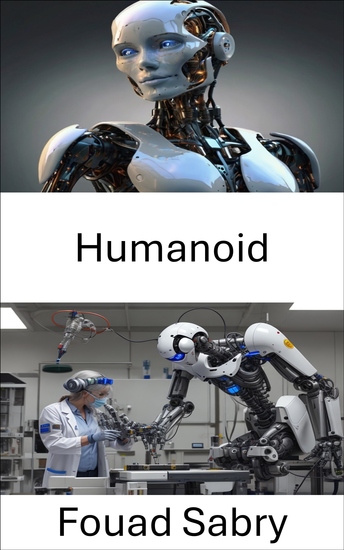
Humanoid - Exploring the Future of Robotic Integration in Human Environments - cover

Humanoid - Exploring the Future of Robotic Integration in Human Environments

Fouad Sabry

Editorial: One Billion Knowledgeable

  • 0
  • 0
  • 0

Sinopsis

"Humanoid" is a groundbreaking exploration into the fascinating intersection of robotics, evolution, and extraterrestrial life. Written by Fouad Sabry, this book delves deep into speculative evolution, the development of humanoid robotics, and the mysteries of life beyond our planet. Whether you are a professional, a student, or simply an enthusiast of robotics science, this book will provide invaluable insights into the future of humanoid technology and the possibilities of alien life.
 
Chapters Brief Overview:
 
1: Humanoid: An introduction to humanoid robotics, exploring their design and functionality.
 
2: Bipedalism: Focuses on the evolution of bipedal movement, crucial for humanoid design.
 
3: Extraterrestrial life: Investigates the potential for life on other planets and its implications.
 
4: Fermi paradox: Discusses the contradiction between high probability of alien civilizations and lack of evidence.
 
5: Grey alien: Explores the cultural and scientific significance of the classic grey alien depiction.
 
6: Troodon: Analyzes the Troodon dinosaur, often speculated as an advanced, intelligent species.
 
7: Alienators: Evolution Continues: Looks at how speculative evolution can lead to humanoid forms elsewhere in the universe.
 
8: Selfreplicating spacecraft: Examines the concept of spacecraft capable of replicating themselves to explore distant worlds.
 
9: Stenonychosaurus: Focuses on the Stenonychosaurus, a dinosaur linked to humanoid evolution in speculative thought.
 
10: Great Filter: Explores the idea that an evolutionary filter may explain why we haven't found other intelligent civilizations.
 
11: Alien Planet: Investigates the types of environments that might support intelligent life on alien planets.
 
12: Expedition (book): Delves into the human quest to explore the unknown and discover alien life forms.
 
13: Mythology of Stargate: Analyzes the impact of scifi shows like Stargate on our understanding of alien civilizations.
 
14: The New Dinosaurs: Speculates on the rise of new dinosaurlike species if humans never existed.
 
15: Darren Naish: A deep dive into Naish’s contributions to paleontology and his views on humanoid evolution.
 
16: Dale Russell: Discusses Russell’s work on the "dinosauroid" hypothesis, where dinosaurs evolve humanoid forms.
 
17: Ancient astronauts in popular culture: Investigates how the idea of ancient astronauts has influenced modern perceptions of alien life.
 
18: Speculative evolution: Explores how speculative evolution theories shape our understanding of future humanoid beings.
 
19: Biology in fiction: Examines the role of biology in creating believable fictional worlds and life forms.
 
20: Dinosauroid: Delves into the theory of humanoid evolution from dinosaurs and its implications.
 
21: Ardipithecus: Focuses on one of the earliest known hominids and its importance in understanding humanoid evolution.
 
This book is not just a collection of facts and theories; it’s a comprehensive exploration that connects robotics, evolution, and speculative science. Whether you're designing cuttingedge robots, studying paleontology, or interested in the future of space exploration, "Humanoid" offers essential insights that are both intellectually stimulating and practically useful.
Disponible desde: 22/01/2025.
Longitud de impresión: 358 páginas.

Otros libros que te pueden interesar

  • Managing Anxiety: A Step-by-Step Guide to Calming the Storm - Transform Your Experience of Anxiety from Panic to Peace and Confidence with a 30-Day Daily Meditation Program for Anxiety Relief - cover

    Managing Anxiety: A Step-by-Step...

    Sandeep Verma

    • 0
    • 0
    • 0
    Anxiety disorders are prevalent mental health issues. While everyone encounters stress and anxiety at some point, triggers vary from person to person. Some may experience anxiety in social situations, while others may feel it when faced with heights. The scale of anxiety differs as well, with some perceiving it as a background worry and others experiencing intense and unsettling emotions, such as continuous fear and panic attacks. 
    Regardless of the type or intensity of anxiety disorder, this course aims to help individuals create mental clarity and peace by distancing themselves from anxiety. The long-term goal is to change the perspective and experience of anxiety rather than trying to eliminate it entirely. Anxiety is a natural emotion inherent in all healthy human beings. While it serves a purpose in certain situations, it becomes problematic when it interferes with daily life and becomes destructive. 
    Overwhelming anxiety hinders our ability to manage day-to-day activities, leading to muscle tension, shortness of breath, rapid heartbeat, and other physical symptoms. We often try to avoid triggering situations. Not only does anxiety impact our own well-being, but it also affects the people around us, including friends and family. 
    This course emphasizes shifting and mastering our relationship with anxiety, rather than attempting to eradicate it. By becoming at ease with anxiety and accepting its presence when it arises, we can avoid getting entangled in it or trying to suppress it.
    Ver libro
  • AI-Powered Publishing - Launch Your Own Profitable eBooks Planners & Guides on Amazon - cover

    AI-Powered Publishing - Launch...

    Dave Jones

    • 0
    • 0
    • 0
    Unlock the Future of Passive Income with AI + Amazon KDP 🚀 
    Are you ready to turn your creativity into cash—without the guesswork? Make Money with AI: 50 Amazon KDP Ideas for Digital Products & eBooks is your ultimate guide to leveraging artificial intelligence to generate profitable, low-effort publishing ideas. Whether you're a seasoned entrepreneur or a curious beginner, this book delivers actionable strategies to help you build a scalable income stream through Amazon Kindle Direct Publishing. 
    Inside, you'll discover:💡 50 AI-powered content ideas tailored for KDP success🧠 How to use free and paid AI tools to create high-quality eBooks and digital products📈 Tips for optimizing your listings, covers, and keywords to boost visibility💸 Monetization strategies that work—even if you’re not a writer 
    No fluff. No hype. Just smart, sustainable ways to make money online using the power of AI. 
    Start your publishing empire today—one idea at a time.
    Ver libro
  • Technology Touchpoints - Parenting in the Digital Dystopia - cover

    Technology Touchpoints -...

    PhD MAC Loretta L. C. Brady

    • 0
    • 0
    • 0
    This is a story about a family coming of age at the same time as smartphones and social media; a multiracial family coming into its own as windows into social injustice opened up before our very screens; and a multi-parent multi-professional family with children living differently depending on which house and which combination of family members happen to be home. While it is a story about a family, it is really the story of technological and global changes unfolding on our doorsteps. 


    While many revile the ascendance of smartphones and social media and the way they suck us into the vortex of cyberspace, there are cultural touchpoints that reflect deeper human and technology development patterns, patterns which we would all do well to understand, no matter whether or how we choose to engage in the ever-innovating digital frontiers. Informed by research and interviews with leaders in policy, human development, ethics, and technology, Loretta Brady helps listeners understand the complex systemic challenges and findings related to technology and human development. 


    We do not have to hate or fear technology. It is neither friend nor foe. But understanding its impact on our daily lives is paramount to cultivating a healthier relationship both with our digital lives and our real, lived ones.
    Ver libro
  • The Shocking Truth about Medical Innovations - cover

    The Shocking Truth about Medical...

    Zoey Fraisers

    • 0
    • 0
    • 0
    Medical innovation has long been a driving force behind longer life expectancy, improved quality of life, and the eradication of once-deadly diseases. From antibiotics and vaccines to robotic surgery and gene editing, the rapid advancement of medical technology has saved countless lives. Yet, behind every breakthrough lies a complex web of ethical dilemmas, financial motivations, and unforeseen consequences. While many medical innovations deliver on their promise, others have caused more harm than good, raising critical questions about the true cost of progress.  
      
    History has shown that not all medical advancements are as beneficial as they seem at first glance. Some treatments that were once hailed as revolutionary later proved to be disastrous. For example, the introduction of thalidomide in the late 1950s as a treatment for morning sickness led to severe birth defects in thousands of newborns. Likewise, the opioid crisis, fueled by the aggressive marketing of painkillers as “safe and non-addictive,” has devastated millions of lives worldwide. These examples highlight the darker side of medical innovation—where rushed approvals, corporate interests, and inadequate regulation can turn hopeful breakthroughs into public health disasters.  
      
    At the heart of this issue is the tension between progress and safety. In the race to bring new treatments and technologies to market, are we sacrificing patient well-being in favor of speed and profit? The pharmaceutical industry, medical device manufacturers, and even hospitals often prioritize financial gain over patient outcomes. Meanwhile, regulatory agencies such as the FDA and the World Health Organization struggle to keep up with the sheer volume of new developments, sometimes failing to catch risks before they reach the public. 
    Ver libro
  • Building Your Own Large Language Model - A comprehensive guide to creating Large Language Models (LLMs) - cover

    Building Your Own Large Language...

    Et Tu Code

    • 0
    • 0
    • 0
    Building Your Own Large Language Model: A Step-by-Step Guide is your comprehensive roadmap to crafting custom language models tailored to diverse applications. 
    From laying the groundwork in Language Model Development Fundamentals to navigating through Essential NLP Concepts and Framework Selection, each step is meticulously detailed to ensure mastery. You'll learn the art of Data Collection and Preprocessing, crucial for gathering and refining training data, followed by the craft of Scalable Model Architecture Design. Training and Fine-Tuning Strategies guide you through efficiently honing your model's capabilities, while Performance Evaluation and Validation ensure accuracy. Model Deployment integrates your creation seamlessly into real-world applications like chatbots or language translation tools, while Task-Specific Fine-Tuning customizes it for sentiment analysis or text summarization. Ethical Considerations address biases and ethical concerns, while Performance Optimization techniques enhance efficiency. Through Exploration of Large Language Models, you'll grasp the landscape's nuances, preparing for Application Integration and Scaling with Distributed Training. Continuous Improvement methodologies, coupled with a focus on Interpretability and a glimpse into Future Trends, equip you for ongoing success. Real-world Case Studies provide practical insights, and Community Engagement fosters collaboration. 
    Concluding with key takeaways and recommendations, this guide propels you into the dynamic realm of large language model development with confidence and clarity. 🚀
    Ver libro
  • Urology - The Urinary System: Health and Function - cover

    Urology - The Urinary System:...

    Mike Crawford

    • 0
    • 0
    • 0
    The urinary system, also known as the excretory or renal system, plays a crucial role in maintaining the body’s internal balance by regulating the composition of the blood, removing waste products, and ensuring proper fluid and electrolyte levels. It consists of the kidneys, ureters, bladder, and urethra, each of which plays an essential role in the formation, storage, and excretion of urine. This system is not only responsible for removing waste products but also for maintaining the body’s homeostasis, which is critical for overall health and function. 
    At the core of the urinary system are the kidneys, which are two bean-shaped organs located near the middle of the back, just below the rib cage. The kidneys filter approximately 200 liters of blood daily, removing waste and excess substances, such as salts and toxins. These waste products are transformed into urine, which is then transported to the bladder for storage. The kidneys also regulate important functions, such as blood pressure, red blood cell production, and calcium levels, by releasing various hormones and enzymes. This intricate process allows the kidneys to maintain the body’s internal balance, ensuring the proper function of organs and tissues. 
    The ureters are muscular tubes that connect the kidneys to the bladder. Their primary role is to transport urine from the kidneys to the bladder through a series of peristaltic movements, which are wave-like contractions that push the urine downward. The bladder is a hollow, muscular organ that serves as a reservoir for urine. As the bladder fills with urine, its walls stretch, and stretch receptors send signals to the brain, prompting the sensation of the need to urinate. When it’s time to void, the bladder contracts and expels the urine through the urethra.
    Ver libro