¡Acompáñanos a viajar por el mundo de los libros!
Añadir este libro a la estantería
Grey
Escribe un nuevo comentario Default profile 50px
Grey
Suscríbete para leer el libro completo o lee las primeras páginas gratis.
All characters reduced
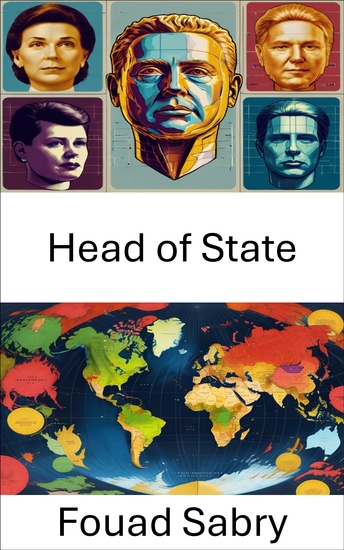
Head of State - Understanding the Role and Influence of National Leaders - cover

Head of State - Understanding the Role and Influence of National Leaders

Fouad Sabry

Editorial: One Billion Knowledgeable

  • 0
  • 0
  • 0

Sinopsis

What is Head of State?
 
Head of State delves into the apex of political power, exploring the roles, powers, and functions of the highest office in various political systems. It examines the influence of this position on governance, diplomacy, and national identity, providing readers with a clearer understanding of global politics and the structures that shape executive leadership.
 
Overviews:
 
1: Head of State – Learn the core concept of the head of state and its key role in leadership.
 
2: Constitutional Monarchy – Explore how tradition meets governance in constitutional monarchies.
 
3: Prime Minister – Understand the intersection of the prime minister's role with the head of state.
 
4: President (Govt Title) – Discover the global variations of the president’s role and authority.
 
5: Separation of Powers – Learn about how governments balance power to prevent abuses.
 
6: Westminster System – Explore how the Westminster model influences many democracies.
 
7: Head of Government – Differentiate the distinct roles of head of state and head of government.
 
8: Veto – Investigate how veto power serves as a legislative check.
 
9: Parliamentary System – Understand how heads of state function in parliamentary frameworks.
 
10: Presidential System – Explore the independent authority of the president in such systems.
 
11: President of India – Case study of a non-executive head of state with key constitutional duties.
 
12: Reserve Power – Uncover discretionary powers of heads of state in extraordinary cases.
 
13: Commander-in-Chief – Learn about heads of state’s military roles ensuring national security.
 
14: List of Countries by System of Government – Compare governmental systems across nations.
 
15: President of Sri Lanka – Case study of a semi-presidential head of state.
 
16: Australian Government – Explore Australia’s federal system and its head of state’s role.
 
17: Parliamentary Republic – Investigate the symbolic but important role of the head of state.
 
18: African Union Member States – Review the diverse political systems of the African Union.
 
19: Constitution of Armenia – Study Armenia’s hybrid political system and its head of state.
 
20: Non-Sovereign Monarchy – Understand the position of heads of state in non-sovereign monarchies.
 
21: Semi-Parliamentary System – Discover systems where executive power is shared.
 
Who is this book for?
 
This book is perfect for professionals, students, and enthusiasts in political science. It offers advanced insights into executive leadership, enhancing understanding of how heads of state shape governance worldwide.
Disponible desde: 22/09/2024.
Longitud de impresión: 465 páginas.

Otros libros que te pueden interesar

  • World War III: Humanity Sacrificed - The Hidden Architecture of Global Collapse - cover

    World War III: Humanity...

    Murat Aibassov

    • 0
    • 0
    • 0
    World War III: Humanity Sacrificed is a chilling yet deeply analytical exploration of how the modern world collapsed into global conflict — and why it was inevitable. Written by Murat Aibassov, an engineer who predicted the war more than a decade before it began, the book exposes the hidden architecture of global systems, the cyclic nature of civilizational collapse, and the elite mechanisms that shape history behind the scenes. 
    Blending geopolitics, economics, technology, and ritual dynamics, Aibassov reveals why global crises unfold with mathematical precision — and what humanity must understand to survive what comes next. 
    This is not a book of fear. 
    This is a book of patterns, truth, and the last chance to prepare for the world after the catastrophe.
    Ver libro
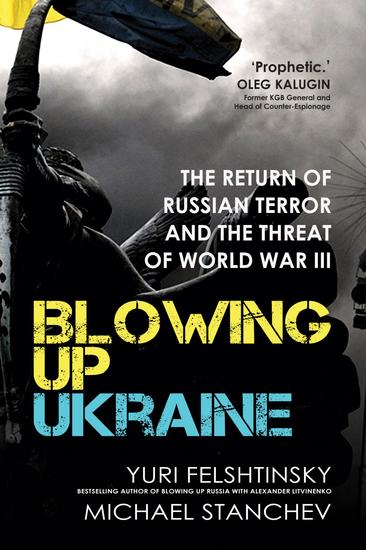
  • Blowing up Ukraine - The Return of Russian Terror and The Threat of World War III - cover

    Blowing up Ukraine - The Return...

    Yuri Felshtinsky, Michael Stanchev

    • 0
    • 0
    • 0
    Presciently researched before the invasion of Ukraine, Blowing up Ukraine is the first comprehensive investigation into the lethal methods Russia has used since 1999 to take over Ukraine – culminating in full-blown unprovoked war in 2022 and mounting atrocities. In this chilling, riveting and alarming narrative the authors cite ample evidence, draw historical analogies, and marshal sources that are new, little known, or anonymous by necessity.Over twenty years, Vladimir Putin skilfully manipulated Ukraine's self-serving politicians and oligarchs, only to be thwarted time and again by peaceful revolutions of ordinary Ukrainians – the Maidan – against government corruption and being pushed into Russia's arms. As Putin became obsessed with conquering Ukraine, Blowing up Ukraine shows how the Kremlin has become a threat to global stability and Ukraine is almost certain to be the first battleground of World War III if the West is not careful to take a stance
    Ver libro
  • Going Low - How Profane Politics Challenges American Democracy - cover

    Going Low - How Profane Politics...

    Finbarr Curtis

    • 0
    • 0
    • 0
    Liberalism puts its trust in civil discourse and rational argument. Today, its opponents enthusiastically flout these norms, making a show of defying so-called political correctness. In the Trump era and beyond, right-wing figures delight in sheer offensiveness. What is at stake in breaking the rules of civility to "own the libs"? 


    Going Low examines how the offensive style of contemporary politics challenges liberal democratic institutions. Considering the rise of illiberal politics and debates about the limits of free speech, Finbarr Curtis draws on the insights of religious studies to rethink provocation and transgression. He argues that the spectacle of brazenly violating taboos is a show of dominance over a supposedly censorious liberalism. Profaning liberal pieties is the ultimate form of "winning." Curtis contends that deliberate offensiveness dovetails with the privatization of public goods: both represent the refusal to accommodate the sensibilities of others in a diverse society.
    Ver libro
  • Fascism - What It Is and How to Fight It - cover

    Fascism - What It Is and How to...

    Leon Trotsky

    • 0
    • 0
    • 0
    Fascism: What It Is and How to Fight It, written by Leon Trotsky in 1933, is a critical analysis of the rise of fascist movements in Europe, particularly focusing on Nazi Germany under Adolf Hitler. Trotsky argues that fascism is not a sudden, irrational outburst of violence but rather the result of deep structural crises in capitalist society, which the ruling class seeks to resolve through authoritarian means. He explains that fascism arises when the traditional political establishment is unable to suppress revolutionary movements from below (such as workers' uprisings or socialist revolutions) and when the capitalist system is threatened by economic collapse. 
    Trotsky highlights that fascism is a tool of the bourgeoisie, aimed at preserving the existing social order through terror, militarism, and the suppression of democratic freedoms. However, it is not simply a reactionary force; it has its own set of internal contradictions, as fascists simultaneously defend capitalist interests while attacking the political establishment and the working class. 
    Trotsky warns of the dangers of fascism's rise and stresses the importance of building a united front of the working class and the Left to prevent its spread. He critiques both Stalinism and social democracy for their failures to adequately respond to the fascist threat, emphasizing the need for a revolutionary approach to combat the fascist menace.
    Ver libro
  • Late Fascism - Race Capitalism and the Politics of Crisis - cover

    Late Fascism - Race Capitalism...

    Alberto Toscano

    • 0
    • 0
    • 0
    Late Fascism turns to theories of fascism produced in the past century, testing their capacity to illuminate our moment and challenging many of the commonplaces that debate on this extremely charged term devolves into. It can be tempting for any contemporary assessment of fascism to reach for historical analogy. 


    Rather than treating fascism as an unrepeatable phenomenon or identifying it with a settled configuration of European parties, regimes, and ideologies, Toscano approaches fascism as a problem and a process, one that is intimately linked to capitalism's demands for domination. Drawing especially on Black radical and anti-colonial theories of racial fascism, Late Fascism makes clear the limits of identifying fascism simply with the political violence of bygone European regimes. From the "Great Replacement" to campaigns against critical race theory and "gender ideology," today's global far-right is launching lethal panics about the threats to traditional political, sexual, and racial regimes. Late Fascism allows us to rediscover some truly inspiring anti-fascist thinkers, rooted in their turn in largely anonymous collective practices of worldmaking against domination, traditions of the oppressed that remain a resource for those set on dismantling the hierarchies and segregations that the partisans of Order and Tradition seek to revive and reimpose.
    Ver libro
  • The story of success - BR Ambedkar - cover

    The story of success - BR Ambedkar

    Gurmeet

    • 0
    • 0
    • 0
    The sucess of Baba Saheb. 
    This story about Dr. B.R Ambedkar. He was a legend person. He was member of Parliament of Rajya sabha in Bombay state. (14 Apr. 1891 to 6 Dec. 1956).This story about Dr. B.R Ambedkar.
    Ver libro