Join us on a literary world trip!
Add this book to bookshelf
Grey
Write a new comment Default profile 50px
Grey
Subscribe to read the full book or read the first pages for free!
All characters reduced
Globalization - The Era of Interconnected States - cover

Globalization - The Era of Interconnected States

Fouad Sabry

Publisher: One Billion Knowledgeable

  • 0
  • 0
  • 0

Summary

Globalization
 
Explore the intricate impacts of globalization on economies, cultures, and political landscapes worldwide in this comprehensive study. Each offers invaluable insights into its complexities and challenges in the contemporary era.
 
Chapters Overview
 
- 1: Globalization - Understand the evolution and significance of globalization in today’s interconnected world.
 
- 2: International Monetary Fund - Examine the IMF’s role in global economic policies and financial stability.
 
- 3: Neoliberalism - Critique the pervasive influence of neoliberalism on economic globalization.
 
- 4: Economic Development - Analyze strategies for economic development in the Global North and South.
 
- 5: Global North and Global South - Investigate disparities between developed and developing regions.
 
- 6: Trade Justice - Discuss the quest for equity in global trade systems.
 
- 7: Green Economy - Explore globalization’s intersection with environmental sustainability.
 
- 8: Economy of Asia - Highlight key trends and challenges in Asia’s dynamic economies.
 
- 9: Economic Nationalism - Examine the resurgence and implications of economic nationalism.
 
- 10: Economic Integration - Investigate the benefits of economic integration globally.
 
- 11: Development Theory - Explore theoretical frameworks guiding development in a global context.
 
- 12: Regional Integration - Assess the impacts of regional integration initiatives worldwide.
 
- 13: Cultural Economics - Examine the economic dimensions of cultural globalization.
 
- 14: Economy of East Asia - Analyze East Asia’s economic dynamics and developmental trajectories.
 
- 15: Globalization in India - Study India’s socio-economic impacts and policy responses to globalization.
 
- 16: Globalization in China - Explore China’s economic rise and global implications.
 
- 17: Barcelona Development Agenda - Assess the effectiveness of global development strategies.
 
- 18: Economic Globalization - Reflect on overarching trends and dynamics of economic globalization.
 
- 19: Outline of Globalization - Provide an overview of globalization’s key dimensions and debates.
 
- 20: Alter-Globalization - Investigate counter-movements and alternative visions for equitable globalization.
 
- 21: Globalization in South Korea - Examine South Korea’s globalization experiences and impacts.
 
Tailored for professionals, students, and enthusiasts, this volume offers detailed insights, comprehensive analyses, and thought-provoking perspectives on navigating our interconnected world.
Available since: 08/05/2024.
Print length: 237 pages.

Other books that might interest you

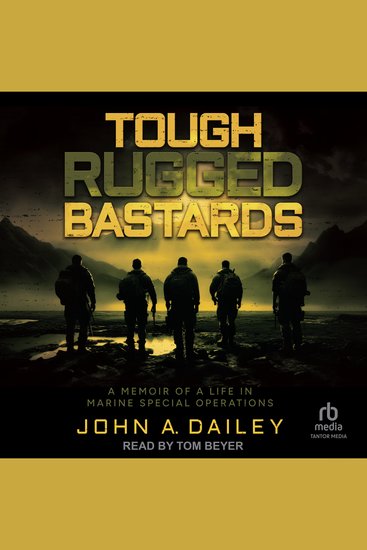
  • Tough Rugged Bastards - A Memoir of a Life in Marine Special Operations - cover

    Tough Rugged Bastards - A Memoir...

    John A. Dailey

    • 0
    • 0
    • 0
    Following the 9/11 attacks, Secretary of Defense Donald Rumsfeld directed the Marine Corps to establish a unit that would answer to US Special Operations Command. The eighty-six-man "Detachment One" was formed with a two-year charter to train and deploy as a "proof-of-concept" to assess the viability of a larger Marine Special Operations contribution in support of the Global War on Terror. 


    For such a departure from the norm, a special leader was needed. The Commanding Officer—Colonel Robert J. Coates, a Marine Force Recon legend—was given his pick of personnel. One of the four team leaders he selected was Gunnery Sergeant John A. Dailey. 


    These men built a unit from nothing, trained for unknown missions in an unknown location, and deployed amid controversy and skepticism. Once in Iraq, they were dubbed "Task Unit Raider" and quickly won over the naysayers who doubted the Marine's ability to operate successfully. 


    This book tells Dailey's story of the creation, training, and volatile 2004 Iraq deployment of Task Unit Raider that led to the creation of the Marine Forces Special Operations Command. Det-1 served as the bridge between the Raiders of WWII and the Marine Raiders of today.
    Show book
  • Important Prophecies of the Future - From Prophets Futurists and Seers - cover

    Important Prophecies of the...

    Martin K. Ettington

    • 0
    • 0
    • 0
    There are many Prophecies and Premonitions from the past which still might happen. This book looks at the most important from a variety of sources and attempts to analyze what will really happen and when. 
    Being an Engineer and a Clairvoyant has led me to analyze my prophecy experiences and given me a better understanding of how they exist and work. 
    My major experiences are reviewed in Chapter 2.0 along with my explanations of how prophecy really works. 
    In the rest of this book we will explore many prophecies from the past which have yet to occur, as well as forecasts by current prophets and great thinkers about our future. 
    Then we get into a few prophecies by those who had Near Death Experiences (NDEs) who are therefore closer to their spirit which increases prophetic validity. 
    Next I make a few of my own prophecies about our future from looking ahead with my intuition to see “what feels right”. 
    Lastly, is an analysis of the prophecies in this book and what we can learn from them.
    Show book
  • A Rare Recording of Margaret Sanger - cover

    A Rare Recording of Margaret Sanger

    Margaret Sanger

    • 0
    • 0
    • 0
    Margaret Higgins Sanger, September 14, 1879 - September 6, 1966, was an American birth control activist, sex educator, writer, and nurse. Sanger popularized the term "birth control", opened the first birth control clinic in the United States, and established organizations that evolved into the Planned Parenthood Federation of America. The following is a recorded tv interview.
    Show book
  • Life in the Confederate Army - Observations and Experiences of a Foreigner in the South During the American Civil War - cover

    Life in the Confederate Army -...

    William Watson

    • 0
    • 0
    • 0
    Life in the Confederate Army is a firsthand account of a Confederate State Army solider William Watson. The book was written shortly after the war and it chronicles author's army life.Watsonjoined the local Rifle Volunteers, and when the Civil War broke out enlisted in the Confederate Army. As a sergeant in the 3rd Louisiana Infantry the author served in a number of military campaigns with the regiment. He was an eye witness and participant of Oak Hills, Pea Ridge and Beechgrove battles.
    Show book
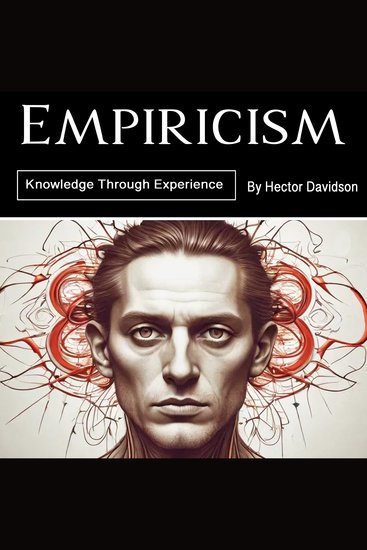
  • Empiricism - Knowledge Through Experience - cover

    Empiricism - Knowledge Through...

    Hector Davidson

    • 0
    • 0
    • 0
    Empiricism, as a philosophical doctrine, asserts that knowledge is primarily derived from sensory experience. This perspective contrasts sharply with rationalism, which emphasizes reason and innate knowledge. Empiricism has shaped our understanding of the world and influenced numerous fields, from the natural sciences to ethics and epistemology. The essence of empiricism lies in the conviction that the mind begins as a "blank slate" (tabula rasa) and that experience, rather than pre-existing ideas or concepts, forms the foundation of all knowledge. 
    At the heart of empiricist thought is the belief that all human knowledge starts with perception. We acquire information about the world through our senses—sight, hearing, touch, taste, and smell—which provide the raw data from which we form concepts and beliefs. For empiricists, knowledge is not something we discover internally, but something we gather from external reality. This view stands in contrast to the rationalist emphasis on a priori knowledge, which is independent of experience and accessible only through reason. 
    Empiricism's roots can be traced back to ancient philosophy, with early proponents like Aristotle, who argued that all knowledge comes from sensory observation. However, the modern development of empiricism is largely credited to three major figures: John Locke, George Berkeley, and David Hume. Locke introduced the idea of the mind as a tabula rasa, arguing that individuals are born without innate ideas and that all knowledge comes from experience. Berkeley took this further by suggesting that even the existence of the external world depends on perception, encapsulating the notion that "to be is to be perceived." Hume, the most radical empiricist of the three, questioned the very basis of causality and inductive reasoning, asserting that our beliefs in cause-and-effect relationships were not rationally justified but arose from habitual experience.
    Show book
  • The Elements of Style - cover

    The Elements of Style

    E.B. White, William Strunk Jr.

    • 0
    • 0
    • 0
    Make every word count. Say what you mean. Say it clearly.
    For generations, writers have turned to The Elements of Style for its simple, no-nonsense rules of good writing. With concise guidance on grammar, usage, composition, and style, Strunk and White show how clarity, brevity, and precision transform ordinary prose into confident communication.
    
    Regarded as "the most influential writing guide ever published," this timeless handbook is trusted by students, professionals, journalists, and authors alike. Its advice is direct, practical, and instantly applicable—whether you're crafting essays, emails, or stories.
    
    If you want to write with confidence, elegance, and impact, this essential classic belongs on your desk.
    
    Open the book—and start writing better today.
    Show book