Join us on a literary world trip!
Add this book to bookshelf
Grey
Write a new comment Default profile 50px
Grey
Subscribe to read the full book or read the first pages for free!
All characters reduced
European Union - Navigating Integration and Power in a Unified Europe - cover

European Union - Navigating Integration and Power in a Unified Europe

Fouad Sabry

Publisher: One Billion Knowledgeable

  • 0
  • 0
  • 0

Summary

The European Union (EU) is central to modern political science, influencing politics, economics, and society globally. "European Union" provides a comprehensive examination of the EU’s formation, structure, and role, essential for anyone interested in this key organization.
 
Chapters Brief Overviews:
 
1: European Union - Explore the origins, evolution, and foundational treaties of the EU.
 
2: Council of the European Union - Learn how member states shape EU policy and legislation.
 
3: European Economic Community - Discover the economic foundation that led to the EU’s creation.
 
4: European Council - Understand the summit’s strategic role in EU policy and direction.
 
5: European Commission - Learn about the EU’s executive body responsible for legislation.
 
6: Intergovernmentalism - Examine the balance of national sovereignty in the EU.
 
7: Eurozone - Analyze the economic and monetary union and its global impact.
 
8: European Court of Auditors - Explore the institution ensuring proper EU budget management.
 
9: European Communities - Trace the roots of various European communities forming the EU.
 
10: Languages of the European Union - Understand the role of linguistic diversity in EU policy.
 
11: Eurostat - Learn about the EU’s statistical office and its data analysis role.
 
12: Agencies of the European Union - Explore specialized bodies supporting EU policy operations.
 
13: Institutions of the European Union - Get an overview of the governing institutions of the EU.
 
14: Politics of the European Union - Examine political dynamics and electoral systems within the EU.
 
15: Economy of the European Union - Understand the EU’s economic structure and trade policies.
 
16: Foreign relations of the European Union - Analyze the EU’s foreign policy and global relations.
 
17: Budget of the European Union - Explore the financial planning and budgeting processes of the EU.
 
18: Member state of the European Union - Learn about the rights and roles of EU member states.
 
19: Voting in the Council of the European Union - Understand voting mechanisms in the Council.
 
20: Treaty of Lisbon - Study the treaty that streamlined EU governance.
 
21: Area of freedom, security and justice - Explore policies ensuring justice and security within the EU.
 
This book is ideal for professionals, students, and enthusiasts seeking a deep, well-rounded understanding of the European Union. Explore its complex structures and appreciate how the EU continues to shape global affairs.
Available since: 10/17/2024.
Print length: 358 pages.
Other books that might interest you

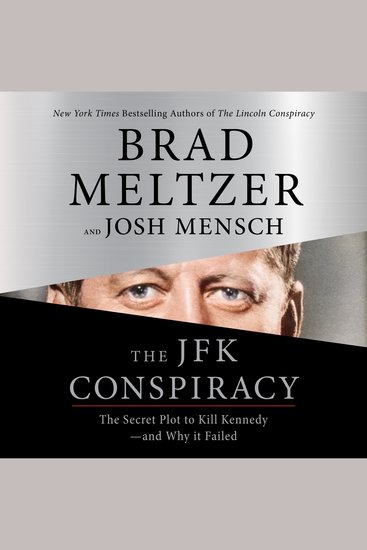
  • The JFK Conspiracy - The Secret Plot to Kill Kennedy—and Why It Failed - cover

    The JFK Conspiracy - The Secret...

    Brad Meltzer, Josh Mensch

    • 0
    • 0
    • 0
    "It's easy to understand why Brad Meltzer and many other authors love to have Scott Brick perform their work. His delivery is impassioned, impossible to ignore...impossible to turn off." —AudioFileFrom the New York Times bestselling authors of The Nazi Conspiracy and The Lincoln Conspiracy comes a true, little-known story about the first assassination attempt on John F. Kennedy, right before his inauguration.Kennedy, the thirty-fifth president of the United States, is often ranked among Americans’   most well-liked presidents. Yet what most Americans don’t know is that JFK’s historic presidency almost ended before it began—at the hands of a disgruntled sociopathic loner armed with dynamite.On December 11, 1960, shortly after Kennedy’s election and before his inauguration, a retired postal worker named Richard Pavlick waited in his car—a parked Buick—on a quiet street in Palm Beach, Florida. Pavlick knew the president-elect’s schedule. He knew when Kennedy would leave his house. He knew where Kennedy was going. From there, Pavlick had a simple plan—one that could’ve changed the course of history.Written in the gripping style that is the hallmark of Brad Meltzer and Josh Mensch’s bestselling series, this is a slice of history vividly brought to life. Meltzer and Mensch are at the top of their game with this brilliant exploration of what could’ve been for one of the most compelling leaders of the 20th century.  A Macmillan Audio production from Flatiron Books.
    Show book
  • Room at the Table - A Leader's Guide to Advancing Health Equity and Inclusion - cover

    Room at the Table - A Leader's...

    Renée Branch Canady

    • 0
    • 0
    • 0
    What Was Your First Memory of Race?This opening question is the heart and soul of “Room at the Table.” The word equity is thrown around in multiple media outlets, corporations, and non-profits. Diversity, Equity, Inclusion… Many shy away from these terms, convinced that they already understand. In truth, these concepts are a mystery to most. It’s more important than ever to grasp the vital, far-reaching aim of the equity lens. What does this work look like? What does it sound like? What actions must equity leaders take to turn the future of leadership into a reality?With public health injustices on the rise, grounded equity leadership can forge the path to a more healthy, understanding, and effective outlook for all of our futures. In her groundbreaking work, Dr. Renee Branch Canady, CEO of the Michigan Public Health Institute, shares through research and candid stories what it’s like to be on the front lines as an equity public health leader. In a culture centered on optics, Dr. Canady brings to light the true act of doing for the sake of change.Points of focus include:• The innovative concept of “Leadering” • Using our outrage to enact change • Seeing, saying, and doing differently • Acting courageously in the face of institutional racism • Leading with authenticity • Harboring the conviction to move equity work forward, one step at a timeIn Dr. Canady’s words, “Health equity leadership is a new leadership in this space that’s predicated by what’s happening at this moment. It hasn’t happened before. Focusing on others, a willingness to be courageous, and a willingness to do something that hasn’t been done before is a grey space in health equity leadership.”“Room at the Table” addresses this grey space with unflinching honestly and hope.
    Show book
  • Arthashastra or The Playbook of Material Gain - Pragmatic and amoral tips on how to gain defend and expand power from India’s greatest philosopher - cover

    Arthashastra or The Playbook of...

    Chanakya

    • 0
    • 0
    • 0
    Truly radical "Machiavellianism", in the popular sense of that word, is classically expressed in Indian literature in the Arthashastra of Kautilya (written long before the birth of Christ, ostensibly in the time of Chandragupta): compared to it, Machiavelli's The Prince is harmless.— Max Weber, Politics as a Vocation (1919)Chanakya's treatise, written while turning a farmhand into the emperor of the largest empire India had ever seen, focuses on how to manage an empire, covering everything from domestic policy and personal rights to assassination and the dirtier arts of politics. This is not, as with Plato’s Republic, a work of theory. Chanakya’s guidance is entirely practical, and is based on both his education and his experience building an empire. It lacks the philosophical ponderings and moralizing of its equivalent Western works (such as The Prince, The Republic or Leviathan) and instead focuses on how one deals with the messiness of the world in practice.People will occasionally refer to Chanakya as an Indian Machiavelli, but this does some discredit to Chanakya. The Prince is a satire, and focused around exposing the tactics and inhumanity of Cesare Borgia. Arthashastra is a manual for every aspect of statecraft, and while it deals in the unethical it does so only because that is, after all is said and done, one of the options available to a ruler.If you're after a totally pragmatic analysis of leadership, stripped of moralising and focused on what works and how to deal with real-world issues, this is the book for you.
    Show book
  • Ukraine and the Art of Strategy - cover

    Ukraine and the Art of Strategy

    Lawrence Freedman

    • 0
    • 0
    • 0
    The Russian invasion of Crimea in 2014, subsequent war in Eastern Ukraine, and economic sanctions imposed by the West transformed European politics. The conflict did not escalate to the levels originally feared but nor was either side able to bring it to a definitive conclusion. Ukraine suffered a loss of territory but was not forced into changing its policies away from the Westward course adopted as a result of the EuroMaidan uprising of February 2014. President Putin was left supporting a separatist enclave as Russia's economy suffered significant damage. 


    Ukraine and the Art of Strategy provides an account of the origins and course of the Russia-Ukraine conflict through the lens of strategy. Lawrence Freedman describes the development of President Putin's anxieties that former Soviet countries were being drawn towards the European Union, the effective pressure he put on President Yanokvych of Ukraine to turn away from the EU, and the resulting "EuroMaidan Revolution" which led to Yanukovych fleeing. He explores the reluctance of Putin to use Russian forces to do more that consolidate the insurgency in Eastern Ukraine, the failure of the Minsk peace process, and the limits of the international response. Putin's strategic-making is kept in view at all times, including his use of "information warfare" and attempts to influence the American election.
    Show book
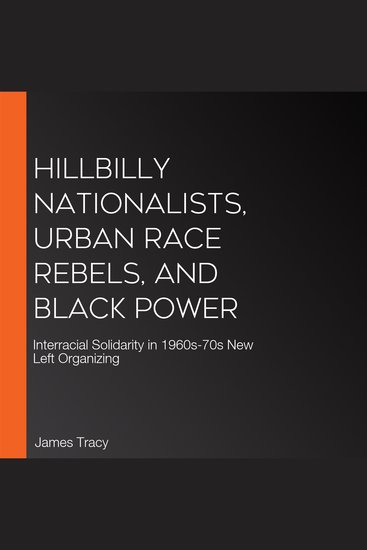
  • Hillbilly Nationalists Urban Race Rebels and Black Power - Interracial Solidarity in 1960s-70s New Left Organizing - cover

    Hillbilly Nationalists Urban...

    James Tracy, Amy Sonnie

    • 0
    • 0
    • 0
    Some of the most important and little-known activists of the 1960s were poor and working-class radicals. Inspired by the Civil Rights movement, the Black Panthers, and progressive populism, they started to organize significant political struggles against racism and inequality during the 1960s and into the 1970s. 


    Historians of the period have traditionally emphasized the work of white college activists who courageously took to the streets to protest the war in Vietnam and continuing racial inequality. Poor and working-class whites have often been painted as spectators, reactionaries, and, even, racists. But authors James Tracy and Amy Sonnie disprove that narrative. 


    Through over ten years of research, interviewing activists along with unprecedented access to their personal archives, Tracy and Sonnie tell a crucial, untold story of the New Left. Their deeply sourced narrative history shows how poor and working-class individuals from diverse ethnic, rural and urban backgrounds cooperated and drew strength from one another. The groups they founded redefined community organizing, and transformed the lives and communities they touched.
    Show book
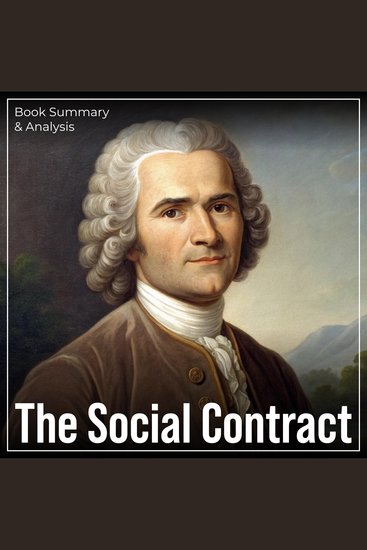
  • Social Contract The: Book Summary & Analysis - cover

    Social Contract The: Book...

    Briefly Summaries

    • 0
    • 0
    • 0
    This is a concise summary and analysis of The Social Contract, by Jean-Jacques Rousseau.
     
    It is not the original book and is not affiliated with or endorsed by Jean-Jacques Rousseau.
    Ideal those seeking a quick and insightful overview.
     
    In The Social Contract, a seminal work of political philosophy, the author explores the foundation of political legitimacy and the principles of collective governance. This thought-provoking text examines the delicate balance between individual liberty and the authority of the state, proposing that a just society is built on a social contract in which citizens agree to form a community that upholds the general will. With profound insights into the nature of freedom, equality, and democracy, this timeless classic continues to inspire debates about the ideals of modern governance and civic responsibility.
    Show book