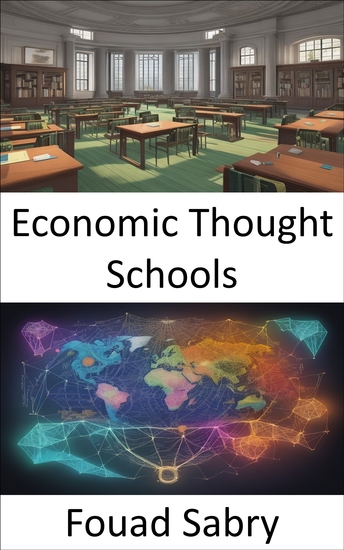
Economic Thought Schools - Discovering Economic Thought a Journey Through Schools and Ideas
Fouad Sabry
Publisher: One Billion Knowledgeable
Summary
What is Economic Thought Schools

A school of economic thought is a collection of economists who have shared or shared a common perspective on the way economies function. This school of thought has its roots in the history of economic theory. Although there are instances when economists do not fit into specific schools of thinking, particularly in modern times, it is customary practice to categorize economists according to their schools of thought. There are three distinct phases that can be loosely distinguished in terms of economic thought: premodern, early modern, and modern. Since the beginning of what is known as the modern era, systematic economic theory has been developed to a significant extent.

How you will benefit

(I) Insights, and validations about the following topics:

Chapter 1: Schools of economic thought

Chapter 2: Neoclassical economics

Chapter 3: General equilibrium theory

Chapter 4: Index of economics articles

Chapter 5: Business cycle

Chapter 6: Classical economics

Chapter 7: Economic efficiency

Chapter 8: Heterodox economics

Chapter 9: Lange model

Chapter 10: Mainstream economics

Chapter 11: Neoclassical synthesis

Chapter 12: New classical macroeconomics

Chapter 13: Economic ideology

Chapter 14: Keynesian Revolution

Chapter 15: History of macroeconomic thought

Chapter 16: Anwar Shaikh (economist)

Chapter 17: Perspectives on capitalism by school of thought

Chapter 18: New neoclassical synthesis

Chapter 19: Disequilibrium macroeconomics

Chapter 20: Marxian economics

Chapter 21: Marxism and Keynesian economics

(II) Answering the public top questions about economic thought schools.

(III) Real world examples for the usage of economic thought schools in many fields.

(IV) Rich glossary featuring over 1200 terms to unlock a comprehensive understanding of economic thought schools. (eBook only).

Who will benefit

Professionals, undergraduate and graduate students, enthusiasts, hobbyists, and those who want to go beyond basic knowledge or information for any kind of economic thought schools.
Available since: 12/23/2023.
Print length: 621 pages.