Junte-se a nós em uma viagem ao mundo dos livros!
Adicionar este livro à prateleira
Grey
Deixe um novo comentário Default profile 50px
Grey
Assine para ler o livro completo ou leia as primeiras páginas de graça!
All characters reduced
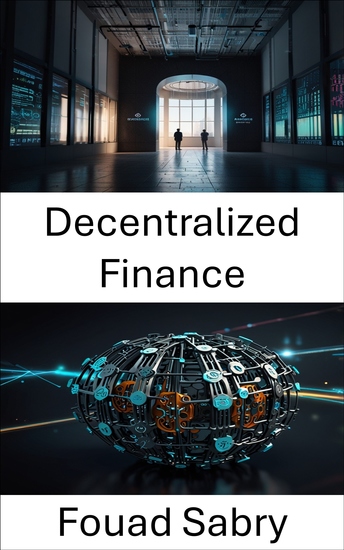
Decentralized Finance - Empowering Global Finance Through DAO Innovation - cover
LER

Decentralized Finance - Empowering Global Finance Through DAO Innovation

Fouad Sabry

Editora: One Billion Knowledgeable

  • 0
  • 0
  • 0

Sinopse

In a world reshaped by digital innovation, understanding decentralized finance is no longer optional—it's essential. This book offers a foundational yet insightful guide into the dynamics of decentralized autonomous organizations (DAOs), revealing their growing influence on politics, economics, and governance.
 
Chapters Brief Overview:
 
1: Decentralized finance: Explores how DeFi redefines financial access through decentralized systems.
 
2: Decentralized autonomous organization: Examines DAOs as governance tools beyond borders or central control.
 
3: Circle (company): Reviews Circle’s contribution to stablecoins and its DAOrelevant financial infrastructure.
 
4: Ethereum: Discusses Ethereum’s critical role as the foundation for many DAOs and DeFi applications.
 
5: Cryptocurrency: Introduces cryptocurrencies as economic instruments within DAO ecosystems.
 
6: Cryptocurrency bubble: Analyzes the volatility risks that DAOs and DeFi systems must navigate.
 
7: Terra (blockchain): Explores Terra’s collapse and its lessons for sustainable decentralized governance.
 
8: 0x (decentralized exchange infrastructure): Unpacks 0x’s role in enabling DAOgoverned decentralized exchanges.
 
9: Dai (cryptocurrency): Details how Dai maintains stability in DeFi and DAObased financial models.
 
10: Cardano (blockchain platform): Highlights Cardano’s innovations in scalable and secure DAO infrastructure.
 
11: Stablecoin: Describes stablecoins as the monetary foundation that fuels DAO economies.
 
12: Decentralized application: Introduces dApps as the digital layer powering DAO functionality.
 
13: Iron Finance: Analyzes Iron Finance’s collapse and its implications for DAO financial modeling.
 
14: USD Coin: Explores USDC’s regulated approach within decentralized platforms and DAO settings.
 
15: Solana (blockchain platform): Reviews Solana’s performance focus and its growing DAO adoption.
 
16: Uniswap: Discusses how Uniswap embodies DAOled marketmaking in decentralized finance.
 
17: Tron (blockchain): Surveys Tron’s trajectory in hosting DAOcentric financial tools.
 
18: Avalanche (blockchain platform): Highlights Avalanche’s fast and efficient consensus ideal for DAOs.
 
19: PancakeSwap: Illustrates DAObased community governance in decentralized exchange models.
 
20: Arkham Intelligence: Investigates blockchain transparency and its value to DAO accountability.
 
21: Bitfinex: Explores Bitfinex’s connection to decentralized protocols and DAOrelated innovation.
 
This comprehensive guide offers more than just knowledge—it empowers you to engage with one of the most transformative movements of our era. Ideal for professionals, students, enthusiasts, and futurefocused readers, this book invites you to discover how DAOs are reshaping political and economic power.
Disponível desde: 21/05/2025.
Comprimento de impressão: 203 páginas.
Outros livros que poderiam interessá-lo

  • The Land of Peek-a-Boo - cover

    The Land of Peek-a-Boo

    Roz Rosenbluth

    • 0
    • 0
    • 0
    Fun sound-effects and whimsical music help tell the story of “The Land Of Peek-a-Boo!” Tina loves to play Peek-a-Boo with her brother Timmy. When Tina jumps out of the closet and yells “Peek-A-Boo”, her brother is afraid.  And when Tina jumps out of the toy chest and yells “Peek-A-Boo,” Timmy tells her to STOP! Tina loves to scare Timmy and doesn't understand why he doesn't want to play this game. Find out what happens when Tina has a dream and goes to The Land of Peek-A-Boo. Will Tina understand how Timmy feels after being frightened in Peek-A-Boo Land? A positive ending adds interest to this adorable story and encourages a lifelong love for storytime.
    Ver livro
  • Mythical Beasts - Exploring the Realms of the Dead - cover

    Mythical Beasts - Exploring the...

    Odessa Nightshade

    • 0
    • 0
    • 0
    Since the dawn of civilization, humans have woven tales of extraordinary creatures—beasts that soar through the skies, rule the oceans, or guard hidden treasures. These mythical beings have captivated the human imagination, appearing in folklore, literature, and art across the globe. From the mighty dragon to the elusive unicorn, these creatures have not only entertained but also served as symbols of power, wisdom, and even fear. But why do these legends endure? What is it about mythical beasts that continues to fascinate us, even in an age of science and reason?  
    Mythical creatures often serve as reflections of human beliefs, fears, and aspirations. In many cultures, they are more than just fictional beings; they carry deep symbolic meaning. The phoenix, for instance, represents rebirth and resilience, while the werewolf embodies the struggle between human nature and primal instincts. Dragons, depicted as both benevolent and malevolent, can symbolize wisdom or destruction, depending on the culture. These beasts act as metaphors, helping people make sense of the world around them and offering explanations for the unknown.  
    The origins of these legends are often rooted in real-life encounters or natural phenomena. The discovery of dinosaur fossils may have inspired stories of dragons, while exaggerated accounts of distant animals, such as narwhals, could have fueled belief in unicorns. Similarly, shadows on the ocean’s surface or misidentified sea creatures may have given rise to mermaid myths. Over time, these stories evolved, influenced by oral tradition, artistic depictions, and cultural exchange, shaping the diverse legends we know today. 
    Ver livro
  • Memory Enhancement Quick Guidebook - cover

    Memory Enhancement Quick Guidebook

    Clarence Briggs

    • 0
    • 0
    • 0
    Memory Enhancement Quick Guidebook: The Memory Mastery Handbook to Boost Your Brainpower in No Time!Keeping your brain healthy is essential for maintaining overall well-being and cognitive function. The brain is the control center of our body, it helps us think, feel, and move. As we age, it's important to take care of our brain to ensure that it continues to function at its best.This audiobook will serve as your guide that offers practical tips and proven techniques to help you improve your memory and boost your brainpower. Whether you are a student, professional, or simply looking to stay mentally sharp as you age, this audiobook will provide you with the tools you need to enhance your memory, retain information more effectively, and achieve your full cognitive potential.This audiobook will cover the following topics:- How to Enhance Your Memory- Habits That Can Hurt Your Brain- Brain Exercises That Boost Memory- And many more!Enhancing your memory is a great way to be successful in both your personal and professional life. If you want to learn more, scroll up and click “add to cart” now!
    Ver livro
  • Marcus Crassus: The Life and Legacy of Ancient Rome’s Richest Man - cover

    Marcus Crassus: The Life and...

    Editors Charles River

    • 0
    • 0
    • 0
    The reasons for Spartacus’s enduring appeal are obvious, but his uprising has overshadowed the fact that his was actually the third such uprising against the Roman Republic in a short span. Preceding this, the First and Second Servile Wars had already demonstrated that revolts against Rome and the whole institution of slavery could gain momentum, and these earlier uprisings provided a blueprint for the larger attempt by Spartacus to win freedom.  
    	At the same time, it’s often overlooked how the revolt affected Rome, and how the leader who put it down propelled his career and played an outsized role in Roman politics ahead of the civil war between Pompey and Caesar. Marcus Licinius Crassus is most remembered today for being the richest Roman in history, and arguably the richest man in world history, but that came about in part because he played a key role in the revolutionary events that took place in Rome throughout the 1st century BCE, including the dictatorship of Sulla, the Third Servile War, the First Triumvirate, and the Parthian Wars. Crassus was the son of Publius Licinius Crassus, who was consul in 97 BCE, and while very little is known of Crassus’ early life, his career as a military figure began in earnest when he escaped from Rome in 87 BCE to Spain to avoid Lucius Cornelius Cinna, who, along with Gaius Marius, led the opposition against Sulla.  
    	Thanks to his rise in the military and politics, Crassus’s renown and riches heavily influenced his contemporaries. In the wake of the Third Servile War, Crassus’ patronage helped position Julius Caesar to be appointed governor of Hispania Ulterior. In order to maintain political office, which made him immune from prosecution for his debts, he left for modern day Spain before his praetorship expired.
    Ver livro
  • Louis Pasteur: A short biography - 5 Minutes: Short on time – long on info! - cover

    Louis Pasteur: A short biography...

    5 Minutes, 5 Minute Biographies,...

    • 0
    • 0
    • 0
    Louis Pasteur, French chemist and father of modern chemistry: Life and work in a short biography! Everything you need to know, brief and concise. Infotainment, education and entertainment at its best!
    Ver livro
  • Bricks that Build Us Book 1 - Understanding how modern communities develop by looking at its people philosophies and reasoning - cover

    Bricks that Build Us Book 1 -...

    Robin Howat

    • 0
    • 0
    • 0
    We live in a time of increasing conflict due to ignorance, lack of self-discipline and polarization. Just look at what happened in recent events at the White House! Other examples are the Covid Tanker blockade, destructive rioting in cities, hospitals coming under siege, and the Russia-Ukraine conflict.... all were and are avoidable. 
    Staple Society results from succeeding constructive and protective concepts meeting obligations which generally follow traditions aimed at accepted common responsibilities. 
    Rob Howat discusses and explores these social building blocks in these four books with facts and examples. He shows that for society and the law to work responsibilities must be fulfilled before meaningful rights can follow. He suggests the ongoing need for calm discussion, research and reviews, an aim for balance, and well-understood and universally agreed 'ground rules' for educational pursuits. 
    The best time to open calm discussions with a goal to start building change is now, using constructive philosophy, logic, and religious proven wisdom. This set of books will greatly simplify and assist in building that deeper informed debate.
    Ver livro