Join us on a literary world trip!
Add this book to bookshelf
Grey
Write a new comment Default profile 50px
Grey
Subscribe to read the full book or read the first pages for free!
All characters reduced
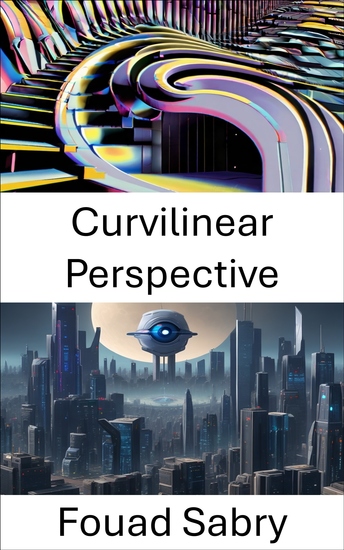
Curvilinear Perspective - Exploring Depth Perception in Computer Vision - cover

Curvilinear Perspective - Exploring Depth Perception in Computer Vision

Fouad Sabry

Publisher: One Billion Knowledgeable

  • 0
  • 0
  • 0

Summary

What is Curvilinear Perspective
 
Curvilinear perspective, also five-point perspective, is a graphical projection used to draw 3D objects on 2D surfaces. It was formally codified in 1968 by the artists and art historians André Barre and Albert Flocon in the book La Perspective curviligne, which was translated into English in 1987 as Curvilinear Perspective: From Visual Space to the Constructed Image and published by the University of California Press.
 
How you will benefit
 
(I) Insights, and validations about the following topics:
 
Chapter 1: Curvilinear perspective
 
Chapter 2: Spherical coordinate system
 
Chapter 3: Tetrahedron
 
Chapter 4: N-sphere
 
Chapter 5: Stereographic projection
 
Chapter 6: Ellipsoid
 
Chapter 7: Conformal geometry
 
Chapter 8: 3D projection
 
Chapter 9: Surface integral
 
Chapter 10: Volume element
 
(II) Answering the public top questions about curvilinear perspective.
 
(III) Real world examples for the usage of curvilinear perspective in many fields.
 
Who this book is for
 
Professionals, undergraduate and graduate students, enthusiasts, hobbyists, and those who want to go beyond basic knowledge or information for any kind of Curvilinear Perspective.
Available since: 05/05/2024.
Print length: 156 pages.

Other books that might interest you

  • Digital Liberty - Power Wealth and the Influence Machine - cover

    Digital Liberty - Power Wealth...

    Matt Stroud

    • 0
    • 0
    • 0
    Digital Liberty explores the imminent convergence of three pivotal themes: data, artificial intelligence and society’s intricate social graph, and warns of a looming crisis that threatens to challenge the very foundations of liberal democracies. Two distinct paths unfurl – a dystopian trajectory marked by surging inequality, globalized elites, and societal unrest, and a utopian alternative rooted in adapting to this impending crisis. Drawing from the annals of liberal philosophy and guided by the insights of our digital age, the book scrutinizes the profound interplay between technological architecture and the character of societies. 
    The book delves into the historical genesis of our contemporary digital milieu, explores the emerging vistas of artificial intelligence, dissects the interplay between technological architecture and political power, and presents a vision for a decentralized future. It demonstrates the transformative potential of decentralised technology in enhancing individual and societal wealth while fostering social cohesion, offering critical insights into the intersection of technology and society, and a guide to shaping a future that aligns with our democratic ideals.
    Show book
  • Walden - cover

    Walden

    Henry David Thoreau

    • 0
    • 0
    • 0
    Immerse yourself in the serene and reflective world of Walden by Henry David Thoreau, narrated by Gary Middleton. This timeless literary classic chronicles Thoreau’s two years living in a simple cabin near Walden Pond, exploring themes of self-reliance, nature, and the pursuit of a meaningful life. Through his philosophical insights and poetic descriptions of the natural world, Thoreau invites readers to reflect on the essentials of existence and the beauty of simplicity. 
    Gary Middleton’s thoughtful narration captures the quiet elegance and profound wisdom of Thoreau’s words, making this audiobook an inspiring journey for listeners seeking solitude and connection with nature. Whether revisiting this masterpiece or experiencing it for the first time, Walden offers a meditative escape into the timeless beauty of the natural world. 
    This audiobook celebrates the enduring relevance of Thoreau’s message, reminding us of the value of introspection, the rhythms of nature, and the simplicity of life lived deliberately.
    Show book
  • The Sacred Depths of Nature - How Life Has Emerged and Evolved 2nd Edition - cover

    The Sacred Depths of Nature -...

    Ursula Goodenough

    • 0
    • 0
    • 0
    For many of us, the great scientific discoveries of the modern age—the Big Bang, evolution, quantum physics, relativity—point to an existence that is bleak, devoid of meaning, pointless. But in The Sacred Depths of Nature, eminent biologist Ursula Goodenough shows us that the scientific world view need not be a source of despair. Indeed, it can be a wellspring of solace and hope. 


    This volume reconciles the modern scientific understanding of reality with our timeless spiritual yearnings for reverence and continuity. Looking at topics such as evolution, emotions, sexuality, and death, Goodenough writes with rich, uncluttered detail about the workings of nature in general and of living creatures in particular. Her luminous clarity makes it possible for even non-scientists to appreciate that the origins of life and the universe are no less meaningful because of our increasingly scientific understanding of them. Goodenough's spiritual reflections respond to the complexity of nature with vibrant emotional intensity and a sense of reverent wonder. This new edition offers a deepened consideration of emergent properties and emergent dynamics, as well as an exploration of their role as the generators of life's complexity. Goodenough also expands upon the ethic of ecomorality in a new chapter, and incorporates new quotes, figures, and poems in her analysis.
    Show book
  • Scrumban - Advanced Metrics and Insights for Scrumban Success - cover

    Scrumban - Advanced Metrics and...

    James Henry

    • 0
    • 0
    • 0
    Unlock the full potential of your teams with Scrumban: Advanced Metrics and Insights for Scrumban Success. This comprehensive guide delves into the hybrid agile framework of Scrumban, blending the best practices of Scrum and Kanban to create a powerful approach for managing complex projects in dynamic environments. 
    Designed for agile practitioners, team leaders, and organizational decision-makers, this book goes beyond the basics to explore the critical role of advanced metrics in driving continuous improvement. Readers will discover how to effectively measure performance using key metrics such as cycle time, throughput, lead time, and work-in-progress (WIP) limits. With real-world case studies and practical examples, you will learn how to implement these metrics to identify bottlenecks, optimize workflows, and enhance team collaboration. 
    Through insightful analysis and actionable strategies, this book highlights the importance of data-driven decision-making in Scrumban. You'll gain valuable insights into how to leverage metrics to foster a culture of accountability, transparency, and continuous learning within your organization. Explore the nuances of adapting Scrumban to meet the specific needs of your team, enabling you to respond quickly to changing priorities and maintain productivity in fast-paced environments. 
    This book provides the tools and knowledge necessary to elevate your project management practices. Equip your teams with the insights and strategies they need to succeed in today’s competitive landscape and embrace the future of agile project management. 
    Transform your approach to Scrumban and unlock your team's true potential with Advanced Metrics and Insights for Scrumban Success. 
     
    Show book
  • Fundamentals of Data Engineering - Building the Foundation for Modern Data Architecture - cover

    Fundamentals of Data Engineering...

    Brian Paul

    • 0
    • 0
    • 0
    In the ever-evolving landscape of data-driven decision-making, "Fundamentals of Data Engineering" serves as your comprehensive guide to mastering the essential principles that underpin modern data architecture. Whether you're a seasoned data professional or a newcomer to the field, this book provides a thorough exploration of the fundamental concepts and technologies that shape the world of data engineering. 
    Unlock the Power of Data: Dive into the heart of data engineering as you explore the intricacies of data modeling, database design, and the crucial Extract, Transform, Load (ETL) processes. Learn how to harness the potential of big data technologies, from Hadoop to Apache Spark, and discover the principles of data warehousing that drive effective business intelligence. 
    Real-Time Insights and Streaming Data: Stay ahead of the curve with a detailed examination of streaming data processing, examining technologies such as Apache Kafka and stream processing frameworks like Apache Flink. Understand the significance of cloud computing in reshaping data infrastructure and explore the practical aspects of migrating on-premise systems to the cloud. 
    Ensuring Data Quality and Security: Delve into the critical aspects of data quality and governance, recognizing the importance of maintaining high standards in an age of increasing data reliance. Explore best practices for data security and privacy, with insights into encryption, access control, and compliance considerations. 
    Equip yourself with the knowledge and skills needed to navigate the dynamic world of data engineering. Whether you are building the foundation for a career in data or seeking to enhance your existing expertise, this book is your indispensable companion on the journey to becoming a proficient data engineer. 
     
    Show book
  • Microbes - The Unseen Agents of Climate Change - cover

    Microbes - The Unseen Agents of...

    David L. Kirchman

    • 0
    • 0
    • 0
    For billions of years, microbes have produced and consumed greenhouse gases that regulate global temperature and in turn other aspects of our climate. The balance of these gases maintains Earth's habitability. Methane, a greenhouse gas produced only by microbes, may have kept Earth out of a deep freeze billions of years ago. Likewise, variations in carbon dioxide, another greenhouse gas released by microbes and other organisms, help to explain the comings and goings of ice ages over the last million years. 


    Now we face a human-made climate crisis with drastic consequences. The complete story behind greenhouse gases, however, involves microbes and their role in natural ecosystems. Microscopic organisms are also part of the solution, producing biofuels and other forms of green energy which keep fossil fuels in the ground. Other microbes can be harnessed to reduce the release of methane and nitrous oxide from agriculture, and geoengineering solutions that depend on microbes could pull carbon dioxide out of the atmosphere. 


    David L. Kirchman introduces a unique and timely contribution to the climate change conversation and the part microbes play in our past, present, and future. He takes listeners into the unseen world behind the most important environmental problem facing society today and encourages us to embrace microbial solutions.
    Show book