Join us on a literary world trip!
Add this book to bookshelf
Grey
Write a new comment Default profile 50px
Grey
Subscribe to read the full book or read the first pages for free!
All characters reduced
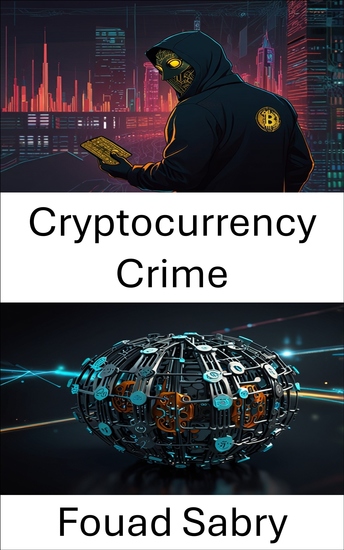
Cryptocurrency Crime - Unmasking Digital Threats in the Era of Decentralized Autonomous Organization - cover

Cryptocurrency Crime - Unmasking Digital Threats in the Era of Decentralized Autonomous Organization

Fouad Sabry

Publisher: One Billion Knowledgeable

  • 0
  • 0
  • 0

Summary

Explore the hidden intersections of political science and technology through the lens of cryptocurrency crime. In a world shaped by decentralized systems, understanding the darker side of blockchain is not just optional—it's essential for professionals, students, and enthusiasts seeking clarity in a fastevolving digital landscape.
 
Chapters Brief Overview:
 
1: Cryptocurrency and crime: Examines how crypto enables new forms of political and economic crimes.
 
2: Cryptocurrency tumbler: Analyzes obfuscation tools challenging law enforcement in decentralized finance.
 
3: Blockchain.com: Investigates how major platforms intersect with regulatory gaps and illicit activity.
 
4: Bitconnect: Unpacks a highprofile crypto Ponzi scheme and its impact on decentralized trust.
 
5: 2016 Bitfinex hack: Chronicles a major hack revealing systemic risks in crypto infrastructure.
 
6: Cryptocurrency wallet: Explores wallets as tools of both empowerment and criminal concealment.
 
7: Quadriga (company): Details the collapse of a crypto exchange and governance flaws in DAOs.
 
8: Bitcoin: Surveys Bitcoin’s evolution and misuse in circumventing centralized oversight.
 
9: SafeMoon: Studies hypedriven tokens and risks of manipulation in decentralized markets.
 
10: Privacy and blockchain: Considers the political tension between privacy rights and accountability.
 
11: Blockchain analysis: Describes forensic tools used to track transactions in decentralized networks.
 
12: Tether (cryptocurrency): Evaluates stablecoins in market manipulation and crossborder crimes.
 
13: Initial coin offering: Discusses ICOs as innovation and vectors for fraudulent fundraising.
 
14: Binance: Reviews a leading exchange's role in balancing decentralization with compliance.
 
15: Cryptocurrency exchange: Breaks down exchange vulnerabilities exploited for financial crimes.
 
16: Sheep Marketplace: Looks into darknet markets and their reliance on untraceable cryptocurrency.
 
17: Bitfinex: Reveals ongoing challenges in security and governance within centralized exchanges.
 
18: Coincheck: Explores lessons from a major breach in Japan and its policy aftermath.
 
19: History of bitcoin: Reflects on Bitcoin’s past to understand how crime adapts to DAO models.
 
20: Cryptocurrency tracing: Highlights tools reshaping political accountability in digital crime.
 
21: Cryptocurrency: Provides a grounding in crypto fundamentals, linking them to decentralized risk.
 
"Cryptocurrency Crime" is a timely guide that places political science at the heart of digital finance. As DAOs reshape governance, understanding their vulnerabilities is crucial. Whether you're a policymaker, a student of political science, or simply curious about the blockchain world, this book delivers insights worth far more than its price.
Available since: 05/20/2025.
Print length: 258 pages.


Other books that might interest you

  • 100 Amazing Facts about Israel - Explorations In the Heart of the Middle East - cover

    100 Amazing Facts about Israel -...

    Marc Dresgui

    • 0
    • 0
    • 0
    Discover the Wonders of Israel with "100 Amazing Facts About Israel" - Now in Audio! 🇮🇱 
    Take a journey through time and nature with this captivating audiobook, perfect for young listeners aged 7 to 12. "100 Amazing Facts About Israel" brings the incredible history, culture, and natural wonders of one of the most fascinating regions in the world to life through engaging storytelling. 
    From ancient secrets to modern marvels, this audiobook answers questions that spark curiosity:What is the story behind the world’s oldest fortified city?How do turtles and migratory birds connect with Israel's ecosystems?Why do mysterious fossils lie hidden in the desert?How did ancient people create the first roads, ovens, and tools thousands of years ago?What makes this audiobook exceptional?Richly detailed facts: From archaeology and history to ecology and geology, listeners will uncover 100 incredible discoveries about Israel.Engaging narration: The facts are presented in a lively and easy-to-follow format that keeps children entertained while they learn.Accessible for all ages: Whether at home, on the go, or in the classroom, this audiobook is a perfect companion for curious learners.Interactive and reflective: Thought-provoking content encourages kids to ask questions and think critically about the world around them. 
    Whether it’s exploring ancient ruins, discovering natural wonders, or delving into surprising historical events, "100 Amazing Facts About Israel" invites young listeners on a journey of discovery. Perfect for road trips, bedtime stories, or classroom learning, this audiobook inspires curiosity and fosters a lifelong love of exploration!
    Show book
  • Between the Waves - The Hidden History of a Very British Revolution 1945-2016 - cover

    Between the Waves - The Hidden...

    Tom McTague

    • 0
    • 0
    • 0
    **Longlisted for the Baillie Gifford Prize for Non-Fiction**This is the definitive history of Britain’s tumultuous relationship with Europe – as it’s never been told before.'Powerful, precise, morally engaged, wonderfully alert to character, context and the greater purpose of political life' – Rory Stewart, author of Politics on the Edge'A lucid, thoughtful and richly provocative book' – Dominic Sandbrook, The Sunday TimesIn a story of ambition and underhand politics, of nation, identity and belief, acclaimed political writer Tom McTague chronicles the battle of ideas, events and personalities that first took the country into the Common Market in 1973. Only to take it out of the European Union in an explosive referendum a little over forty years later.Drawing on unpublished sources and exclusive interviews, McTague unearths the roots of ideological conflict that raged between the leading politicians of the twentieth century as they fought for the future of Europe – Charles de Gaulle, Harold Macmillan, Jean Monnet, Enoch Powell and Margaret Thatcher.Alongside these famous figures are the lesser-known actors in Britain’s great post-war drama: a coterie of Eurosceptic student radicals, Cold Warriors, eccentric billionaires and political strategists who turned the tide of history.A riveting story of the clashing ideals that have pulled at Britain’s public imagination for more than seven decades, Between the Waves raises that most elemental of questions: who are we?'A sweeping, impressive and ambitious history of modern Europe' – Helen Lewis, author of Difficult Women'Compelling, hugely well-informed . . . will stand for many years as the authoritative political history’ – David Kynaston, author of Austerity Britain, 1945-1951
    Show book
  • A Heart Finally Open - cover

    A Heart Finally Open

    Lamont Kellum Jr.

    • 0
    • 0
    • 0
    Lamont Kellum Jr. is a very profound and prolific writer. Taking his poetry and spoken word to new heights, he is now telling his story in his own cadence unapologetically. From having the artistical architecture in his writing of poetry, he decided to utilize his gifted craft with a story telling of his own after all these years of everyone else telling it. After being wrongfully convicted and sentenced to life in prison, Lamont, also known as King Ccholo, is now giving his true self in this audiobook. Speaking on his life experiences with his upbringing, friends, family, previous and current relationships; Lamont is now setting the tone with a new approach to poetry and spoken word and it starts NOW!
    Show book
  • Walls of Constantinople The: The History of the Fortifications that Made the Byzantine Capital Nearly Impregnable - cover

    Walls of Constantinople The: The...

    Charles River Editors

    • 0
    • 0
    • 0
    In terms of geopolitics, perhaps the most seminal event of the Middle Ages was the successful Ottoman siege of Constantinople in 1453. Naturally, the Ottoman Empire would also use Constantinople as the capital of its empire after their conquest effectively ended the Byzantine Empire, and thanks to its strategic location, it has been a trading center for years and remains one today under the Turkish name of Istanbul. The end of the Byzantine Empire had a profound effect not only on the Middle East but Europe as well. Constantinople had played a crucial part in the Crusades, and the fall of the Byzantines meant that the Ottomans now shared a border with Europe. The Ottomans were viewed as a threat by the predominantly Christian continent to their west, and it took little time for different European nations to start clashing with them. In fact, the Ottomans would clash with Russians, Austrians, Venetians, Polish, and more before collapsing as a result of World War I, when they were part of the Central Powers.  
    Of course, it wasn’t an accident that Constantinople survived for so long. Since ancient times, settlements have been protected by walls, ranging from simple earth fortifications, mounds, and ditches to sophisticated structures incorporating gates and watchtowers. The globe is replete with famous walls such as that built by Hadrian in the north of England and the Great Wall of China, which spans hundreds of miles across a vast landscape. Some of the earliest evidence of defensive walling can be found in Africa, and the Bible includes references to the walls of Jericho, dating back to at least the 8th century BCE. Walls have protected great civilizations and occasionally been their downfall, and the Byzantine Empire relied on Constantinople’s extensive, sophisticated walls, among the greatest engineering achievements of the ancient world and Early Middle Ages, to survive as long as it did. 
    Show book
  • The Virtues of Captain America 2nd Edition - Modern-Day Lessons on Character from a World War II Superhero - cover

    The Virtues of Captain America...

    Mark D. White

    • 0
    • 0
    • 0
    In The Virtues of Captain America, philosopher and long-time comics fan Mark D. White shows us that this fictional superhero's "old-fashioned" moral code is exactly what we need today to restore kindness and respect in our personal and civic lives. 


    Now in its second edition, The Virtues of Captain America is updated to include all the new developments in Captain America's saga. This edition also offers new material on Sam Wilson—formerly Captain America's partner the Falcon who recently became Captain America himself—and how his interpretation of the role compares to Steve Rogers's. 


    The Virtues of Captain America examines the moral and political philosophy behind eighty years of Captain America comics and movies; demonstrates that the core principles and judgment exhibited by Captain America in the 1940s remain relevant in the twenty-first century; and illustrates how Captain America stands for the basic ideals of America, not its politics or government. 
     
    The second edition of The Virtues of Captain America remains a must-listen for everyone wanting to make ethical decisions in complex real-world situations and tackle the personal and political issues of today with integrity and respect.
    Show book
  • Why AI Undermines Democracy and What to Do About It - cover

    Why AI Undermines Democracy and...

    Mark Coeckelbergh

    • 0
    • 0
    • 0
    Across the world, AI is used as a tool for political manipulation and totalitarian repression. Stories about AI are often stories of polarization, discrimination, surveillance, and oppression. Is democracy in danger? And can we do anything about it? 


    In this compelling and balanced book, Mark Coeckelbergh reveals the key risks posed by AI for democracy. He argues that AI, as currently used and developed, undermines fundamental principles on which liberal democracies are founded, such as freedom and equality. How can we make democracy more resilient in the face of AI? And, more positively, what can AI do for democracy? Coeckelbergh advocates not only for more democratic technologies, but also for new political institutions and a renewal of education to ensure that AI promotes, rather than hinders, the common good for the twenty-first century. 


    Why AI Undermines Democracy and What to Do About It is a must-listen for anyone who is concerned about the fate of democracy.
    Show book