Join us on a literary world trip!
Add this book to bookshelf
Grey
Write a new comment Default profile 50px
Grey
Subscribe to read the full book or read the first pages for free!
All characters reduced
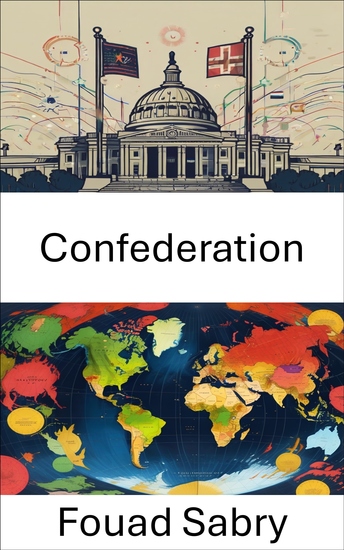
Confederation - Dynamics of Decentralized Political Systems - cover

Confederation - Dynamics of Decentralized Political Systems

Fouad Sabry

Publisher: One Billion Knowledgeable

  • 0
  • 0
  • 0

Summary

Confederation offers a comprehensive exploration of confederate governance, a critical but often misunderstood political science concept. The book covers the balance of power, cooperation between states, and both historical and modern perspectives on confederations. It is an essential resource for professionals, students, and political enthusiasts who seek to understand the dynamics and implications of such systems.
 
1: Confederation - An introduction to confederation, its defining traits, and how it contrasts with other governance forms.
 
2: Federalism - Examines the relationship between federalism and confederation, focusing on power distribution.
 
3: Federalist - Explores the ideology supporting federalism and its effect on confederate systems.
 
4: Federalisation of the European Union - Analyzes the EU’s federalization journey, highlighting successes and challenges.
 
5: Secession - Studies the dynamics of secession in confederations, with historical and legal perspectives.
 
6: Federation - Looks at the transition from confederation to federation, considering motivations and processes.
 
7: Confederacy - Investigates historical confederacies, their operation, and the lessons they offer.
 
8: Constitutional debate in Canada - Focuses on Canada’s constitutional discussions around confederation and federalism.
 
9: European integration - Explores European integration's impact on member states and confederation principles.
 
10: Supranational union - Studies supranational unions and their relationship to confederate governance.
 
11: Central government - Examines the role and authority of central governments in confederations.
 
12: Political union - Compares political unions to confederations in structure and function.
 
13: Dual federalism - Looks at dual federalism’s relevance to confederate systems.
 
14: Old Swiss Confederacy - Explores the Old Swiss Confederacy and its historical significance.
 
15: Granadine Confederation - Studies the Granadine Confederation's governance and legacy.
 
16: Paradiplomacy - Analyzes regional governments' role in international relations within confederations.
 
17: European Federation - Investigates the European Federation concept and its alignment with confederation ideas.
 
18: Staatenverbund - Studies the German concept of Staatenverbund in confederate governance.
 
19: Federalism in the United Kingdom - Focuses on the UK’s federalism and its connections to confederation.
 
20: List of countries by federal system - Reviews various federal systems and their governance approaches.
 
21: Proposed United Kingdom confederation - Analyzes proposals for a UK confederation and its potential impacts.
 
In conclusion, Confederation provides in-depth insights into confederate systems and tackles critical questions on governance.
Available since: 10/17/2024.
Print length: 313 pages.

Other books that might interest you

  • How to Find Happiness - An Ancient Guide to the Good Life - cover

    How to Find Happiness - An...

    Marcus Tullius Cicero, Katharina...

    • 0
    • 0
    • 0
    Does happiness come from the pursuit of pleasure or moral virtue? A vivid new translation of Cicero’s exploration of a timeless question“Of course, we all want to be happy.” So wrote the Roman statesman, orator, and philosopher Marcus Tullius Cicero. He and his fellow Greek and Roman philosophers agreed that the secret to happiness—or what they called the “good life”—is pursuing the “greatest good.” The only problem is that they couldn’t agree on what the greatest good is. Cicero addressed this dilemma by composing a set of dialogues, On the Greatest Good and Evil (De finibus bonorum et malorum), in which he pitted advocates of different philosophical approaches to happiness against one another. Notably, these include the Epicureans (who believe that the greatest good is pleasure) and the Stoics (according to whom it is moral virtue). Rather than choosing sides, Cicero considers the pros and cons of the different philosophies, ultimately leaving it to his readers to make up their own minds. In How to Find Happiness, Katharina Volk offers a vivid new translation of selections from Cicero’s work, complete with an introduction and the original Latin text on facing pages. The result is a lively and engaging debate that invites each of us to discover our own path to happiness.
    Show book
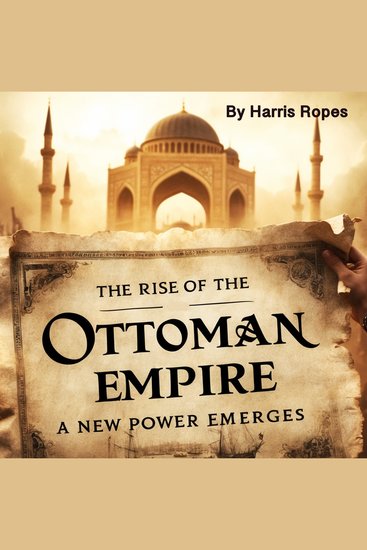
  • The Rise of the Ottoman Empire - A New Power Emerges - cover

    The Rise of the Ottoman Empire -...

    Harris Ropes

    • 0
    • 0
    • 0
    The story of the Ottoman Empire begins not with grandeur and empire-building, but with the survival and adaptation of a small Turkic tribe navigating the collapse of greater powers. In the late 13th century, the Anatolian region was a mosaic of fragmented states, weakened by internal conflict and external invasions. Among these groups were the Turks, originally Central Asian nomads, who had migrated westward in waves over centuries. Their destiny would shift dramatically with the decline of the Seljuk Sultanate of Rum and the vacuum left by the Mongol invasions, creating space for new leadership to emerge. 
    The Seljuks had once dominated much of Anatolia, but their weakening rule after the Mongol defeat at the Battle of Köse Dağ in 1243 left the region divided among various beyliks, or small principalities. One such principality was led by a chieftain named Ertuğrul, who had settled near the Byzantine frontier. Upon his death, leadership passed to his son, Osman, a bold and ambitious leader who would become the namesake of the Ottoman dynasty. Osman’s emergence marked a turning point, as his military successes and political acumen allowed him to consolidate power and expand his territory, laying the foundation for what would become the Ottoman Empire. 
    Osman I’s rise coincided with a period of instability within the Byzantine Empire, which was plagued by civil wars and weakened borders. Taking advantage of this, Osman led raids into Byzantine lands, gradually carving out a small but growing domain. More than just a warrior, Osman capitalized on the frontier spirit, attracting ghazis—Muslim warriors motivated by the idea of fighting non-Muslims. These fighters brought not only military strength but also religious legitimacy to Osman’s rule, enabling him to establish a principality that combined spiritual purpose with political ambition.
    Show book
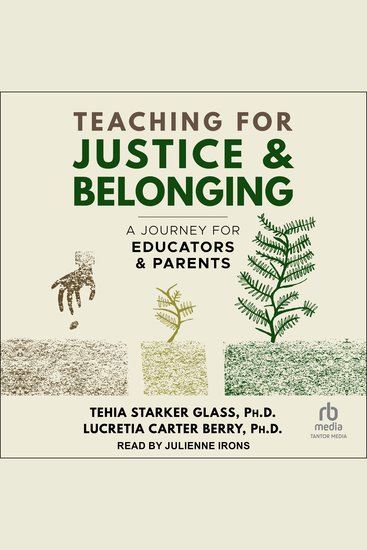
  • Teaching for Justice & Belonging - A Journey for Educators & Parents - cover

    Teaching for Justice & Belonging...

    Tehia Starker Glass, Lucretia...

    • 0
    • 0
    • 0
    Create a classroom with a culture of true belonging, liberation, and justice for all 


    Teaching for Justice & Belonging: A Journey for Educators & Parents provides a practical and powerful blueprint to unrooting racism in the educational setting. The book is an easy-to-understand guide designed to cultivate an educational experience that inspires a culture of true belonging, liberation, and justice for all. 


    Relying on case studies, thorough research, and deeply personal and enlightening experiences drawn from the lives of the authors themselves, Teaching for Justice & Belonging also offers: 


    ● Demonstrations of how to explore personal and collective racial identity to learn more about oneself and others 


    ● Support for making systemic change within the spheres of influence of educators and parents 


    ● Real testimonials and stories to guide listeners on their own healthy anti-racism journeys 


    A central piece of any anti-racism roadmap, this book is perfect for K-12 educators, administrators, and teacher leaders. It will also earn a place in the bookshelves of pre-service teachers and parents interested in unlearning racism and encouraging diverse voices in the education system.
    Show book
  • Carbon Technocracy - Energy Regimes in Modern East Asia - cover

    Carbon Technocracy - Energy...

    Victor Seow

    • 0
    • 0
    • 0
    A forceful reckoning with the relationship between energy and power through the history of what was once East Asia’s largest coal mine. 
     
    The coal-mining town of Fushun in China’s Northeast is home to a monstrous open pit. First excavated in the early twentieth century, this pit grew like a widening maw over the ensuing decades, as various Chinese and Japanese states endeavored to unearth Fushun’s purportedly “inexhaustible” carbon resources. Today, the depleted mine that remains is a wondrous and terrifying monument to fantasies of a fossil-fueled future and the technologies mobilized in attempts to turn those developmentalist dreams into reality. 
     
    In Carbon Technocracy, Victor Seow uses the remarkable story of the Fushun colliery to chart how the fossil fuel economy emerged in tandem with the rise of the modern technocratic state. Taking coal as an essential feedstock of national wealth and power, Chinese and Japanese bureaucrats, engineers, and industrialists deployed new technologies like open-pit mining and hydraulic stowage in pursuit of intensive energy extraction. But as much as these mine operators idealized the might of fossil fuel–driven machines, their extractive efforts nevertheless relied heavily on the human labor that those devices were expected to displace. Under the carbon energy regime, countless workers here and elsewhere would be subjected to invasive techniques of labor control, ever-escalating output targets, and the dangers of an increasingly exploited earth. 
     
    Although Fushun is no longer the coal capital it once was, the pattern of aggressive fossil-fueled development that led to its ascent endures. As we confront a planetary crisis precipitated by our extravagant consumption of carbon, it holds urgent lessons. This is a groundbreaking exploration of how the mutual production of energy and power came to define industrial modernity and the wider world that carbon made.
    Show book
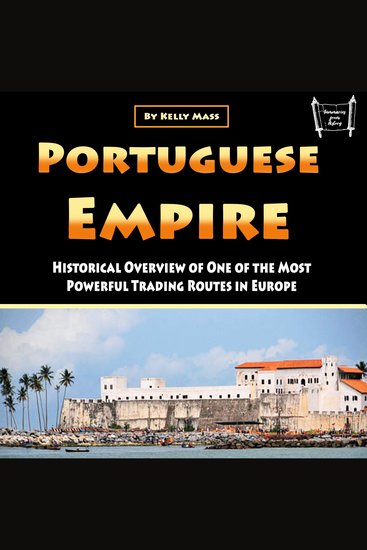
  • Portuguese Empire - Historical Overview of One of the Most Powerful Trading Routes in Europe - cover

    Portuguese Empire - Historical...

    Kelly Mass

    • 0
    • 0
    • 0
    The Portuguese Empire comprised a vast network of colonies, factories, and overseas territories established by Portugal. Beginning with the capture of Ceuta in North Africa in 1415 and continuing until the handover of sovereignty over Macau to China in 1999, it stands as one of the longest-lasting empires in European history. The empire's roots can be traced back to the 15th century, and by the early 16th century, it had established a global presence with strategic bases in North and South America, Africa, Asia, and Oceania. 
    The rise of the Portuguese Empire coincided with the dawn of the Age of Discovery, a period characterized by exploration and expansion. Following the Reconquista, which concluded in 1492, Portuguese sailors embarked on expeditions along the African coast and the Atlantic archipelagos starting in 1418. Leveraging advancements in navigation, mapping, and maritime technology, particularly the caravel—a vessel adept at oceanic travel—they aimed to uncover a sea route to the lucrative spice trade of the East. Key milestones during this era included Bartolomeu Dias’s successful rounding of the Cape of Good Hope in 1488 and Vasco da Gama’s historic arrival in India in 1498. Around 1500, Pedro Álvares Cabral arrived at the shores of Brazil, either by chance or as part of a broader imperial strategy.
    Show book
  • Dealing With Stress - Coping With Stress Methods That Have Been Tried and Tested For A Stress-Free Life - cover

    Dealing With Stress - Coping...

    Behnay Books

    • 0
    • 0
    • 0
    Stress is a normal feeling that can be caused by many different things. It's important to understand how stress affects our lives so we can take steps to reduce or eliminate it. Here are six ways stress can negatively affect us:Stress can make us lose sleep. When we're stressed, it's difficult to get the sleep we need to function properly the next day. This can lead to problems such as being tired during the day and making mistakes at work or school.Stress can make us lose appetite. When we're stressed, our body releases adrenaline, which makes us feel anxious and irritable. This can make us less likely to eat and eat unhealthy foods, which can lead to weight gain or obesity.Stress can cause us to become an emotional roller coasters ride that never ends in one place for very long.Stress can cause us to have more problems with our health.Stress can make us feel lonely, depressed, and anxious.Stress is the reason why many people suffer from depression, addictions, poor health, and other mental health issues. 
    However, there are many ways to deal with stress and we will discuss them in this book. 
    Stress is something that everyone experiences at some point in their lives. It can come from a lot of different sources and can be very disruptive. However, there are many ways to deal with stress and we will discuss them in this book. Some techniques are more effective than others, but all of them have benefits. By learning about how to manage stress, you can reduce its impact and improve your overall wellbeing. 
    Many people struggle with managing stress in their lives. In This book, you'll learn the best practices for dealing with stress in a healthy way. You'll also find tips on how to reduce your anxiety and improve your overall mood. You can learn how to reduce stress by practicing the techniques that you learn in this book.
    Show book