Join us on a literary world trip!
Add this book to bookshelf
Grey
Write a new comment Default profile 50px
Grey
Subscribe to read the full book or read the first pages for free!
All characters reduced
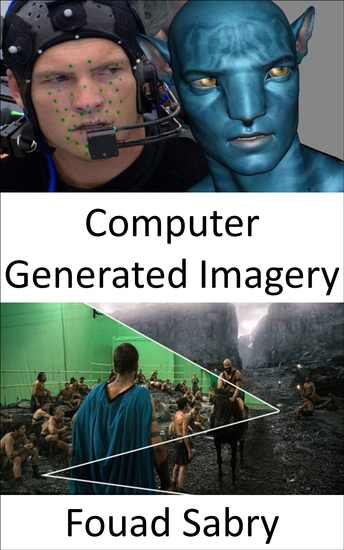
Computer Generated Imagery - How Computer-generated Imagery Is Used in Movies and Animation - cover

Computer Generated Imagery - How Computer-generated Imagery Is Used in Movies and Animation

Fouad Sabry

Publisher: One Billion Knowledgeable

  • 0
  • 0
  • 0

Summary

What Is Computer Generated Imagery
 
The use of computer graphics to create or contribute to images in works of art, printed media, video games, simulators, computer animation, and visual effects in motion pictures, television programs, shorts, commercials, and videos is referred to as computer-generated imagery (also abbreviated as CGI). Although the word "CGI" is most generally used to refer to the 3-D computer graphics used for producing characters, scenes, and special effects in films and television, which is defined as "CGI animation," the pictures may be dynamic or static, and they may be two-dimensional (2D).
 
How You Will Benefit
 
(I) Insights, and validations about the following topics:
 
Chapter 1: Computer-generated imagery
 
Chapter 2: Computer animation
 
Chapter 3: Digital art
 
Chapter 4: Autodesk 3ds Max
 
Chapter 5: Visual effects
 
Chapter 6: Scientific visualization
 
Chapter 7: Visualization (graphics)
 
Chapter 8: Non-photorealistic rendering
 
Chapter 9: Real-time computer graphics
 
Chapter 10: Virtual cinematography
 
Chapter 11: 3D rendering
 
Chapter 12: 3D computer graphics
 
Chapter 13: Projection augmented model
 
Chapter 14: Computer graphics (computer science)
 
Chapter 15: Computer graphics
 
Chapter 16: Fractal-generating software
 
Chapter 17: List of 3D computer graphics software
 
Chapter 18: History of computer animation
 
Chapter 19: 3D modeling
 
Chapter 20: Visual computing
 
Chapter 21: Virtual humans
 
(II) Answering the public top questions about computer generated imagery.
 
(III) Real world examples for the usage of computer generated imagery in many fields.
 
(IV) 17 appendices to explain, briefly, 266 emerging technologies in each industry to have 360-degree full understanding of computer generated imagery' technologies.
 
Who This Book Is For
 
Professionals, undergraduate and graduate students, enthusiasts, hobbyists, and those who want to go beyond basic knowledge or information for any kind of computer generated imagery.
Available since: 08/03/2022.
Print length: 381 pages.


Other books that might interest you

  • Breaking the Medicine Monopolies - Reflections of a Generic Drug Pioneer - cover

    Breaking the Medicine Monopolies...

    Alfred Engelberg

    • 0
    • 0
    • 0
    Breaking the Medicine Monopolies is a lawyer's personal narrative of the events that led to the widespread use of low-cost generic drugs and the current drug price crisis. 


    Breaking the Medicine Monopolies is a personal narrative about Alfred Engelberg's fifty years of legal work in the drug industry. He takes you inside the mysterious world of patents to provide a basic understanding of how drug makers have gamed the laws governing brand and generic competition, misused patents to prolong monopolies, and delayed generic competition on old drugs instead of focusing on discovering new ones. In this book, Engelberg provides listeners with an understanding of how the growing use of low-cost generic drugs led to the highest prices in the world for new drugs, and how middlemen in the drug distribution chain have exploited a lack of price transparency in order to earn excessive profits. Breaking the Medicine Monopolies is a must-listen for anyone who wants to understand how ill-considered policy decisions and an inept patent system led to unaffordable prices for new drugs, and what can be done to correct the problem.
    Show book
  • SQL for Beginners: Building Strong Database Foundations - Your Essential Guide to Querying and Managing Databases - cover

    SQL for Beginners: Building...

    Emily Harris

    • 1
    • 1
    • 0
    "SQL for Beginners: Building Strong Database Foundations: Your Essential Guide to Querying and Managing Databases" is not just a starting point, but a comprehensive resource for anyone eager to master the art of database management and SQL querying.  
    The book starts with an introduction to databases and the role of SQL in managing and querying data. It then moves into essential database concepts, including schema design, normalization, and data integrity. Readers will learn to write basic and advanced SQL queries, manipulate data effectively, and understand the nuances of data types and constraints. 
    Advanced topics such as subqueries, joins, indexing and query optimization are covered in detail, providing readers with the tools to enhance database performance and efficiency. The book also delves into critical aspects of database security, user management, and transaction control, ensuring readers can manage databases securely and reliably. 
    With a focus on practical learning, "SQL for Beginners" offers a blend of theory and practice. This approach ensures that readers not only grasp theoretical concepts but also gain practical experience in applying them. Through practical examples, real-world case studies, and hands-on exercises, you'll be able to immediately apply what you've learned, reinforcing your understanding and skill in SQL and database management. 
    Whether you are an aspiring data analyst, developer, or IT professional, this book will lay a strong foundation in SQL, empowering you to handle databases confidently and precisely. Start your journey to becoming an SQL expert with this essential guide.
    Show book
  • Math Riddles for Kids of all ages - Boost your thinking abilities while having fun and entertainment - cover

    Math Riddles for Kids of all...

    Marcelo Gameiro

    • 0
    • 0
    • 0
    olving riddles enhances your thinking ability and also allows you to think out of the box at the same time, among other things. It lets you test your mathematical knowledge and analytical skills. If you are a math lover and love solving mathematical problems for fun, here, we have prepared a list of some really amazing fun math riddles, which you can enjoy with your friends everywhere. More than 90 riddles with answers. 
    ©2021 Marcelo Gonçalves Gameiro
    Show book
  • Chaos and Nonlinear Dynamics - Understanding Complex Systems and Behavior - cover

    Chaos and Nonlinear Dynamics -...

    Mark Hedges

    • 0
    • 0
    • 0
    Chaos and nonlinear dynamics are fundamental concepts in understanding the behavior of complex systems. Unlike linear systems, which exhibit proportionality and predictability, nonlinear systems often display unexpected, highly sensitive, and seemingly random behaviors. This unpredictability, despite being governed by deterministic rules, is the hallmark of chaos theory. 
    The study of chaos and nonlinear dynamics has evolved over centuries, but it gained prominence in the 20th century with the advent of modern computing. One of the most well-known figures in this field is Edward Lorenz, a meteorologist who, in the 1960s, discovered that small changes in initial conditions could lead to vastly different outcomes in weather models. This phenomenon, later termed the "butterfly effect," became a defining feature of chaotic systems. Lorenz’s discovery challenged the classical notion that the universe operates like a clockwork mechanism, reinforcing the idea that certain systems, though deterministic, are inherently unpredictable. 
    Nonlinear dynamics appear in a wide array of disciplines, from physics and engineering to biology and economics. In physics, chaotic motion is evident in fluid turbulence, celestial mechanics, and quantum systems. Engineering applications include secure communication systems that exploit chaotic signals for encryption. Biological systems, such as neural activity in the brain and heartbeat irregularities, also follow nonlinear principles. Ecological systems, particularly predator-prey relationships and population dynamics, demonstrate chaotic fluctuations over time. Even in finance, stock market movements and economic cycles exhibit nonlinear behaviors that make precise long-term predictions nearly impossible.
    Show book
  • The Story of My Boyhood and Youth - cover

    The Story of My Boyhood and Youth

    John Muir

    • 0
    • 0
    • 0
    Before he became one of America’s most influential environmental voices, John Muir was a curious Scottish immigrant boy growing up on the Wisconsin frontier. This honest and vivid memoir traces his journey from a strict religious upbringing to the early stirrings of a lifelong love for nature. 
    In simple yet moving detail, Muir recalls farm life, his inventive mechanical creations, and the challenges of a hard pioneer existence. What shines through is his relentless curiosity about the natural world and the quiet strength that would later shape the U.S. conservation movement. 
    A compelling read for fans of nature writing, American history, and personal memoirs, this book offers a glimpse into the early mind of the man who helped inspire the creation of Yosemite National Park and the Sierra Club.
    Show book
  • Earth and Space - Unraveling the Mysteries of Nature (3 in 1) - cover

    Earth and Space - Unraveling the...

    Mike Crawford

    • 0
    • 0
    • 0
    This bundle is a comprehensive exploration of the forces that shape our planet—and beyond. This engaging volume merges three interconnected scientific fields to offer a captivating look at Earth's dynamic systems and their cosmic parallels. 
    Begin with Geology, the foundational science of Earth’s structure and processes. Learn how tectonic plates shift to create mountains and earthquakes, how minerals form, and how rocks record the history of Earth across billions of years. Uncover the secrets buried deep within Earth's crust, from volcanoes and fossil records to the power of erosion and glaciation. 
    Next, venture into Astrogeology, where Earth science meets space exploration. This field applies geological principles to other celestial bodies—such as the Moon, Mars, and asteroids. Discover how craters form on the Moon, what Martian soil is made of, and what geological features on distant planets can teach us about Earth’s own evolution. 
    Finally, immerse yourself in Hydrology, the study of water in all its forms and movements. From underground aquifers to the ocean’s currents, this section covers the water cycle, river systems, precipitation, and the crucial role of water in sustaining life and shaping landscapes. It also highlights modern challenges like water scarcity, flooding, and the impact of climate change on hydrological systems. 
    Together, these three disciplines offer a rich and accessible guide for students, educators, and lifelong learners fascinated by the inner workings of Earth and its connection to the wider universe.
    Show book