Join us on a literary world trip!
Add this book to bookshelf
Grey
Write a new comment Default profile 50px
Grey
Subscribe to read the full book or read the first pages for free!
All characters reduced
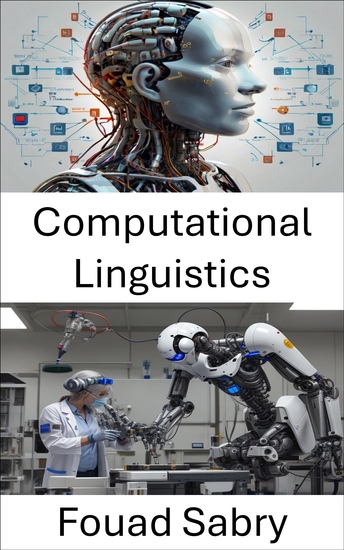
Computational Linguistics - Language Models and Artificial Intelligence in Robotic Systems - cover

Computational Linguistics - Language Models and Artificial Intelligence in Robotic Systems

Fouad Sabry

Publisher: One Billion Knowledgeable

  • 0
  • 0
  • 0

Summary

In the rapidly advancing world of Robotics Science, understanding computational linguistics is paramount. This book, "Computational Linguistics," delves into the intersection of language and technology, offering invaluable insights into the processes and tools that are shaping artificial intelligence and natural language processing. It is an essential read for professionals, students, and enthusiasts seeking to deepen their knowledge of how language can be understood and processed by machines.
 
Chapters Brief Overview:
 
1: Computational linguistics: Explore the foundational concepts and methodologies of computational linguistics.
 
2: Natural language processing: Uncover the techniques that enable machines to understand human language.
 
3: Corpus linguistics: Examine the study of language through large collections of text, fundamental to machine learning.
 
4: Text corpus: Discover how corpora are used to train language models and improve NLP systems.
 
5: Wordsense disambiguation: Understand how machines discern meaning from words with multiple interpretations.
 
6: Cognitive linguistics: Explore the relationship between language and thought, essential for AI comprehension.
 
7: Partofspeech tagging: Learn how machines identify and categorize words in a sentence for processing.
 
8: Charles J. Fillmore: Delve into the work of Fillmore, whose theories have influenced modern linguistics and NLP.
 
9: Treebank: Study the annotated syntactic structure of language used in computational models.
 
10: Statistical machine translation: Examine how statistical methods are applied to machine translation systems.
 
11: Linguistic categories: Understand the classification of language elements and its role in NLP applications.
 
12: Language and Communication Technologies: Discover the technologies driving advancements in languagebased AI.
 
13: History of natural language processing: Gain insights into the evolution of NLP and its current significance.
 
14: SemEval: Explore the SemEval series of evaluations, crucial for assessing NLP tasks.
 
15: DELPHIN: Learn about the DELPHIN project and its contributions to computational linguistics.
 
16: John Nerbonne: Discover the influential work of Nerbonne in the realm of computational linguistics.
 
17: ISLRN: Study the role of the International Standard Language Resource Number in data sharing.
 
18: Emily M. Bender: Understand the pioneering contributions of Bender in linguistics and AI.
 
19: Functional linguistics: Dive into functional linguistics and its application to computational models.
 
20: Lexicology: Explore the study of words and their meanings, crucial for language processing.
 
21: Syntax: Learn the rules governing sentence structure, essential for AI language comprehension.
 
By bridging the gap between linguistics and technology, this book offers readers a comprehensive toolkit for understanding and advancing in computational linguistics. Whether you're a student eager to delve into the subject, a professional seeking to expand your expertise, or an enthusiast curious about the future of AI, this book is for you.
Available since: 01/01/2025.
Print length: 195 pages.

Other books that might interest you

  • Epidemics - cover

    Epidemics

    Hippocrates

    • 0
    • 0
    • 0
    The term "epidemic" is used to describe the spread of a disease or condition to a large number of people. The word "epidemic" is derived from the Greek word "epi", meaning "upon", and "demos", meaning "people". Hippocrates, a Greek physician who lived in the fourth century BC, was one of the first to use the term "epidemic". He used it to describe the spread of disease through a population. Read in English, unabridged.
    Show book
  • Artificial Intelligence - Concepts Evolution and Future Prospects - cover

    Artificial Intelligence -...

    Bright Mills

    • 0
    • 0
    • 0
    Artificial Intelligence (AI) is a transformative field of computer science dedicated to building systems that can perform tasks typically requiring human intelligence. These tasks include learning, reasoning, problem-solving, perception, language understanding, and decision-making. This comprehensive guide explores the foundational principles of AI, its historical evolution, methodologies, real-world applications, ethical challenges, and the future it holds. The document begins by defining AI, its goals, and its place in the broader field of computer science. It discusses the major branches, such as machine learning, natural language processing, computer vision, robotics, and expert systems. Following that, the paper delves into the historical timeline of AI from early philosophical concepts to the rise of neural networks and deep learning in the 21st century. The core methodologies are explored in-depth, including supervised, unsupervised, and reinforcement learning, as well as symbolic AI, heuristic approaches, and hybrid models. It further illustrates how AI is integrated across industries like healthcare, finance, manufacturing, education, transportation, and defense. The guide also addresses the critical ethical and societal questions surrounding AI: data privacy, algorithmic bias, surveillance, job displacement, and the need for regulation and responsible AI development. 
    Finally, it speculates on the future trajectory of AI, including artificial general intelligence (AGI), quantum AI, and human-AI symbiosis. It highlights both the immense opportunities AI offers and the serious challenges it poses. 
    This 10,000-word exposition aims to serve students, researchers, policymakers, and enthusiasts by offering a detailed, accessible, and balanced perspective on one of the most powerful technologies of the 21st century.
    Show book
  • Nature's Wild Ideas - How the Natural World is Inspiring Scientific Innovation - cover

    Nature's Wild Ideas - How the...

    Kristy Hamilton

    • 0
    • 0
    • 0
    When astronomers wanted a telescope that could capture X-rays from celestial bodies, they looked to the lobster. When doctors wanted a medication that could stabilize Type II diabetic patients, they found their muse in a lizard. When scientists wanted to drastically reduce emissions in cement manufacturing, they observed how corals construct their skeletons in the sea. This is biomimicry in action: taking inspiration from nature to tackle human challenges. 


    In Nature's Wild Ideas, Kristy Hamilton goes behind the scenes of some of our most unexpected innovations. She traverses frozen waterfalls, treks through cloudy forests, discovers nests in the Mojave desert, scours intertidal zones, and takes us to the deepest oceans and near volcanoes to introduce us to the animals and plants that have inspired everything from cargo routing systems to non-toxic glues, and the men and women who followed that first spark of "I wonder" all the way to its conclusion, sometimes against all odds. 


    While the joy of scientific discovery is front and center, Nature's Wild Ideas is also a love letter to nature—complete with a deep message of conservation: If we are to continue learning from the creatures around us, we must protect their untamed homelands.
    Show book
  • A Question of Standing - The History of the CIA - cover

    A Question of Standing - The...

    Rhodri Jeffreys-Jones

    • 0
    • 0
    • 0
    The mission of the CIA has always been intelligence. Seventy-five years ago, in the year of its creation, the National Security Act gave the agency, uniquely in world history up to that point, a democratic mandate to pursue that mission of intelligence. It gave the CIA a special standing in the conduct of United States foreign relations. That standing diminished when successive American presidents ordered the CIA to exceed its original mission. When they tasked the agency secretly to overthrow democratic governments, the United States lost its international standing, and its command of a majority in the United Nations General Assembly. Such dubious operations, even the government's embrace of assassination and torture, did not diminish the standing of the CIA in United States public opinion. However, domestic interventions did. CIA spying on domestic protesters led to tighter congressional oversight from the 1970s on. 


    A Question of Standing offers a balanced narrative and perspective on recognizable episodes in the CIA's history. Famous incidents include the Bay of Pigs invasion, the War on Terror, 9/11, the weapons of mass destruction deception, the Iran estimate of 2007, the assassination of Osama bin Laden, and Fake News. The book also defends the CIA's exposure of foreign meddling in United States elections.
    Show book
  • Excel - The Complete Ultimate Comprehensive Step-By-Step Guide To Learn Excel Programming - cover

    Excel - The Complete Ultimate...

    Kevin Clark

    • 0
    • 0
    • 0
    This book includes :Excel : The Ultimate Comprehensive Step-By-Step Guide to the Basics of Excel ProgrammingExcel : The Ultimate Comprehensive Step-by-Step Guide to Strategies in Excel Programming (Formulas, Shortcuts and Spreadsheets) 
    Have you ever wanted to know what you can do with excel? Did you know that you could use excel to learn more about trend lines? 
    Did you know you could use excel to learn more about your data? Well, if you want the answers to these questions you have come to the right place. 
    Excel is one of the most useful tools developed by Microsoft which can not only be used to store data, but also be used to analyze data. This book will shed some light on how you can use excel, and also share some tips on how you can become an expert. 
    Over the course of the book, you will gather information on:An introduction to VBAHow to Use Data From ExcelHow to Manipulate Data In ExcelWorking With Loops, Strings and Conditional StatementsCommon Mistakes for You to AvoidHow to add or delete rows and columns in a worksheetHow to sort data using multiple sort levelsSimple mathematical operations that can be performed in ExcelSome shortcuts in Excel 
    It is important to remember that one can only master Excel or any other tool if they practice. Yes, you will make mistakes and there may be times when you do not know what it is that you need to do to format a cell, modify the data in a cell or format a worksheet. This book will guide you and help you understand how you can use excel. 
    So, grab a copy of this book NOW.
    Show book
  • Origin Story: Book Summary & Analysis - cover

    Origin Story: Book Summary &...

    Briefly Summaries

    • 0
    • 0
    • 0
    This is a concise summary and analysis of Origin Story, by David Christian.
     
    It is not the original book and is not affiliated with or endorsed by  David Christian.
     
    Ideal those seeking a quick and insightful overview.
     
    Origin Story takes readers on a journey through the history of the universe, from the Big Bang to the present day. It explores how human beings and the world around us came to be, weaving together insights from science, philosophy, and history. The book provides a broad perspective on the evolution of life, offering a narrative that connects the origins of the cosmos with the development of human societies, cultures, and the modern world.
    Show book