¡Acompáñanos a viajar por el mundo de los libros!
Añadir este libro a la estantería
Grey
Escribe un nuevo comentario Default profile 50px
Grey
Suscríbete para leer el libro completo o lee las primeras páginas gratis.
All characters reduced
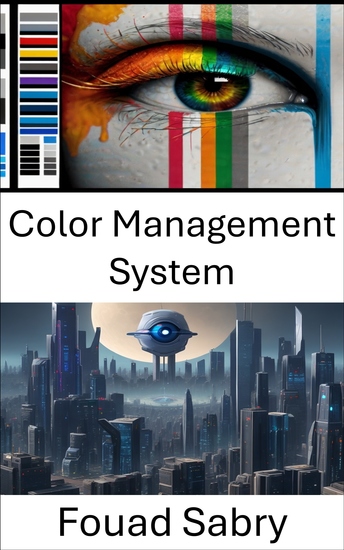
Color Management System - Optimizing Visual Perception in Digital Environments - cover

Color Management System - Optimizing Visual Perception in Digital Environments

Fouad Sabry

Editorial: One Billion Knowledgeable

  • 0
  • 0
  • 0

Sinopsis

What is Color Management System
 
A color appearance model, often known as a CAM, is a mathematical model that aims to capture the perceptual elements of human color vision. This model is used to describe viewing settings in which the appearance of a color does not coincide with the corresponding actual measurement of the stimulus source.
 
How you will benefit
 
(I) Insights, and validations about the following topics:
 
Chapter 1: Color management
 
Chapter 2: RGB color model
 
Chapter 3: CMYK color model
 
Chapter 4: Gamma correction
 
Chapter 5: Web colors
 
Chapter 6: CIELAB color space
 
Chapter 7: Gamut
 
Chapter 8: sRGB
 
Chapter 9: Adobe RGB color space
 
Chapter 10: Color calibration
 
(II) Answering the public top questions about color management system.
 
(III) Real world examples for the usage of color management system in many fields.
 
Who this book is for
 
Professionals, undergraduate and graduate students, enthusiasts, hobbyists, and those who want to go beyond basic knowledge or information for any kind of Color Management System.
Disponible desde: 29/04/2024.
Longitud de impresión: 97 páginas.
Otros libros que te pueden interesar

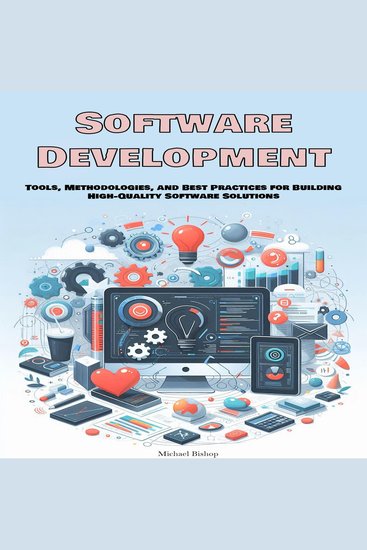
  • Software Development - Tools Methodologies and Best Practices for Building High-Quality Software Solutions - cover

    Software Development - Tools...

    Michael Bishop

    • 0
    • 0
    • 0
    In today's digital era, software development is at the core of technological innovation, transforming industries and everyday life. Software Development: Tools, Methodologies, and Best Practices for Building High-Quality Software Solutions is an essential guide designed for beginners and aspiring developers who want to understand the complete process of creating software from the ground up. 
     This comprehensive book covers everything from the fundamental concepts of programming and key development methodologies, to modern tools and technologies shaping the future of software. With clear explanations and practical insights, it introduces readers to the Software Development Life Cycle (SDLC), explores popular programming languages like JavaScript and Python, and delves into critical topics like version control, software architecture, and testing strategies. 
     Whether you're learning how to collaborate in Agile teams, understanding the importance of DevOps for continuous integration, or exploring future trends such as AI-driven development and cloud computing, this book provides the foundation you need to excel in the ever-evolving world of software development. 
     Perfect for students, newcomers, and professionals looking to strengthen their knowledge, Software Development: Tools, Methodologies, and Best Practices for Building High-Quality Software Solutions demystifies the complexities of software creation, guiding you through every step to help turn your ideas into functional, high-quality software solutions.
    Ver libro
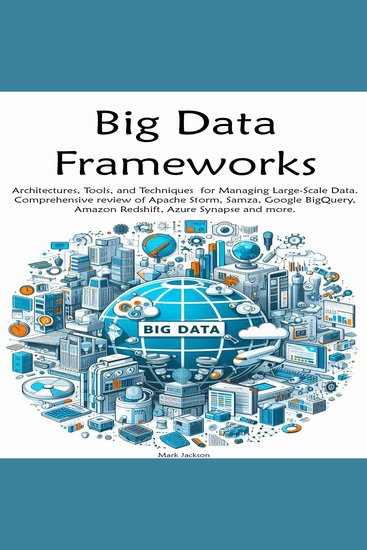
  • Big Data Frameworks - Architectures Tools and Techniques for Managing Large-Scale Data - cover

    Big Data Frameworks -...

    Mark Jackson

    • 0
    • 0
    • 0
    Big Data Frameworks: Architectures, Tools, and Techniques for Managing Large-Scale Data offers a comprehensive exploration of the fundamental concepts and cutting-edge technologies essential for handling vast and complex data environments. This book serves as an essential guide for data engineers, architects, and analysts who seek to understand and leverage the power of big data frameworks in today’s data-driven world. 
    Big Data Frameworks is written in a clear and accessible style, making complex concepts understandable and actionable. Whether you are a seasoned professional or new to the field, this book provides the knowledge and tools needed to effectively manage and leverage large-scale data for strategic decision-making and innovation. 
    Unlock the potential of big data with this essential guide and transform your approach to managing and analyzing large datasets. 
     
    Ver libro
  • Deep Learning for Beginners: 2 in 1 - cover

    Deep Learning for Beginners: 2 in 1

    Steven Cooper

    • 0
    • 0
    • 0
    2 books in 1! This is the bundle of two successful books in the market.Book 1: In "Deep Learning for Beginners: A comprehensive introduction of deep learning fundamentals for beginners to understanding frameworks, neural networks, large datasets, and creative applications with ease" you will learn:•	Deep learning utilizes frameworks which allow people to develop tools which are able to offer better abstraction, along with simplification of hard programming issues. •	The book illustrates TensorFlow and Caffe2 as the prime frameworks that are used for development by Google and Facebook. •	The book considers several components and tools of deep learning such as the neural networks; CNNs, RNNs, GANs, and auto-encoders. •	The book also considers several applications, including chatbots and virtual assistants, which have become the main focus for deep learning into the future, as they represent the next frontier in information gathering and connectivity.•	And much more...Book 2: In "Data Science from Scratch: The #1 Data Science Guide for Everything A Data Scientist Needs to Know: Python, Linear Algebra, Statistics, Coding, Applications, Neural Networks, and Decision Trees" you will learn:•	In depth information about what data science is and why it is important.•	The prerequisites you will need to get started in data science.•	What it means to be a data scientist.•	The roles that hacking and coding play in data science.•	The different coding languages that can be used in data science.•	Why python is so important.•	How to use linear algebra and statistics.•	The different applications for data science.•	How to work with the data through munging and cleaning•	And much more...Get your copy of these fantastic guides to master state-of-the-art, deep learning algorithms and their implementation!
    Ver libro
  • CLIMATE - How Wladimir Koppen Studied Weather and Drew the First Climate Maps - cover

    CLIMATE - How Wladimir Koppen...

    Darcy Pattison

    • 0
    • 0
    • 0
    2026 Best STEM Book – NSTA/CBC 
    2026 NSSTA Notable Social Studies Book 
    “A visually evocative and mentally stimulating introduction to a climatologist.” Kirkus Reviews 
      
    Before kids can understand climate change—first, they need to understand climate. 
      
    As a teenager, Wladimir Köppen became interested how the landscape changed as he traveled south from St. Petersburg on the Baltic Sea in northern Russia to Crimea on the Black Sea. Explaining that changing landscape became his life’s work. 
      
    In late 1800s, weather and climates were poorly understood. They needed someone to study it carefully over a long period of time. Köppen moved to Hamburg, Germany as head weatherman at the Deutsche Seewarte, the German Marine Observatory on the Baltic Sea. His job was to start one of the world’s first daily weather reports. He helped set up weather stations on the North Sea and train its staff. From around the world, he gathered other weather data. 
      
    The World’s First Climate Map 
    Slowly, that childhood problem of changing landscapes came into focus as he developed the world’s first climate map. They set out the five climate classifications Köppen identified (tropical, arid, temperate, continental, and polar). Köppen’s maps are still used today to help us understand the world’s ecosystems and plan for the future. 
     
    Ver libro
  • Silence - The Psychology and the Craft for Emotional Wellbeing - cover

    Silence - The Psychology and the...

    Olga V. Lehmann

    • 0
    • 0
    • 0
    In Silence: The Psychology and the Craft for Emotional Wellbeing, the author―a psychotherapist, university professor, educator, and researcher―takes the listener into a thought-provoking and heartfelt journey. She offers original perspectives and vulnerable stories from her clients, students, and personal life. Drawing on, among others, ethnographic and autoethnographic accounts, Lehmann serves the listener with psychological insights, offering a timely, critical, and thorough viewpoint to contrast with an overload of misinformation about what silence is and how people should feel when quiet. The listener will be challenged to aspire to balance when communicating or connecting with themselves, with others, with nature, or with art, or, for some, as part of a spiritual path. Whether in nature, at work meetings, on the road, in a classroom, in the therapy room, or at the dinner table, silences appear as coordinates, and this book is the missing map for surviving and thriving when navigating toward well-being.
    Ver libro
  • Touchpad Plus Ver 40 Class 2 - cover

    Touchpad Plus Ver 40 Class 2

    Nidhi Gupta

    • 0
    • 0
    • 0
    Computer Science Textbook with New Pedagogical Approaches 
    
    KEY FEATURES 
    - National Education Policy 2020 
    - Tech Funda: This section provides a practical information or tip to the students. 
    - Clickipedia: This section provides interesting computer facts. 
    - Lab Session: This is a lab activity to develop practical skills. (Subject Enrichment) 
    - Explore More: This section contains supplement topics for add-on knowledge. 
    - QR Code: Scan the QR Code given on the first page of each chapter to start chapter animation. 
    - Mind Boggler: This section has puzzle or fun based activity to help understand the concepts better. 
    
    DESCRIPTION 
    Computer technology has become essential and an integral part of life at work, in recreation, social networking and education too. With the constant development of new technology, it has become more significant in helping and preparing students for jobs. Computers have revolutionised the way education is imparted to children. 
    
    Touchpad Plus Version 4.0 is a complete computer science curriculum solution for grades 1-8. It is based on Windows 10 and MS Office 2019, with new and future-ready content. Fun is the most important element of learning. Keeping in mind the concept of Joyful Learning, varied activities have been designed based on multiple intelligences and 21st century skills for holistic development. 
    
    The books have a conversational style introduction of each chapter to make learning fun and engaging. The topics and their approaches are integrated in different themes as per ICT learning. Grade I and II books have four-line writing space to enhance writing skills in children. Each book is accompanied by digital learning resources that offer interesting animation and interactive tests for the student to supplement classroom learning with independent learning. 
    
    The books are curated in a way that they make students and teachers equal partners in the learning process and take learning beyond classroom. We welcome and look forward to all meaningful and valuable suggestions for improving the book 
    
    WHAT WILL YOU LEARN 
    You will learn about: 
    - Digital World 
    - Cyber World 
    - Coding World 
    - Computational Thinking 
    - Artificial Intelligence 
    
    WHO THIS BOOK IS FOR 
    Grade 2 
    
    TABLE OF CONTENTS 
    1. More About a Computer 
    2. Working of a Computer 
    3. IPO Devices 
    4. The Keyboard and the Mouse 
    5. Introduction to Word 2019 
    6. Let’s Learn Paint 
    7. Reasoning and Analysis 
    8. More on ScratchJr 
    9. Artificial Intelligence Around Us 
    ADD-ONS 
    ASSESSMENTS
    Ver libro