
Join us on a literary world trip!
Add this book to bookshelf
Grey
Write a new comment Default profile 50px
Grey
Subscribe to read the full book or read the first pages for free!
All characters reduced
Chiefdom - The Evolution of Leadership and Social Hierarchies in Pre-State Societies - cover

Chiefdom - The Evolution of Leadership and Social Hierarchies in Pre-State Societies

Fouad Sabry

Publisher: One Billion Knowledgeable

  • 0
  • 0
  • 0

Summary

Explore the intricate world of chiefdoms in "Chiefdom," a vital addition to the Political Science series. This volume provides a thorough analysis of the political and social structures defining chiefdoms, focusing on governance, hierarchy, and cultural dynamics. A must-read for professionals, students, and enthusiasts, this book enhances understanding of chiefdoms in historical and contemporary contexts.
 
1: Chiefdom: Discover the core concepts of chiefdoms, including governance structures and societal roles.
 
2: Civilization: Examine the relationship between chiefdoms and early civilizations, highlighting their contributions.
 
3: Tribe: Delve into distinctions and connections between tribes and chiefdoms, showcasing social variations.
 
4: Nomad: Investigate the influence of nomadic lifestyles on the formation and sustainability of chiefdoms.
 
5: Heterarchy: Understand heterarchy in chiefdoms, where multiple hierarchies create unique dynamics.
 
6: Pre-industrial Society: Analyze chiefdoms' roles in pre-industrial societies and their influence before industrialization.
 
7: Andrey Korotayev: Gain insights into Korotayev's theories and contributions to chiefdom studies.
 
8: Leonid Grinin: Explore Grinin's framework for understanding the development and function of chiefdoms.
 
9: Dmitri Bondarenko: Discover Bondarenko's analysis and impact on political science through his research.
 
10: Robert L. Carneiro: Learn about Carneiro's circumscription theory and its implications for chiefdoms.
 
11: Complex Society: Examine chiefdoms' role in the evolution of complex societies.
 
12: Eurasian Nomads: Explore the interactions between Eurasian nomads and chiefdoms in social structures.
 
13: Circumscription Theory: Delve into the circumscription theory and its relevance to chiefdom studies.
 
14: Social Evolution & History: Investigate how chiefdoms inform our understanding of social evolution and history.
 
15: Timothy Pauketat: Learn about Pauketat's theoretical contributions to chiefdom studies.
 
16: Nikolay Kradin: Explore Kradin’s theories related to chiefdoms and their significance.
 
17: Homoarchy: Understand homoarchy and its relevance to chiefdom hierarchies.
 
18: Cliodynamics: Discover cliodynamics and its application to chiefdom analysis.
 
19: Tessaleno Devezas: Explore Devezas' insights into chiefdoms and contributions to political science.
 
20: World-System: Examine chiefdoms within the context of world-system theory.
 
21: Henri J. M. Claessen: Gain an understanding of Claessen’s work on chiefdoms and political structures.
 
"Chiefdom" is more than a book; it’s a comprehensive guide, providing insights and answers to key questions about chiefdoms, enriching your perspective on this fascinating subject.
Available since: 10/17/2024.
Print length: 206 pages.

Other books that might interest you

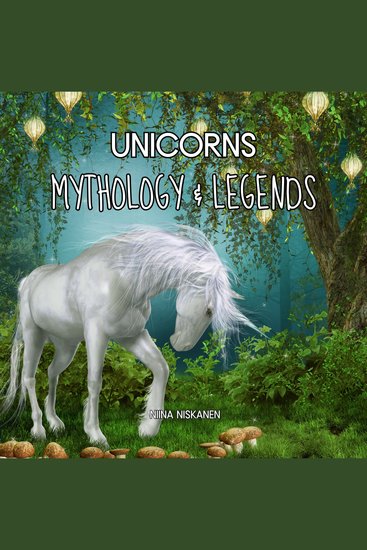
  • Unicorns: Mythology & Legends - cover

    Unicorns: Mythology & Legends

    Niina Niskanen

    • 0
    • 0
    • 0
    Unicorns are made of dreams and enchantments. They are some of the most beloved mythical beings and very common motifs that we still come across today. In this book, we will go through the history of unicorns from ancient times to the medieval time period and renaissance. 
    A lot of people believed that a unicorn was an actual animal. It is possible that the legend of the unicorn was born from rhinos, deer, antelopes or roe deer and other animals with antlers. We will also be discussing the symbolism behind horns and antlers, and the different meanings and interpretations that unicorns horn has been given. You will learn about the domestic lives of the unicorns. Where they live, what they eat and who creates the unicorns. 
    Unicorns are often connected to spirituality and magic. In this book, you will also find out about the Christian symbolism behind unicorns and why we can still today find unicorn imagery in churches around Europe. There are many mentions of unicorns in the Bible as well. Step into a journey to learn about unicorns in ancient civilizations such as Greece and Persia. What unicorns are symbolised in Greek and Roman mythology? You will also learn about unicorns in Asian cultures and how they can take many kinds of shapes and forms. 
    In medieval times unicorns symbolized purity and in medieval bestiaries, the unicorn was a commonly depicted animal but more than that, during these times unicorns became the symbol of courtly love and this is why we find him woven into many medieval tapestries. 
    Show book
  • Escaping America in World War II: The History of Attempted Prison Escapes by Axis Prisoners in the United States - cover

    Escaping America in World War...

    Editors Charles River

    • 0
    • 0
    • 0
    Though it’s often overlooked today, during World War II, the United States held hundreds of thousands of enemy prisoners of war, and the country was unprepared for the influx, despite the fact that only weeks after the attack on Pearl Harbor, the government started detaining Japanese Americans and foreigners from Axis countries. Some camps, used for training Army recruits, were repurposed as prison camps, and the experience of building camps for the 120,000 Japanese and Japanese Americans was useful in building camps for the POWs. In addition to the Japanese, about 31,000 German, Japanese, and Italian residents were placed in camps.  
    	At first, there were few POWs because it took months for the American military to get ready to participate in campaigns. The first POW was a Japanese sailor who’d survived the sinking of his midget submarine at Pearl Harbor. The first German prisoners were survivors of U-boats sunk off the American coasts. There were also a few hundred German and Italian merchant sailors on ships seized in American ports (these sailors were interned as enemy aliens, not POWs). 
    	Soon, the prisoners came in waves. A sizable number came to the US at the request of Britain, which had too many prisoners and sent tens of thousands to Canada and the US. The first large number of enemy POWs captured by American forces came at the end of the North Africa campaign in May 1943, when the Allied forces trapped most of the vaunted Afrika Korps in Tunisia (then a French colony) and forced it to surrender. About 280,000 German and Italian troops surrendered. These were different from later prisoners; they tended to be volunteers, with many of them fervent Nazis (if German) and diehard Fascists (if Italian). They were generally confident of an ultimate German victory.
    Show book
  • The Principles of Psychology Volume 3 - cover

    The Principles of Psychology...

    William James

    • 0
    • 0
    • 0
    "The Principles of Psychology" by William James is a foundational text in the field, exploring the science of mental life. James delves into topics like consciousness, habit, memory, and emotions, blending empirical research with philosophical insight. He introduces key ideas such as the stream of consciousness and pragmatism, emphasizing the importance of understanding psychology through practical applications. His work bridges physiology and philosophy, offering an innovative perspective on how humans perceive, think, and act. A comprehensive exploration of the mind’s complexities, this book remains influential for its pioneering approach to studying human behavior and cognition.
    Show book
  • A Rare Recording of Aleister Crowley - cover

    A Rare Recording of Aleister...

    Aleister Crowley

    • 0
    • 0
    • 0
    Aleister Crowley was a British occultist, writer, philosopher and mystic. Crowley was also an influential member in several occult organizations, including the Golden Dawn and Ordo Templi Orientis (O.T.O.). In this rare voice clip from 1920, made on a wax cylinder in London, Crowley reads excerpts from The Gnostic Mass.
    Show book
  • The Complex PTSD Treatment Manual - An Integrative Mind-Body Approach to Trauma Recovery - cover

    The Complex PTSD Treatment...

    Arielle Schwartz

    • 0
    • 0
    • 0
    In The Complex PTSD Treatment Manual, clinicians will find the road map they need to conduct successful therapy with clients who have experienced prolonged exposure to traumatic events. Combining the science and art of therapy, Dr. Arielle Schwartz seamlessly integrates research-based interventions with the essentials of healing to create a whole-person approach to trauma treatment. 


    Drawing from her years of experience in working with trauma survivors, Dr. Schwartz provides clinicians with the tools they need to become a trustworthy companion to trauma survivors and become capable of guiding a healing journey for clients with a history of abuse or neglect. In this book, you will find: 


    ● Essential interventions that strengthen mindful body awareness, enhance distress tolerance, cultivate self-compassion, and facilitate trauma recovery 


    ● Practices and self-reflection points to utilize in each stage of the client's therapeutic process 


    ● Integration of several therapeutic approaches for trauma treatment, including relational therapy, mindful body awareness, parts work therapy, CBT, EMDR, somatic psychology, and practices drawn from complementary and alternative medicine
    Show book
  • Sun Tzu's The Art of War - Unabridged - cover

    Sun Tzu's The Art of War -...

    Sun Tzu

    • 0
    • 0
    • 0
    "The Art of War" is the widely acclaimed book of military strategy written by the legendary Chinese general and philosopher Sun Tzu.   
    In this treatise, Sun Tzu lays out his basic philosophy of how to wage military campaigns, including a description of the correct temperament of a general, flanking and attack strategies, the use of spies, the employment of deception and counter-intelligence and dozens of other time-honored pieces of military advice. The book has been read and studied by scores of leaders, presidents, generals and even corporate titans and Sun Tzu is often praised as the finest military strategist in history.   
    We are proud to present this manuscript in its original and unabridged format, as translated by Lionel Giles, M.A. in 1910.
    Show book