Join us on a literary world trip!
Add this book to bookshelf
Grey
Write a new comment Default profile 50px
Grey
Subscribe to read the full book or read the first pages for free!
All characters reduced
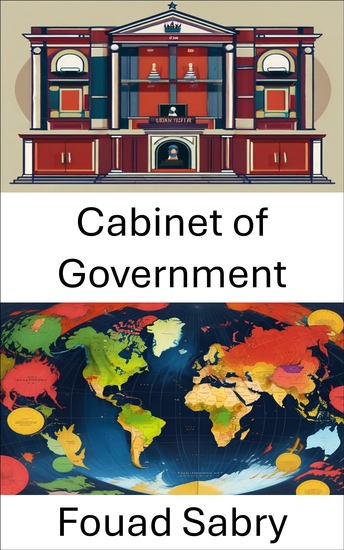
Cabinet of Government - Decoding the Power Dynamics and Decision-Making Processes - cover

Cabinet of Government - Decoding the Power Dynamics and Decision-Making Processes

Fouad Sabry

Publisher: One Billion Knowledgeable

  • 0
  • 0
  • 0

Summary

Discover the dynamics of modern governance with Cabinet of Government, part of the Political Science series. This essential book delves into the core elements shaping executive power. It’s a must-read for professionals, students, and those curious about political strategies and decision-making.
 
1: Cabinet (Government) – Learn about the cabinet’s fundamental role as the backbone of the executive branch in various political systems.
 
2: Head of Government – Explore the global variations in the role of the head of government and its impact on policy.
 
3: Prime Minister – Examine the prime minister’s powers and responsibilities within parliamentary systems.
 
4: Parliamentary System – Understand how parliamentary systems organize executive and legislative branches for cohesive governance.
 
5: Minister (Government) – Discover the diverse roles of ministers and their collective responsibilities within the cabinet.
 
6: Cabinet Collective Responsibility – Investigate the principle of collective responsibility and its effect on government accountability.
 
7: Ministers in New Zealand – Learn about New Zealand’s unique cabinet system and ministerial roles.
 
8: Fusion of Powers – Examine how executive and legislative functions are blended in certain political systems.
 
9: Government of Barbados – Understand the cabinet's role in Barbados' political structure.
 
10: Government of Malaysia – Analyze the composition and impact of Malaysia’s cabinet on governance.
 
11: Head of State – Differentiate between the roles of head of state and head of government.
 
12: Politics of Mongolia – Learn about Mongolia’s political structure and its cabinet's role.
 
13: Westminster System – Understand the Westminster system’s evolution and global influence.
 
14: Presidency – Explore the presidency’s role in shaping executive power in various political systems.
 
15: Presidential System – Compare presidential systems with other forms of government.
 
16: List of Countries by System of Government – View a comprehensive list of global government systems.
 
17: Parliament of Malaysia – Understand Malaysia’s parliamentary system and its interaction with the cabinet.
 
18: Cabinet of Australia – Analyze Australia’s cabinet and its role in the political system.
 
19: Indirect Election – Learn about indirect election processes and their effects on governance.
 
20: Australian Government – Explore the executive and legislative branches of the Australian government.
 
21: New Zealand Government – Review New Zealand's cabinet system and its role within its government.
 
Cabinet of Government offers an in-depth exploration of executive power, providing valuable insights into political cabinets worldwide. This book expands your understanding of governance and executive mechanisms on a global scale.
Available since: 09/28/2024.
Print length: 378 pages.

Other books that might interest you

  • War at Arm's Length - How America Can Build Effective Partners Through Military Assistance - cover

    War at Arm's Length - How...

    Alexander Noyes, Richard Bennet

    • 0
    • 0
    • 0
    An in-depth examination of how the United States can build more effective partner militaries Military assistance has a bad reputation. Large-scale attempts to build partner militaries in Afghanistan, Iraq, and Vietnam cost the United States billions of dollars and ended ignominiously, with the collapse of local forces as American troops withdrew. Arms transfers of sophisticated, American-made weapons often appear to do more harm than good. Yet military assistance and support—operating indirectly through partners—when done right, can deliver remarkable strategic results for the United States and its partners. How to work effectively with partner militaries is one of the most pressing national security challenges for the United States today. Richard Bennet and Alexander Noyes offer a systematic look at military assistance in the twenty-first century, examining a frequently deployed but often misunderstood set of tools that allows the United States to leverage partner militaries to achieve national security objectives. Bennet and Noyes posit that two main factors—the degree of interest alignment on security issues and the level of institutional capacity of the receiving force—will be the most important variables in Washington's ability to build militarily effective partners.
    Show book
  • Above the Ground - A True Story of the Troubles in Northern Ireland - cover

    Above the Ground - A True Story...

    Dan Lawton

    • 0
    • 0
    • 0
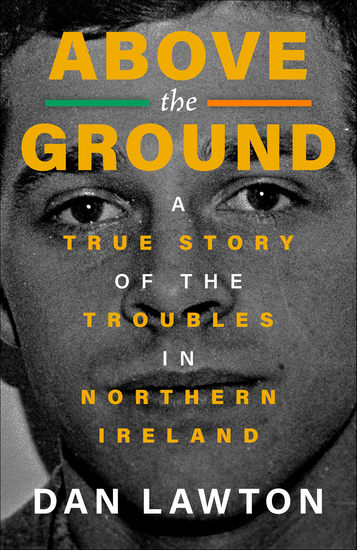
    “The fascinating true story of [Kevin Barry] Artt . . . and how his life was pummeled and turned upside down by being dragged unjustly into ‘the Troubles.’” —Los Angeles Daily JournalThe account of a man convicted for a murder that he did not commit, Above the Ground: A True Story of the Troubles in Northern Ireland takes readers through one of the darkest periods in Northern Ireland’s history, highlighting themes of injustice, perseverance, and hope through Kevin Barry Artt’s escape and struggle.In this deep and exposing novel, readers are shown for the first time, the true story of the murder of British prison official Albert Miles by Irish Republican Army assassins and the best efforts of former IRA men and the British government to keep hidden the secrets of their dirty war during the Troubles in Northern Ireland. No matter where you stand regarding the bloody conflict, Above the Ground will have you turning the pages to keep revealing the truth. Filled with courtroom drama and true crime, you will not want to put this new release down!“Lawton’s account, honed by years on Kevin Barry Artt’s legal team, brings an advocate’s insight and dedication to exposing injustice. A must-read for anyone interested in Irish history, true crime, or courtroom drama.” —The Irish Echo “A startling, memorable forensic analysis and account of British rule in Ireland.” —Seamus Deane, Irish historian and writer“One of the best books ever written by an American about Northern Ireland and a must-read for those interested in promoting peace.” —Nancy Soderberg, former deputy assistant to President Clinton for national security affairs and author of The Superpower Myth
    Show book
  • America’s Disenfranchised - Why Restoring Their Vote Can Save the Soul of Our Democracy - cover

    America’s Disenfranchised - Why...

    Desmond Meade

    • 0
    • 0
    • 0
    Voting is foundational in a democracy, yet over six million American citizens remain stripped of their ability to participate in elections. Once convicted of a felony, people who complete their sentences reenter society, but no longer with the civil rights they once had. They may return to school, secure employment to provide for their families, and become law-abiding, tax-paying citizens―sometimes for decades―and still be denied the voting rights afforded to every other citizen.Desmond Meade, director of the Florida Rights Restoration Coalition and a returning citizen himself, played an instrumental role in the landslide 2018 Amendment 4 victory in Florida, which used the ballot box to restore voting rights to 1.4 million Floridians with a previous felony conviction. Meade argues how, state by state, America can do better. His efforts in Florida present a compelling argument that creating access to democracy for those living on the fringes of society will create a more vibrant and robust democracy for all. He is the winner of the 2021 Brown Democracy Medal for his continuing work to restore voting rights and connect Americans along shared social values.
    Show book
  • All In: How we build a country that works - cover

    All In: How we build a country...

    Lisa Nandy

    • 0
    • 0
    • 0
    ‘A persuasive manifesto for a better Britain.’ Observer Book of the Day 
    Britain needs a fresh start. This timely book by one of the stars of the new government shows how to achieve it. 
    In this brilliant and accessible intervention, Lisa Nandy reveals how Britain can leave behind the mess in which we find ourselves. All In charts a course towards a fairer, more equal, more prosperous country by drawing on the greatest asset we have – each other. 
    Rapid global changes, political division and economic crisis have left Britain reeling. For decades, large swathes of the country have been shut out, condemned to low productivity, underinvestment and managed decline, and stripped of their voice. With most major cities now beset with high housing costs, air pollution and congestion, even the ‘winners’ are losing. 
    All In shows how, by handing power and resources to people with a stake in the outcome, Britain can draw on the talent, assets and potential in every part of the country and start firing on all cylinders again. Finding strength rather than fear in our differences, it reimagines the relationship between people and government so that all of us can play our part in meeting the challenges of our age and rebuilding Britain the only way that works – together. 
    Lucid, clear-eyed and hopeful, this book sets out how we restore values, energy and direction to our politics and offers a glimpse of the alternative future that remains within our grasp. 
    Nandy's autobiography is a personal exploration of the process of political change, offering a best case scenario for a united, prosperous Britain. Drawing on history and economics, she presents a compelling vision for the 21st century. 
    For fans of Wes Streeting (One Boy, Two Bills and a Fry Up), Gordon Brown (My Life, Our Times), Jess Phillips (Truth to Power), Chris Bryant (Code of Conduct), and Sebastian Payne (Broken Heartlands). 
    HarperCollins 2022
    Show book
  • Pardon Power - How The Pardon System Works And Why - cover

    Pardon Power - How The Pardon...

    Kim Wehle

    • 0
    • 0
    • 0
    If you've ever wondered about the constitutional basis for presidential pardons, this book explains it, offering examples from the recent and distant past. Follow constitutional law professor and popular newsroom commentator Kim Wehle through a fascinating rundown of how this executive power has been—and might be—used by American presidents.
    Show book
  • 1980 Nomination Acceptance Address - cover

    1980 Nomination Acceptance Address

    Ronald Reagan

    • 0
    • 0
    • 0
    Cover Art Photo: Ronald Reagan giving his acceptance speech at the Republican National Convention at Joe Louis Arena, Detroit, Michigan. July 17, 1980. 
    In his acceptance speech, Reagan envisioned “a new consensus with all those across the land who share a community of values embodied in these words: family, work, neighborhood, peace and freedom.” Reagan’s acceptance focuses on “three grave threats to our very existence, any one of which could destroy us. We face a disintegrating economy, a weakened defense and an energy policy based on the sharing of scarcity.” 
    Reagan places responsibility on the “Democratic party leadership-in the White House and in Congress-for this unprecedented calamity which has befallen us.” He says his first act will be “to impose an immediate and thorough freeze on federal hiring” and “to conduct a detailed review of every department, bureau and agency that lives by federal appropriation.” Reagan calls for “a 30 percent reduction in income tax rates over a period of three years” and reminds us that “every major tax cut in this century has strengthened the economy, generated renewed productivity and ended up yielding new revenues for the government”. 
    On the issue of national defense, Reagan asserts that we “know only too well that war comes not when the forces of freedom are strong, but when they are weak. It is then that tyrants are tempted.” While calling for a strong military, Reagan reiterates his long-held belief that government is too big and the “time is now to limit federal spending; to insist on a stable monetary reform and to free ourselves from imported oil.” 
    Search online for “Ronald Reagan major speeches” to see both a text version and a video version of this speech. Audio recording courtesy of the Ronald Reagan Presidential Library. AspenLeafMedia.com
    Show book