Join us on a literary world trip!
Add this book to bookshelf
Grey
Write a new comment Default profile 50px
Grey
Subscribe to read the full book or read the first pages for free!
All characters reduced
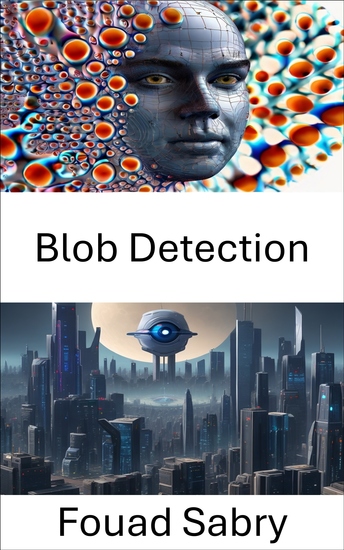
Blob Detection - Unveiling Patterns in Visual Data - cover

Blob Detection - Unveiling Patterns in Visual Data

Fouad Sabry

Publisher: One Billion Knowledgeable

  • 0
  • 0
  • 0

Summary

What is Blob Detection
 
In the field of computer vision, blob detection algorithms are designed to identify areas within a digital image that are distinct from the regions that surround them in terms of characteristics such as brightness or color characteristics. In a more casual sense, a blob is a region of a picture in which certain qualities remain constant or almost constant. All of the points that make up a blob might be considered to be comparable to one another in some way. The use of convolution is the method that is utilized the most frequently for blob detection.
 
How you will benefit
 
(I) Insights, and validations about the following topics:
 
Chapter 1: Blob detection
 
Chapter 2: Edge detection
 
Chapter 3: Canny edge detector
 
Chapter 4: Scale-invariant feature transform
 
Chapter 5: Scale space
 
Chapter 6: Feature (computer vision)
 
Chapter 7: Difference of Gaussians
 
Chapter 8: Corner detection
 
Chapter 9: Ridge detection
 
Chapter 10: Scale-invariant feature operator
 
(II) Answering the public top questions about blob detection.
 
(III) Real world examples for the usage of blob detection in many fields.
 
Who this book is for
 
Professionals, undergraduate and graduate students, enthusiasts, hobbyists, and those who want to go beyond basic knowledge or information for any kind of Blob Detection.
Available since: 05/01/2024.
Print length: 134 pages.

Other books that might interest you

  • Build Your AI Automation Agency in 30 Days - How to Scale an AI Automation Business - cover

    Build Your AI Automation Agency...

    David Brennan

    • 0
    • 0
    • 0
    This audiobook is narrated by an AI Voice. Launch Your Six-Figure AI Automation Agency in 30 Days—No Coding Required 
     
    The AI revolution is creating millionaires while others are still trying to understand what ChatGPT does. This isn't another theory book about artificial intelligence—it's a complete blueprint for building a profitable AI automation agency that generates $10,000+ monthly revenue. 
     
    Written by David Brennan, a successful agency owner who has generated millions in automation revenue for clients across healthcare, legal services, real estate, and e-commerce sectors. 
     
    What You'll Master: 
     
    • The Service Menu Blueprint: Exact offerings that command $5,000-$50,000 per project (chatbots, workflow automation, document processing, voice AI systems) 
     
    • No-Code Automation Mastery: Build sophisticated solutions using Make, Zapier, Voiceflow, and AI APIs without programming skills 
     
    • Niche Selection Strategy: Dominate lucrative sectors like medical practices, law firms, and real estate agencies where automation delivers massive ROI 
     
    • Client Acquisition Systems: Proven outbound strategies, LinkedIn content marketing, and partnership frameworks that generate consistent leads 
     
    • Value-Based Pricing Models: Stop trading time for money with retainer structures and performance-based contracts 
     
    • Scaling Framework: From solo founder to team-managed agency with standardized processes and productized services 
     
    Complete Technical Stack Covered: 
     
    • GPT-4, Claude, and Gemini API integration 
    • Vector databases and RAG knowledge systems 
    • Document processing automation with Azure AI 
    • Voice AI phone systems for 24/7 customer service 
    • CRM integration and workflow automation 
    • Web scraping and competitive intelligence tools
    Show book
  • Cyber Security for Beginners - Safeguarding Your Cyber Space - cover

    Cyber Security for Beginners -...

    Daniel Green

    • 0
    • 0
    • 0
    In a world powered by technology and interconnectivity, the digital landscape is both a playground and a battleground. "Cybersecurity for Beginners" is your essential companion on the journey to fortifying your online presence and understanding the fundamentals of cybersecurity. 
    Embark on a captivating exploration of the evolution of cyber threats, from the early days of viruses to the sophisticated challenges of the modern digital era. This book goes beyond the headlines, delving into the importance of cybersecurity for both individuals and businesses, unraveling the layers of protection needed to safeguard your identity, privacy, and sensitive information. 
    With an easy-to-follow approach, you'll learn the art of creating strong, unique passwords and the power of two-factor authentication. Navigate the treacherous waters of social engineering attacks, recognizing phishing emails and thwarting malicious tactics aimed at manipulating unsuspecting users. 
    Equip yourself with the tools to secure your devices and networks, understanding the role of antivirus software, and implementing network security best practices. Uncover the secrets of safe online behavior, from web browsing best practices to safeguarding your social media presence. 
    Business owners will discover invaluable insights into small business cybersecurity and corporate cybersecurity policies, empowering them to protect their enterprises from the ever-growing array of digital threats. 
    As you progress through "Cybersecurity for Beginners" you'll gain a comprehensive understanding of the cybersecurity landscape, empowering you to make informed decisions and defend against potential threats. The book concludes with a glimpse into the diverse career paths within cybersecurity and guidance on further learning, making it an ideal resource for those aspiring to enter this dynamic and crucial field.
    Show book
  • Life Lessons from a Parasite - What Tapeworms Flukes Lice and Roundworms Can Teach Us About Humanity's Most Difficult Problems - cover

    Life Lessons from a Parasite -...

    John Janovy Jr.

    • 0
    • 0
    • 0
    The answers to life's biggest questions can be found by looking at the little things . . . 


    Though you may not be able to see them with the naked eye, parasites—miniscule life forms that live inside other organisms—inhabit our everyday lives. From headlice to bird droppings, litterboxes to unfiltered water, you have brushed up against the most common way of life on our planet. 


    In this unique book, John Janovy Jr., one of the world's preeminent experts on parasites, reveals what can humans learn from the most reviled yet misunderstood animals on Earth: lice, tapeworms, flukes, and maggots that can eat a lizard from the inside, and how these lessons help us negotiate our own complicated world. Whether we're learning to adapt to adverse conditions, accept our own limitations, or process new information in an ever-changing landscape—we can be sure a parasite did it first. 


    At once peculiar and profound, Life Lessons from a Parasite makes a case for using knowledge of the natural world, with all its wonderful mysteries and quirks, to tackle our worst problems.
    Show book
  • Biomimetics - How Lessons from Nature can Transform Technology - cover

    Biomimetics - How Lessons from...

    Brian Clegg

    • 0
    • 0
    • 0
    An exploration of the transformative ways in which nature has inspired the technological advancement of humankind.
    
    Biomimetics literally means emulating biology - and in a broader sense the term covers technological advances where the original inspiration came from nature. The Earth is a vast laboratory where the mechanisms of natural selection have enabled evolutionary solutions to be developed to a wide range of problems.
    
    In this new title in the Hot Science series, science writer Brian Clegg looks at how humans have piggybacked on natural experimentation, redeploying a solution to create things that make our lives easier. He looks at how the hooks on burdock seeds inspired the creation of Velcro, how the stickiness of the feet of geckos and frogs has been used to create gripping surfaces, such as tyre treads, and how even the most basic optical enhancement in the form of spectacles is itself a form of biomimetics.
    Show book
  • The Dressmaker's Mirror - Sudden Death Genetics and a Jewish Family's Secret - cover

    The Dressmaker's Mirror - Sudden...

    Susan Weiss Liebman

    • 0
    • 0
    • 0
    Experts agree on the value of genetic testing when there is a family history of disease, or if the patient has an illness frequently caused by a mutation. Knowing the disease mutation lets family members find out if they have it too and need preventive care. The book explains that doctors can order tests with genetic counseling at relatively low cost and how this will help them prescribe preventive actions, make earlier diagnoses, and get better outcomes. The book's genetic discussions also delve into the implications of broad-based genetic screening without a family history. Policymakers are considering the benefits and drawbacks of this approach and I present both sides of this debate. 


    While working on this book I uncovered a family secret hidden for over one hundred years. Family lore had it that a heavy dressmaker's mirror fell on and killed my uncle when he was four. But the death certificate told a different story—his true cause of death was heart failure. My grandparents fabricated the accident to protect their surviving children's marriage prospects. Long before the discovery of DNA, my grandparents intuited and feared James Watson's message, "We used to think that our fate was in our stars, but now we know that, in large measure, our fate is in our genes." The book suggests genetic testing and associated medical intervention can change our fates.
    Show book
  • Hubble Space Telescope and James Webb Space Telescope The: The History of the World’s Most Important Telescopes - cover

    Hubble Space Telescope and James...

    Editors Charles River

    • 0
    • 0
    • 0
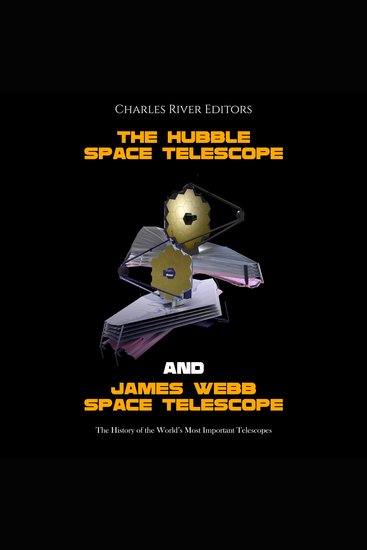
    By the time the Hubble telescope reached orbit, it was already the world’s most famous telescope, but it was also the most scorned. The telescope cost nearly $2 billion more to complete than anticipated, and to make matters worse, the first images it sent back were skewed. However, within about a year of fixing it, the telescope captured images of a major event in the solar system. In July 1994, the telescope provided a firsthand observation of a comet, Shoemaker-Levy 9, breaking apart and slamming into Jupiter. The comet broke into about two dozen pieces, some of them more than a mile wide, and hit the giant planet with the force of millions of atomic bombs.In addition to capturing the streaking comet breaking up and colliding with Jupiter, the telescope captured images of the impact marks that were left on Jupiter’s surface, helping astronomers study Jupiter’s atmosphere and debris left by major impacts. 
    The increase in excitement was palpable. Scientists had viewed much of the universe through Hubble, almost as it was when it was formed, but they learned that none of these galaxies were the first ones formed. Then ultimately realized that “Hubble wasn’t the right instrument to detect those first galaxies.” “The farther we can see in space, the farther we can see in time…and that’s not a metaphor. That’s actually literally true,” explained scientist Amber Straughn. The Webb Space Telescope represents “looking in a part of space that we’ve never seen before.” The telescope will be able to detect the earliest galaxies because of its unparalleled sensitivity. Another factor is the kind of light it will collect, “light that our eyes aren’t designed to see.”
    Show book