Join us on a literary world trip!
Add this book to bookshelf
Grey
Write a new comment Default profile 50px
Grey
Subscribe to read the full book or read the first pages for free!
All characters reduced
Artillery - Mastering Firepower in Modern Warfare - cover

Artillery - Mastering Firepower in Modern Warfare

Fouad Sabry

Publisher: One Billion Knowledgeable

  • 0
  • 0
  • 0

Summary

What is Artillery
 
Artillery refers to ranged weapons designed to launch munitions far beyond the range and power of infantry firearms. Historically, artillery development began with the creation of siege engines aimed at breaching defensive walls and fortifications. These early devices were heavy and relatively immobile. Over time, advancements in technology led to the development of lighter and more mobile field artillery cannons, enhancing their utility on the battlefield. Modern artillery includes highly mobile self-propelled artillery vehicles, which provide a significant portion of an army's firepower due to their versatility and mobility.
 
How You Will Benefit
 
(I) Insights and Validations on the Following Topics:
 
Chapter 1: Artillery
 
- Overview of artillery, its historical evolution, and modern applications.
 
Chapter 2: Howitzer
 
- Detailed information on howitzers, their design, and their role in modern and historical contexts.
 
Chapter 3: Self-propelled Artillery
 
- Insights into the development, functionality, and strategic advantages of self-propelled artillery.
 
Chapter 4: M110 Howitzer
 
- An in-depth look at the M110 howitzer, including specifications, usage, and historical significance.
 
Chapter 5: Nuclear Artillery
 
- Exploration of the development and deployment of nuclear artillery weapons.
 
Chapter 6: Recoilless Rifle
 
- Examination of recoilless rifles, their mechanism, and their tactical use in military operations.
 
Chapter 7: Mortar (Weapon)
 
- Comprehensive coverage of mortars, including their design, types, and use in various military scenarios.
 
Chapter 8: Shell (Projectile)
 
- Information on artillery shells, including their design, types, and impact on warfare.
 
Chapter 9: QF 18-Pounder Gun
 
- Detailed history and technical specifications of the QF 18-pounder gun, a significant piece of field artillery.
 
Chapter 10: Field Artillery
 
- Overview of field artillery, its evolution, and its role in modern military strategy.
 
(II) Answering the Public's Top Questions about Artillery
 
- Common inquiries about artillery, ranging from technical specifications to historical use and modern advancements, will be addressed comprehensively.
 
Who This Book Is For
 
- Professionals: Military professionals and defense industry experts seeking in-depth knowledge of artillery.
 
- Undergraduate and Graduate Students: Students studying military history, defense technology, or related fields.
 
- Enthusiasts and Hobbyists: Individuals with a keen interest in military technology and history.
 
- General Readers: Those looking to expand their understanding of artillery beyond basic knowledge.
 
This book serves as a detailed guide for anyone interested in the complexities and advancements in artillery technology and its strategic applications throughout history.
Available since: 06/18/2024.
Print length: 180 pages.
Other books that might interest you

  • Project Management For Young Minds - cover

    Project Management For Young Minds

    Luigi Pascal Rondanini

    • 0
    • 0
    • 0
    You've got a mind exploding with cool ideas already, and you are not even 15 yet? Now, discover how to transform them into reality! 
    Project management whiz Luigi Pascal guides you with whimsical wit, killer insights, and step-by-step instructions for planning awesome ventures from start to finish. 
    Follow along in this action-packed playbook as you master vital skills to bring your biggest dreams to life. 
    Learn how to manage resources, lead fearless teams, handle hiccups, and power them through to completion – the fun way! 
    From throwing epic parties to pulling legendary pranks, building treehouses, or coding crazy apps, we've got you covered. 
    Packed with real-world examples, graphics, and a pumped-up attitude, this project primer will motivate you to take on big builds immediately. 
    Stop brainstorming and start doing it. 
    With Luigi Pascal's simple tips for writing an unshakable plan, rallying a talented crew, and working through chaos like a boss, you'll make jaw-dropping progress in no time. 
    Your masterpiece awaits—let's get cracking!
    Show book
  • Blue - A History of Postpartum Depression in America - cover

    Blue - A History of Postpartum...

    Rachel Louise Moran

    • 0
    • 0
    • 0
    New motherhood is often seen as a joyful moment in a woman's life; for some women, it is also their lowest moment. For much of the twentieth century, popular and medical voices blamed women who had emotional and mental distress after childbirth for their own suffering. By the end of the century, though, women with postpartum mental illnesses sought to take charge of this narrative. In Blue: A History of Postpartum Depression in America, Rachel Louise Moran explores the history of the naming and mainstreaming of postpartum depression. Coalitions of maverick psychiatrists, psychologists, and women who themselves had survived substantial postpartum distress fought to legitimize and normalize women's experiences. They argued that postpartum depression is an objective and real illness and fought to avoid it being politicized alongside other fraught medical and political battles over women's health. 


    Based on insightful oral histories and in-depth archival research, Blue reveals a secret history of American motherhood, women's political activism, and the rise of postpartum depression advocacy amid an often-censorious conservative culture. By breaking new ground with the first book-length history of postpartum mental illness in the twentieth century, Moran brings mothers' battles with postpartum depression out of the shadows and into the light.
    Show book
  • Meditations: The Art of War - Thunderstorms - cover

    Meditations: The Art of War -...

    Sun Tzu

    • 0
    • 0
    • 0
    Introducing: "Meditations: The Art of War" - Enhanced Digital Audio Edition  
      
    Are you ready to experience two timeless classics in an entirely new way? Dive into the wisdom of Sun Tzu's "The Art of War" with a unique twist that will captivate your mind and transport you to a realm of profound contemplation. Introducing our innovative Enhanced Digital Audio Edition, featuring "Meditations: The Art of War" with captivating thunderstorms in the background. 
      
    Sun Tzu's "The Art of War": For centuries, this masterpiece has guided strategic thinking and decision-making in fields as diverse as warfare, business, and personal development. Delve into the profound teachings of Sun Tzu as his words come to life through our expertly narrated audio rendition. 
      
    Thunderstorms for Atmosphere: Imagine immersing yourself in the teachings of "The Art of War" while being enveloped by the majestic power of thunderstorms. The rumbling thunder and gentle raindrops provide the perfect backdrop for introspection, focus, and deep contemplation. 
      
    Harmonizing Wisdom and Nature: We've carefully curated the harmonious blend of Sun Tzu's wisdom with the raw energy of thunderstorms. The result is an audio experience that connects you with both ancient philosophy and the forces of nature, allowing you to tap into newfound inspiration and insight.
    Show book
  • Awakening to Justice - Faithful Voices from the Abolitionist Past - cover

    Awakening to Justice - Faithful...

    Estrelda Y. Alexander,...

    • 0
    • 0
    • 0
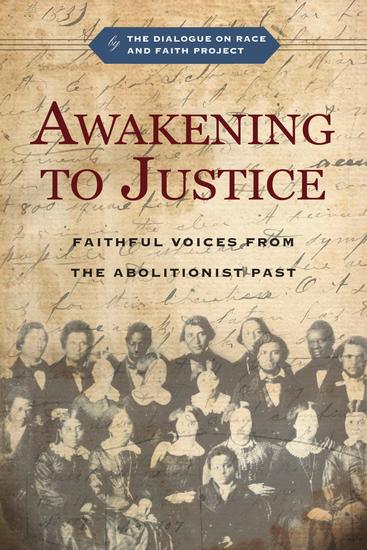
    "O where are the sympathies of Christians for the slave and where are their exertions for their liberation? . . . It seems as if the church were asleep."
    David Ingraham, 1839
    In 2015, the historian Chris Momany helped discover a manuscript that had been forgotten in a storage closet at Adrian College in Michigan. He identified it as the journal of a nineteenth-century Christian abolitionist and missionary, David Ingraham. As Momany and a fellow historian Doug Strong pored over the diary, they realized that studying this document could open new conversations for twenty-first-century Christians to address the reality of racism today. They invited a multiracial team of fourteen scholars to join in, thus launching the Dialogue on Race and Faith Project.
    Awakening to Justice presents the groundbreaking work of these scholars. In addition to reflecting on Ingraham's journal, chapters also explore the life and writings of two of Ingraham's Black colleagues, James Bradley and Nancy Prince. Appendixes feature writings by all three abolitionists so readers can engage the primary sources directly.
    Through considering connections between the revivalist, holiness, and abolitionist movements; the experiences of enslaved and freed people; abolitionists' spiritual practices; various tactics used by abolitionists; and other themes, the authors offer insight and hope for Christians concerned about racial justice. They highlight how Christians associated with Charles Finney's style of revivalism formed intentional, countercultural communities such as Oberlin College to be exemplars of interracial cooperation and equality.
    Christians have all too often compromised with racism throughout history, but that's not the whole story. Hearing the prophetic witness of revivalist social justice efforts in the nineteenth century can provide a fresh approach to today's conversations about race and faith in the church.
    Show book
  • Courage and Complicity - Moral outrage meets institutional apathy - cover

    Courage and Complicity - Moral...

    CLAUDETTE Languedoc

    • 0
    • 0
    • 0
    In August, 1947, Mary Brock boarded a train in Toronto. She was headed for the wilds of Northwestern Ontario and a teaching job at an Indian Residential School. Her family was horrified.At the end of her first day of teaching, Mary was horrified too. This was not the exciting adventure she had imagined. But Mary wasn't one to give up, and buoyed by her ideals and her pragmatism, she kept showing up.She lasted the academic year but when she boarded the train for home, she knew she had failed in every way that mattered. The ideals she had come with had shattered on her classroom floor, and a big piece of her heart, lay buried behind a small log cabin in the woods.Sixty years later, two unexpected gifts forced Mary to take a second look back and a more hopeful look forward. Maybe her ideals weren't so naive after all.
    Show book
  • Mandate for Mesopotamia and Mandate for Palestine The: The History of the Former Ottoman Territories Administered by the British after World War I - cover

    Mandate for Mesopotamia and...

    Editors Charles River

    • 0
    • 0
    • 0
    The United Nations is one of the most famous bodies in the world, and its predecessor, the League of Nations, might be equally notorious. In fact, President Woodrow Wilson’s pet project was controversial from nearly the minute it was conceived. While it would attempt to resolve some territorial disputes, it simply proved too weak to prevent international aggression, primarily among the Axis Powers in the buildup to World War II. Thus, the League’s greatest legacy ended up being its dismal failure to prevent World War II and ensure that World War I had truly been the “war to end all wars,” as originally intended. 
    Although the League of Nations was short-lived and clearly failed in its primary mission, it did essentially spawn the United Nations at the end of World War II, and many of the UN’s structures and organizations came straight from its predecessor, with the concepts of an International Court and a General Assembly coming straight from the League. More importantly, the failures of the League ensured that the UN was given stronger authority and enforcement mechanisms, most notably through the latter’s Security Council, and while the League dissolved after a generation, the UN has survived for over 70 years. 
    One of the League’s most lasting legacies was the manner in which it handed over administrative control of land in the Middle East to the victorious Allied Powers, namely France and Britain. The Ottoman Empire quickly collapsed after World War I, and its extensive lands were divvied up between the French and British. While the French gained control of the Levant, which would later become modern day nations like Syria and Lebanon, the British were given mandates for Mesopotamia and Palestine. The British Mandate for Palestine gave the British control over the lands that have since become Jordan, Israel, the West Bank, and the Gaza Strip, while Mesopotamia covered modern Iraq.
    Show book