Rejoignez-nous pour un voyage dans le monde des livres!
Ajouter ce livre à l'électronique
Grey
Ecrivez un nouveau commentaire Default profile 50px
Grey
Abonnez-vous pour lire le livre complet ou lisez les premières pages gratuitement!
All characters reduced
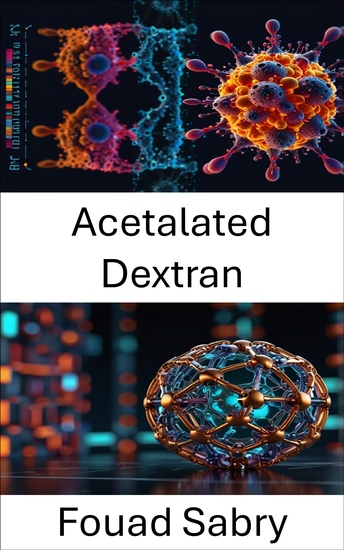
Acetalated Dextran - Advances in Biodegradable Polymers for Targeted Drug Delivery - cover

Acetalated Dextran - Advances in Biodegradable Polymers for Targeted Drug Delivery

Fouad Sabry

Maison d'édition: One Billion Knowledgeable

  • 0
  • 0
  • 0

Synopsis

Explore the cuttingedge field of nanocapsules and their profound impact on drug delivery systems with Acetalated Dextran. This meticulously crafted book is an essential resource for professionals, graduate and undergraduate students, enthusiasts, and hobbyists alike, offering invaluable insights into the emerging technologies shaping modern pharmaceutical formulations.
 
The book delves deeply into the role of acetalated dextran, a versatile polymer in drug delivery, and its applications in addressing some of today's most pressing medical challenges. Through 21 detailed chapters, readers will uncover how nanocapsules can revolutionize targeted treatment, enhance therapeutic efficacy, and deliver precision medicine. With practical knowledge and academic rigor, this book becomes an indispensable guide for anyone interested in the future of drug delivery technologies.
 
Chapters Brief Overview:
 
1: Acetalated dextran: Introduction to acetalated dextran, focusing on its properties and significance in drug delivery.
 
2: Macromolecular cages: Exploration of macromolecular cages and their potential in encapsulating bioactive agents.
 
3: PLGA: Understanding poly(lacticcoglycolic acid) (PLGA) as a key component in nanoparticlebased delivery systems.
 
4: Rubottom oxidation: Discussion of Rubottom oxidation and its applications in creating stable drug delivery systems.
 
5: Protein nanoparticles: Examination of protein nanoparticles for their role in targeted drug delivery.
 
6: Nanogel: Overview of nanogels and their capacity for controlled release and biomedical applications.
 
7: Polymerprotein hybrid: Study of polymerprotein hybrids, combining the benefits of both for enhanced delivery efficiency.
 
8: PEGylation: Analysis of PEGylation and its role in improving the pharmacokinetics of drug carriers.
 
9: OSU03012: Detailed look at the promising anticancer agent OSU03012 and its potential in nanomedicine.
 
10: Dextran: Indepth exploration of dextran, its biocompatibility, and use in various drug delivery systems.
 
11: Dextran drug delivery systems: Focus on dextranbased delivery systems for targeted treatment.
 
12: Heather Maynard: Highlighting the contributions of Heather Maynard to the advancement of nanomedicine.
 
13: Kristy M. Ainslie: Examining the work of Kristy M. Ainslie in the development of innovative drug delivery techniques.
 
14: Mark W. Grinstaff: Discussing Mark W. Grinstaff’s research and its influence on polymeric drug delivery systems.
 
15: Intracellular delivery: Study of techniques for intracellular drug delivery, including nanoparticles and nanocapsules.
 
16: Nanoparticle drug delivery: Insights into nanoparticle systems for improving drug efficacy and targeting.
 
17: Dendrimer: Examination of dendrimers as highly efficient drug delivery platforms with unique properties.
 
18: Polystyrene (drug delivery): Overview of polystyrenebased nanoparticles and their role in drug delivery.
 
19: Thiomers: Study of thiomer technology and its potential for enhancing drug stability and targeting.
 
20: Chitosan nanoparticles: Insight into chitosan nanoparticles and their applications in gene and drug delivery.
 
21: Nanoparticles for drug delivery to the brain: Exploring the future of nanoparticles in delivering drugs to the brain for neurological disorders.
 
Acetalated Dextran is not just a book; it's a gateway to understanding the future of pharmaceutical innovations. This work is indispensable for anyone aiming to be at the forefront of nanomedicine, as it presents detailed, practical knowledge that will remain valuable for years to come. The combination of indepth research and practical insights makes this book a wise investment for your academic and professional journey.
Disponible depuis: 14/03/2025.
Longueur d'impression: 261 pages.

D'autres livres qui pourraient vous intéresser

  • NFT for Beginners - The Real Guide to Investing in Non-Fungible Token Trending Learn How to Start in Metaverse Business Real Estate & Gaming Through Cryptocurrencies or Become an NFTs Digital Artist - cover

    NFT for Beginners - The Real...

    Meta Digital Academy

    • 0
    • 0
    • 0
    How can today's entrepreneurs prepare themselves for tomorrow's NFT-driven world? 
    What influence will NFTs have on art and industry in the next decades, and—perhaps most importantly—what are they? 
    Think of NFTs as the Bitcoin of digital content. Forbes defines NFTs as a record of ownership for unique digital items like art, music, tweets, and games. Non-fungible, they can't be exchanged for a similar item at the same value. NFTs, a major digital innovation since blockchain and bitcoin, combine the best features of these technologies. This book explores NFT technology's foundations and its transformative impact on industries like fashion, sports, fine art, and social justice, introducing new asset classes and investment opportunities, such as fractional ownership in dynamic artworks. 
    This book includes the following:Understanding NFTs: Basics, History, and BuzzwordsMechanics of NFTs: How They Work and Their PopularityDispelling Myths and Examining the Growth of NFTsNavigating the NFT Market and Establishing a BusinessStrategies for Earning with NFTs and Future Technological TrendsExploring NFT Standards, Marketplaces, and Artistic OpportunitiesMaximizing NFT Investments: Considerations and Practical Guidance 
    You'll learn everything you need to know about NFTs by following this book step by step. Enhance your knowledge and relate to the tale of how you found and became enamored with this powerful new instrument, as well as where you think NFTs will lead business and branding in the twenty-first century. 
    So, what are you waiting for? Get hold of NFT for Beginners and enhance your knowledge!
    Voir livre
  • CISSP - Simple and Effective Strategies for Mastering Information Systems Security from A-Z - cover

    CISSP - Simple and Effective...

    Walker Schmidt

    • 0
    • 0
    • 0
    This book is the best recipe for becoming an expert on information security. If you aspire to be a security expert by taking the CISSP exam, there is no shortage of books that claim to be the ultimate solution to information security. They dupe students into thinking that they are the only books on the market for this specific subject. 
    Well, they may be dubbed as the ultimate but are they the most reader-friendly books for this dry subject? Will there be any juice to be consumed by the reader and fiber to digest? Are those books written easy to under language? If those book authors have crammed their work with technical jargon, I must plead with you to avoid this confusion. 
    What makes this book different from the other books on the market is the fact that it is written in a lucid and coherent form. You will find all the topics well-connected and written in easy and simple language. The book contains the following topics: 
    •Security Principles 
    •Security Threats and Countermeasures 
    •Business Continuity Planning 
    •Incident Response Planning 
    •Security Models and Controls 
    •Secure Communications 
    •And lots more!
    Voir livre
  • Ultimate Parallel and Distributed Computing with Julia For Data Science - Excel in Data Analysis Statistical Modeling and Machine Learning by leveraging MLBasejl and MLJjl to optimize workflows - cover

    Ultimate Parallel and...

    Nabanita Dash

    • 0
    • 0
    • 0
    Unleash Julia’s power: Code Your Data Stories, Shape Machine Intelligence!
    Book Description
    This book takes you through a step-by-step learning journey, starting with the essentials of Julia's syntax, variables, and functions. You'll unlock the power of efficient data handling by leveraging Julia arrays and DataFrames.jl for insightful analysis. Develop expertise in both basic and advanced statistical models, providing a robust toolkit for deriving meaningful data-driven insights. The journey continues with machine learning proficiency, where you'll implement algorithms confidently using MLJ.jl and MLBase.jl, paving the way for advanced data-driven solutions. Explore the realm of Bayesian inference skills through practical applications using Turing.jl, enhancing your ability to extract valuable insights. The book also introduces crucial Julia packages such as Plots.jl for visualizing data and results.
    The handbook culminates in optimizing workflows with Julia's parallel and distributed computing capabilities, ensuring efficient and scalable data processing using Distributions.jl, Distributed.jl and SharedArrays.jl. This comprehensive guide equips you with the knowledge and practical insights needed to excel in the dynamic field of data science and machine learning.
    Table of Contents
    1. Julia In Data Science Arena
    2. Getting Started with Julia
    3. Features Assisting Scaling ML Projects
    4. Data Structures in Julia
    5. Working With Datasets In Julia
    6. Basics of Statistics
    7. Probability Data Distributions
    8. Framing Data in Julia
    9. Working on Data in DataFrames
    10. Visualizing Data in Julia
    11. Introducing Machine Learning in Julia
    12. Data and Models
    13. Bayesian Statistics and Modeling
    14. Parallel Computation in Julia
    15. Distributed Computation in Julia
    Index
    Voir livre
  • Bioinformatics Guide - A Comprehensive Guide to Bioinformatics Techniques and Tools - cover

    Bioinformatics Guide - A...

    James Ferry

    • 0
    • 0
    • 0
    "Bioinformatics Guide: A Comprehensive Guide to Bioinformatics Techniques and Tools" is an indispensable resource for students, researchers, and professionals eager to master the rapidly evolving field of bioinformatics. This guide offers an in-depth exploration of the fundamental techniques and cutting-edge tools that are transforming how we analyze and interpret complex biological data. 
    Starting with the basics, the book covers essential concepts in molecular biology, including the central dogma and the structure and function of DNA, RNA, and proteins. It then delves into advanced topics such as genomics, transcriptomics, proteomics, and metabolomics, providing a thorough understanding of these critical areas. 
    Readers will gain valuable insights into sequencing technologies, from traditional Sanger sequencing to the latest advancements in next-generation and third-generation sequencing. The book discusses the advantages and limitations of various sequencing platforms and their applications in research and medicine. 
    The guide also addresses genome assembly and annotation, detailing the algorithms and strategies used to assemble genomes and predict genes, functional elements, and regulatory regions. It explores sequence alignment and homology searching, explaining the algorithms behind these processes and their applications in evolutionary studies. 
    In the realm of structural bioinformatics, readers will learn about protein structure prediction methods, molecular visualization tools, and the resources available in protein structure databases. The book further covers phylogenetics and evolutionary analysis, including methods for constructing phylogenetic trees and the molecular clock hypothesis.
    Voir livre
  • Parkinson's Disease - Diagnosis Treatment and Hope for the Future - cover

    Parkinson's Disease - Diagnosis...

    Lilly Richardsen

    • 0
    • 0
    • 0
    Parkinson’s disease is a progressive neurological disorder that primarily affects movement. It develops when certain nerve cells in the brain, particularly those in the substantia nigra, deteriorate or die, leading to a decrease in dopamine production. Dopamine is a crucial neurotransmitter that helps regulate movement and coordination. As dopamine levels decline, individuals with Parkinson’s begin to experience tremors, muscle rigidity, and slowed movement, among other symptoms. While the exact cause of Parkinson’s remains unknown, researchers believe a combination of genetic and environmental factors contributes to its development. 
    The symptoms of Parkinson’s disease typically appear gradually and worsen over time. In the early stages, a person may notice mild tremors in their hands or stiffness in their limbs. As the disease progresses, walking, balance, and speech can become affected, making daily activities increasingly challenging. Beyond the physical symptoms, Parkinson’s also impacts cognitive function, mood, and sleep, leading to depression, anxiety, and memory issues in some patients. The complexity of symptoms makes early diagnosis critical, though there is no definitive test for Parkinson’s, and misdiagnosis is not uncommon. Physicians primarily rely on clinical evaluation, medical history, and neurological assessments to determine the presence of the disease. 
    Currently, there is no cure for Parkinson’s, but several treatment options can help manage symptoms and improve quality of life. Medications such as levodopa and dopamine agonists are commonly prescribed to replenish or mimic dopamine’s effects. Physical therapy, occupational therapy, and lifestyle changes, including exercise and a healthy diet, also play a vital role in managing symptoms. For those with more advanced cases, surgical interventions like deep brain stimulation (DBS) may offer significant relief.
    Voir livre
  • Bacteriology - The Invisible World of Bacteria and Their Impact on Life - cover

    Bacteriology - The Invisible...

    Mike Crawford

    • 0
    • 0
    • 0
    Bacteriology, the study of bacteria, plays a pivotal role in modern science, shaping our understanding of life, health, and the environment. Although invisible to the naked eye, bacteria are among the most influential organisms on Earth. They have existed for billions of years, adapting to diverse environments and participating in countless biological processes. Their impact is so profound that without them, life as we know it would cease to exist. From supporting ecosystems to influencing human health, bacteriology provides critical insights into how these microscopic organisms affect every aspect of the world around us. 
    In medicine, bacteriology has transformed healthcare. The discovery of pathogenic bacteria and the development of germ theory revolutionized how diseases were understood and treated. Bacterial infections that once claimed millions of lives are now treatable due to antibiotics and vaccines, significantly reducing mortality rates. However, the rise of antibiotic-resistant bacteria poses new challenges, making bacteriological research more crucial than ever. Understanding bacterial behavior, genetics, and mechanisms of resistance is key to developing effective treatments and ensuring global health security. Moreover, the human microbiome—an intricate community of bacteria living in and on our bodies—plays an essential role in digestion, immunity, and even mental health. Bacteriology sheds light on this complex relationship, offering promising avenues for personalized medicine and therapeutic innovations. 
    Beyond human health, bacteria are indispensable in maintaining ecological balance. They drive critical processes like nitrogen fixation, which enriches soil for plant growth, and decomposition, recycling organic matter and releasing essential nutrients back into ecosystems. In aquatic environments, bacteria contribute to nutrient cycling, supporting diverse marine life.
    Voir livre