Join us on a literary world trip!
Add this book to bookshelf
Grey
Write a new comment Default profile 50px
Grey
Subscribe to read the full book or read the first pages for free!
All characters reduced
Academy - Exploring Political Thought and Institutional Dynamics - cover

Academy - Exploring Political Thought and Institutional Dynamics

Fouad Sabry

Publisher: One Billion Knowledgeable

  • 0
  • 0
  • 0

Summary

In "Academy," explore how academic institutions influence political ideologies and governance. This book examines universities, think tanks, and educational entities' roles in shaping political thought and decision-making.
 
Chapters:
 
1. Academy: Historical evolution and impact on political discourse.2. College: Role in developing future leaders and shaping opinions.3. Military Academy: Contributions to national security and strategy.4. Graduation: Political symbolism and significance.5. National Tsing Hua University: Impact on Taiwan's political and academic spheres.6. Academic Dress: Cultural and political implications of regalia.7. Learned Society: Advancing political knowledge and debate.8. National Academy: Influence on policy and research.9. Academy of Sciences: Impact on science policy and politics.10. Art School: Intersection with political expression and cultural diplomacy.11. Institute of Technology: Contribution to political and economic development.12. Town and Gown: Relationship between institutions and communities.13. Platonic Academy: Historical significance and philosophical impact.14. Roman Academies: Contributions to political and intellectual traditions.15. Education in Brazil: Effects on political and social structures.16. Military Academy of Modena: Role in military and political strategy.17. University: Broader impact on political thought and society.18. Music School: Influence on political and cultural narratives.19. Ancient Higher-Learning Institutions: Development and early political thought.20. Nanjing University: Role in China's political and academic spheres.21. Religion: Intersection with academia and political ideologies.
 
"Academy" offers deep insights into how educational institutions shape politics, providing valuable knowledge for professionals, students, and enthusiasts.
Available since: 08/01/2024.
Print length: 309 pages.

Other books that might interest you

  • The New Goliaths - How Corporations Use Software to Dominate Industries Kill Innovation - cover

    The New Goliaths - How...

    James Bessen

    • 0
    • 0
    • 0
    An approach to reinvigorating economic competition that doesn’t break up corporate giants, but compels them to share their technology, data, and knowledge 
      
    “Bessen is a master of unpacking the nuances of a complex array of interrelated trends to build a coherent story of how the promise of the democratized Internet ended up under the control of just a few. Read The New Goliaths to see how the forest came to have only room for a few tall trees with the rest of us in the undergrowth.”—Joshua Gans, coauthor of Prediction Machines: The Simple Economics of Artificial Intelligence 
      
    Historically, competition has powered progress under capitalism. Companies with productive new products rise to the top, but sooner or later, competitors come along with better innovations and disrupt the threat of monopoly. Dominant firms like Walmart, Amazon, and Google argue that this process of “creative destruction” prevents them from becoming too powerful or entrenched. 
      
    But the threat of competition has sharply decreased over the past twenty years, and today’s corporate giants have come to power by using proprietary information technologies to create a tilted playing field. This development has increased economic inequality and social division, slowed innovation, and allowed dominant firms to evade government regulation. In the face of increasing calls to break up the largest companies, James Bessen argues that a better way to restore competitive balance and dynamism is to encourage or compel these companies to share technology, data, and knowledge.
    Show book
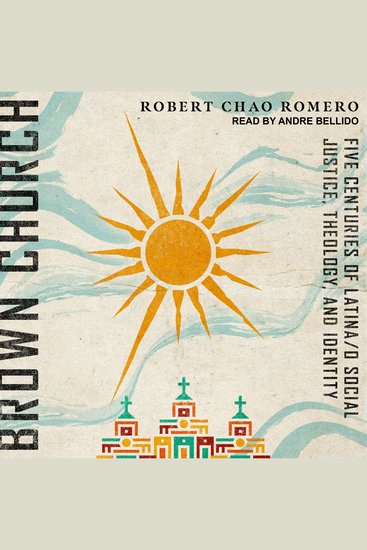
  • Brown Church - Five Centuries of Latina o Social Justice Theology and Identity - cover

    Brown Church - Five Centuries of...

    Robert Chao Romero

    • 0
    • 0
    • 0
    Foreword INDIES Book of the Year Finalist 


    Interest in and awareness of the demand for social justice as an outworking of the Christian faith is growing. But it is not new. 


    For five hundred years, Latina/o culture and identity have been shaped by their challenges to the religious, socio-economic, and political status quo, whether in opposition to Spanish colonialism, Latin American dictatorships, US imperialism in Central America, the oppression of farmworkers, or the current exploitation of undocumented immigrants. Christianity has played a significant role in that movement at every stage. 


    Robert Chao Romero, the son of a Mexican father and a Chinese immigrant mother, explores the history and theology of what he terms the "Brown Church." Romero considers how this movement has responded to these and other injustices throughout its history by appealing to the belief that God's vision for redemption includes not only heavenly promises but also the transformation of every aspect of our lives and the world. Walking through this history of activism and faith, listeners will discover that Latina/o Christians have a heart after God's own.
    Show book
  • Triumph of Liberty The: Book Summary & Analysis - cover

    Triumph of Liberty The: Book...

    Briefly Summaries

    • 0
    • 0
    • 0
    This is a concise summary and analysis of The Triumph of Liberty, by Jim Powell.
     
    It is not the original book and is not affiliated with or endorsed by  Jim Powell.
    Ideal those seeking a quick and insightful overview.
     
    The Triumph of Liberty is a compelling exploration of humanity's long and arduous struggle for individual freedom and dignity. Through vivid storytelling, the book chronicles the lives and achievements of extraordinary men and women who championed liberty against the forces of oppression, tyranny, and inequality. From abolitionists and revolutionaries to advocates for free speech and human rights, their stories reveal the profound impact of personal courage and the enduring power of ideas. This inspirational narrative celebrates the triumphs of the human spirit in the pursuit of a freer, more just world.
    Show book
  • Waco Rising - David Koresh the FBI and the Birth of America's Modern Militias - cover

    Waco Rising - David Koresh the...

    Kevin Cook

    • 0
    • 0
    • 0
    In 1993, David Koresh and a band of heavily armed evangelical Christians took on the might of the US government. A two-month siege of their compound in Waco, Texas, ended in a firefight that killed seventy-six, including twenty-five children. America is still picking up the pieces, and we still haven't heard the full story. 


    Kevin Cook finally provides the full story of what happened at Waco. He gives listeners a taste of Koresh's deadly charisma and takes us behind the scenes at the Branch Davidians' compound, where "the new Christ" turned his followers into servants and sired seventeen children by a dozen "wives." In vivid accounts packed with human drama, Cook harnesses never-reported material to reconstruct the FBI's fifty-one-day siege of the Waco compound in minute-to-minute detail. He sheds new light on the Clinton administration's approval of a lethal governmental assault in a new, definitive account of the firefight that ended so many lives and triggered the rise of today's militia movement. Waco drew the battle lines for American extremists—in Oklahoma City bomber Timothy McVeigh's words, "Waco started this war." With help from sources as diverse as Branch Davidian survivors and the FBI's lead negotiator during the siege, Cook draws a straight line from Waco's ashes to the January 6, 2021, riot at the US Capitol and insurrections yet to come.
    Show book
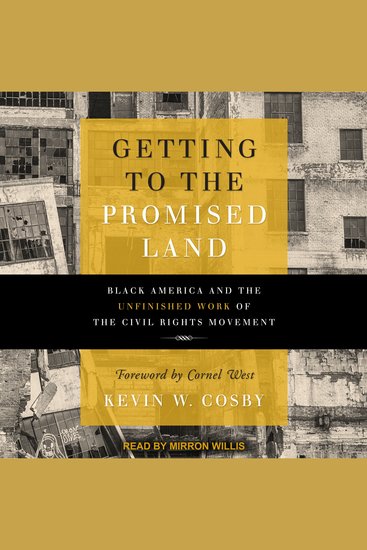
  • Getting to the Promised Land - Black America and the Unfinished Work of the Civil Rights Movement - cover

    Getting to the Promised Land -...

    Kevin W. Cosby

    • 0
    • 0
    • 0
    Too often, all oppressed people in America are lumped together under the moniker people of color, as if each group's experience under the yoke of systemic racism has the same economic and social repercussions. But the American Descendants of Slavery (ADOS) hold a unique claim to economic and reparative justice: for ADOS, after all, is the only group whose ancestors were forcibly brought to America, enslaved, built much of the wealth of the country, yet continue to be specifically excluded from the same social, political, and economic rights of other Americans. To that end, Rev. Dr. Kevin W. Cosby lays out the first theology of the ADOS movement, turning the traditional lens of Black liberation theology from Moses leading escaped Hebrew slaves in Exodus to other biblical leaders like Solomon, Daniel, and Nehemiah. 


    In the stories of Nehemiah and other biblical leaders, Cosby finds inspiration on how to rebuild Black America including the necessity of government reparations for ADOS. Cosby calls all Americans to move from a place of relative nonengagement and detachment to a place of active support of ADOS's efforts for justice and healing.
    Show book
  • The Color of Civics - Civic Education for a Multiracial Democracy - cover

    The Color of Civics - Civic...

    Matthew D. Nelsen

    • 0
    • 0
    • 0
    Generations of Americans have regarded schools as essential for developing the knowledge and civic values necessary for sustaining democracy. Yet, as Matthew D. Nelsen argues in The Color of Civics, traditional approaches to civic education are not living up to their promise for many students, particularly students of color from disadvantaged communities. 


    Drawing on lessons from students and teachers in Chicago, The Color of Civics reimagines the democratic purpose of civic education. Nelsen's findings challenge some of the most widely cited civic education research, arguing that the content of traditional civic education courses privileges the political experiences of white political actors, and in turn, contributes to divergent political behaviors and participatory outcomes across racial and ethnic groups. He presents a new approach to civic education that aims to foster political empowerment by centering historically-grounded conversations about current events as well as critical categories of knowledge—those that highlight the agency of marginalized groups. This approach increases rates of political participation among young people of color and heightens political empathy among white youth. Nelsen also explores how the attitudes and lived experiences of teachers drive the implementation of more empowering civic learning environments.
    Show book