Join us on a literary world trip!
Add this book to bookshelf
Grey
Write a new comment Default profile 50px
Grey
Subscribe to read the full book or read the first pages for free!
All characters reduced
Trust Verification Systems - cover

Trust Verification Systems

Forest Greenpath

Translator A AI

Publisher: Publifye

  • 0
  • 0
  • 0

Summary

In today's connected world, understanding trust is more critical than ever. Trust Verification Systems examines how we assess trustworthiness using approaches like signaling theory, reputation systems, and awareness of our cognitive biases. It provides a framework for understanding the subtle processes that shape our perceptions, emphasizing that effective trust verification relies on accurate signals and awareness of our limitations. For example, signaling theory suggests that observable actions communicate trustworthiness, while reputation systems aggregate past behavior to influence future interactions. The book explores how humans have adapted trust verification methods, from relying on communal knowledge in tribal societies to utilizing algorithms on modern online platforms; it investigates cognitive biases such as the halo effect, which can skew our evaluations. The book progresses through foundational principles, signaling theory, reputation systems, and cognitive biases, ultimately offering actionable recommendations for improving trust judgments. This comprehensive approach integrates insights from psychology, economics, and computer science to offer a nuanced understanding of trust in various contexts.
Available since: 02/21/2025.
Print length: 89 pages.

Other books that might interest you

  • America's Legendary Frontier Towns: The History of Tombstone Deadwood and Dodge City - cover

    America's Legendary Frontier...

    Editors Charles River

    • 0
    • 0
    • 0
    The Wild West has made legends out of many men, but it has forged a lasting legacy for the city of Tombstone, Arizona, a frontier boomtown that has come to symbolize everything about the Old West. In many ways, Tombstone fit all the stereotypes associated with that era in American history. A dusty place on the outskirts of civilization, Tombstone brought together miners, cowboys, lawmen, saloons, gambling, brothels, and everything in between, creating an environment that was always colorful and occasionally fatal. 	Those characteristics might not have distinguished Tombstone from other frontier outposts like Deadwood in the Dakotas, but some of the most famous legends of the West called Tombstone home for many years, most notably the Earp brothers and Doc Holliday. And ultimately, the relationships and rivalries forged by those men in Tombstone culminated in the legendary Gunfight at the O.K. Corral on October 26, 1881. 
    	The mining town of Deadwood quickly sprung up as prospectors descended on the area, even though the federal government had ordered military troops to set up posts there to keep prospectors out. Men like Al Swearengen and Charlie Utter came to make fortunes one way or another, Calamity Jane amused and irritated the townspeople in equal measure, and the legendary Wild Bill Hickok was shot and killed in one of Deadwood’s saloons while holding the “Dead Man’s Hand” by “the coward McCall.”  
    By 1876, however, Dodge City had become a popular destination spot for cattle drives starting from as far south as Texas, earning itself the nickname “The Cowboy Capital of the World”. With that, the town also came to symbolize everything about the Old West. Dodge City brought together cowboys, lawmen, saloons, gambling, brothels, and everything in between, creating an environment that was always colorful and occasionally fatal. Since Dodge City was on the frontier, it took awhile for the law to catch up to it.
    Show book
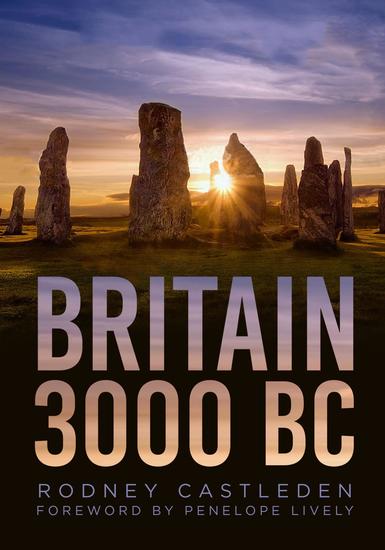
  • Britain 3000 BC - cover

    Britain 3000 BC

    Rodney Castleden

    • 0
    • 0
    • 0
    Were prehistoric people like us? How did they live, what did they think and how did they see their world?
    3000 BC was a moment of great significance in the British Isles: Avebury, Stonehenge and many other major monuments were at vital stages in their construction and use, and writing – often regarded as the ultimate hallmark of civilisation – made its first appearance in Europe. In this revised and updated edition of Britain 3000 BC, Rodney Castleden uses the evidence of archaeological investigations to recreate the society, customs, economy, religion and ritual of Britain 5000 years ago, and to reveal the lost world of prehistoric people.
    From the well-built stone houses of Skara Brae on the Orkney Islands to the more primitive wooden huts of Honington in Suffolk, Castleden enters the dwellings and lifestyles of neolithic communities and delves into the nature of their society, their trading networks and positive obsession with death. Britain 3000 BC will be fascinating reading for everyone who is interested in prehistory, archaeology and the magnificent monuments our ancient ancestors left behind.
    Show book
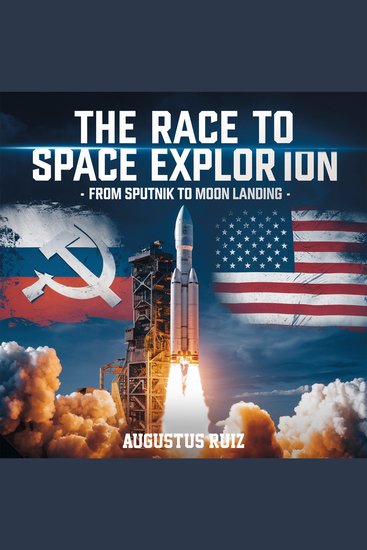
  • The Race to Space Exploration – From Sputnik to Moon Landing - How the US and Soviet Union Competed to Conquer Space - cover

    The Race to Space Exploration –...

    Augustus Ruiz

    • 0
    • 0
    • 0
    The Space Race defined an era—one of innovation, rivalry, and exploration. The Cold War superpowers, the United States and the Soviet Union, competed to achieve what no one had done before: reach beyond Earth’s atmosphere and into the vast unknown of space. 
    This audiobook takes you deep into the history of space exploration, uncovering the missions, risks, and scientific breakthroughs that shaped the modern world. Discover: 
    ✅ How Sputnik 1’s launch changed global politics overnight 
    ✅ The challenges of the first human spaceflights from Gagarin to Apollo 
    ✅ The hidden dangers and failures that nearly ended space exploration 
    ✅ How the Apollo 11 Moon landing became a defining moment for humanity 
    The Race to Space Exploration – From Sputnik to Moon Landing is a must-listen for history lovers, space enthusiasts, and anyone fascinated by the greatest adventure ever undertaken by humankind.
    Show book
  • You Shall Be as Gods - Pagans Progressives and the Rise of the Woke Gnostic Left - cover

    You Shall Be as Gods - Pagans...

    Erick son

    • 0
    • 0
    • 0
    Our country doesn't have a partisan problem, a political problem, a social problem, or an economic problem. We have a spiritual problem. 


    As Christianity has been pushed aside, the Progressive Left has developed a new pagan religion. But the radical roots of the new secular religion are ancient. We've seen it all before. In You Shall Be as Gods, Erick Erickson traces the religion's roots from Paganism and Gnosticism through the Age of Enlightenment all the way into the Postmodernism of the twenty-first century. At the heart of the ancient religion is a self-centered culture. 


    The Christian church today has been weakened by compromising with the neo-pagan religion, leaving the faithful ill-prepared to counter the claims of society's present-day doctrine. Yet there remains a significant remnant in America that refuses to bow to the rising belief system. 


    Just as in Rome and countless societies throughout history, the religions present two opposing stories of reality which necessitates conflict. In an era where the "Christian thing" to do seems to be to go along and get along, Erickson makes clear that the two cultures cannot peacefully coexist and calls the listener to speak the truth in love.
    Show book
  • Instructional Design Made Easy - A Beginner's Guide - cover

    Instructional Design Made Easy -...

    Dr. Dorea M. Hardy

    • 0
    • 0
    • 0
    This audiobook is narrated by an AI Voice. Are you new to the world of instructional design and looking to create impactful learning experiences? Look no further than Instructional Design Made Easy: A Beginner's Guide by Dr. Dorea M. Hardy. 
     
    This comprehensive guide delves into the essential theories, models, and principles that form the foundation of effective instructional design. Whether you're designing for the classroom, online platforms, or mobile devices, this book will equip you with the knowledge and practical skills to transform your content into engaging and inclusive learning experiences. 
     
    Discover how to align your instructional materials with clear learning objectives, leverage visual design to enhance learner engagement, and ensure accessibility for all. Gain insights from an industry expert and unlock the power of instructional design to drive measurable success. 
     
    Dive into Instructional Design Made Easy and embark on your journey to becoming an accomplished instructional designer, educator, or training professional. Click the "Buy Now" button and start creating impactful learning experiences today!
    Show book
  • If There Is No God - The Battle Over Who Defines Good and Evil - cover

    If There Is No God - The Battle...

    Dennis Prager

    • 0
    • 0
    • 0
    A NEW YORK TIMES BESTSELLER 
    One of the most important conservative voices of the last century takes on the dangers of secularism, perhaps the most important issue in our lives. 
    Your beloved dog and a stranger are drowning. Who do you try to save first? 
    Every time famed radio host, New York Times bestselling author, and Co-founder of PragerU, Dennis Prager, has asked this question, one-third of the audience voted for the dog, one-third for the stranger, and one-third was not sure. We live in an era when people increasingly make moral judgments based on their emotions. But if feelings determine what is right and wrong, then whether murder, rape, and theft are wrong is no more than an opinion. Why are those who riot and destroy property wrong, especially if they feel their behavior is justified? Prager explains that without objective morality, the world will descend into chaos, with every individual engaging in any behavior they feel is right. 
    For fifty years, Dennis Prager, one of the best-known public intellectuals in the Western world, has explored the vital role Judeo-Christian values play in shaping individual lives and entire societies. In If There Is No God, he engages in provocative and sometimes heated exchanges with questioners who offer some of the greatest challenges he has faced concerning how one determines good and evil and why one’s feelings can be life-enhancing yet morally unimportant. 
    If God exists, why doesn’t He punish the unjust? Why does He allow the innocent to suffer? How can religion better the human condition when so many of the religious are often immoral? These timeless questions are in urgent need of answers. The reader need not be religious or even believe in God to find the arguments and debates in this book compelling and meaningful. All one needs is reason to appreciate the ideas Prager presents. 
    Thought-provoking, important, and accessible for the devout and the skeptic, If There Is No God is a guide for anyone seeking clarity in a morally troubled age.
    Show book